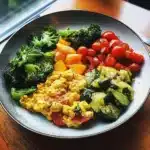
Ingredients
- Large Eggs: 6 (The star of the show! Use fresh, high-quality eggs for the best flavor and texture. Pastured eggs often have richer yolks and a more vibrant color.)
- Olive Oil or Butter: 1 tablespoon (Or a combination of both. Olive oil for a fruitier note, butter for richness.)
- Medium Onion: 1/2, finely chopped (Yellow or white onions work best, providing a sweet, aromatic base.)
- Garlic Cloves: 2, minced (Fresh garlic is key; adjust to your preference. For a milder flavor, use roasted garlic.)
- Bell Pepper: 1 medium, any color (or a mix), diced (Red, yellow, or orange bell peppers add sweetness and vibrant color. Green bell peppers offer a slightly more savory, grassy note.)
- Mushrooms: 1 cup, sliced or chopped (Cremini, button, or shiitake mushrooms add an earthy, umami depth. Ensure they are cleaned well.)
- Fresh Spinach: 2 cups, packed (Or kale, Swiss chard. Spinach wilts down significantly, adding a powerhouse of nutrients without overwhelming the dish.)
- Cherry Tomatoes: 1/2 cup, halved or quartered (Optional, but they add a burst of juicy acidity and color. Add them towards the end to prevent them from becoming too mushy.)
- Milk or Cream: 2 tablespoons (Optional, for creamier eggs. Whole milk, half-and-half, or even a non-dairy alternative like unsweetened almond milk can work.)
- Shredded Cheese: 1/2 cup (Cheddar, Monterey Jack, Gruyère, feta, or goat cheese. Choose your favorite! A good melting cheese works wonders.)
- Salt: 1/2 teaspoon, or to taste (Fine sea salt or kosher salt.)
- Freshly Ground Black Pepper: 1/4 teaspoon, or to taste
- Fresh Herbs (Optional for garnish): 1 tablespoon chopped parsley, chives, or dill (These add a final touch of freshness and visual appeal.)
- Pinch of Red Pepper Flakes (Optional): For a subtle kick of heat.
Instructions
- Prepare Your Ingredients (Mise en Place): This is a crucial first step for a smooth cooking process. Wash and chop all your vegetables: finely dice the onion, mince the garlic, dice the bell pepper, slice or chop the mushrooms, and halve or quarter the cherry tomatoes if using. Roughly chop the spinach if the leaves are very large. Grate your cheese. Having everything ready to go prevents rushing and potential burning. Set everything aside in separate bowls.
- Whisk the Eggs: In a medium-sized mixing bowl, crack the 6 large eggs. Add the optional 2 tablespoons of milk or cream. Season with 1/4 teaspoon of salt and a pinch of freshly ground black pepper. Whisk vigorously with a fork or a whisk until the yolks and whites are fully combined and the mixture is slightly frothy and an even pale yellow. Over-whisking can make eggs tough, so just until combined is perfect. Set aside.
- Sauté the Aromatics: Place a large non-stick skillet or a well-seasoned cast-iron pan over medium heat. Once the pan is warm, add the 1 tablespoon of olive oil or butter. Allow it to heat until the oil shimmers or the butter is melted and foamy. Add the chopped onion and sauté for 3-4 minutes, stirring occasionally, until it becomes translucent and softened.
- Cook the Harder Vegetables: Add the minced garlic and diced bell pepper to the skillet with the onions. Cook for another 4-5 minutes, stirring frequently, until the bell peppers begin to soften. The garlic should be fragrant but not browned (burnt garlic tastes bitter). If you’re adding other harder vegetables like diced carrots or broccoli florets, this is the time to add them.
- Add the Mushrooms: Stir in the sliced or chopped mushrooms. Cook for about 5-7 minutes, stirring occasionally. Mushrooms release a lot of water initially; continue cooking until most of this liquid has evaporated and the mushrooms are tender and slightly browned. This browning develops their rich, earthy flavor. Season the vegetables lightly with a pinch of salt and pepper at this stage to help draw out moisture and build layers of flavor.
- Wilt the Spinach: Add the packed fresh spinach to the skillet. It will look like a lot, but it wilts down significantly. Stir gently until the spinach is just wilted, which should only take 1-2 minutes. If using kale or Swiss chard, they might take a minute or two longer and benefit from having their tough stems removed and being chopped more finely.
- Introduce the Eggs: Reduce the heat to medium-low. Pour the whisked egg mixture evenly over the vegetables in the skillet. Let the eggs sit undisturbed for about 30-60 seconds, or until the edges begin to set. This initial pause helps create larger, fluffier curds.
- Scramble Gently: Using a heat-resistant spatula, gently push the cooked egg from the edges towards the center, tilting the pan so that the uncooked egg flows underneath. Continue this process, gently folding and stirring, until the eggs are mostly set but still slightly moist and glossy. Avoid stirring too vigorously or constantly, as this can result in small, dry curds. The goal is soft, creamy curds.
- Add Tomatoes and Cheese: If using cherry tomatoes, stir them in now. Sprinkle the 1/2 cup of shredded cheese evenly over the eggs. Gently fold the cheese into the scramble until it’s just melted and gooey. This should only take about 30 seconds to a minute. Be careful not to overcook at this stage; the residual heat will continue to cook the eggs.
- Final Seasoning and Serving: Taste the scramble and adjust seasoning with more salt and pepper if needed. If you’re using red pepper flakes for a bit of spice, sprinkle them in now. Immediately remove the skillet from the heat to prevent the eggs from overcooking. Serve hot, garnished with fresh chopped parsley, chives, or dill, if desired.
Nutrition
- Serving Size: One Normal Portion
- Calories: 350-450