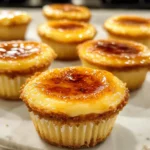
Ingredients
Scale
For the Graham Cracker Crust:
- 1 ½ cups (about 150g) graham cracker crumbs (from about 10–12 full graham crackers)
- ¼ cup (50g) granulated sugar
- 6 tablespoons (85g) unsalted butter, melted
For the Cheesecake Filling:
- 16 ounces (452g) full-fat cream cheese, softened to room temperature (two 8-ounce blocks)
- 1 cup (200g) granulated sugar
- 2 large eggs, room temperature
- 2 large egg yolks, room temperature (these add richness, key for the crème brûlée feel)
- ¼ cup (60ml) heavy cream, room temperature
- 1 tablespoon all-purpose flour (helps prevent cracking)
- 1 teaspoon pure vanilla extract
- Pinch of salt
For the Crème Brûlée Topping:
- ½ cup (100g) granulated sugar (or superfine/caster sugar for easier caramelization), approximately
Instructions
Phase 1: Preparing the Perfect Crust
- Preheat & Prep: Preheat your oven to 325°F (160°C). Line a 12-cup standard muffin tin with paper cupcake liners. This recipe might yield slightly more or less depending on how full you make them, so having a couple of extra liners on standby is a good idea.
- Make the Crumbs: If you’re not using pre-made graham cracker crumbs, place your graham crackers into a food processor and pulse until they form fine crumbs. Alternatively, place them in a zip-top bag and crush them with a rolling pin. Measure out 1 ½ cups of crumbs.
- Combine Crust Ingredients: In a small bowl, combine the graham cracker crumbs, ¼ cup of granulated sugar, and the melted unsalted butter. Stir with a fork until the mixture is well combined and resembles wet sand.
- Press into Liners: Distribute the crumb mixture evenly among the prepared cupcake liners. Use the bottom of a small glass or a tablespoon measure to press the crumbs down firmly into an even layer at the bottom of each liner. This firm packing is crucial for a crust that holds together.
- Pre-Bake the Crust: Bake the crusts for 5-7 minutes, just until set and fragrant. Remove from the oven and set aside to cool slightly while you prepare the cheesecake filling. Do not turn off the oven.
Phase 2: Crafting the Creamy Cheesecake Filling
- Beat Cream Cheese: In the bowl of a stand mixer fitted with the paddle attachment, or in a large bowl using a handheld electric mixer, beat the softened cream cheese on medium speed until completely smooth and free of lumps. This step is vital – scrape down the sides and bottom of the bowl frequently to ensure there are no hidden lumps. Room temperature cream cheese is essential for this. If it’s too cold, it won’t blend smoothly.
- Add Sugar: Gradually add the 1 cup of granulated sugar to the cream cheese, beating on medium-low speed until just combined and smooth. Again, scrape down the bowl. Overbeating at this stage can incorporate too much air, leading to cracks later.
- Incorporate Eggs and Yolks: Add the room temperature large eggs and egg yolks one at a time, beating on low speed until just incorporated after each addition. Do not overmix! Overmixing eggs is a primary cause of cheesecake cracking and a tough texture. The mixture should look homogenous.
- Add Wet Ingredients & Flour: Gently stir in the room temperature heavy cream, pure vanilla extract, all-purpose flour, and pinch of salt on low speed until just combined. The flour helps to bind the cheesecake and can reduce the risk of cracking. Scrape the bowl one last time to ensure everything is evenly mixed, but be careful not to overdo it. The batter should be thick, smooth, and luscious.
Phase 3: Assembling and Baking the Cheesecakes
- Fill the Liners: Carefully divide the cheesecake batter evenly among the cupcake liners, filling each one almost to the top (about ¾ to ⅞ full). The cheesecakes won’t rise dramatically like regular cupcakes.
- Bake the Cheesecakes: Place the muffin tin into the preheated 325°F (160°C) oven. Bake for 18-22 minutes. The cheesecakes are done when the edges are set, but the centers still have a slight wobble – they shouldn’t be liquid, but not entirely firm either. They will continue to cook and set as they cool. Overbaking will result in a dry, crumbly texture and potential cracks.
- Cool Down Gradually: Once baked, turn off the oven, prop the oven door open slightly with a wooden spoon, and let the cheesecakes cool in the oven for 30 minutes. This gradual cooling process helps prevent cracking.
- Cool to Room Temperature: After 30 minutes in the turned-off oven, carefully remove the muffin tin and let the cheesecakes cool completely on a wire rack at room temperature (about 1-2 hours).
Phase 4: Chilling – The Key to Texture
- Refrigerate: Once the cheesecakes have cooled to room temperature, cover the muffin tin loosely with plastic wrap (try not to let the plastic touch the tops of the cheesecakes) and transfer to the refrigerator. Chill for at least 4 hours, but preferably overnight. This chilling period is crucial for the cheesecake to fully set and for the flavors to meld. Do not rush this step!
Phase 5: The Crème Brûlée Magic – Torching!
- Prepare for Torching: Just before you plan to serve, remove the chilled cheesecakes from the refrigerator. If there’s any condensation on top, gently blot it with a paper towel.
- Sugar Coating: Sprinkle about 1 to 1 ½ teaspoons of granulated sugar (superfine sugar works best as it melts and caramelizes more evenly) over the top of each cheesecake, creating a thin, even layer. Ensure the entire surface is covered.
- Torch the Sugar: Using a kitchen torch, hold the flame a few inches away from the sugar. Move the torch continuously and slowly over the surface until the sugar melts, bubbles, and then caramelizes into a beautiful amber-brown, brittle crust. Be careful not to burn the sugar; you’re looking for a deep golden brown. If you don’t have a kitchen torch, see the FAQ section for an alternative (though a torch yields the best results).
- Rest Briefly: Let the caramelized sugar cool and harden for a minute or two before serving. This is when that signature “crack” develops.
Nutrition
- Serving Size: One Normal Portion
- Calories: 350-400