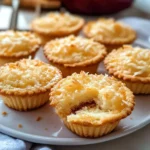
Ingredients
For the Sweet Shortcrust Pastry (Yields enough for 12-14 standard tartlet shells):
- All-Purpose Flour: 1 ¾ cups (210g) – Provides the structure for our pastry.
- Unsalted Butter: ½ cup + 2 tablespoons (140g), cold and cubed – Cold butter is essential for a flaky crust. The small cubes incorporate more easily.
- Powdered Sugar (Icing Sugar): ¼ cup (30g), sifted – Dissolves easily and creates a tender, melt-in-the-mouth texture.
- Large Egg Yolk: 1 – Adds richness, color, and helps bind the dough.
- Ice Water: 2-3 tablespoons – Use sparingly, just enough to bring the dough together. The cold temperature keeps the butter from melting.
- Salt: ¼ teaspoon – Enhances the flavors of the pastry.
For the Luscious Coconut Filling (Fills 12-14 tartlet shells):
- Unsweetened Desiccated Coconut: 2 ½ cups (225g) – The star of the show! Unsweetened allows you to control the overall sweetness. If using sweetened, you may need to reduce the sugar.
- Granulated Sugar: ¾ cup (150g) – Provides sweetness and contributes to the texture. Adjust to your preference if using sweetened coconut.
- Large Eggs: 2 – Bind the filling and provide richness and structure.
- Unsalted Butter: ¼ cup (57g), melted – Adds moisture, richness, and helps with browning.
- Heavy Cream (or Full-Fat Coconut Milk for extra coconut flavor): ½ cup (120ml) – Contributes to a creamy, moist texture.
- Vanilla Extract: 1 teaspoon – Enhances the sweetness and complements the coconut flavor.
- Almond Extract (Optional but Recommended): ¼ teaspoon – A small amount beautifully elevates the coconut flavor.
- Salt: ⅛ teaspoon – Balances the sweetness.
Instructions
Part 1: Preparing the Sweet Shortcrust Pastry
- Combine Dry Ingredients: In a large mixing bowl, whisk together the all-purpose flour, sifted powdered sugar, and salt. This ensures even distribution.
- Cut in the Butter: Add the cold, cubed unsalted butter to the flour mixture. Using a pastry blender, your fingertips, or a food processor (on pulse mode), cut the butter into the flour until the mixture resembles coarse breadcrumbs with some pea-sized pieces of butter remaining. Working quickly is key to keep the butter cold. These small pieces of butter will melt during baking, creating steam and those desirable flaky layers.
- Add Egg Yolk and Water: In a small bowl, lightly whisk the egg yolk with 2 tablespoons of ice water. Make a well in the center of the flour-butter mixture and pour in the egg yolk mixture. Gently combine with a fork or your hands until the dough just starts to come together. If it seems too dry and crumbly, add the remaining tablespoon of ice water, one teaspoon at a time, until it forms a cohesive (but not sticky) dough. Be careful not to overmix, as this will develop the gluten and make the pastry tough.
- Chill the Dough: Turn the dough out onto a lightly floured surface and gently pat it into a flat disc. Wrap it tightly in plastic wrap and refrigerate for at least 1 hour (or up to 2 days). Chilling allows the gluten to relax (preventing shrinkage) and the fat to solidify, making it easier to roll and contributing to flakiness.
Part 2: Shaping and Blind Baking the Tartlet Shells
You’ll need a 12-cup standard muffin tin or individual tartlet tins (approximately 3 inches/7.5 cm in diameter).
- Preheat Oven and Prepare Tins: Preheat your oven to 375°F (190°C). Lightly grease your muffin tin cups or individual tartlet tins if they are not non-stick.
- Roll the Dough: On a lightly floured surface, unwrap the chilled dough. If it’s very firm, let it sit at room temperature for 5-10 minutes to become more pliable. Roll the dough out to about ⅛ inch (3mm) thickness. Work quickly to keep the dough cool.
- Cut and Line Tins: Using a round cookie cutter (approximately 4 inches/10 cm in diameter, or sized appropriately to line your tins with a slight overhang), cut out circles of dough. Gently press each circle into a muffin cup or tartlet tin, ensuring it fits snugly against the bottom and sides. Prick the bottom of each pastry case a few times with a fork. This allows steam to escape and prevents the base from puffing up during baking.
- Chill Again (Crucial Step): Place the lined tins in the refrigerator or freezer for another 15-20 minutes. This further helps prevent shrinkage during baking.
- Blind Bake: Line each pastry case with a small square of parchment paper or a cupcake liner, and fill with pie weights, dried beans, or uncooked rice. This process, known as blind baking, pre-bakes the crust and prevents a “soggy bottom” when the wet filling is added.
- First Bake: Bake for 15 minutes. Carefully remove the parchment paper and weights.
- Second Bake (Sealing the Crust): Return the tartlet shells to the oven and bake for another 5-7 minutes, or until the pastry is lightly golden and looks dry. This step ensures the inside of the crust is cooked through. If you have any cracks, you can optionally brush the hot pastry shells with a little beaten egg white immediately after removing them from the oven to seal them.
- Cool Slightly: Remove the pastry shells from the oven and let them cool in the tins for a few minutes before carefully transferring them to a wire rack to cool further while you prepare the filling. If using a muffin tin, they might be easier to fill while still in the tin. Reduce oven temperature to 350°F (175°C).
Part 3: Preparing the Luscious Coconut Filling
- Combine Wet Ingredients: In a medium mixing bowl, whisk together the granulated sugar and the large eggs until well combined and slightly pale.
- Add Butter, Cream, and Flavorings: Whisk in the melted unsalted butter, heavy cream (or coconut milk), vanilla extract, optional almond extract, and salt until the mixture is smooth and homogenous.
- Fold in Coconut: Add the unsweetened desiccated coconut to the wet mixture. Use a spatula to fold it in gently until all the coconut is evenly moistened. Do not overmix. The mixture will be thick.
Part 4: Assembling and Baking the Coconut Tartlets
- Fill the Tartlet Shells: Spoon the coconut filling evenly into the pre-baked pastry shells. Fill them almost to the top, but be mindful that they might puff slightly during baking. Avoid overfilling to prevent spillage.
- Bake: Place the filled tartlets (either on a baking sheet if using individual tins, or in the muffin tin) into the preheated oven at 350°F (175°C). Bake for 20-25 minutes, or until the filling is set and the tops are beautifully golden brown. The edges of the coconut should look nicely toasted.
- Cool Completely: Once baked, remove the tartlets from the oven. Let them cool in their tins for 10-15 minutes before carefully transferring them to a wire rack to cool completely. They are delicate when hot, so handle with care. Cooling completely allows the filling to set fully and the flavors to meld.
Part 5: Garnishing (Optional)
- Toast Coconut Flakes (if using): Spread a thin layer of coconut flakes on a baking sheet and toast in the oven at 325°F (160°C) for 3-5 minutes, watching carefully as they can burn quickly.
- Decorate: Once the tartlets are completely cool, you can sprinkle them with toasted coconut flakes, place a half or quarter glacé cherry in the center, or give them a light dusting of powdered sugar just before serving.
Nutrition
- Serving Size: One Normal Portion
- Calories: 300-350