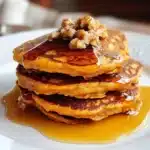
Ingredients
Scale
- 1 Medium Sweet Potato: The star of the show! Choose a medium-sized sweet potato, roughly around 6-8 ounces. The type of sweet potato doesn’t drastically alter the recipe, but varieties like Jewel or Garnet, known for their moistness and sweetness, work particularly well. Ensure your sweet potato is cooked until soft. Baking, microwaving, steaming, or boiling are all viable methods, each imparting a slightly different nuance to the final pancake texture. For baking, roasting the sweet potato brings out a deeper sweetness and slightly drier texture, which can be beneficial for thicker pancakes. Microwaving is the quickest option, perfect for when time is of the essence, though it might result in a slightly wetter sweet potato. Steaming and boiling are also excellent methods, ensuring a moist and tender sweet potato. Regardless of your chosen method, the key is to have a cooked sweet potato that is easily mashable and free from any tough or undercooked parts.
- 2 Large Eggs: The binding agent and protein powerhouse! Large eggs are recommended for this recipe to provide the right balance of moisture and structure. Eggs are crucial for holding the pancakes together, adding richness, and contributing to their overall texture. They also add a significant nutritional boost, packing in protein and essential vitamins. If you’re using extra-large eggs, you might want to start with 1.5 eggs initially and adjust the batter consistency if needed. Conversely, if using medium eggs, you might consider adding a touch more sweet potato to maintain the desired batter thickness. Fresh, high-quality eggs will always yield the best results, both in terms of flavor and binding capabilities.
Instructions
Step 1: Prepare the Sweet Potato
- Cooking Method: Choose your preferred method for cooking the sweet potato. Baking at 400°F (200°C) for 45-60 minutes, microwaving on high for 5-8 minutes (piercing several times first), steaming for 20-25 minutes, or boiling for 15-20 minutes are all viable options. Baking often yields the best flavor and slightly drier texture, while microwaving is the quickest.
- Cool Slightly: Once cooked, let the sweet potato cool slightly until it’s comfortable to handle. This prevents the heat from cooking the eggs prematurely when you mix the batter.
- Peel (Optional but Recommended): While the skin is edible and nutritious, peeling the sweet potato will result in a smoother pancake batter. The choice is yours based on your preference and the desired texture.
- Mash Thoroughly: In a medium-sized mixing bowl, mash the cooked sweet potato thoroughly using a fork or potato masher. Ensure there are no large lumps remaining for a smooth pancake texture. The consistency should be similar to mashed potatoes.
Step 2: Combine Ingredients
- Add Eggs: Crack the eggs directly into the bowl with the mashed sweet potato.
- Mix Well: Using a fork or whisk, thoroughly combine the mashed sweet potato and eggs. Mix until you achieve a smooth, homogenous batter. It should be slightly thick but pourable. Don’t overmix; just ensure everything is well combined. If you are adding any optional spices like cinnamon, nutmeg, vanilla extract, or a pinch of salt, incorporate them at this stage and mix them in evenly.
Step 3: Cook the Pancakes
- Heat a Non-Stick Pan or Griddle: Place a non-stick skillet or griddle over medium heat. Non-stick cookware is essential for this recipe to prevent the pancakes from sticking.
- Add a Touch of Oil or Butter (Optional): While a good non-stick pan might not require it, adding a very small amount of coconut oil, butter, or cooking spray to the pan can help achieve a golden-brown exterior and prevent sticking, especially if your pan is not perfectly non-stick. Use just enough to lightly grease the surface.
- Pour Batter onto Hot Pan: Once the pan is heated, pour ¼ cup of batter onto the hot surface for each pancake. Don’t overcrowd the pan; cook in batches if necessary to maintain even cooking and prevent sticking. Leave enough space between pancakes for easy flipping.
- Cook for 3-4 Minutes per Side: Cook the pancakes for approximately 3-4 minutes per side, or until golden brown and cooked through. The edges should start to look set, and small bubbles may appear on the surface as they cook.
- Flip Carefully: Gently flip the pancakes using a spatula when the bottom is golden brown and they release easily from the pan. Cook the other side for another 2-3 minutes, or until cooked through and golden brown. To ensure they are cooked through, you can gently press down on the center of a pancake; it should feel firm, not squishy.
Step 4: Serve Immediately
- Remove from Pan: Once cooked, remove the pancakes from the pan and place them on a plate.
- Repeat with Remaining Batter: Continue cooking the remaining batter in batches, adding a touch more oil or butter to the pan if needed between batches.
- Serve Warm: These pancakes are best enjoyed immediately while they are warm and fluffy. Serve with your favorite toppings (suggestions in the “How to Serve” section below).
Nutrition
- Serving Size: One Normal Portion
- Calories: 150-200
- Fat: 6-8 grams
- Carbohydrates: 25-30 grams
- Protein: 8-10 grams