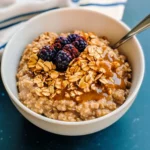
Ingredients
- Oats (1 cup Rolled Oats Recommended): Oats are the heart and soul of this recipe, and for good reason! We recommend using rolled oats, also known as old-fashioned oats, for the best texture and nutritional benefits. Rolled oats offer a delightful chewiness and absorb liquid beautifully, creating a creamy and satisfying oatmeal. However, you can also use other types of oats depending on your preference and what you have available.
- Rolled Oats (Old Fashioned Oats): These are our top choice for this recipe due to their balanced texture – not too mushy, not too firm. They cook relatively quickly, typically in about 5-7 minutes on the stovetop, and hold their shape well. Nutritionally, rolled oats are fantastic. They are a great source of soluble fiber, which is known to help lower cholesterol levels and promote heart health. The fiber also aids in digestion and helps you feel fuller for longer, making this oatmeal a truly satisfying meal.
- Quick Oats (Instant Oats): If you are truly pressed for time, quick oats can be used. They are pre-cooked and rolled thinner than rolled oats, which means they cook much faster, often in just a minute or two. However, quick oats tend to have a softer, almost mushier texture compared to rolled oats. While they are still nutritious, they may not provide quite the same satisfying chewiness as rolled oats. If using quick oats, you may need to slightly adjust the liquid ratio as they absorb liquid more quickly.
- Steel-Cut Oats (Irish Oats): For those who prefer a chewier, nuttier oatmeal, steel-cut oats are an excellent option. They are the least processed type of oats, as they are simply oat groats that have been cut into smaller pieces. Steel-cut oats take longer to cook, usually around 20-30 minutes, but the result is a wonderfully hearty and textured oatmeal. While you can use steel-cut oats for this recipe, you will need to significantly increase the cooking time and potentially the liquid amount. The texture will be different from rolled oats, resulting in a more rustic and less creamy oatmeal.
- Liquid (2 cups Milk or Water, or a Combination): The liquid you choose significantly impacts the flavor and creaminess of your oatmeal. You have several options here, each offering its own unique characteristics.
- Milk (Dairy or Non-Dairy): Using milk, whether dairy or non-dairy, will result in a richer, creamier oatmeal. Dairy milk, such as whole milk or 2% milk, adds a classic creaminess and a subtle sweetness. For a vegetarian option, or if you prefer a plant-based choice, non-dairy milks are excellent substitutes.
- Dairy Milk: Provides calcium, protein, and vitamins, enhancing the nutritional profile of the oatmeal. The fat content in dairy milk contributes to a richer flavor and creamier texture.
- Non-Dairy Milk (Almond Milk, Oat Milk, Soy Milk, Coconut Milk): Each non-dairy milk offers a slightly different flavor and texture.
- Oat Milk: Naturally creamy and slightly sweet, oat milk is an excellent choice for oatmeal as it complements the oat flavor and enhances the creamy texture. It also tends to froth well if you are using it in coffee or lattes, making it a versatile pantry staple.
- Almond Milk: Lower in calories and fat, almond milk provides a lighter texture and a slightly nutty flavor. Unsweetened almond milk is a good option if you want to control the sweetness of your oatmeal.
- Soy Milk: A good source of protein and with a neutral flavor, soy milk is a versatile non-dairy milk that works well in oatmeal. It tends to be slightly thicker than almond milk.
- Coconut Milk (from a carton, not canned): Offers a distinct coconut flavor and a creamy texture. It can add a tropical twist to your peanut butter oatmeal. Be sure to use coconut milk from a carton (beverage type) rather than canned coconut milk, which is much thicker and richer and may be too overpowering for this recipe.
- Water: For a lighter oatmeal and to reduce calories, water is a perfectly acceptable liquid. While it won’t be as creamy as oatmeal made with milk, it still creates a delicious and healthy breakfast. You can always add a splash of milk or cream at the end if you desire a bit more richness.
- Combination of Milk and Water: A 1:1 ratio of milk and water can be a great compromise, offering some creaminess from the milk while keeping the overall dish lighter than using all milk. This is a good option if you want a balance between richness and lightness.
- Milk (Dairy or Non-Dairy): Using milk, whether dairy or non-dairy, will result in a richer, creamier oatmeal. Dairy milk, such as whole milk or 2% milk, adds a classic creaminess and a subtle sweetness. For a vegetarian option, or if you prefer a plant-based choice, non-dairy milks are excellent substitutes.
- Peanut Butter (2 tablespoons Creamy or Crunchy): Peanut butter is the star flavor in this recipe, adding richness, protein, and healthy fats. You can use either creamy or crunchy peanut butter, depending on your textural preference.
- Creamy Peanut Butter: Provides a smooth, velvety texture that blends seamlessly into the oatmeal, creating a uniformly creamy dish. It distributes the peanut butter flavor evenly throughout the oatmeal.
- Crunchy Peanut Butter: Adds a delightful textural contrast with little bits of peanuts scattered throughout the creamy oatmeal. If you enjoy a bit of crunch in your breakfast, crunchy peanut butter is the way to go.
- Natural Peanut Butter (No Sugar Added): For a healthier option, choose natural peanut butter that contains only peanuts and salt. These peanut butters tend to have a more intense peanut flavor and are free from added sugars and oils. You may need to stir natural peanut butter well before using it, as the oil can separate.
- Sweetener (1-2 tablespoons Maple Syrup, Honey, Brown Sugar, or Sugar Substitute): A touch of sweetness enhances the flavors of the peanut butter and oats. You can use your preferred sweetener and adjust the amount to your taste.
- Maple Syrup: Adds a warm, caramel-like sweetness that complements the peanut butter and oats beautifully. Pure maple syrup is a natural sweetener with a distinct flavor.
- Honey: Provides a floral sweetness and a slightly thicker consistency than maple syrup. Honey is another natural sweetener option. Note that honey is not vegan.
- Brown Sugar: Adds a molasses-rich sweetness and a hint of depth. Light or dark brown sugar can be used; dark brown sugar will have a more pronounced molasses flavor.
- Granulated Sugar (White Sugar): A simple and readily available sweetener option. White sugar provides a clean sweetness without adding additional flavors.
- Sugar Substitutes (Stevia, Erythritol, Monk Fruit): For a lower-sugar or sugar-free option, you can use sugar substitutes. Adjust the amount according to the sweetness level of your chosen substitute and your personal preference. Start with a small amount and add more to taste.
- Salt (Pinch): A pinch of salt might seem surprising in oatmeal, but it is crucial for enhancing the flavors of all the other ingredients. Salt balances the sweetness and brings out the nutty notes of the peanut butter and the earthy flavor of the oats. Don’t skip the salt!
- Optional Toppings (Fruits, Nuts, Seeds, Chocolate Chips, etc.): Toppings are where you can really personalize your Vegetarian Peanut Butter Oatmeal and add extra flavor, texture, and nutrition. Consider these delicious and healthy options:
- Fresh Fruits (Banana slices, Berries, Apples, Peaches): Fresh fruits add natural sweetness, vitamins, and a refreshing element. Banana slices are a classic pairing with peanut butter, while berries provide antioxidants and a burst of juicy flavor. Diced apples or peaches add a pleasant crunch and sweetness.
- Nuts (Chopped Peanuts, Almonds, Walnuts, Pecans): Nuts add extra crunch, healthy fats, and protein. Chopped peanuts enhance the peanut butter flavor, while almonds, walnuts, or pecans offer different flavor profiles and textures. Toasting the nuts lightly in a dry pan before adding them as a topping can enhance their flavor and crunch.
- Seeds (Chia Seeds, Flax Seeds, Hemp Seeds, Pumpkin Seeds, Sunflower Seeds): Seeds are packed with nutrients like fiber, omega-3 fatty acids, and minerals. Chia seeds and flax seeds add a slight thickening effect to the oatmeal and are excellent sources of omega-3s. Hemp seeds, pumpkin seeds, and sunflower seeds provide a nutty flavor and satisfying crunch.
- Chocolate Chips (Dark Chocolate, Milk Chocolate, White Chocolate): For a touch of indulgence, a sprinkle of chocolate chips is always a welcome addition. Dark chocolate chips offer antioxidants and a slightly bitter-sweet flavor that complements peanut butter. Milk chocolate chips provide classic sweetness, while white chocolate chips add a creamy sweetness.
- Spices (Cinnamon, Nutmeg, Ginger): Spices add warmth and depth of flavor to your oatmeal. Cinnamon is a classic oatmeal spice that pairs well with peanut butter. Nutmeg adds a subtle warmth and complexity. A pinch of ginger can add a zesty kick.
- Dried Fruits (Raisins, Cranberries, Chopped Dates): Dried fruits add sweetness, chewiness, and concentrated flavor. Raisins are a traditional oatmeal topping, while cranberries and chopped dates offer different flavor profiles and textures.
- Coconut Flakes (Toasted or Unsweetened): Toasted coconut flakes add a crispy texture and a hint of tropical flavor. Unsweetened coconut flakes provide a less sweet option with a similar texture.
- A Drizzle of Extra Peanut Butter or Nut Butter: For peanut butter lovers, an extra drizzle of peanut butter on top is pure bliss. You can also use other nut butters like almond butter, cashew butter, or sunflower seed butter for variety.
- A Swirl of Jam or Jelly: For a PB&J inspired oatmeal, a swirl of your favorite jam or jelly (strawberry, grape, raspberry) adds fruity sweetness and a nostalgic touch.
- A Dollop of Yogurt (Greek Yogurt, Regular Yogurt, Non-Dairy Yogurt): Yogurt adds creaminess, protein, and a slightly tangy flavor that can balance the sweetness of the oatmeal. Greek yogurt provides extra protein and a thicker texture. Non-dairy yogurt options like coconut yogurt or almond yogurt are great for vegan diets.
Instructions
Stovetop Method (Recommended for Best Texture):
- Combine Oats, Liquid, and Salt: In a medium-sized saucepan, combine the rolled oats, your chosen liquid (milk, water, or a combination), and a pinch of salt. Using a saucepan with a heavy bottom will help prevent the oatmeal from sticking and scorching.
- Bring to a Boil: Place the saucepan over medium-high heat and bring the mixture to a gentle boil. Stir occasionally to prevent the oats from sticking to the bottom of the pan.
- Reduce Heat and Simmer: Once boiling, reduce the heat to low and let the oatmeal simmer gently for about 5-7 minutes, or until the oats are cooked through and have absorbed most of the liquid. Continue to stir occasionally during simmering to ensure even cooking and prevent sticking. The oatmeal should thicken to a creamy consistency. If you are using steel-cut oats, the simmering time will be significantly longer, around 20-30 minutes.
- Stir in Peanut Butter and Sweetener: Remove the saucepan from the heat. Stir in the peanut butter and your chosen sweetener (maple syrup, honey, brown sugar, etc.). Stir until the peanut butter is fully melted and incorporated into the oatmeal, creating a creamy and peanut butter-flavored base. Taste the oatmeal and adjust the sweetness as needed.
- Serve and Add Toppings: Pour the Vegetarian Peanut Butter Oatmeal into bowls. Now comes the fun part – adding your favorite toppings! Get creative and sprinkle on fresh fruits, nuts, seeds, chocolate chips, spices, or any other toppings you desire. Serve immediately while warm and enjoy!
Microwave Method (For Quick and Easy Oatmeal):
- Combine Oats, Liquid, and Salt in a Microwave-Safe Bowl: In a large, microwave-safe bowl (make sure it’s large enough to prevent boil-over), combine the rolled oats, your chosen liquid, and a pinch of salt.
- Microwave: Microwave on high power for 1-2 minutes, or until the oatmeal is cooked and has absorbed most of the liquid. Microwave times may vary depending on your microwave’s wattage, so start with 1 minute and check for doneness. If needed, continue microwaving in 30-second intervals until the oatmeal is cooked to your liking. Be cautious as the bowl will be hot.
- Stir in Peanut Butter and Sweetener: Remove the bowl from the microwave. Stir in the peanut butter and your chosen sweetener. Stir until well combined and creamy.
- Serve and Add Toppings: Add your desired toppings and serve immediately. Microwave oatmeal is best enjoyed right away.
Overnight Oats Method (For Cold and Convenient Oatmeal):
- Combine All Ingredients in a Jar or Container: In a jar or airtight container, combine the rolled oats, liquid, peanut butter, sweetener, and a pinch of salt. You can also add chia seeds or flax seeds at this stage for extra thickness and nutrition.
- Stir Well: Stir all the ingredients together thoroughly to ensure everything is well combined.
- Refrigerate Overnight: Cover the jar or container and refrigerate it overnight, or for at least 4 hours. During this time, the oats will soften and absorb the liquid, creating a creamy and cold oatmeal.
- Enjoy Cold or Warm Up (Optional): In the morning, your Vegetarian Peanut Butter Oatmeal is ready to eat straight from the refrigerator. Enjoy it cold as is for a refreshing breakfast or snack. If you prefer warm oatmeal, you can gently heat it in the microwave or on the stovetop until warmed through.
- Add Toppings Before Serving: Before serving, stir the overnight oats and add your favorite toppings. Overnight oats are a fantastic make-ahead breakfast option for busy mornings.
Nutrition
- Serving Size: one normal portion
- Calories: 350-450
- Sugar: 10-20 grams
- Sodium: 150-250 mg
- Fat: 15-20 grams
- Saturated Fat: 3-5 grams
- Carbohydrates: 45-60 grams
- Fiber: 8-10 grams
- Protein: 12-15 grams
- Cholesterol: 0-15 mg