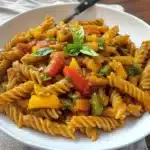
Ingredients
Scale
- 1 Box Gluten-Free Pasta (such as Jovial Brown Rice Pasta): The foundation of our Rasta Pasta is, of course, the pasta itself. Choosing a gluten-free option like Jovial Brown Rice Pasta ensures this dish is accessible to everyone, regardless of dietary restrictions. Brown rice pasta offers a slightly nutty flavor and a satisfying chewiness that holds up beautifully to the rich sauce. Feel free to experiment with other gluten-free pasta varieties like quinoa pasta or lentil pasta if you prefer, keeping in mind that cooking times may vary slightly. The key is to cook the pasta al dente, as it will continue to cook a bit more when added to the sauce.
- 1/2 cup Onion, chopped: Onions are the aromatic base of countless dishes, and they are essential here too. Chopped onion, sautéed at the beginning, releases its savory sweetness, building a foundational flavor profile for the entire pasta dish. Yellow or white onions work best for their mild and versatile flavor. Make sure to chop the onion into small, even pieces so it cooks evenly and softens properly during sautéing.
- 6 oz Mushrooms: Mushrooms add a delightful earthy and umami depth to the Rasta Pasta. They also contribute a meaty texture that is particularly satisfying in a vegan dish. Cremini mushrooms (also known as baby bellas) or white button mushrooms are excellent choices. You can slice or quarter the mushrooms depending on your preference – slicing them thinly will allow them to cook down more and blend into the sauce, while quartering them will provide more substantial bites. Don’t overcrowd the pan when sautéing mushrooms; cook them in batches if necessary to ensure they brown nicely rather than steaming.
- 2 Scallions, sliced: Scallions, also known as green onions, bring a fresh, mild oniony flavor with a hint of sharpness. They are used both during the sautéing process and as a garnish, adding layers of flavor to the dish. Slice the scallions thinly, using both the white and green parts for maximum flavor. The white parts are slightly more pungent and are great for sautéing, while the green parts are milder and perfect for a fresh, vibrant garnish.
- 1 small Tomato, chopped: Tomato adds a touch of acidity and sweetness to the Rasta Pasta, balancing the richness of the coconut milk and the spiciness of the jerk seasoning. A ripe, small tomato, chopped into small pieces, will melt into the sauce, contributing both flavor and moisture. Roma tomatoes or cherry tomatoes work well. If using cherry tomatoes, halve or quarter them. For a deeper tomato flavor, you can use fire-roasted diced tomatoes, but be sure to drain them slightly before adding them to the pan.
- 3 Garlic Cloves, chopped: Garlic is a powerhouse of flavor, and it’s indispensable in Caribbean cuisine. Chopped garlic cloves infuse the olive oil with their pungent aroma and savory taste, adding a crucial layer of depth to the Rasta Pasta. Fresh garlic is always preferred for its vibrant flavor. Mince or finely chop the garlic cloves to release their flavor effectively during sautéing. Avoid burning the garlic, as it can become bitter. Sauté it until fragrant, which usually takes about 30 seconds to a minute.
- 3 Bell Peppers (red, yellow/orange, and green), all sliced: Bell peppers are the stars of Rasta Pasta, contributing vibrant color, sweetness, and a satisfying crunch. Using a combination of red, yellow/orange, and green bell peppers not only creates a visually stunning dish but also offers a complex flavor profile. Red and yellow/orange bell peppers are sweeter, while green bell peppers have a slightly more bitter and grassy flavor. Slicing the bell peppers into strips allows them to cook evenly and retain some texture. Remove the seeds and membranes before slicing.
- 1 can Coconut Milk (full-fat recommended): Coconut milk is the secret to the creamy and luscious sauce that defines Rasta Pasta. Full-fat coconut milk is highly recommended for its richness and flavor. It provides a velvety texture and a subtle sweetness that complements the savory spices and vegetables perfectly. Shake the can well before opening to ensure the cream and liquid are properly mixed. If you prefer a lighter sauce, you can use light coconut milk, but the sauce will be less creamy and flavorful.
- 3 tbsp Jerk Seasoning: Jerk seasoning is the heart and soul of Rasta Pasta, delivering the signature Caribbean flavor. It’s a blend of spices that typically includes allspice, thyme, scotch bonnet peppers (or other hot peppers), garlic, ginger, cloves, cinnamon, and nutmeg. The amount of jerk seasoning can be adjusted to your spice preference. Start with 3 tablespoons and add more to taste if you like it spicier. You can use store-bought jerk seasoning or make your own homemade blend for a truly authentic flavor.
- 1 tsp Turmeric: Turmeric adds a warm, earthy flavor and a vibrant golden color to the Rasta Pasta. It also boasts anti-inflammatory properties, making it a healthy addition to the dish. Ground turmeric is readily available and easy to use. A teaspoon is sufficient to impart both color and flavor without overpowering the other spices.
- 2 tbsp Nutritional Yeast: Nutritional yeast is a deactivated yeast with a cheesy, nutty flavor that is a staple in vegan cooking. It adds a savory umami depth and a slightly cheesy note to the Rasta Pasta, enhancing the overall flavor complexity. It also contributes some B vitamins and protein. Stir in the nutritional yeast towards the end of cooking to preserve its flavor.
- 2 tbsp Olive Oil: Olive oil is used for sautéing the vegetables, providing a healthy fat base and enhancing their flavors. Extra virgin olive oil is a good choice for its rich flavor and health benefits. Heat the olive oil in a skillet to create a non-stick surface for sautéing the onions, garlic, mushrooms, and scallions.
- 1/4 cup Warm Pasta Water (saved from draining the pasta): Pasta water is a secret ingredient that helps to create a silky and emulsified sauce. As pasta cooks, it releases starch into the water, making it slightly thickened and cloudy. Reserving a bit of this starchy water and adding it to the sauce helps to bind the ingredients together, creating a creamy and cohesive texture. Make sure to reserve the pasta water before draining the pasta.
- Sprinkle of Thyme (fresh or dried): Thyme adds a delicate, herbaceous aroma and flavor to the Rasta Pasta. It complements the jerk seasoning and vegetables beautifully. Fresh thyme sprigs can be added during cooking and removed before serving, or dried thyme can be sprinkled in. Fresh thyme provides a brighter flavor, while dried thyme has a more concentrated, earthy taste. Use whichever you have on hand or prefer.
Instructions
- Cook the Pasta: Begin by cooking the gluten-free pasta according to the package directions. It’s crucial to cook the pasta al dente, meaning it should be firm to the bite. Overcooked pasta can become mushy when combined with the sauce. While the pasta is cooking, prepare the vegetables and sauce.
- Reserve Pasta Water: Before draining the pasta, remember to reserve about 1/4 cup of the pasta cooking water. This starchy water will be essential for creating a creamy and emulsified sauce later on. Use a measuring cup or ladle to scoop out the water and set it aside.
- Drain Pasta: Once the pasta is cooked to al dente perfection, drain it in a colander. Rinse briefly with cold water to stop the cooking process and prevent sticking if you are not adding it to the sauce immediately. Set the drained pasta aside.
- Sauté Aromatics: Place a large skillet or Dutch oven over medium heat. Add 2 tablespoons of olive oil to the skillet and let it heat up. Once the oil is shimmering, add the chopped onion, chopped garlic cloves, sliced mushrooms, and sliced scallions (white parts only, reserving the green parts for garnish later). Sauté these aromatics for about 5-7 minutes, or until the onions become translucent and softened, and the mushrooms start to release their moisture and brown slightly. Stir frequently to prevent burning and ensure even cooking.
- Steam Bell Peppers: Add the sliced bell peppers (red, yellow/orange, and green) to the skillet with the sautéed aromatics. Pour in the reserved 1/4 cup of warm pasta water. Reduce the heat to low, cover the skillet with a lid, and allow the bell peppers to steam for 10 minutes. Steaming the bell peppers helps them to soften slightly while retaining their vibrant color and a bit of their crispness. The pasta water will create steam inside the skillet, facilitating the cooking process.
- Incorporate Tomato and Jerk Seasoning: After steaming for 10 minutes, remove the lid from the skillet. Increase the heat to medium. Add the chopped tomato and jerk seasoning to the vegetables in the skillet. Stir well to combine all the ingredients and ensure the jerk seasoning is evenly distributed. Cook for another 2-3 minutes, allowing the tomato to soften slightly and the jerk seasoning to become fragrant.
- Combine Pasta, Turmeric, and Coconut Milk: Add the cooked gluten-free pasta to the skillet with the vegetable and spice mixture. Pour in the can of coconut milk and sprinkle in the turmeric. Stir everything together gently but thoroughly, ensuring the pasta is well coated with the sauce and all the ingredients are evenly combined.
- Simmer and Thicken: Continue to cook the Rasta Pasta for 4-5 minutes, allowing the sauce to heat through and slightly thicken. The coconut milk will reduce slightly and meld with the jerk seasoning and vegetable flavors, creating a creamy and flavorful sauce that clings to the pasta. Stir occasionally to prevent sticking and ensure even cooking.
- Stir in Nutritional Yeast: Finally, stir in the nutritional yeast. Continue to cook for another 2 minutes, stirring constantly. The nutritional yeast will melt into the sauce, adding a cheesy, umami flavor and further thickening the sauce slightly.
- Garnish and Serve: Remove the skillet from the heat. Garnish the Vegan Rasta Pasta with a sprinkle of fresh thyme leaves and the reserved sliced green parts of the scallions for a pop of fresh flavor and visual appeal. Serve immediately and enjoy the vibrant flavors of this Caribbean-inspired vegan dish!
Nutrition
- Serving Size: One Normal Portion
- Calories: 450-550
- Sugar: 8-12g
- Sodium: 400-600mg
- Fat: 25-30g
- Saturated Fat: 15-20g
- Carbohydrates: 50-60g
- Fiber: 8-10g
- Protein: 10-12g
- Cholesterol: 0mg