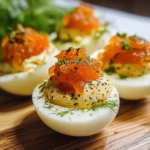
Ingredients
- Eggs: The foundation of any deviled egg, eggs are non-negotiable. For this recipe, we’re looking for large eggs. Why large? Larger eggs provide a more substantial base for the filling and are easier to handle when peeling and halving. When selecting eggs, consider the source. Free-range or pasture-raised eggs often boast richer yolks and a more vibrant color, which can visually enhance your deviled eggs. The freshness of your eggs also matters significantly when it comes to peeling. Slightly older eggs (about a week old) tend to peel much easier than very fresh eggs, as the air sac between the shell and the egg white expands, making separation smoother. If you’re planning ahead, purchasing your eggs a few days in advance can be a smart move for easier peeling.
- Smoked Trout: This is the star of the show, the ingredient that elevates these deviled eggs from classic to gourmet. Smoked trout brings a depth of flavor that’s both smoky and subtly sweet, adding a layer of complexity that perfectly complements the creamy egg yolk base. When choosing smoked trout, you’ll encounter various types: hot-smoked and cold-smoked. For this recipe, hot-smoked trout is recommended. Hot-smoked trout is fully cooked during the smoking process, resulting in a flaky, moist texture and a more pronounced smoky flavor. Cold-smoked trout, on the other hand, has a silkier, almost raw texture and a milder smoke. While cold-smoked trout could be used, hot-smoked trout provides a more robust and satisfying element to the deviled eggs. Look for smoked trout fillets that are skinless and boneless to simplify preparation. The quality of the smoked trout will significantly impact the final flavor, so opt for reputable brands or local fishmongers known for their quality smoked fish.
- Mayonnaise: Mayonnaise is the binding agent and creaminess provider in deviled egg filling. It’s crucial to choose a high-quality mayonnaise for the best flavor. Full-fat mayonnaise is generally preferred for its richer taste and texture. While light mayonnaise can be used, it might result in a slightly less creamy and flavorful filling. Consider exploring different types of mayonnaise. Classic mayonnaise provides a familiar taste, but you could also experiment with flavored mayonnaises like aioli or even a smoked paprika mayonnaise to further enhance the smoky notes of the trout. Homemade mayonnaise, while requiring a bit more effort, offers unparalleled flavor and control over ingredients. If you’re feeling adventurous, making your own mayonnaise can truly elevate these deviled eggs.
- Dijon Mustard: Dijon mustard adds a tangy kick and depth of flavor that cuts through the richness of the mayonnaise and egg yolks. Its sharpness balances the smokiness of the trout and prevents the deviled eggs from being overly heavy. Dijon mustard is preferred over yellow mustard for its more complex and sophisticated flavor profile. There are various types of Dijon mustard available, from classic to grainy. Classic Dijon provides a smooth, sharp flavor, while grainy Dijon adds a subtle textural element. For this recipe, either classic or grainy Dijon will work well, depending on your personal preference. A small amount of Dijon goes a long way, so start with the recommended amount and adjust to your taste.
- Fresh Dill: Fresh dill is the herbaceous counterpoint to the smoky trout and rich egg yolks. Its bright, slightly anise-like flavor adds freshness and vibrancy to the deviled eggs, preventing them from becoming one-dimensional. Fresh dill is essential for this recipe; dried dill will not provide the same fresh, aromatic qualities. When selecting dill, look for bright green, feathery fronds that are fragrant and not wilted. To prepare dill, finely chop the fronds, discarding the tougher stems. Dill is best added fresh, just before serving, to maintain its vibrant flavor and color. If you don’t have fresh dill, fresh chives or parsley could be used as a substitute, although they will impart a slightly different flavor profile.
- Lemon Juice: Lemon juice is the acidic element that brightens the flavors and balances the richness of the other ingredients. It prevents the deviled eggs from tasting heavy or cloying and adds a refreshing zest. Freshly squeezed lemon juice is always preferred over bottled lemon juice for its brighter, more vibrant flavor. The acidity of lemon juice also helps to preserve the color of the egg yolks and prevents them from oxidizing and turning gray. Start with the recommended amount of lemon juice and adjust to your taste. If you prefer a more pronounced lemon flavor, you can add a bit more. Lime juice could be used as a substitute for lemon juice, offering a slightly different citrusy note.
- Black Pepper: Freshly ground black pepper is a simple yet crucial seasoning that adds a subtle spice and enhances the overall flavor of the deviled eggs. Freshly ground pepper is always recommended over pre-ground pepper for its more aromatic and complex flavor. The coarse grind of freshly ground pepper also provides a subtle textural element. Season generously with black pepper to taste, remembering that pepper complements the smoky and creamy flavors of the dish. White pepper can be used as a milder alternative if you prefer a less pronounced pepper flavor or want to avoid black specks in your filling.
- Optional Garnishes: Garnishes are not just for aesthetics; they can also add layers of flavor and texture to your Smoked Trout Deviled Eggs. Consider these optional garnishes to elevate your presentation and taste:
- Extra Smoked Trout: Flakes of smoked trout reserved for garnish can reinforce the primary flavor and create a visually appealing topping.
- Fresh Dill Sprigs: Small sprigs of fresh dill add a touch of green and reinforce the herbaceous notes.
- Lemon Zest: A sprinkle of lemon zest provides a burst of bright citrus aroma and flavor.
- Paprika: A dusting of paprika, especially smoked paprika, can add a subtle smoky sweetness and a pop of color.
- Capers: Capers offer a salty, briny bite that contrasts nicely with the creamy filling and smoky trout.
- Finely Chopped Red Onion or Shallots: These add a mild sharpness and textural crunch.
Instructions
Step 1: Prepare the Eggs
- Hard-Boil the Eggs: Place the eggs in a saucepan and cover them with cold water by about an inch. Bring the water to a rolling boil over high heat. Once boiling, remove the pan from the heat, cover it, and let it stand for exactly 10 minutes for large eggs. This method ensures perfectly cooked yolks that are creamy and not dry or chalky.
- Ice Bath: Immediately after 10 minutes, carefully transfer the eggs to an ice bath (a bowl filled with ice water). This crucial step stops the cooking process and makes the eggs much easier to peel. Let the eggs cool completely in the ice bath for at least 15-20 minutes. The cold water seeps between the egg white and the shell, facilitating easier separation.
- Peel the Eggs: Gently tap each egg all over on a hard surface to crack the shell. Starting under cold running water, peel the eggs. The water helps to lift the shell away from the egg white. If you find a particularly stubborn egg, try peeling it under running water for easier removal. Once peeled, pat the eggs dry with paper towels.
Step 2: Prepare the Deviled Egg Base
- Halve the Eggs: Using a sharp knife, carefully slice each peeled egg lengthwise. Gently separate the yolks from the whites. Place the egg yolks in a medium-sized mixing bowl and arrange the egg white halves on a serving platter or a plate lined with paper towels (to absorb any excess moisture).
- Mash the Yolks: Using a fork, mash the egg yolks thoroughly until they are smooth and crumb-free. This ensures a creamy and consistent filling texture. For an even smoother filling, you can use a fine-mesh sieve to push the mashed yolks through, removing any remaining lumps.
Step 3: Create the Smoked Trout Filling
- Flake the Smoked Trout: If your smoked trout is in larger pieces, gently flake it into smaller, bite-sized pieces using your fingers or a fork. Remove any remaining skin or bones, although good quality skinless and boneless fillets should minimize this. Set aside a small portion of the flaked smoked trout for garnish, if desired.
- Combine Ingredients: Add the mayonnaise, Dijon mustard, lemon juice, and freshly ground black pepper to the bowl with the mashed egg yolks. Mix everything together until well combined and creamy. Taste the mixture and adjust seasoning as needed. You might want to add a pinch of salt if necessary, but be mindful that smoked trout is already somewhat salty.
- Incorporate Smoked Trout and Dill: Gently fold in the flaked smoked trout and the chopped fresh dill into the yolk mixture. Be careful not to overmix, as you want to maintain some texture from the smoked trout. Stir until the smoked trout and dill are evenly distributed throughout the filling.
Step 4: Fill and Garnish the Deviled Eggs
- Fill the Egg Whites: There are several ways to fill the egg whites. The simplest is to use a spoon to scoop the filling and carefully fill each egg white cavity. For a more elegant presentation, you can use a piping bag fitted with a decorative tip (like a star tip). Spoon the filling into the piping bag and pipe it into each egg white half. This creates a professional-looking swirl and adds a touch of visual appeal.
- Garnish (Optional): Garnish the filled deviled eggs as desired. Options include:
- Smoked Trout Garnish: Top each deviled egg with a small flake of reserved smoked trout.
- Fresh Dill Garnish: Place a tiny sprig of fresh dill on top of each egg.
- Lemon Zest Garnish: Sprinkle a tiny amount of lemon zest over the eggs.
- Paprika Garnish: Lightly dust with paprika for color and a hint of flavor.
- Caper Garnish: Place a caper on top of each egg.
- Red Onion/Shallot Garnish: Sprinkle a few finely chopped red onion or shallot pieces.
- Combination Garnish: You can combine garnishes, for example, a flake of smoked trout and a sprig of dill.
Step 5: Chill and Serve
- Chill: Cover the platter of filled deviled eggs loosely with plastic wrap and refrigerate for at least 30 minutes before serving. Chilling allows the flavors to meld together and firms up the filling, making the deviled eggs even more enjoyable. You can chill them for up to 2-3 hours before serving if needed.
- Serve: Remove the deviled eggs from the refrigerator about 10-15 minutes before serving to allow them to come to a slightly less chilled temperature, which enhances their flavor. Arrange them attractively on a serving platter and enjoy!
Nutrition
- Serving Size: One Normal Portion
- Calories: 220-250
- Sodium: 250-350mg
- Fat: 18-22g
- Saturated Fat: 4-5g
- Unsaturated Fat: 14-17g
- Carbohydrates: 2-3g
- Protein: 10-12g
- Cholesterol: 250-300mg