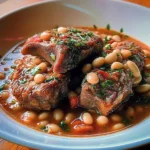
Ingredients
Scale
- Lamb:
- 1.5 – 2 lbs Lamb Shoulder or Leg, cut into 2-inch cubes: Lamb shoulder is highly recommended for this recipe due to its rich flavor and generous marbling. The fat renders beautifully during slow cooking, resulting in incredibly tender and flavorful meat. Lamb leg is a leaner option, but still works wonderfully. Avoid very lean cuts like lamb loin, as they can become dry during the long cooking process. Cutting the lamb into 2-inch cubes ensures even cooking and allows for optimal browning. If you purchase a larger piece of lamb shoulder or leg, simply trim off any excess fat and cut it into the desired size. Bone-in lamb will add even more depth of flavor to the broth, but boneless is perfectly acceptable and easier to work with.
- White Beans:
- 1 lb Dried White Beans (Cannellini, Great Northern, or Navy Beans): Dried beans are essential for achieving the creamy texture and authentic flavor of this dish. Cannellini beans, also known as white kidney beans, are a popular choice due to their large size, creamy texture, and slightly nutty flavor. Great Northern beans are another excellent option, offering a milder flavor and slightly firmer texture. Navy beans, smaller and more delicate, will create a smoother, almost sauce-like consistency. Avoid canned beans for this recipe, as they lack the depth of flavor and creamy texture that slow-cooked dried beans provide. Using dried beans also allows you to control the sodium content of your dish.
- Aromatics & Vegetables:
- 2 Large Onions, roughly chopped: Onions form the aromatic base of this dish. Roughly chopping them is sufficient as they will soften and meld into the stew during cooking. Yellow or white onions are both suitable.
- 4–5 Cloves Garlic, minced: Garlic is another crucial aromatic, adding pungent and savory notes. Freshly minced garlic is always preferred for the best flavor. Adjust the amount to your preference; some may prefer a milder garlic flavor, while others enjoy a more pronounced garlic kick.
- 2 Carrots, peeled and roughly chopped: Carrots add sweetness and color to the stew. Roughly chopping them ensures they cook evenly and contribute to the overall texture.
- 2 Celery Stalks, roughly chopped: Celery provides an earthy and slightly peppery flavor that complements the lamb and beans. Like the onions and carrots, roughly chopping the celery is ideal.
- 1 Red Bell Pepper, roughly chopped (Optional): Red bell pepper adds a touch of sweetness and vibrant color. While optional, it enhances the flavor profile and visual appeal of the dish. Green or yellow bell peppers can also be used, but red bell peppers tend to be sweeter.
- 1–2 Bay Leaves: Bay leaves infuse the stew with a subtle, herbaceous aroma. They are essential for adding depth and complexity to the flavor. Remember to remove them before serving.
- Fresh Rosemary Sprigs (2-3 sprigs) or 1 tsp Dried Rosemary: Rosemary is a classic pairing with lamb, imparting a fragrant, piney, and slightly lemony aroma. Fresh rosemary is preferred if available, but dried rosemary works well too. If using dried rosemary, be mindful that its flavor is more concentrated, so use a slightly smaller amount than fresh.
- Fresh Thyme Sprigs (2-3 sprigs) or 1 tsp Dried Thyme: Thyme complements both lamb and beans beautifully, adding earthy, slightly minty, and floral notes. Similar to rosemary, fresh thyme is ideal, but dried thyme is a good substitute.
- Liquid & Flavor Enhancers:
- 6 Cups Chicken Broth or Lamb Broth (Low Sodium Preferred): Broth forms the liquid base of the stew, adding moisture and flavor. Chicken broth is a versatile option, while lamb broth will further enhance the lamb flavor. Low sodium broth is recommended to control the salt content of the dish, allowing you to adjust seasoning later.
- 1 Cup Dry White Wine (Optional): White wine adds acidity and depth of flavor to the stew. A dry white wine like Sauvignon Blanc or Pinot Grigio works well. If you prefer not to use wine, simply replace it with an equal amount of broth.
- 2 tbsp Tomato Paste: Tomato paste adds umami richness and depth of flavor. It also helps to thicken the sauce slightly.
- 2 tbsp Olive Oil: Olive oil is used for browning the lamb and sautéing the vegetables. It adds flavor and helps to create a rich base for the stew. Extra virgin olive oil is a good choice.
- Salt and Freshly Ground Black Pepper to taste: Seasoning is crucial for bringing out the flavors of all the ingredients. Salt enhances the savory notes, while black pepper adds a touch of warmth and spice. Season generously at each stage of cooking, tasting and adjusting as needed.
- Garnish (Optional):
- Fresh Parsley, chopped: Fresh parsley adds a bright, herbaceous finish and visual appeal.
- Lemon Wedges: Lemon wedges provide a squeeze of acidity that brightens the dish and cuts through the richness.
Instructions
Step 1: Prepare the Beans (Crucial for Creamy Perfection)
- Rinsing: Begin by thoroughly rinsing the dried white beans in a colander under cold running water. This removes any debris and helps to hydrate them slightly.
- Soaking (Recommended Overnight or Quick Soak): Soaking the beans is essential for reducing cooking time and improving their texture.
- Overnight Soak: Place the rinsed beans in a large pot and cover them with plenty of cold water (about 2-3 inches above the beans). Let them soak at room temperature for at least 8 hours, or preferably overnight.
- Quick Soak (if short on time): If you’re pressed for time, you can use a quick soak method. Place the rinsed beans in a pot and cover them with water. Bring to a boil and cook for 2 minutes. Remove from heat, cover, and let stand for 1 hour.
- Draining and Rinsing Again: After soaking, drain the beans in a colander and rinse them again with fresh cold water. This helps to remove any compounds that can cause digestive discomfort.
Step 2: Brown the Lamb for Deep Flavor
- Seasoning the Lamb: Pat the lamb cubes dry with paper towels. This is crucial for achieving a good sear. Season generously on all sides with salt and freshly ground black pepper. Don’t be shy with the seasoning; it’s the foundation of the lamb’s flavor.
- Searing the Lamb: Heat olive oil in a large, heavy-bottomed pot or Dutch oven over medium-high heat. Once the oil is shimmering hot, add the lamb cubes in batches, being careful not to overcrowd the pot. Overcrowding will steam the lamb instead of searing it. Brown the lamb on all sides until deeply golden brown, about 2-3 minutes per side. This searing process creates a flavorful crust and enhances the overall depth of the dish.
- Removing the Lamb: Once browned, remove the lamb from the pot and set aside. Leave any rendered fat in the pot – this will contribute to the flavor of the vegetables.
Step 3: Sauté the Aromatics and Vegetables for Flavor Base
- Sautéing Onions, Carrots, and Celery: Reduce the heat to medium. Add the chopped onions, carrots, and celery to the pot and sauté for 5-7 minutes, or until the onions are softened and translucent. Stir occasionally, scraping up any browned bits from the bottom of the pot – these browned bits (fond) are packed with flavor.
- Adding Garlic and Bell Pepper (Optional): Add the minced garlic and chopped red bell pepper (if using) to the pot and sauté for another minute until fragrant. Be careful not to burn the garlic.
- Tomato Paste Incorporation: Stir in the tomato paste and cook for 1-2 minutes, stirring constantly. Cooking the tomato paste in the oil helps to deepen its flavor and remove any raw taste.
Step 4: Combine and Simmer for Tenderness and Flavor Infusion
- Deglazing the Pot (Optional but Recommended for Extra Flavor): If there are any browned bits stuck to the bottom of the pot, deglaze by pouring in the white wine (if using). Scrape the bottom of the pot with a wooden spoon to loosen any browned bits and let the wine simmer for a minute or two, reducing slightly. This step adds another layer of flavor. If not using wine, you can deglaze with a splash of broth.
- Adding Broth, Beans, and Herbs: Return the browned lamb to the pot. Add the soaked and drained white beans, chicken or lamb broth, bay leaves, rosemary sprigs, and thyme sprigs.
- Bringing to a Simmer and Slow Cooking: Bring the mixture to a simmer, then reduce the heat to low, cover the pot, and simmer gently for 2-3 hours, or until the lamb is fork-tender and the beans are creamy and cooked through. Stir occasionally during cooking to prevent sticking and ensure even cooking. The longer simmering time allows the flavors to meld and deepen beautifully.
- Checking for Doneness: The lamb should be incredibly tender and easily shredded with a fork. The beans should be creamy and soft, not mushy. If the beans are still firm, continue to simmer for longer, checking periodically.
Step 5: Seasoning and Finishing Touches
- Skimming Excess Fat (Optional): If desired, skim off any excess fat that has risen to the surface of the stew with a spoon.
- Removing Bay Leaves and Herb Sprigs: Before serving, remove the bay leaves, rosemary sprigs, and thyme sprigs from the pot.
- Seasoning to Taste: Taste the stew and adjust seasoning with salt and freshly ground black pepper as needed. Don’t be afraid to season generously to bring out the flavors.
- Simmering to Thicken (If Necessary): If the stew is too thin for your liking, you can simmer it uncovered for the last 15-20 minutes to allow it to reduce and thicken slightly. Alternatively, you can mash a small portion of the beans against the side of the pot to thicken the sauce naturally.
Step 6: Serve and Enjoy!
- Serving Hot: Serve the Lamb & White Beans hot, garnished with fresh chopped parsley and lemon wedges, if desired.
Instructional Optimization for SEO and Readability:
- Clear Step Headings: Use bold headings for each step (e.g., Step 1: Prepare the Beans) for better readability and SEO.
- Detailed Sub-steps: Break down each step into smaller, more manageable sub-steps using bullet points or numbered lists.
- Emphasis on Key Techniques: Highlight important techniques like browning the lamb and soaking the beans and explain why they are crucial.
- Time Cues: Include approximate cooking times for each step to guide the reader.
- Descriptive Language: Use descriptive language to engage the reader and make the instructions more appealing (e.g., “shimmering hot oil,” “deeply golden brown,” “aroma filling the kitchen”).
- “Why” Explanations: Briefly explain the purpose of certain steps, such as deglazing, to enhance understanding and appreciation of the recipe.
- Troubleshooting Tips: Implicitly include troubleshooting advice within instructions (e.g., “don’t overcrowd the pot,” “be careful not to burn the garlic”).
Nutrition
- Serving Size: one normal portion
- Calories: 450-550
- Sugar: 5-8g
- Sodium: 400-600mg
- Fat: 20-30g
- Saturated Fat: 8-12g
- Carbohydrates: 30-40g
- Fiber: 10-15g
- Protein: 40-50g
- Cholesterol: 120-150mg