Ingredients
Scale
For the Habichuelas Guisadas (Stewed Red Beans):
- 1 pound (approximately 450 grams) Dried Red Kidney Beans: These are the heart and soul of La Bandera. Opt for dried beans as they offer a richer, more authentic flavor and texture compared to canned. Kidney beans are traditional, but you can also use other types of red beans, such as small red beans, for slight variations in taste and consistency. The key is to ensure they are dried and of good quality. Fresh, plump beans will cook more evenly and deliver a creamier final result.
- 8 cups (approximately 2 liters) Water (for soaking) + Additional Water for Cooking: Water is crucial at every stage. For soaking, use enough to fully submerge the beans, allowing them to rehydrate properly. For cooking, you’ll need additional water, added gradually, to achieve the desired creamy consistency of the stew without drying it out. Filtered water is always a good choice, especially if your tap water has a strong chlorine taste.
- 1 tablespoon Olive Oil or Vegetable Oil: A good quality oil is essential for sautéing the aromatics and building flavor from the base. Olive oil imparts a richer, more fruity note, while vegetable oil provides a neutral base, allowing the other flavors to shine through. Choose an oil you enjoy cooking with and that suits your dietary preferences.
- 1 medium Onion, finely chopped: Onion forms the aromatic foundation of the beans. Yellow or white onions are typically used and provide a balanced sweetness and savory depth. Finely chopping ensures it cooks down evenly and melds seamlessly into the sauce.
- 1 Green Bell Pepper, finely chopped: Green bell pepper adds a subtle sweetness and a slightly grassy note that complements the richness of the beans. It also contributes a touch of vibrant color to the dish. Ensure it’s finely chopped to cook down evenly.
- 2–3 cloves Garlic, minced: Garlic is indispensable for its pungent aroma and savory flavor. Freshly minced garlic is always preferable for maximum flavor impact. Adjust the amount to your preference; some prefer a more garlicky flavor, while others prefer a milder touch.
- 1/4 cup Cilantro, chopped: Fresh cilantro brings a bright, citrusy, and slightly peppery note that elevates the bean stew. It’s best added towards the end of cooking to preserve its fresh flavor and vibrant green color. If you are not a fan of cilantro, you can omit it, but it does contribute a distinctive element to the traditional flavor profile.
- 1 Ají Dulce or Sweet Bell Pepper (optional, but highly recommended): Ají Dulce peppers, though often labeled as “sweet peppers,” have a unique, slightly smoky and fruity flavor that is distinct from regular bell peppers. They are a staple in Dominican cooking and contribute a depth of flavor that’s hard to replicate. If you can find them, they are a game-changer for authentic flavor. If unavailable, you can use a small piece of red bell pepper for a similar, albeit less complex, sweetness.
- 1 teaspoon Dried Oregano: Oregano adds a warm, slightly peppery, and herbaceous note that is quintessential in Dominican cuisine. Dried oregano is ideal as its flavor intensifies during cooking, infusing the beans with its characteristic aroma.
- 1/2 teaspoon Cumin Powder: Cumin brings an earthy, warm, and slightly smoky depth that complements the other spices and enhances the savory notes of the dish. A little goes a long way, so start with half a teaspoon and adjust to taste.
- 1/4 teaspoon Smoked Paprika (optional, but recommended): Smoked paprika adds a subtle smoky depth and a hint of sweetness that enhances the overall flavor complexity of the beans. It’s not essential but adds a lovely layer of flavor that is often found in authentic Dominican recipes.
- 1 Bay Leaf: Bay leaf imparts a subtle, tea-like, and slightly minty aroma that infuses the beans with a delicate complexity. It’s important to remove it before serving.
- Salt and Black Pepper to taste: Salt and pepper are fundamental seasonings that balance and enhance all the other flavors. Season generously throughout the cooking process, tasting and adjusting as needed to achieve the perfect flavor balance.
For the Arroz Blanco (White Rice):
- 2 cups Long Grain White Rice: Long grain white rice is the classic choice for Arroz Blanco in La Bandera. It cooks up fluffy and separate, providing the perfect textural contrast to the beans and meat. Choose a good quality long grain rice for the best results.
- 4 cups Water: The water-to-rice ratio is crucial for perfectly cooked rice. For long grain white rice, a 2:1 ratio (water to rice) is generally recommended. Adjust slightly depending on your rice brand and altitude.
- 1 tablespoon Vegetable Oil or Olive Oil (optional): A touch of oil can help prevent the rice from sticking and contributes to a slightly glossy finish. It’s not strictly necessary but can improve the texture.
- 1 teaspoon Salt: Salt is essential for seasoning the rice and bringing out its natural flavor.
For the Carne Guisada (Stewed Meat):
- 1.5 pounds (approximately 680 grams) Beef Stew Meat (such as chuck roast or beef round), cut into 1-inch cubes: Beef stew meat, like chuck roast or beef round, is ideal for Carne Guisada because it has good marbling and connective tissue that breaks down during slow cooking, resulting in tender and flavorful meat. Cut it into uniform 1-inch cubes for even cooking.
- 1 tablespoon Olive Oil or Vegetable Oil: Used for searing the meat and sautéing the aromatics, similar to the beans. Choose a good quality oil that can withstand high heat.
- 1 medium Onion, finely chopped: Onion, again, forms the aromatic base for the meat stew, adding sweetness and savory depth.
- 1 Red Bell Pepper, finely chopped: Red bell pepper provides a sweeter and slightly fruitier note compared to green bell pepper, complementing the richness of the beef.
- 2–3 cloves Garlic, minced: Garlic is crucial for adding pungent aroma and savory flavor to the meat.
- 1/4 cup Tomato Paste: Tomato paste adds a concentrated tomato flavor, acidity, and richness to the stew. It also helps to thicken the sauce and deepen its color.
- 1/2 cup Chicken Broth or Beef Broth: Broth adds moisture and depth of flavor to the stew. Chicken or beef broth both work well; choose based on your preference or what you have on hand. Low-sodium broth is recommended to control the salt level.
- 1/4 cup Red Wine (optional, but recommended): Red wine adds complexity, depth, and acidity to the stew. It helps to tenderize the meat and create a richer, more flavorful sauce. Dry red wine, like Cabernet Sauvignon or Merlot, is a good choice. If omitting, you can add a splash more broth.
- 1 tablespoon Sofrito (Dominican Sofrito recipe is ideal, or store-bought): Sofrito is a foundational flavor base in Dominican cooking, a blend of herbs, peppers, and aromatics. Homemade Dominican Sofrito is best for authentic flavor, but good quality store-bought sofrito can also be used. It adds a complex layer of savory, herbal, and slightly sweet notes.
- 1 teaspoon Dried Oregano: Oregano again features in the meat stew, providing its characteristic warm, slightly peppery, and herbaceous notes.
- 1/2 teaspoon Cumin Powder: Cumin complements the beef and other spices, adding an earthy, warm, and slightly smoky depth.
- 1/4 teaspoon Smoked Paprika (optional, but recommended): Smoked paprika enhances the smoky and savory notes of the meat stew, adding another layer of flavor complexity.
- 1 Bay Leaf: Bay leaf contributes its subtle, tea-like, and slightly minty aroma to the meat stew.
- Salt and Black Pepper to taste: Essential for seasoning the meat and sauce, balancing the flavors and bringing out the richness of the beef and spices.
- Optional: 1-2 tablespoons chopped Cilantro or Parsley for garnish: Fresh cilantro or parsley can be used as a garnish to add a touch of freshness and visual appeal to the finished Carne Guisada.
Instructions
Part 1: Preparing the Habichuelas Guisadas (Stewed Red Beans)
- Soak the Beans: Begin by rinsing the dried red kidney beans in a colander under cold running water. This removes any debris or impurities. Place the rinsed beans in a large pot and cover them with 8 cups of water. Let them soak for at least 6-8 hours, or preferably overnight. Soaking helps to rehydrate the beans, reducing cooking time and making them easier to digest.
- Drain and Rinse Again: After soaking, drain the beans in a colander and rinse them again under cold running water. This removes the soaking water, which may contain compounds that can cause digestive discomfort.
- Sauté Aromatics: In the same large pot (or a Dutch oven), heat 1 tablespoon of olive oil or vegetable oil over medium heat. Add the chopped onion and green bell pepper and sauté for about 5-7 minutes, or until the onions become translucent and softened, and the peppers are slightly tender. Stir occasionally to prevent burning.
- Add Garlic and Spices: Add the minced garlic, chopped cilantro, ají dulce (if using), dried oregano, cumin powder, and smoked paprika (if using) to the pot. Sauté for another minute, stirring constantly, until fragrant. Be careful not to burn the garlic. The aroma will be wonderfully inviting at this stage.
- Add Beans, Water, and Bay Leaf: Add the drained and rinsed red beans to the pot. Pour in enough fresh water to cover the beans by about 2-3 inches. Add the bay leaf. Bring the mixture to a boil over high heat.
- Simmer and Cook: Once boiling, reduce the heat to low, cover the pot, and simmer gently for 1.5 to 2 hours, or until the beans are tender and creamy. Stir occasionally and add more water if needed to keep the beans submerged and prevent them from drying out. The cooking time will vary depending on the freshness and type of beans. You should be able to easily mash a bean against the side of the pot when they are done.
- Season and Simmer Further: Once the beans are tender, season generously with salt and black pepper to taste. Continue to simmer, uncovered, for another 15-20 minutes, or until the sauce has thickened to your desired consistency. Taste and adjust seasoning as needed. Some prefer a thicker sauce, while others like it slightly more liquid.
- Remove Bay Leaf: Before serving, remember to remove and discard the bay leaf. The Habichuelas Guisadas are now ready. Keep them warm while you prepare the rice and meat.
Part 2: Preparing the Arroz Blanco (White Rice)
- Rinse the Rice (Optional): While not strictly necessary for all types of long grain rice, rinsing the rice can help remove excess starch and result in fluffier, less sticky rice. Place the rice in a fine-mesh sieve and rinse under cold running water until the water runs clear.
- Combine Ingredients in a Pot: In a medium-sized pot with a tight-fitting lid, combine the rinsed rice (or unrinsed rice if you skipped rinsing), 4 cups of water, vegetable oil (if using), and salt.
- Bring to a Boil: Bring the mixture to a rolling boil over high heat, uncovered. You’ll see bubbles forming on the surface and steam escaping.
- Simmer and Steam: Once boiling, immediately reduce the heat to the lowest setting, cover the pot tightly with the lid, and simmer for 18-20 minutes. It’s crucial to keep the lid on and avoid lifting it during this time to allow the rice to steam properly.
- Rest and Fluff: After 18-20 minutes, remove the pot from the heat and let it stand, covered, for another 5-10 minutes. This resting period allows the steam to fully absorb into the rice, resulting in perfectly cooked grains.
- Fluff with Fork: After resting, gently fluff the rice with a fork to separate the grains. Avoid over-stirring, which can make the rice gummy. The Arroz Blanco is now ready. Keep it warm.
Part 3: Preparing the Carne Guisada (Stewed Meat)
- Season and Sear the Beef: Pat the beef stew meat cubes dry with paper towels. Season them generously with salt and black pepper. Heat 1 tablespoon of olive oil or vegetable oil in a large, heavy-bottomed pot or Dutch oven over medium-high heat. Once the oil is hot and shimmering, sear the beef in batches, ensuring not to overcrowd the pot. Sear on all sides until nicely browned, about 2-3 minutes per side. Searing creates a flavorful crust and seals in the juices. Remove the seared beef from the pot and set aside.
- Sauté Aromatics: In the same pot, add the chopped onion and red bell pepper. Sauté for 5-7 minutes, or until the onions are translucent and softened, and the peppers are slightly tender.
- Add Garlic and Tomato Paste: Add the minced garlic and tomato paste to the pot. Sauté for another minute, stirring constantly, until fragrant and the tomato paste has slightly caramelized. This deepens the flavor of the tomato paste.
- Deglaze with Red Wine (Optional): If using red wine, pour it into the pot and scrape up any browned bits from the bottom of the pot (this is called deglazing). Let the wine simmer for a minute or two, allowing the alcohol to evaporate slightly.
- Add Broth, Sofrito, Spices, and Bay Leaf: Add the chicken or beef broth, sofrito, dried oregano, cumin powder, smoked paprika (if using), and bay leaf to the pot. Stir to combine all the ingredients.
- Return Beef to Pot and Simmer: Return the seared beef to the pot. Bring the mixture to a simmer, then reduce the heat to low, cover the pot, and simmer gently for 2-2.5 hours, or until the beef is fork-tender and easily shreds. Stir occasionally and add more broth if needed to keep the meat submerged and prevent the sauce from becoming too thick.
- Thicken Sauce (if needed): If the sauce is too thin at the end of cooking, you can remove the lid and simmer for another 10-15 minutes, or until it has reduced and thickened to your desired consistency.
- Season and Garnish: Season the Carne Guisada with salt and black pepper to taste. Remove and discard the bay leaf. If desired, stir in or garnish with chopped cilantro or parsley for a touch of freshness. The Carne Guisada is now ready.
Part 4: Assembling La Bandera Dominicana
- Serve Hot: La Bandera Dominicana is best served hot and freshly prepared.
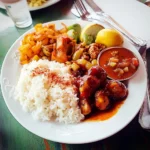
- Plate the Components: On each plate, arrange a generous portion of fluffy Arroz Blanco, a ladleful of flavorful Habichuelas Guisadas, and a serving of tender Carne Guisada. The visual presentation should resemble the Dominican flag, with the white rice representing the white cross, the red beans and meat representing the red and blue rectangles.
- Enjoy! Serve immediately and enjoy the delicious flavors of La Bandera Dominicana!
Nutrition
- Serving Size: One Normal Portion
- Calories: 600-750
- Sugar: 5-10 grams
- Sodium: 600-800 mg
- Fat: 20-30 grams
- Saturated Fat: 8-12 grams
- Carbohydrates: 70-90 grams
- Fiber: 15-20 grams
- Protein: 35-45 grams
- Cholesterol: 80-100 mg