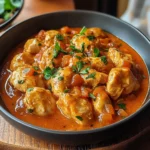
Ingredients
- Chicken: 2.5 – 3 lbs bone-in, skin-on chicken thighs and/or drumsticks. Using bone-in, skin-on chicken is crucial for achieving the rich flavor and moist, tender texture that defines authentic Chicken Paprikash. The bones contribute depth to the sauce as it simmers, and the skin renders down, adding delicious fat and flavor. You can use a mix of thighs and drumsticks for variety, or stick to just one type based on your preference. If you prefer a leaner option, you can use boneless, skinless chicken thighs, but be aware that the sauce may not be quite as rich, and the chicken might dry out slightly faster. Adjust cooking time accordingly if using boneless chicken.
- Onions: 2 large yellow onions, finely chopped. Yellow onions are the workhorse of many savory dishes, and in Chicken Paprikash, they form the aromatic base of the sauce. Finely chopping them ensures they melt seamlessly into the sauce as they cook, releasing their sweet and savory flavors. Don’t rush this step; properly sautéing the onions is crucial for building flavor depth. White or Vidalia onions can also be used as substitutes if yellow onions are unavailable, though yellow onions offer a slightly more robust flavor that holds up well in this dish.
- Paprika: 3 tablespoons sweet Hungarian paprika. This is the star ingredient, and using authentic Hungarian paprika is highly recommended for the most authentic flavor. Hungarian paprika is known for its vibrant color and rich, complex flavor, ranging from sweet and mild to smoky and hot. Sweet paprika is the most common type and provides the classic paprika flavor we expect in this dish. Do not substitute with smoked paprika unless you desire a smoky flavor profile, which is not traditional for Chicken Paprikash. Ensure your paprika is fresh for the best flavor; old paprika can lose its potency.
- Hot Paprika (Optional): 1-2 teaspoons hot Hungarian paprika or cayenne pepper (adjust to taste). For those who enjoy a bit of heat, a touch of hot paprika or cayenne pepper adds a welcome kick to balance the richness of the sauce. Start with a smaller amount and adjust to your spice preference. If you are sensitive to spice, you can omit this ingredient entirely. Hot paprika is preferred for a more authentic Hungarian flavor, but cayenne pepper is a readily available substitute.
- Chicken Broth: 2 cups low-sodium chicken broth. Chicken broth provides the liquid base for the sauce and adds another layer of chicken flavor. Using low-sodium broth allows you to control the saltiness of the dish more precisely. If you only have regular chicken broth, taste the dish before adding any additional salt. Vegetable broth can be used as a substitute if you prefer a less intense chicken flavor or are making a vegetarian version (though this recipe is traditionally chicken-based).
- Sour Cream: 1 cup full-fat sour cream. Sour cream is what gives Chicken Paprikash its signature creamy texture and tangy richness. Full-fat sour cream is essential for achieving the desired creamy consistency; low-fat or fat-free sour cream may curdle or not thicken the sauce properly. For the best results, ensure your sour cream is cold when adding it to the sauce to prevent curdling.
- All-Purpose Flour: 2 tablespoons all-purpose flour. Flour is used as a thickening agent to create the luscious sauce that coats the chicken. All-purpose flour works well in this recipe. For a gluten-free option, you can use a gluten-free all-purpose flour blend or cornstarch (use 1 tablespoon cornstarch mixed with 2 tablespoons cold water to create a slurry, and add it at the end to thicken).
- Vegetable Oil or Lard: 2 tablespoons vegetable oil or lard. Vegetable oil or lard is used for sautéing the onions and browning the chicken. Lard, traditionally used in Hungarian cooking, will add a richer flavor. Vegetable oil is a readily available and neutral-flavored alternative. Olive oil is not recommended for high-heat browning as it has a lower smoke point and can impart a strong flavor.
- Garlic: 2 cloves garlic, minced. Garlic adds another layer of savory flavor to the sauce. Mince the garlic finely to ensure it cooks evenly and releases its flavor fully. Fresh garlic is always preferred over pre-minced garlic for the best flavor.
- Tomato Paste: 1 tablespoon tomato paste. Tomato paste adds a subtle depth of flavor and richness to the sauce, as well as a touch of acidity that balances the creaminess. A little goes a long way.
- Caraway Seeds (Optional): 1 teaspoon caraway seeds. Caraway seeds are a traditional Hungarian spice that adds a distinctive, slightly anise-like flavor to Chicken Paprikash. While optional, they contribute an authentic touch and enhance the overall flavor profile. If you are not familiar with caraway seeds, start with a smaller amount and adjust to taste.
- Salt and Black Pepper: To taste. Salt and black pepper are essential for seasoning and enhancing the flavors of all the other ingredients. Season generously at each stage of cooking, tasting and adjusting as needed. Kosher salt or sea salt is recommended for better flavor. Freshly ground black pepper is always preferred.
- Fresh Parsley or Dill (for garnish): Fresh parsley or dill, chopped, for garnish. Fresh herbs add a bright, fresh element to the finished dish and a pop of color. Parsley and dill are both traditional garnishes for Chicken Paprikash. Choose your preference or use a combination of both.
Instructions
- Prepare the Chicken: Pat the chicken thighs and drumsticks dry with paper towels. This is crucial for achieving a good sear. Season generously on all sides with salt and black pepper. Drying the chicken removes excess moisture, allowing it to brown beautifully when it hits the hot pan. Proper seasoning at this stage is essential as it flavors the chicken from the inside out.
- Brown the Chicken: Heat vegetable oil or lard in a large, heavy-bottomed pot or Dutch oven over medium-high heat. Once the oil is hot and shimmering, add the chicken in batches, skin-side down, and brown for 4-5 minutes per side, until golden brown and crispy. Don’t overcrowd the pot; working in batches ensures proper browning. Overcrowding will steam the chicken instead of searing it. Browning the chicken not only adds flavor but also creates a beautiful color and texture. Remove the browned chicken from the pot and set aside. Do not discard the rendered fat and browned bits in the pot – these are packed with flavor and will form the base of your sauce.
- Sauté the Onions: Reduce the heat to medium. Add the chopped onions to the pot and sauté for 8-10 minutes, stirring occasionally, until softened and translucent. Sautéing the onions until they are soft and translucent is crucial for developing their sweetness and releasing their aromatic compounds. Don’t rush this step; properly sautéed onions are the foundation of a flavorful sauce. If the pot seems dry, add a tablespoon or two of oil or chicken fat.
- Bloom the Paprika: Reduce the heat to low. Add the minced garlic, sweet paprika, and hot paprika (if using) to the onions. Cook for 1-2 minutes, stirring constantly, until fragrant. This step, known as “blooming” the paprika, is essential for unlocking its full flavor and preventing it from tasting bitter. Cooking the paprika in the fat releases its oils and intensifies its aroma and flavor. Be careful not to burn the paprika, as this will make it taste bitter. Stir constantly and keep the heat low.
- Add Tomato Paste and Caraway Seeds (Optional): Stir in the tomato paste and caraway seeds (if using). Cook for 1 minute, stirring constantly, until the tomato paste is fragrant and slightly darkened. Cooking the tomato paste deepens its flavor and removes its raw taste. The caraway seeds, if using, will also become fragrant and release their aromatic oils.
- Deglaze the Pot: Pour in the chicken broth, scraping up any browned bits from the bottom of the pot. These browned bits, known as fond, are packed with flavor and will enrich the sauce. Deglazing ensures you capture all that delicious flavor and incorporate it into the sauce.
- Return Chicken and Simmer: Return the browned chicken to the pot, nestling it into the sauce. Bring the sauce to a simmer, then reduce the heat to low, cover the pot, and simmer gently for 30-40 minutes, or until the chicken is cooked through and fork-tender. Simmering allows the chicken to cook gently and absorb the flavors of the sauce. The chicken is done when its internal temperature reaches 165°F (74°C) and the meat is easily pulled apart with a fork.
- Thicken the Sauce (if needed): In a small bowl, whisk together the all-purpose flour and 1/4 cup of the hot cooking liquid from the pot until smooth. This creates a slurry that will thicken the sauce without lumps. Slowly whisk the flour slurry into the simmering sauce. Simmer for another 5-10 minutes, or until the sauce has thickened to your desired consistency. If you prefer a thicker sauce, you can simmer for longer or add another tablespoon of flour slurry. If you prefer a thinner sauce, add a little more chicken broth.
- Temper the Sour Cream: Remove the pot from the heat. In a separate bowl, gently temper the sour cream by whisking in a few tablespoons of the hot sauce from the pot, one spoonful at a time. This prevents the sour cream from curdling when added to the hot sauce. Tempering the sour cream is a crucial step to ensure a smooth and creamy sauce.
- Stir in Sour Cream and Finish: Gradually stir the tempered sour cream into the pot until fully incorporated and the sauce is smooth and creamy. Do not boil after adding the sour cream, as this can cause it to curdle. Taste and adjust seasoning with salt and black pepper as needed. Heating the sauce after adding sour cream can cause it to separate or curdle. Gentle warming is fine, but avoid boiling.
- Serve: Garnish with fresh parsley or dill and serve hot over your choice of noodles, rice, or dumplings. Enjoy your Hearty Chicken Paprikash!
Nutrition
- Serving Size: one normal portion
- Calories: 450-550
- Sugar: 5-7g
- Sodium: 400-600mg
- Fat: 25-35g
- Saturated Fat: 12-18g
- Carbohydrates: 15-20g
- Fiber: 2-3g
- Protein: 35-45g
- Cholesterol: 180-220mg