Ingredients
- Olive Oil: 2 tablespoons (Extra Virgin recommended)
- Why: Olive oil is the foundation for sautéing your aromatics and browning the turkey. Extra virgin olive oil offers a robust, fruity flavor, but regular olive oil or even avocado oil will work well.
- Ground Turkey: 1.5 lbs (preferably 93% lean)
- Why: The star of the show! Using 93% lean ground turkey provides a good balance of flavor and leanness. You can use 99% lean for an even healthier option, though you might want to add a touch more olive oil or a splash of broth to keep it moist. Ground chicken can also be substituted.
- Yellow Onion: 1 large, finely chopped
- Why: Onions provide a sweet, aromatic base that deepens the overall flavor of the sauce. Shallots or red onion can be used for a slightly different flavor profile.
- Carrots: 2 medium, peeled and finely diced or grated
- Why: Carrots add a subtle sweetness and beautiful color. Grating them helps them melt into the sauce, which is great for picky eaters.
- Celery Stalks: 2 medium, finely diced
- Why: Celery contributes a savory, earthy note and a bit of texture, forming part of the classic “soffritto” or “mirepoix” base.
- Garlic: 4-6 cloves, minced
- Why: Garlic is essential for its pungent, savory kick. Adjust the amount based on your love for garlic! Freshly minced is always best, but garlic powder (about 1 teaspoon) can be used in a pinch.
- Bell Peppers: 1 large (any color: red, yellow, or orange recommended), chopped
- Why: Bell peppers add sweetness, vibrant color, and a slight crunch if not overcooked. Red, yellow, or orange peppers are sweeter than green ones.
- Mushrooms: 8 oz (Cremini or White Button), sliced or chopped
- Why: Mushrooms bring an umami depth and meaty texture that complements the turkey wonderfully. If you’re not a fan, feel free to omit them or substitute with diced zucchini.
- Tomato Paste: 3 tablespoons
- Why: This concentrated tomato product adds an intense, rich tomato flavor and helps to thicken the sauce. “Toasting” it briefly in the pan before adding liquids deepens its flavor.
- Crushed Tomatoes: 1 can (28 oz)
- Why: Crushed tomatoes provide the bulk of the sauce with a good texture – not too chunky, not too smooth.
- Diced Tomatoes: 1 can (14.5 oz), undrained
- Why: These add some chunkier tomato pieces for textural contrast. Fire-roasted diced tomatoes can add a lovely smoky depth.
- Chicken or Vegetable Broth: 1 cup (low sodium preferred)
- Why: Broth adds liquid to the sauce, helping it simmer and develop flavors. It also prevents the sauce from becoming too thick. You can also use reserved pasta water.
- Dried Italian Seasoning: 2 teaspoons
- Why: A convenient blend of classic Italian herbs like oregano, basil, thyme, and rosemary.
- Dried Oregano: 1 teaspoon
- Why: Adds a characteristic robust, earthy, and slightly bitter flavor common in Italian-American sauces.
- Dried Basil: 1 teaspoon
- Why: Provides a sweet, slightly peppery flavor. If using fresh basil, add it at the end (about 1/4 cup chopped).
- Red Pepper Flakes: 1/4 – 1/2 teaspoon (optional, for a touch of heat)
- Why: A pinch of red pepper flakes brightens the sauce and adds a subtle warmth. Adjust to your spice preference.
- Sugar: 1 teaspoon (optional)
- Why: A small amount of sugar can help balance the acidity of the tomatoes. Taste your sauce before adding; you might not need it. Maple syrup or a touch of honey can also work.
- Salt: 1.5 teaspoons (or to taste)
- Why: Essential for enhancing all the other flavors. Start with this amount and adjust after tasting.
- Black Pepper: 1 teaspoon (freshly ground, or to taste)
- Why: Adds a mild, pungent spice. Freshly ground pepper has a much better flavor.
- Pasta: 1 lb (16 oz) of your choice (e.g., Penne, Rigatoni, Rotini, Fettuccine, Spaghetti)
- Why: The vessel for your delicious sauce! Shapes with ridges or hollows like penne, rigatoni, or rotini are excellent for capturing the hearty sauce. Whole wheat pasta can be used for added fiber.
- Fresh Parsley: 1/4 cup, chopped (for garnish)
- Why: Adds a burst of freshness and color when serving.
- Fresh Basil: A few leaves, chopped or torn (for garnish, optional)
- Why: Enhances the fresh herb flavor if you have it on hand.
- Grated Parmesan Cheese: For serving (optional, but highly recommended)
- Why: Adds a salty, nutty, umami finish that elevates the dish. Pecorino Romano is another excellent choice.
Instructions
- Prepare the Vegetables (Mise en Place):
- Finely chop the yellow onion.
- Peel and finely dice or grate the carrots.
- Finely dice the celery stalks.
- Mince the garlic cloves.
- Chop the bell pepper into bite-sized pieces.
- Slice or chop the mushrooms.
- Tip: Having all your vegetables prepped before you start cooking makes the process smoother and more enjoyable. This is known as “mise en place.”
- Cook the Pasta:
- Bring a large pot of salted water to a rolling boil. Add about 1 tablespoon of salt to the water – this seasons the pasta from the inside out.
- Add your chosen pasta (1 lb) to the boiling water. Stir immediately to prevent sticking.
- Cook according to package directions until al dente (tender but still with a slight bite). Overcooked pasta can become mushy when mixed with the sauce.
- Before draining, reserve about 1-2 cups of the starchy pasta water. This water is golden for adjusting the sauce consistency later.
- Drain the pasta and set aside. You can toss it with a tiny drizzle of olive oil to prevent sticking if it will sit for a while, but this isn’t strictly necessary if you’re adding it to the sauce quickly.
- Brown the Ground Turkey:
- While the pasta water is heating, heat 1 tablespoon of olive oil in a large, heavy-bottomed pot, Dutch oven, or deep skillet over medium-high heat.
- Add the ground turkey (1.5 lbs) to the hot pot. Use a wooden spoon or spatula to break it apart into smaller crumbles.
- Cook, stirring occasionally, until the turkey is fully browned and no longer pink, about 8-10 minutes. Don’t rush this step; browning creates flavor.
- If there’s a lot of excess fat/liquid (unlikely with lean turkey, but possible), carefully drain it off.
- Season the browned turkey with about 1/2 teaspoon of salt and 1/4 teaspoon of black pepper.
- Remove the browned turkey from the pot and set it aside on a plate.
- Sauté Aromatics and Vegetables:
- Add the remaining 1 tablespoon of olive oil to the same pot (no need to clean it – those browned bits are flavor!).
- Add the chopped onion, diced carrots, and diced celery. Sauté over medium heat, stirring occasionally, for about 5-7 minutes, or until the vegetables begin to soften and the onion becomes translucent. This is your “soffritto” or flavor base.
- Add the minced garlic and chopped bell pepper to the pot. Cook for another 2-3 minutes, stirring frequently, until the garlic is fragrant and the bell pepper starts to soften. Be careful not to burn the garlic.
- Add the sliced or chopped mushrooms and cook for another 4-5 minutes, until they release their liquid and start to brown.
- Build the Sauce:
- Push the vegetables to one side of the pot and add the tomato paste (3 tablespoons) to the cleared space. Cook, stirring the paste constantly, for 1-2 minutes until it darkens slightly. This “toasting” step caramelizes the tomato paste and deepens its flavor.
- Stir the tomato paste into the vegetables.
- Return the browned ground turkey to the pot.
- Add the crushed tomatoes (28 oz can), diced tomatoes (14.5 oz can, undrained), chicken or vegetable broth (1 cup), dried Italian seasoning (2 tsp), dried oregano (1 tsp), dried basil (1 tsp), and red pepper flakes (1/4 – 1/2 tsp, if using).
- If you’re using sugar to balance acidity, add it now (1 tsp).
- Stir everything together thoroughly to combine.
- Simmer the Sauce:
- Bring the sauce to a gentle simmer. Once simmering, reduce the heat to low, cover the pot, and let it cook for at least 20-30 minutes, stirring occasionally.
- A longer simmer (up to 1 hour or more on very low heat) will allow the flavors to meld and deepen even further. If simmering for longer, you may need to add a splash more broth or some of the reserved pasta water if the sauce becomes too thick.
- After simmering, taste the sauce and adjust seasonings. Add the remaining 1 teaspoon of salt and 3/4 teaspoon of black pepper, or more, to your preference. This is the crucial step to ensure your sauce is perfectly seasoned.
- Combine Pasta and Sauce:
- Add the cooked pasta directly to the pot with the sauce.
- Toss gently but thoroughly to ensure every piece of pasta is well-coated with the delicious sauce.
- If the sauce seems too thick, add a splash or two of the reserved starchy pasta water to reach your desired consistency. The starch in the pasta water helps the sauce cling to the pasta beautifully.
- Let the pasta and sauce simmer together for a minute or two, allowing the pasta to absorb some of the sauce’s flavor.
- Serve and Garnish:
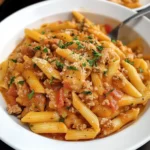
- Ladle the Ground Turkey Pasta into bowls.
- Garnish generously with freshly chopped parsley, a few leaves of fresh basil (if using), and a good sprinkle of grated Parmesan cheese.
- Serve immediately and enjoy the fruits of your labor!
Nutrition
- Serving Size: One Normal Portion
- Calories: 550-650