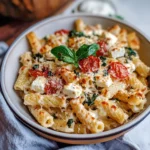
Ingredients
8 ounces Block of Feta Cheese: The star of the show! Opt for a block of feta packed in brine rather than pre-crumbled feta. Block feta is creamier and holds its shape better during baking, resulting in a smoother, more melt-in-your-mouth texture. The briny saltiness of the feta is what gives this dish its signature tangy and savory flavor. Using high-quality feta will make a noticeable difference in the overall taste. If you are sensitive to salt, you can lightly rinse the feta before baking, but be aware that this might slightly reduce its saltiness and flavor intensity. For a richer flavor, consider using sheep’s milk feta or a blend of sheep and goat’s milk feta.
1 pint Cherry or Grape Tomatoes: These small, sweet tomatoes are perfect for roasting. They burst open in the oven, releasing their juices and creating a naturally sweet and slightly acidic sauce base. Cherry tomatoes tend to be a bit sweeter, while grape tomatoes are meatier and hold their shape slightly better. You can use either, or even a mix of both. Look for ripe, vibrant tomatoes for the best flavor. If you are using larger tomatoes, you can roughly chop them into similar sizes as cherry or grape tomatoes to ensure even roasting. During off-season, you can still use cherry or grape tomatoes as they are generally available year-round and maintain good flavor even when not perfectly in season.
4 cloves Garlic: Garlic adds a pungent, aromatic depth to the dish that complements the feta and tomatoes beautifully. Fresh garlic is highly recommended for the best flavor. Minced garlic cloves release their oils and flavor as they roast alongside the tomatoes and feta, infusing the entire dish with a savory garlicky aroma. If you are sensitive to strong garlic flavor, you can roast the garlic cloves whole or halve them instead of mincing. This will mellow out the garlic flavor slightly. Roasted garlic becomes sweet and creamy, adding a more subtle garlicky sweetness to the sauce.
¼ cup Olive Oil: Olive oil is essential for roasting the vegetables and feta. It helps them cook evenly, prevents them from drying out, and adds richness and flavor. Extra virgin olive oil is preferred for its superior flavor and health benefits. The olive oil coats the tomatoes and garlic, allowing them to caramelize slightly as they roast, enhancing their natural sweetness and flavor. It also helps to create a luscious sauce when combined with the tomato juices and melted feta. Using a good quality olive oil will contribute significantly to the overall flavor profile of the dish.
1 teaspoon Dried Oregano: Oregano is a classic Mediterranean herb that pairs perfectly with feta and tomatoes. Its slightly peppery and earthy flavor adds a warm, herbaceous note to the dish. Dried oregano is convenient and readily available, and its flavor intensifies as it roasts. You can also use fresh oregano if you prefer. If using fresh oregano, use about 1 tablespoon, and add it towards the end of the cooking time to preserve its fresh flavor. Other Mediterranean herbs like dried thyme or basil can also be used as substitutes or in combination with oregano for a slightly different flavor profile.
½ teaspoon Red Pepper Flakes (Optional): For those who like a little heat, red pepper flakes add a pleasant kick to the dish. They provide a subtle warmth that balances the richness of the feta and the sweetness of the tomatoes. Adjust the amount of red pepper flakes to your preference – start with a pinch if you are sensitive to spice and increase it if you want a more pronounced heat. If you don’t have red pepper flakes, a pinch of cayenne pepper can be used as a substitute, but be very cautious as cayenne pepper is much hotter. You can also serve red pepper flakes on the side for those who want to add their own level of spice.
Salt and Black Pepper to taste: Salt and pepper are fundamental seasonings that enhance all the flavors in the dish. Season generously with salt and freshly ground black pepper to bring out the best in the tomatoes, feta, and garlic. Taste and adjust the seasoning as needed after baking. Remember that feta is already salty, so start with a moderate amount of salt and add more if necessary. Freshly ground black pepper is preferred for its brighter, more aromatic flavor compared to pre-ground pepper.
1 pound Grain-Free Pasta Alternative (e.g., Zucchini Noodles, Spaghetti Squash, Cauliflower Gnocchi): This is where we make the recipe grain-free! Instead of traditional pasta, we are using a healthier and equally delicious alternative. Zucchini noodles (zoodles) are a light and refreshing option, providing a low-carb and vegetable-rich base. Spaghetti squash, when cooked and shredded, naturally resembles spaghetti and has a slightly sweet and nutty flavor. Cauliflower gnocchi, often found in the frozen section of grocery stores, is another grain-free option that offers a slightly more substantial texture. You can also use other grain-free pasta alternatives like shirataki noodles, hearts of palm noodles, or even roasted vegetables like bell peppers or eggplant strips as a base for the sauce. Choose your preferred grain-free alternative based on your dietary needs and taste preferences. Ensure you prepare your grain-free pasta alternative according to package directions or specific recipes before adding the baked feta and tomato sauce. For zucchini noodles, you might lightly sauté or blanch them to remove excess moisture before tossing them with the sauce. For spaghetti squash, roast or microwave it until tender, then shred the flesh. For cauliflower gnocchi, pan-fry or bake according to package instructions.
Fresh Basil, for garnish (Optional): Fresh basil adds a vibrant, aromatic, and slightly sweet finish to the dish. Its bright green color also provides a beautiful visual contrast to the red tomatoes and creamy feta. Fresh basil is best added at the very end, just before serving, to preserve its fresh flavor and aroma. You can roughly chop the basil leaves or tear them into smaller pieces. Other fresh herbs like parsley, oregano, or chives can also be used for garnish, depending on your preference.
Instructions
- Preheat Your Oven and Prepare Baking Dish: Start by preheating your oven to 400°F (200°C). This temperature is ideal for roasting the vegetables and feta, ensuring they cook evenly and develop a beautiful caramelized flavor. While the oven is preheating, choose an oven-safe baking dish. An 8×8 inch or 9×13 inch baking dish works well, depending on how much sauce you prefer. A smaller dish will result in a thicker sauce, while a larger dish will spread the ingredients out more and create a slightly thinner sauce. Ensure the baking dish is large enough to comfortably hold all the ingredients in a single layer.
- Combine Ingredients in Baking Dish: Place the block of feta cheese in the center of your prepared baking dish. Arrange the cherry or grape tomatoes around the feta. Scatter the minced garlic cloves amongst the tomatoes. Drizzle the olive oil generously over the feta, tomatoes, and garlic, ensuring everything is lightly coated. Sprinkle the dried oregano and red pepper flakes (if using) evenly over the ingredients. Season generously with salt and freshly ground black pepper. Don’t be shy with the seasoning, as it will enhance the flavors of all the ingredients.
- Bake in Preheated Oven: Carefully place the baking dish in the preheated oven. Bake for 30-35 minutes, or until the tomatoes have burst and are softened, and the feta is melted and golden brown on top. The baking time may vary slightly depending on your oven and the size of your baking dish. Keep an eye on the dish and check for doneness around the 30-minute mark. The tomatoes should be juicy and slightly caramelized, and the feta should be soft and easily spreadable. If the feta is not yet golden brown, you can broil it for the last 1-2 minutes of cooking, but watch it closely to prevent burning.
- Mash and Mix: Once the baking is complete, remove the baking dish from the oven. Use a fork or spoon to gently mash the roasted tomatoes and feta together. As you mash, the melted feta will combine with the tomato juices and olive oil to create a creamy and flavorful sauce. Stir everything together until well combined and a smooth, luscious sauce forms. Taste the sauce and adjust the seasoning if needed, adding more salt, pepper, or red pepper flakes to your preference.
- Prepare Grain-Free Pasta Alternative: While the feta and tomatoes are baking, prepare your chosen grain-free pasta alternative according to package directions or recipe instructions. If using zucchini noodles, lightly sauté or blanch them. If using spaghetti squash, roast or microwave it and shred the flesh. If using cauliflower gnocchi, pan-fry or bake it. Ensure your grain-free pasta alternative is cooked and ready to be combined with the sauce as soon as the baking is finished.
- Combine Sauce and Grain-Free Pasta Alternative: Add your cooked grain-free pasta alternative directly to the baking dish with the baked feta and tomato sauce. Toss everything together gently but thoroughly until the grain-free pasta alternative is evenly coated in the flavorful sauce. Ensure every strand or piece of your chosen alternative is covered in the delicious feta and tomato mixture.
- Garnish and Serve Immediately: Garnish the Grain-Free Baked Feta Pasta with fresh basil leaves, if desired. Serve immediately while it’s hot and the sauce is creamy and luscious. This dish is best enjoyed fresh, but leftovers can be stored in the refrigerator and reheated. Serve it as a main course, a side dish, or a light lunch. It pairs well with a side salad or grilled chicken or fish for a more complete meal.
Nutrition
- Serving Size: one normal portion
- Calories: 450-550
- Fat: 35-45g
- Carbohydrates: 15-25g
- Fiber: 5-8g
- Protein: 20-25g