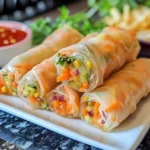
Ingredients
For the Spring Rolls:
- Gluten-Free Rice Paper Wrappers: These are the foundation of our spring rolls, providing that delicate, slightly chewy texture. Look for wrappers specifically labeled “gluten-free” to ensure they are made without wheat or other gluten-containing ingredients. Most brands available in Asian grocery stores and many mainstream supermarkets are naturally gluten-free, made from rice flour, tapioca flour, and water. You’ll need about 12-16 wrappers, depending on how many spring rolls you want to make.
- Rice Vermicelli Noodles (Gluten-Free): These thin, delicate noodles add substance and a pleasant texture to the spring rolls. Ensure they are made from rice flour and are labeled gluten-free. You’ll need approximately 4 ounces (about 1 cup dry) of rice vermicelli noodles.
- Carrots: Carrots provide a lovely sweetness, crunch, and vibrant orange color. You’ll need 2 medium carrots, peeled and julienned (thinly sliced into matchsticks). Julienning ensures they are easy to roll and provide a consistent texture throughout the spring roll.
- Cucumber: Cucumber adds a refreshing coolness and crispness. Use 1/2 of a large cucumber or 1 small cucumber, julienned or thinly sliced. You can peel it if you prefer a less bitter taste, but leaving the skin on adds nutrients and fiber.
- Bell Peppers (Red, Yellow, or Orange): Bell peppers contribute sweetness, color, and a slight crunch. Choose 1 bell pepper of your preferred color (or a mix for visual appeal), seeded and julienned. Red and yellow peppers tend to be sweeter than green ones.
- Green Leaf Lettuce or Butter Lettuce: Lettuce provides a soft, leafy base and helps hold the other ingredients together. You’ll need 4-6 large leaves of lettuce, washed and patted dry. Butter lettuce or green leaf lettuce are ideal because they are pliable and easy to roll.
- Fresh Mint Leaves: Mint adds a burst of refreshing, aromatic flavor. You’ll need about 1/4 cup of fresh mint leaves, roughly chopped or left whole, depending on your preference.
- Fresh Cilantro Leaves: Cilantro contributes a bright, citrusy, and slightly peppery flavor that complements the other ingredients beautifully. You’ll need about 1/4 cup of fresh cilantro leaves, roughly chopped or left whole.
- Fresh Basil Leaves (Thai Basil or Sweet Basil): Basil adds a slightly sweet and peppery note, enhancing the overall flavor profile. Thai basil has a distinct anise-like flavor that works particularly well in spring rolls, but sweet basil is also delicious. You’ll need about 1/4 cup of fresh basil leaves, roughly chopped or left whole.
- Cooked Shrimp, Tofu, or Chicken (Optional Protein): For a heartier spring roll, you can add a protein source. Cooked shrimp (about 1/2 pound, peeled and deveined), firm tofu (pressed and sliced or crumbled), or cooked chicken (shredded or thinly sliced) are excellent choices. These are optional, and the spring rolls are delicious even without added protein.
- Water (for soaking rice paper wrappers): You’ll need a shallow dish or pie plate filled with warm water for softening the rice paper wrappers.
For the Dipping Sauce (Optional but Highly Recommended):
While the spring rolls themselves are incredibly flavorful, a delicious dipping sauce elevates them to another level. Here’s a simple and popular peanut dipping sauce recipe:
- Peanut Butter (Smooth or Crunchy): Peanut butter forms the base of the sauce, providing richness and nutty flavor. Use 1/4 cup of smooth or crunchy peanut butter. For a smoother sauce, smooth peanut butter is recommended.
- Rice Vinegar: Rice vinegar adds a tangy and slightly sweet element, balancing the richness of the peanut butter. You’ll need 2 tablespoons of rice vinegar.
- Soy Sauce or Tamari (Gluten-Free): Soy sauce (or tamari for gluten-free) provides a savory, umami flavor. Use 2 tablespoons of soy sauce or tamari. Ensure you use gluten-free tamari if you need the sauce to be completely gluten-free.
- Honey or Maple Syrup: A touch of sweetness balances the savory and tangy flavors. Use 1 tablespoon of honey or maple syrup. Maple syrup is a great vegan alternative to honey.
- Lime Juice: Fresh lime juice adds brightness and acidity. You’ll need the juice of 1/2 lime (about 1 tablespoon).
- Sesame Oil: Sesame oil adds a nutty aroma and flavor. Use 1 teaspoon of sesame oil.
- Warm Water: Warm water helps to thin out the sauce to the desired consistency. You’ll need 2-4 tablespoons of warm water, or more to adjust consistency.
- Red Pepper Flakes (Optional): For a touch of heat, add a pinch of red pepper flakes to taste.
Instructions
1. Prepare the Vegetables and Protein (if using):
- Julienne or Thinly Slice Vegetables: Wash and prepare all your vegetables. Julienne the carrots, cucumber, and bell pepper into thin matchsticks. Shred or thinly slice any other vegetables you are using.
- Prepare Protein (if using): If using shrimp, tofu, or chicken, ensure it is cooked and prepared. Shrimp should be peeled, deveined, and cooked (boiled, grilled, or pan-fried). Tofu should be pressed to remove excess water and then sliced or crumbled and pan-fried or baked. Chicken should be cooked and shredded or thinly sliced.
2. Cook the Rice Vermicelli Noodles:
- Boil Water: Bring a pot of water to a boil.
- Cook Noodles: Add the rice vermicelli noodles to the boiling water and cook according to package directions. This usually takes just a few minutes, until the noodles are tender but still slightly firm (al dente). Be careful not to overcook them, as they can become mushy.
- Drain and Rinse: Once cooked, immediately drain the noodles and rinse them under cold water to stop the cooking process and prevent them from sticking together.
- Set Aside: Set the cooked noodles aside to drain completely. You can lightly toss them with a tiny bit of sesame oil to prevent sticking if desired.
3. Prepare the Dipping Sauce (Optional):
- Combine Ingredients: In a small bowl, whisk together the peanut butter, rice vinegar, soy sauce (or tamari), honey (or maple syrup), lime juice, and sesame oil.
- Thin with Water: Gradually add warm water, 1 tablespoon at a time, whisking until the sauce reaches your desired consistency. You want it to be thick enough to cling to the spring rolls but thin enough to dip easily.
- Adjust Flavor: Taste and adjust the flavors as needed. Add more lime juice for tanginess, honey for sweetness, or soy sauce for saltiness. Stir in red pepper flakes if you want a spicy kick.
- Set Aside: Set the dipping sauce aside while you assemble the spring rolls.
4. Assemble the Spring Rolls:
- Prepare Soaking Station: Fill a shallow dish or pie plate with warm water. Have your prepared vegetables, noodles, protein (if using), lettuce leaves, and herbs ready and arranged near your soaking station and a clean work surface.
- Soak Rice Paper Wrapper: Take one rice paper wrapper and carefully submerge it in the warm water for a few seconds (usually 5-10 seconds). You want it to become pliable and soft but not too soggy, as it will continue to soften as you work. Follow the instructions on your specific rice paper wrapper package, as soaking times can vary slightly between brands.
- Lay Flat: Carefully remove the softened rice paper wrapper from the water and lay it flat on a clean, slightly damp work surface (a cutting board or clean plate works well).
- Layer Ingredients: Working quickly but gently, arrange your fillings in the center of the rice paper wrapper, closer to the edge closest to you. Start with a lettuce leaf as a base to prevent the wrapper from tearing and to create a neat roll. Then layer on some rice noodles, carrots, cucumber, bell pepper, protein (if using), mint, cilantro, and basil leaves. Don’t overfill the wrapper, as it will be harder to roll and may tear.
- Roll the Spring Roll:
- Fold: Fold the edge of the rice paper wrapper closest to you over the fillings, tucking it in snugly.
- Fold Sides: Fold in the sides of the wrapper, like you are wrapping a burrito.
- Roll Tightly: Continue rolling away from you, tightly but gently, until you have a neatly rolled spring roll. The wrapper will be slightly sticky and will seal itself.
- Repeat: Repeat the soaking and rolling process with the remaining wrappers and fillings until you have used up all your ingredients or have made the desired number of spring rolls.
5. Serve and Enjoy!
- Arrange on a Platter: Arrange the finished spring rolls on a platter. You can cut them in half diagonally for easier dipping and a more elegant presentation if desired.
- Serve Immediately or Chill: Spring rolls are best served fresh or within a few hours of making them. If you are not serving them immediately, cover them loosely with a damp paper towel and plastic wrap and store them in the refrigerator for up to a few hours to prevent the rice paper from drying out.
- Serve with Dipping Sauce: Serve the spring rolls with the prepared peanut dipping sauce
Nutrition
- Serving Size: one normal portion
- Calories: 150-250