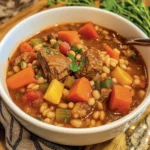
Ingredients
- Beef Stew Meat: 1.5 lbs (approximately 700g). For the best results, choose beef stew meat that is cut from chuck roast. Chuck roast is known for its marbling and connective tissue, which breaks down during slow cooking, resulting in incredibly tender and flavorful beef. Look for pieces that are about 1-2 inches in size. You can often find pre-cut stew meat at the grocery store, but if you prefer, you can buy a chuck roast and cut it into cubes yourself. Trimming excess fat is recommended, but leaving some fat will contribute to the richness of the stew. Alternatively, you can use other cuts of beef like round roast or brisket, but chuck roast is generally considered the best option for stewing.
- Pearl Barley: 1 cup (approximately 200g). Pearl barley is the star grain in this stew, providing a wonderful chewy texture and nutty flavor. It’s also a great source of fiber and nutrients. Make sure to use pearl barley, not quick-cooking barley, as quick-cooking barley can become mushy during the long simmering time required for this stew. Rinsing the pearl barley before adding it to the stew is a good practice to remove any excess starch and ensure a cleaner flavor. If you absolutely cannot find pearl barley, you could consider using hulled barley, but pearl barley is preferred for its texture and cooking time in this recipe.
- Olive Oil: 2 tablespoons. Olive oil is used for browning the beef and sautéing the vegetables. It adds a subtle fruity flavor and is a healthy fat option. Extra virgin olive oil is a good choice for its flavor and nutritional benefits. If you don’t have olive oil, you can substitute it with other cooking oils like vegetable oil, canola oil, or avocado oil. Butter can also be used for browning and sautéing, which will add a richer flavor, but olive oil is generally a healthier and lighter option for this stew.
- Yellow Onion: 1 large, chopped. Yellow onion forms the aromatic base of the stew. It provides a mild, sweet flavor that mellows as it cooks and blends beautifully with the other ingredients. Make sure to chop the onion into uniform pieces, about ½ inch in size, so they cook evenly. If you prefer a milder onion flavor, you can use white onions. For a slightly stronger flavor, you can use red onions, but yellow onions are typically the best choice for stews.
- Carrots: 2 large, peeled and chopped. Carrots add sweetness, color, and texture to the stew. Peel the carrots and chop them into rounds or chunks, about ½ inch thick. This size ensures they cook through but still retain some texture in the finished stew. Baby carrots can be used as a convenient alternative, just make sure to chop them into smaller pieces so they cook evenly. You can also use different varieties of carrots, such as rainbow carrots, for added visual appeal.
- Celery: 2 stalks, chopped. Celery contributes a subtle savory and slightly peppery flavor to the stew. It also adds a pleasant crunch. Wash the celery stalks thoroughly and chop them into pieces similar in size to the carrots and onions, about ½ inch thick. Make sure to include the leafy tops of the celery stalks as they are packed with flavor. If you don’t have celery, you can omit it, but it does add a characteristic flavor to classic stews.
- Garlic: 2 cloves, minced. Garlic is essential for adding depth and aromatic complexity to the stew. Mince the garlic finely to release its flavor effectively. Fresh garlic is always preferred for its robust flavor, but if you’re in a pinch, you can use ½ teaspoon of garlic powder as a substitute. Adding the garlic towards the end of sautéing the vegetables prevents it from burning and ensures its flavor remains prominent in the stew.
- Beef Broth: 6 cups (approximately 1.4 liters). Beef broth is the liquid base of the stew and adds rich beefy flavor. Use low-sodium beef broth to control the salt content of the stew. You can also use homemade beef broth for an even more flavorful stew. If you don’t have beef broth, you can substitute it with beef bouillon cubes or granules dissolved in water. Chicken broth or vegetable broth can also be used, but beef broth will provide the most authentic flavor for a beef stew.
- Diced Tomatoes: 1 (14.5 oz) can, undrained. Diced tomatoes add acidity, sweetness, and moisture to the stew. Using undrained diced tomatoes contributes to the overall liquid volume and flavor of the stew. You can use regular diced tomatoes or fire-roasted diced tomatoes for a slightly smoky flavor. Crushed tomatoes can also be used for a smoother texture. If you prefer fresh tomatoes, you can use about 2 cups of diced fresh tomatoes, but canned tomatoes are generally more flavorful and convenient for stews.
- Tomato Paste: 2 tablespoons. Tomato paste is a concentrated form of tomatoes that adds a deep, rich tomato flavor and enhances the color of the stew. It also helps to thicken the stew slightly. A little tomato paste goes a long way, so 2 tablespoons is usually sufficient. You can store leftover tomato paste in the refrigerator for future use.
- Dried Thyme: 1 teaspoon. Dried thyme is a classic herb that pairs beautifully with beef and vegetables. It adds a warm, earthy, and slightly minty flavor to the stew. If you prefer fresh thyme, you can use 1 tablespoon of fresh thyme leaves. Other herbs that complement beef stew include bay leaf, rosemary, and oregano.
- Dried Bay Leaf: 1. Bay leaf adds a subtle, aromatic depth to the stew. It’s traditionally used in stews and soups to enhance the overall flavor profile. Remember to remove the bay leaf before serving the stew as it is not meant to be eaten. One bay leaf is usually sufficient for this recipe.
- Salt: To taste. Salt is essential for seasoning and enhancing the flavors of all the ingredients in the stew. Start with a teaspoon of salt and adjust to taste as needed. Remember that you can always add more salt, but you can’t remove it, so it’s best to season gradually. Use kosher salt or sea salt for the best flavor.
- Black Pepper: To taste. Black pepper adds a warm, slightly spicy kick to the stew. Freshly ground black pepper is preferred for its more intense flavor. Season generously with black pepper, starting with about ½ teaspoon and adjusting to taste.
- Optional Garnishes: Fresh parsley, chopped, or crusty bread for serving. Fresh parsley adds a pop of color and freshness to the finished stew. Chopped parsley can be sprinkled over each serving just before serving. Crusty bread is perfect for soaking up the delicious broth and enjoying alongside the stew. Sourdough bread, baguette, or ciabatta are all excellent choices.
Instructions
- Prepare the Beef: Begin by patting the beef stew meat dry with paper towels. This step is crucial for achieving a good sear when browning, which enhances the flavor of the beef. Season the beef generously with salt and black pepper. Evenly coating the beef with seasoning at this stage ensures that every piece is flavorful.
- Brown the Beef: Heat olive oil in a large Dutch oven or heavy-bottomed pot over medium-high heat. Once the oil is shimmering and hot, add the beef in batches, being careful not to overcrowd the pot. Overcrowding will steam the beef instead of browning it. Brown the beef on all sides until it develops a rich, golden-brown crust. This browning process, known as the Maillard reaction, is key to developing deep, savory flavors in the stew. Remove the browned beef from the pot and set aside.
- Sauté Aromatics: In the same pot, reduce the heat to medium. Add the chopped onion and cook for about 5-7 minutes, stirring occasionally, until softened and translucent. Sautéing the onion first releases its sweetness and creates a flavorful base for the stew. Next, add the chopped carrots and celery to the pot and cook for another 5-7 minutes, stirring occasionally, until they begin to soften slightly. Cooking the carrots and celery with the onion builds layers of flavor and ensures they are tender in the final stew.
- Add Garlic and Tomato Paste: Add the minced garlic to the pot and cook for about 1 minute, or until fragrant, stirring constantly to prevent it from burning. Garlic burns quickly, so it’s important to add it after the onions, carrots, and celery have softened. Stir in the tomato paste and cook for about 1-2 minutes, stirring constantly, until it darkens slightly. Cooking the tomato paste caramelizes it and intensifies its flavor, adding depth and richness to the stew.
- Deglaze the Pot: Pour in a splash of beef broth to deglaze the pot, scraping up any browned bits from the bottom of the pot with a wooden spoon. These browned bits, known as fond, are packed with flavor and will enhance the overall taste of the stew.
- Return Beef and Add Remaining Ingredients: Return the browned beef to the pot. Add the pearl barley, diced tomatoes (undrained), beef broth, dried thyme, and bay leaf. Stir everything together to combine all the ingredients.
- Simmer the Stew: Bring the stew to a boil, then reduce the heat to low, cover the pot, and simmer gently for 1.5 to 2 hours, or until the beef is fork-tender and the barley is cooked through and tender. Simmering the stew low and slow allows the flavors to meld together beautifully and tenderizes the beef and barley perfectly. Stir the stew occasionally during simmering to prevent sticking and ensure even cooking.
- Season and Serve: After simmering, remove the bay leaf. Taste the stew and adjust seasoning with salt and black pepper as needed. Remember that flavors will continue to develop as the stew sits. If the stew is too thick, you can add a little more beef broth to reach your desired consistency. Ladle the hot stew into bowls and garnish with fresh parsley, if desired. Serve immediately with crusty bread for dipping and enjoying every last drop.
Nutrition
- Serving Size: one normal portion
- Calories: 350-450