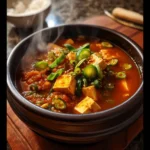
Ingredients
Scale
- For the Stew:
- 1 tablespoon neutral cooking oil (like canola or vegetable)
- 5 ounces (150g) pork belly, sliced into thin, bite-sized pieces
- 1/2 large onion (about 1 cup), diced
- 1 medium potato (about 1 cup), peeled and cut into 1/2-inch cubes
- 2 cloves garlic, minced
- 4 cups (1 liter) anchovy stock or rice water (see notes)
- 1/4 cup doenjang (Korean fermented soybean paste)
- 1 tablespoon gochujang (Korean chili paste), optional for extra flavor and spice
- 1 medium Korean zucchini or regular zucchini (about 1 cup), cut into 1/2-inch cubes
- 1/2 block (7-8 ounces or 200g) medium-firm tofu, cut into 1-inch cubes
- 1–2 teaspoons gochugaru (Korean chili flakes), adjust to your spice preference
- For Garnish:
- 1 scallion, thinly sliced
- 1 fresh chili pepper (green or red, like Serrano), thinly sliced (optional)
Instructions
- Build the Flavor Base: Place a medium-sized heavy-bottomed pot or a Korean earthenware pot (ttukbaegi) over medium heat. Add the tablespoon of cooking oil. Once it shimmers, add the sliced pork belly. Cook for 3-4 minutes, stirring occasionally, until the pork is lightly browned and some of the fat has rendered out. This step is crucial for creating a rich, savory foundation for the stew.
- Sauté the Aromatics: Add the diced onion to the pot with the pork. Sauté for another 2-3 minutes until the onion becomes translucent and fragrant. Add the minced garlic and cook for 30 seconds more until you can smell its aroma. Be careful not to burn the garlic.
- Incorporate the Doenjang: Add the doenjang and the optional gochujang to the pot. Using your spoon or spatula, stir and “fry” the pastes in the rendered pork fat for about 1-2 minutes. This step is a game-changer; it toasts the pastes, blooming their flavors and removing any raw, harsh notes, resulting in a much deeper, nuttier, and more complex taste.
- Add Liquid and Potatoes: Pour in your chosen liquid (anchovy stock or rice water). Use your spoon to stir everything together, ensuring the doenjang and gochujang dissolve completely into the liquid. Add the cubed potatoes. Bring the stew to a boil, then reduce the heat to a steady simmer.
- Simmer and Soften: Cover the pot and let the stew simmer for about 10-12 minutes. This allows the potatoes to cook through and all the flavors to meld together beautifully. The broth will begin to thicken slightly.
- Add Vegetables and Tofu: Once the potatoes are tender (you can test one with a fork), add the cubed zucchini, the cubed tofu, and the gochugaru (Korean chili flakes). Gently stir to incorporate, being careful not to break up the tofu too much.
- Final Simmer: Continue to simmer for another 5-7 minutes, until the zucchini is tender but still has a slight bite. Avoid overcooking the zucchini, as it can become mushy. Taste the broth at this point. If you feel it needs more saltiness, you can add a tiny bit more doenjang or a splash of soy sauce, but typically the doenjang provides enough salt.
- Garnish and Serve: Turn off the heat. Stir in the sliced scallions and optional fresh chili peppers. The residual heat will wilt them slightly while keeping their fresh flavor. Your Doenjang Jjigae is now ready to be served immediately.
Nutrition
- Serving Size: One Normal Portion
- Calories: 350-450