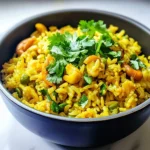
Ingredients
1. Rice:
The foundation of our dish, the type of rice you choose significantly impacts the final texture and flavor.
- Basmati Rice: My personal favorite and highly recommended for curried rice. Basmati is a long-grain rice known for its delicate, nutty flavor and fluffy texture when cooked. It absorbs flavors beautifully without becoming mushy, making it ideal for dishes where you want distinct grains and a pleasant aroma. Its slightly floral scent also complements the spices in curry powder wonderfully.
- Jasmine Rice: Another excellent long-grain option, jasmine rice is known for its slightly sweet, fragrant aroma and softer texture compared to basmati. It also works well in curried rice, especially if you prefer a slightly stickier consistency.
- Long Grain White Rice: A readily available and budget-friendly option. While it lacks the distinct aroma of basmati or jasmine, it still works well as a base for curried rice. Just be mindful of the cooking time and water ratio to avoid it becoming too sticky.
- Brown Rice: For a healthier, nuttier, and chewier option, brown rice can be used. However, brown rice requires longer cooking times and more liquid compared to white rice. You’ll need to adjust the cooking time and broth quantity accordingly. The earthier flavor of brown rice also pairs well with bolder curry flavors.
- Avoid Short Grain Rice (like Arborio or Sushi Rice): These types of rice are higher in starch and tend to become creamy or sticky when cooked, which is not ideal for curried rice where we want distinct, fluffy grains.
2. Curry Powder:
The heart and soul of curried rice, curry powder is a blend of spices that provides the signature warm, earthy, and slightly spicy flavor.
- Choosing Your Curry Powder: Curry powder blends vary greatly in flavor and heat level. Experiment to find your favorite!
- Mild Curry Powder: Great for those who are sensitive to spice or prefer a more subtle flavor.
- Medium Curry Powder: A good all-purpose option offering a balanced flavor with a moderate level of heat.
- Madras Curry Powder: Known for its deeper, richer flavor and noticeable heat. If you enjoy a spicier kick, Madras curry powder is an excellent choice.
- Garam Masala: While not technically curry powder, Garam Masala is another Indian spice blend that can be used to add warmth and complexity. It’s generally less spicy than curry powder and offers a more fragrant profile. You can use it in addition to or instead of curry powder for a different flavor dimension.
- Freshness Matters: Like all spices, curry powder loses its potency over time. Use fresh curry powder for the best flavor. If you’re unsure how old your curry powder is, give it a sniff – it should have a strong, aromatic fragrance.
3. Aromatics (Onion, Garlic, Ginger):
These form the aromatic base of the dish, building layers of flavor before the rice even goes in.
- Onion: Yellow or white onions are commonly used and provide a foundational savory flavor. Diced finely, they sauté until softened and slightly caramelized, adding sweetness and depth.
- Garlic: Fresh garlic is essential for that pungent, savory kick. Minced or finely chopped garlic releases its aroma and flavor as it cooks, complementing the curry spices beautifully.
- Ginger (Optional but Highly Recommended): Fresh ginger adds a warm, slightly peppery, and zesty note that enhances the complexity of the curry flavor. Grated or finely minced ginger blends seamlessly into the dish.
4. Cooking Oil/Fat:
Oil or fat is necessary to sauté the aromatics and toast the spices, unlocking their flavors and infusing them into the rice.
- Vegetable Oil: A neutral oil like vegetable or canola oil works well, allowing the flavors of the spices and aromatics to shine through.
- Coconut Oil: For a richer flavor and a subtle hint of coconut, coconut oil is a fantastic option, especially if you’re using coconut milk in your broth. Refined coconut oil has a neutral flavor if you prefer to avoid the coconut taste.
- Ghee (Clarified Butter): Ghee adds a nutty, rich flavor and aroma. It’s a traditional choice in Indian cooking and elevates the overall taste profile.
- Butter: Butter can also be used for a richer flavor, though it has a lower smoke point than oil or ghee, so be careful not to overheat it.
5. Broth/Liquid:
The liquid used to cook the rice not only cooks the grains but also infuses them with flavor.
- Vegetable Broth: A classic choice for curried rice, vegetable broth adds savory depth and keeps the dish vegetarian or vegan.
- Chicken Broth: Chicken broth adds richness and a slightly meaty flavor that pairs well with curry spices.
- Coconut Milk (Canned, Full-Fat or Light): For a creamier, richer, and slightly sweet curried rice, substitute some or all of the broth with coconut milk. Full-fat coconut milk will result in a richer, more decadent dish, while light coconut milk offers a lighter option. Using coconut milk also imparts a subtle coconut flavor that complements curry beautifully.
- Water: In a pinch, water can be used, but broth or coconut milk will significantly enhance the flavor of the rice.
6. Salt and Pepper:
Essential seasonings to balance and enhance all the flavors. Salt brings out the natural flavors of the ingredients, while pepper adds a subtle warmth and complexity.
7. Optional Add-ins (Vegetables, Herbs, Nuts, Dried Fruit):
Curried rice is incredibly versatile, and you can easily customize it by adding various ingredients to boost flavor, texture, and nutrition.
- Vegetables:
- Peas: Frozen peas are a classic addition, adding sweetness and a pop of green color. Add them towards the end of cooking.
- Carrots: Diced carrots add sweetness and vibrant color. Sauté them with the onions and garlic.
- Bell Peppers: Diced bell peppers (any color) add sweetness and a slight crunch. Sauté them with the onions and garlic.
- Cauliflower or Broccoli Florets: Small florets can be added and cooked along with the rice.
- Spinach or Kale: Stir in fresh spinach or kale towards the end of cooking until wilted for added greens and nutrients.
- Raisins or Dried Cranberries: Add a touch of sweetness and chewiness. Stir them in after the rice is cooked.
- Cashews, Almonds, or Peanuts: Toasted nuts add a delightful crunch and nutty flavor. Sprinkle them on top before serving.
- Fresh Herbs (Cilantro, Parsley, Mint): Freshly chopped herbs brighten the dish and add a fresh, vibrant finish. Stir them in after cooking or use as a garnish.
- Lemon or Lime Juice: A squeeze of fresh lemon or lime juice at the end adds brightness and acidity, balancing the richness of the spices and other ingredients.
Instructions
Step 1: Prepare the Aromatics (Sauté Onion and Garlic)
- Heat the Oil: In a medium-sized saucepan or pot with a tight-fitting lid, heat the oil or chosen fat over medium heat. Allow the oil to heat up until it shimmers slightly. This ensures that the onions and garlic sauté properly and don’t just steam.
- Sauté the Onion: Add the diced onion to the heated oil and sauté for about 5-7 minutes, stirring occasionally. The goal is to soften the onions and make them translucent. They should become fragrant and slightly softened but not browned. Sautéing the onion first releases its sweetness and creates a flavorful base for the dish.
- Add Garlic and Ginger (Optional): Once the onions are softened, add the minced garlic and grated ginger (if using). Sauté for another 1-2 minutes, stirring constantly. Be careful not to burn the garlic, as it can become bitter quickly. Sautéing garlic and ginger briefly releases their aromatic oils and infuses the base with even more flavor.
Step 2: Toast the Curry Powder
- Add Curry Powder: Reduce the heat slightly if needed to prevent burning, and add the curry powder to the saucepan with the sautéed aromatics.
- Toast the Spices: Cook the curry powder for about 1 minute, stirring constantly. Toasting the spices in the hot oil is crucial. This process releases their essential oils, intensifying their aroma and flavor. You’ll notice a significant increase in fragrance as the curry powder toasts. Be careful not to burn the spices; they should become fragrant but not blackened.
Step 3: Add Rice and Broth
- Rinse the Rice (Optional but Recommended): Rinsing the rice under cold water removes excess starch, which helps prevent the rice from becoming too sticky. Place the rice in a fine-mesh sieve and rinse until the water runs clear. This step is particularly beneficial if using white rice varieties.
- Add Rice to the Pot: Add the rinsed rice (or unrinsed if you prefer) to the saucepan with the toasted spices and aromatics. Stir to coat the rice grains evenly with the spiced oil mixture. This helps to infuse each grain with flavor.
- Pour in Broth (or Coconut Milk/Water): Pour in the vegetable broth (or chicken broth, coconut milk, or water) and add salt and pepper to taste. The liquid should be enough to cook the rice properly. The general ratio is usually 2 cups of liquid for every 1 cup of rice for white rice. For brown rice, you’ll need more liquid (around 2.5 to 3 cups per cup of rice). Refer to your rice packaging for specific liquid ratios if needed.
Step 4: Simmer and Cook the Rice
- Bring to a Boil: Increase the heat to high and bring the mixture to a rolling boil. Once it’s boiling, immediately reduce the heat to the lowest setting possible.
- Simmer Covered: Cover the saucepan tightly with the lid. It’s important to maintain a tight seal to trap the steam and cook the rice evenly. Simmer gently for the time specified on your rice packaging (usually around 15-20 minutes for white rice, and longer for brown rice). Do not lift the lid during the simmering process, as this will release steam and affect the cooking process.
- Check for Doneness: After the recommended simmering time, check if the rice is cooked. Carefully lift the lid and check if all the liquid has been absorbed and the rice is tender. If there’s still liquid remaining, continue to simmer, covered, for another few minutes and check again. If the rice is still too firm and the liquid is absorbed, add a tablespoon or two more of broth or water, cover, and continue simmering.
Step 5: Fluff and Rest
- Remove from Heat and Rest: Once the rice is cooked and all the liquid is absorbed, remove the saucepan from the heat and let it stand, covered, for 5-10 minutes. This resting period allows the steam to redistribute evenly throughout the rice, resulting in fluffier grains.
- Fluff with a Fork: After resting, remove the lid and fluff the rice gently with a fork. This separates the grains and prevents them from sticking together.
Step 6: Stir in Optional Add-ins (Vegetables, Herbs, etc.)
- Add Vegetables (if using): If you’re adding frozen peas, stir them in during the last few minutes of cooking or immediately after fluffing the rice, allowing the residual heat to thaw and warm them through. For other vegetables like sautéed carrots or bell peppers, you can stir them in after fluffing the rice.
- Stir in Fresh Herbs and Lemon Juice: Stir in freshly chopped herbs like cilantro, parsley, or mint, and squeeze in fresh lemon or lime juice for added brightness and freshness.
Step 7: Serve and Enjoy!
- Transfer the curried rice to a serving dish and garnish with extra fresh herbs, toasted nuts, or a sprinkle of curry powder if desired. Serve hot as a side dish or as a base for your favorite protein or vegetables.
Nutrition
- Serving Size: One Normal Portion
- Calories: 250 kcal
- Sugar: 1-3g
- Sodium: 300-400mg
- Fat: 5-8g
- Saturated Fat: 1-2g
- Unsaturated Fat: 4-6g
- Carbohydrates: 40-50g
- Fiber: 2-4g
- Protein: 4-6g
- Cholesterol: 0mg