Ingredients
Scale
For the French Toast Custard:
- 1 cup Heavy Cream: The richness of heavy cream is non-negotiable here. It provides the luxurious texture and depth of flavor that makes this French toast so decadent. Ensure it’s actual heavy cream (with a high fat content) and not just whipping cream for the best results.
- 1 cup Whole Milk: While heavy cream is essential for richness, whole milk balances it out, adding moisture and preventing the custard from becoming overly heavy. The fat content in whole milk also contributes to a smoother, creamier texture.
- 6 Large Eggs: Eggs are the binding agent in our custard, providing structure and richness. Use large eggs for consistency in the recipe. Make sure they are fresh for optimal flavor and binding power.
- 1/4 cup Granulated Sugar: Sugar not only adds sweetness but also helps in creating a tender texture. Granulated sugar dissolves easily into the custard base, ensuring even sweetness throughout.
- 1 teaspoon Vanilla Extract: Pure vanilla extract is crucial for adding a warm, aromatic depth of flavor. Avoid imitation vanilla, as it lacks the complexity of real vanilla. A good quality vanilla extract will elevate the entire dish.
- 1/4 teaspoon Ground Cinnamon: A hint of cinnamon introduces a warm spice note that complements the vanilla and caramelized sugar beautifully. Freshly ground cinnamon will offer a more potent and aromatic flavor.
- Pinch of Salt: Salt enhances the sweetness and balances the flavors in the custard. Just a pinch is enough to bring out the best in all the other ingredients.
For the Brulee Topping:
- 1/2 cup Granulated Sugar (for caramelizing): This is the star ingredient for the signature creme brulee crust. Granulated sugar is ideal for caramelizing because it melts evenly and creates a crisp, brittle texture when torched or broiled.
- Optional: 2 tablespoons Grand Marnier or Orange Liqueur (for soaking bread): For an extra layer of sophisticated flavor, consider adding an orange liqueur like Grand Marnier or Cointreau. This is used to soak the bread before dipping it into the custard, infusing a subtle citrus and aromatic note. If you prefer a non-alcoholic version, you can skip this or use orange juice.
For the French Toast:
- 1 Loaf Brioche Bread (about 1-inch thick slices): Brioche is the quintessential bread for French toast. Its rich, buttery flavor and slightly dense texture make it perfect for soaking up the custard without becoming soggy. Slices that are about 1-inch thick are ideal for achieving a good balance of crispy exterior and custardy interior. Challah or even day-old baguette can be used as alternatives, but brioche provides the most luxurious result.
- Butter or Oil for cooking: Use unsalted butter for its rich flavor, or a neutral oil like canola or vegetable oil for cooking the French toast. Butter will add flavor and help in browning, while oil can withstand higher temperatures and prevent burning. A combination of both can offer the best of both worlds – flavor from butter and higher smoke point from oil.
Instructions
Step 1: Prepare the Custard Base
- Whisk Wet Ingredients: In a large bowl, whisk together the heavy cream, whole milk, eggs, granulated sugar, vanilla extract, cinnamon, and salt. Whisk until the mixture is smooth, pale yellow, and all ingredients are fully incorporated. Avoid over-whisking, which can introduce air bubbles.
- Optional Liqueur Infusion (Bread): If using Grand Marnier or orange liqueur, lightly brush or drizzle it over each slice of brioche bread. This step is optional but adds a delightful aromatic complexity to the French toast. Allow the liqueur to soak in for a few minutes while you prepare the next steps.
Step 2: Soak the Brioche Bread
- Generously Soak Bread: Dip each slice of brioche bread into the custard mixture, ensuring both sides are thoroughly coated. Let the bread soak for about 30-60 seconds per side. The soaking time will depend on the bread’s density and dryness. You want the bread to be saturated but not falling apart.
- Gentle Handling: Brioche is delicate, so handle the soaked bread gently. Lift each slice carefully, allowing any excess custard to drip back into the bowl before transferring it to the cooking surface.
Step 3: Cook the French Toast
- Heat Skillet or Griddle: Heat a large skillet or griddle over medium heat. Add butter or oil (or a combination of both) and let it melt and heat up until it shimmers. The pan should be hot enough so that the French toast sizzles when it hits the surface.
- Cook in Batches: Place the soaked bread slices onto the hot skillet, being careful not to overcrowd the pan. Overcrowding will lower the pan temperature and result in soggy French toast. Cook in batches if necessary.
- Cook Time – First Side: Cook for about 3-4 minutes per side, or until golden brown and cooked through. The French toast should be nicely browned and slightly crisp on the outside.
- Cook Time – Second Side: Flip the French toast slices gently using a spatula and cook for another 3-4 minutes, or until the second side is also golden brown and the French toast is cooked through. The internal temperature should reach about 160°F (71°C) to ensure the egg custard is fully cooked.
- Keep Warm (Optional): As the French toast is cooked, you can keep it warm in a preheated oven at 200°F (93°C) on a wire rack set over a baking sheet. This helps to maintain crispiness and warmth while you finish cooking all the batches.
Step 4: The Brulee Topping – Caramelization
- Sprinkle Sugar Evenly: Once all the French toast slices are cooked, place them on a baking sheet lined with parchment paper or a silicone mat. Sprinkle a generous and even layer of granulated sugar over the top of each slice.
- Caramelize with Kitchen Torch (Preferred Method): If you have a kitchen torch, this is the ideal method for caramelizing the sugar. Hold the torch about 4-6 inches away from the sugar and move it in a sweeping motion across the surface. The sugar will melt, bubble, and then caramelize into a hard, brittle crust. Be careful not to burn the sugar; it should be a rich amber color.
- Caramelize under Broiler (Alternative Method): If you don’t have a kitchen torch, you can use your oven’s broiler. Preheat your broiler to high. Place the baking sheet with sugared French toast under the broiler, about 4-6 inches from the heat source. Watch very closely – the sugar can caramelize and burn quickly under the broiler, usually within 1-3 minutes. Rotate the baking sheet as needed to ensure even caramelization.
- Cool Slightly and Harden: Let the caramelized sugar crust cool for a minute or two. As it cools, it will harden and become the signature crisp brulee topping.
Step 5: Serve Immediately
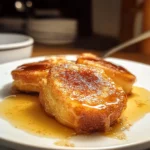
- Serve Right Away: Creme Brulee French Toast is best served immediately after caramelizing to enjoy the contrast between the warm, custardy interior and the crisp, cold sugar crust.
- Garnish (Optional): Garnish with fresh berries, a dusting of powdered sugar, a dollop of whipped cream, or a drizzle of maple syrup if desired. However, it’s truly delightful on its own, showcasing the brulee topping.
Nutrition
- Serving Size: One Normal Portion
- Calories: 450-550
- Sugar: 25-35g
- Sodium: 200-300mg
- Fat: 25-35g
- Saturated Fat: 15-20g
- Carbohydrates: 45-60g
- Protein: 10-15g
- Cholesterol: 200-250mg