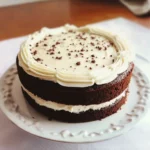
Ingredients
For the Chocolate Chiffon Cake:
- Cake Flour (2 ½ cups): The foundation of our light and airy cake. Cake flour, with its lower protein content compared to all-purpose flour, is crucial for creating a tender crumb. It prevents the cake from becoming tough, resulting in that signature chiffon texture we’re aiming for. If you can’t find cake flour, you can make a substitute (instructions below), but for the best results, seek out cake flour.
- Granulated Sugar (1 ¾ cups): Sugar not only sweetens the cake but also contributes to its moisture and tenderness. We use granulated sugar for the cake batter itself, providing a clean sweetness that complements the chocolate.
- Unsweetened Cocoa Powder (¾ cup, Dutch-processed preferred): The heart of our chocolate flavor. Dutch-processed cocoa powder, also known as alkalized cocoa, has a smoother, less acidic flavor and a darker color compared to natural cocoa powder. It will give your chiffon cake a richer, more sophisticated chocolate taste. If you only have natural cocoa powder, you can use it, but the flavor profile will be slightly different.
- Baking Powder (1 ½ tablespoons): Our primary leavening agent. Baking powder is a chemical leavening agent that provides lift and volume to the cake, creating its characteristic airy texture. Ensure your baking powder is fresh for optimal results.
- Baking Soda (¾ teaspoon): Baking soda works in conjunction with the baking powder to further enhance the leavening process. It also reacts with the cocoa powder to deepen the chocolate flavor and color.
- Salt (1 teaspoon): Salt is a flavor enhancer in baking. It balances the sweetness and intensifies the chocolate notes, preventing the cake from tasting flat or one-dimensional.
- Large Eggs (7, separated): Eggs are essential for structure, moisture, and richness in cakes. We separate the eggs in this recipe because the yolks contribute to richness and flavor, while the whipped egg whites are the key to achieving the chiffon cake’s signature lightness.
- Vegetable Oil (½ cup): Oil provides moisture and tenderness to the cake. Unlike butter, oil remains liquid at room temperature, contributing to a moist crumb that stays fresh for longer. Use a neutral-flavored oil like vegetable or canola oil so it doesn’t compete with the chocolate flavor.
- Milk or Buttermilk (¾ cup): Liquid is necessary to hydrate the dry ingredients and create the batter. Milk or buttermilk adds moisture and richness to the cake. Buttermilk, with its slight acidity, can further tenderize the cake and enhance the cocoa flavor.
- Vanilla Extract (1 teaspoon): Vanilla extract enhances the overall flavor profile of the cake, adding a subtle warmth and complexity that complements both the chocolate and the vanilla frosting. Use pure vanilla extract for the best flavor.
- Hot Coffee (½ cup, freshly brewed): Hot coffee is a secret weapon for intensifying chocolate flavor. It deepens the cocoa notes and adds a subtle mocha undertone to the cake. Freshly brewed coffee is best, but strong brewed instant coffee will also work in a pinch.
For the Vanilla Frosting:
- Unsalted Butter (1 cup, 2 sticks, softened): The base of our creamy vanilla frosting. Unsalted butter allows you to control the salt level in the frosting. Ensure the butter is properly softened to room temperature for a smooth and fluffy frosting. If the butter is too cold, it will be difficult to cream, and if it’s too melted, the frosting may become greasy.
- Powdered Sugar (4 cups, sifted): Powdered sugar, also known as confectioners’ sugar, is the sweetener and thickener for our frosting. Sifting the powdered sugar is crucial to remove any lumps and ensure a smooth, lump-free frosting.
- Vanilla Extract (2 teaspoons): Vanilla extract is the star flavor of our frosting. Using a generous amount of high-quality vanilla extract will create a rich, aromatic vanilla frosting that perfectly complements the chocolate cake.
- Milk or Heavy Cream (2-4 tablespoons): Liquid is used to adjust the consistency of the frosting. Start with 2 tablespoons and add more gradually until you reach your desired frosting consistency. Milk will create a lighter frosting, while heavy cream will result in a richer, more decadent frosting.
Instructions
Part 1: Preparing the Chocolate Chiffon Cake Batter
- Preheat Oven and Prepare Pan: Preheat your oven to 325°F (160°C). This lower temperature is crucial for chiffon cakes to bake evenly and prevent them from drying out. For the cake pan, you’ll need a 10-inch tube pan with a removable bottom. Crucially, do NOT grease the pan. Chiffon cakes need to cling to the sides of the pan as they rise to achieve their signature height. If the pan is greased, the batter will slip down, and the cake will not rise properly. Ensure your tube pan is clean and dry.
- Sift Dry Ingredients: In a large mixing bowl, sift together the cake flour, granulated sugar (1 ½ cups from the total amount), cocoa powder, baking powder, baking soda, and salt. Sifting is essential for chiffon cakes as it aerates the dry ingredients and removes any lumps, resulting in a smoother batter and a more tender cake. Whisk the sifted ingredients together to ensure they are evenly combined.
- Combine Wet Ingredients (Yolks): In a separate large mixing bowl, whisk together the egg yolks, vegetable oil, milk or buttermilk, vanilla extract, and hot coffee. Make sure the hot coffee is not scalding hot but warm enough to enhance the cocoa flavor. Whisk until the mixture is well combined and slightly emulsified.
- Combine Wet and Dry Ingredients (Yolk Batter): Gradually add the wet ingredients (yolk mixture) to the dry ingredients, mixing on low speed with an electric mixer or whisking by hand until just combined. Be careful not to overmix at this stage. The batter will be fairly thick and smooth. Set this yolk batter aside temporarily.
- Whip Egg Whites: In a clean, grease-free bowl (preferably glass or metal), using an electric mixer with a whisk attachment, beat the egg whites until soft peaks form. Soft peaks are when the whites hold their shape but the tips gently curl over when you lift the whisk.
- Add Sugar Gradually to Egg Whites: With the mixer running on medium speed, gradually add the remaining ¼ cup of granulated sugar to the egg whites, one tablespoon at a time. Continue beating until stiff, glossy peaks form. Stiff peaks are when the whites stand straight up and hold their shape firmly when you lift the whisk. Be careful not to overwhip the egg whites, as this can make them dry and difficult to fold into the batter.
- Fold Egg Whites into Yolk Batter (Gentle Folding): This is the most crucial step for achieving the chiffon cake’s airy texture. Gently fold about one-third of the whipped egg whites into the yolk batter using a large rubber spatula. This lightens the batter and makes it easier to incorporate the remaining egg whites. Then, gently fold in the remaining egg whites in two additions, being careful not to deflate the whites. Use a figure-eight motion and turn the bowl as you fold, scraping down the sides and bottom to ensure everything is evenly incorporated. Fold just until no streaks of egg white remain. Overmixing at this stage will deflate the egg whites and result in a dense cake.
- Pour Batter into Pan: Carefully pour the batter into the ungreased tube pan. Gently spread the batter evenly in the pan.
Part 2: Baking and Cooling the Chocolate Chiffon Cake
- Bake in Preheated Oven: Place the tube pan in the preheated oven at 325°F (160°C) and bake for 55-65 minutes, or until a wooden skewer inserted into the center of the cake comes out clean. The cake should be golden brown and spring back lightly when gently pressed. Chiffon cakes often take a bit longer to bake than other cakes due to their height and delicate structure.
- Invert Pan Immediately After Baking: As soon as you remove the cake from the oven, invert the tube pan immediately onto a wire rack or bottle neck. This is absolutely crucial for chiffon cakes. Inverting the pan allows gravity to help the cake cool and prevents it from collapsing as it cools. The cake needs to hang upside down to maintain its airy texture.
- Cool Completely Upside Down: Let the cake cool completely upside down in the inverted pan for at least 1-2 hours, or preferably until it is completely cold. Do not attempt to remove the cake from the pan while it is still warm, as it will be very fragile and may tear. Cooling completely allows the cake to set and firm up, making it easier to handle.
- Release Cake from Pan: Once the cake is completely cool, gently loosen the sides of the cake from the pan using a thin, flexible knife or an offset spatula. If your tube pan has a removable bottom, carefully push up from the bottom to release the cake. If not, gently invert the pan again onto a serving plate and tap firmly to release the cake. Run a knife around the center tube to fully release if needed.
Part 3: Preparing and Applying the Vanilla Frosting
- Soften Butter: Ensure your unsalted butter is softened to room temperature. It should be soft enough to press with your finger but not melted or greasy.
- Cream Butter: In a large mixing bowl, using an electric mixer with a paddle attachment (or beaters), cream the softened butter on medium speed until it is light and fluffy. This should take about 2-3 minutes.
- Add Powdered Sugar Gradually: Gradually add the sifted powdered sugar to the creamed butter, one cup at a time, mixing on low speed to prevent a powdered sugar cloud. Once all the powdered sugar is added, increase the speed to medium and beat until the frosting is smooth and well combined.
- Add Vanilla Extract and Milk/Cream: Add the vanilla extract to the frosting and mix to combine. Then, add milk or heavy cream, one tablespoon at a time, mixing after each addition, until you reach your desired frosting consistency. You may need 2-4 tablespoons of liquid depending on your preference. Beat the frosting for another minute or two until it is light and fluffy.
- Frost the Cake: Once the cake is completely cooled and released from the pan, place it on a serving plate or cake stand. Frost the cake generously with the vanilla frosting, swirling it decoratively over the top and sides of the cake. You can use an offset spatula or a piping bag for a more decorative finish.
Nutrition
- Serving Size: one normal portion
- Calories: 350-450
- Sugar: 30-40g
- Sodium: 200-250mg
- Fat: 18-25g
- Saturated Fat: 10-15g
- Trans Fat: 0g
- Carbohydrates: 45-55g
- Fiber: 1-2g
- Protein: 4-6g
- Cholesterol: 80-100mg