Ingredients
- 1 – 1 1/2 lbs cod – or sub black cod, halibut, sea bass… etc. (Approximately 450-680 grams)
- Cod: The star of the show! We are using about 1 to 1.5 pounds of cod fillets. Cod is a fantastic choice for baking because it’s a lean, white fish that cooks quickly and flakes beautifully. Its mild flavor makes it a wonderful canvas for the bright lemon and garlic notes in this recipe. Feel free to use fresh or frozen cod fillets, just ensure they are fully thawed if using frozen.
- Substitutions: The recipe is versatile! If cod isn’t available or you prefer other types of fish, you can easily substitute with black cod (also known as sablefish), halibut, or sea bass. These are all firm, white fish that bake well and have a similar texture to cod. Each will bring its own subtle nuance to the flavor profile. For instance, black cod is richer and more buttery, while halibut is a bit firmer and meatier. Sea bass offers a delicate, slightly sweet flavor.
- 1 tablespoon olive oil (Approximately 15 ml)
- Olive Oil (for cod marinade): A good quality extra virgin olive oil is essential for both flavor and healthy fats. We’ll use a tablespoon to lightly coat the cod fillets, helping them stay moist during baking and enhancing the absorption of the seasonings. Olive oil also adds a subtle fruity and peppery note that complements the fish.
- 1 teaspoon kosher salt (Approximately 5 grams)
- Kosher Salt (for cod marinade): Kosher salt is preferred by many chefs because of its larger, coarser crystals, which are easier to pinch and distribute evenly. It also adheres well to food surfaces. Salt is crucial for seasoning the cod and bringing out its natural flavors.
- 1/2 teaspoon pepper (Approximately 2.5 grams)
- Black Pepper (for cod marinade): Freshly ground black pepper is always recommended for its vibrant aroma and robust flavor. Pepper adds a subtle warmth and spice that balances the brightness of the lemon and garlic.
- 2 teaspoons fresh thyme (Approximately 4 grams)
- Fresh Thyme (for cod marinade): Fresh thyme brings an earthy, slightly lemony, and subtly minty aroma to the marinade. Its delicate leaves infuse the cod with a fragrant herbaceousness that elevates the overall flavor profile. If fresh thyme isn’t available, you can substitute with 1 teaspoon of dried thyme, but fresh is highly recommended for the best taste.
- zest from one lemon
- Lemon Zest (for cod marinade): Lemon zest is the finely grated outer rind of a lemon, and it’s packed with intensely fragrant lemon oils. It provides a bright, zesty, and aromatic punch that is far more potent than lemon juice alone. Be sure to zest only the yellow part of the lemon, avoiding the bitter white pith underneath.
- 2 tablespoons olive oil (Approximately 30 ml)
- Olive Oil (for vegetables): Another dose of good quality olive oil for sautéing the vegetables. It helps to tenderize them, adds flavor, and creates a beautiful base for the dish.
- 1 large fennel bulb, cored and thinly sliced ( or sub celery and more asparagus)
- Fennel Bulb: Fennel is a fantastic vegetable with a unique anise-like flavor that becomes sweeter and more mellow when cooked. We’ll use one large bulb, thinly sliced. The thin slices will soften beautifully during sautéing and baking, adding a delightful textural contrast to the flaky cod and tender asparagus.
- Substitutions: If you’re not a fan of fennel or it’s not readily available, you can substitute it with celery and more asparagus. Celery will provide a similar crunchy texture and a mild, slightly peppery flavor. Adding more asparagus will enhance the spring vegetable theme and keep the dish vibrant.
- 1 large leek, white and light green parts, thinly sliced into half moons
- Leek: Leeks are part of the onion family, but they have a milder, sweeter, and more delicate flavor than onions. We’ll use the white and light green parts of one large leek, thinly sliced into half moons. Sautéing leeks brings out their sweetness and adds a lovely savory depth to the vegetable base.
- 4 cloves garlic, rough chopped
- Garlic: Garlic is a flavor powerhouse! Four cloves, roughly chopped, will infuse the vegetables and the cod with a pungent, aromatic, and slightly spicy kick. Roughly chopping the garlic ensures it doesn’t burn during sautéing and releases its flavor gradually.
- 2 tablespoons finely chopped preserved lemon (or sub zest from another lemon)
- Preserved Lemon: Preserved lemon is a North African condiment made by pickling lemons in salt and their own juice. The rind becomes incredibly flavorful and adds a unique salty, tangy, and intensely lemony depth that is unlike fresh lemon zest. Finely chopped preserved lemon rind adds a complex layer of flavor to the dish.
- Substitutions: If you don’t have preserved lemon on hand, you can substitute with zest from another fresh lemon. While it won’t have the same fermented, salty tang, fresh lemon zest will still provide a bright citrusy note. You might consider adding a pinch of salt to compensate for the salty element of preserved lemon if you use this substitution.
- 1 tablespoons fresh thyme (Approximately 3 grams)
- Fresh Thyme (for vegetables): More fresh thyme to complement the thyme used in the cod marinade and to further enhance the herbaceousness of the vegetables.
- 1/2 cup chicken or veggie broth or stock, more as needed (Approximately 120 ml)
- Chicken or Vegetable Broth/Stock: Broth or stock adds moisture and depth of flavor to the vegetable base. Chicken broth will provide a richer, savory flavor, while vegetable broth keeps the dish vegetarian and lighter. We’ll use half a cup initially, with the option to add more as needed to ensure the vegetables are tender and the dish is slightly moist.
- 1/2 cup white wine (or sub more broth and a squeeze of lemon) (Approximately 120 ml)
- White Wine: Dry white wine, like Pinot Grigio or Sauvignon Blanc, adds acidity, brightness, and complexity to the dish. As it simmers, the alcohol evaporates, leaving behind a nuanced flavor that complements the lemon, garlic, and vegetables.
- Substitutions: If you prefer not to use wine or don’t have any on hand, you can substitute with more broth and a squeeze of fresh lemon juice. The lemon juice will provide the necessary acidity, and the extra broth will maintain the moisture level.
- generous pinch salt and pepper
- Salt and Pepper (for vegetables): To season the vegetables and balance the flavors. Adjust the amount to your taste.
- 1 large bunch asparagus, cut into 1–2 inch pieces, tough ends removed.
- Asparagus: Asparagus is the quintessential spring vegetable, and its bright green color and tender-crisp texture make it a perfect addition to this dish. We’ll use one large bunch, cut into 1-2 inch pieces, ensuring to snap off the tough ends near the base of the stalks.
- Serve this on its own for a low-carb dinner, or serve with creamy polenta, basmati rice, everyday quinoa, or cauliflower rice.
- Serving Suggestions: These are optional accompaniments to serve alongside the baked cod and vegetables, depending on your dietary preferences and desired meal composition.
Instructions
- Preheat oven to 400F (200C).
- Preheating is Key: Start by preheating your oven to 400 degrees Fahrenheit (200 degrees Celsius). This ensures the oven is at the correct temperature when you place the dish inside, allowing for even and efficient cooking.
- Prepare the Cod Marinade: Cut cod into 4 pieces and pat dry. Place in a bowl, drizzle with 1 tablespoon olive oil, and sprinkle with 1 teaspoon kosher salt, 1/2 teaspoon pepper, 2 teaspoons fresh thyme, and zest from one lemon. Toss to coat well. Set aside.
- Cod Preparation: Cut the cod fillets into four equal portions. Patting them dry with paper towels removes excess moisture, which helps them sear slightly in the oven and prevents them from steaming too much.
- Marinade Magic: In a bowl, gently toss the cod pieces with 1 tablespoon of olive oil, kosher salt, black pepper, fresh thyme, and lemon zest. This simple marinade infuses the cod with flavor and helps to keep it moist and tender during baking. Massage the marinade into the cod to ensure it’s evenly coated. Setting it aside allows the flavors to meld and penetrate the fish while you prepare the vegetables.
- Sauté the Aromatic Vegetable Base: Heat 2 tablespoons olive oil over medium heat in an oven-proof skillet, cast iron skillet, or Dutch oven. Add fennel and sauté for 5-7 minutes, stirring, cooking until just tender. Add leeks and garlic and continue cooking, stirring until leeks are golden and tender.
- Choosing the Right Pan: Select an oven-proof skillet, cast iron skillet, or Dutch oven that is large enough to comfortably hold the vegetables and the cod fillets in a single layer. Cast iron skillets are excellent for heat retention and even cooking.
- Building Flavor Base: Heat 2 tablespoons of olive oil in the pan over medium heat. Add the thinly sliced fennel and sauté for 5-7 minutes, stirring occasionally. Sautéing the fennel first allows it to soften and its flavor to mellow. Once the fennel is slightly tender, add the sliced leeks and roughly chopped garlic. Continue to sauté, stirring frequently, until the leeks are golden and tender and the garlic is fragrant, about 3-5 minutes. Be careful not to burn the garlic, as it can become bitter.
- Simmer the Vegetables with Broth and Wine: Add preserved lemon (or lemon zest), fresh thyme, broth, and white wine to the skillet. Stir in salt and pepper, simmer on medium-low heat until liquid has reduced by half, and fennel is nice and tender, about 5 minutes.
- Layering Flavors: Add the finely chopped preserved lemon (or lemon zest), fresh thyme, chicken or vegetable broth, and white wine to the skillet. Stir to combine all the ingredients. Season with a generous pinch of salt and pepper.
- Reducing and Tenderizing: Bring the mixture to a simmer over medium-low heat. Simmer for about 5 minutes, or until the liquid has reduced by about half and the fennel is tender. Simmering allows the flavors to meld together beautifully and further tenderizes the fennel. If the fennel needs more time to become tender, proceed to the next step.
- Steam Fennel if Needed: If fennel needs a bit longer, add another splash of broth and cover pan for a few minutes, letting it steam and get tender.
- Ensuring Tender Fennel: If the fennel is still slightly firm after simmering, add a splash more broth (about 1/4 cup) to the pan. Cover the skillet with a lid and let it steam for a few minutes. Steaming helps to quickly tenderize the fennel without drying out the vegetables. Check for tenderness by piercing a piece of fennel with a fork – it should be easily pierced.
- Add Asparagus: Once fennel is tender, add the asparagus, give a stir, and cook for 2 more minutes – until asparagus turns bright green. If the mixture seems dry, add another splash of broth – you want this slightly wet (¼-inch liquid in the bottom of the pan).
- Asparagus Perfection: Add the asparagus pieces to the skillet and stir to combine them with the other vegetables. Cook for just 2 minutes, or until the asparagus turns bright green and is tender-crisp. Asparagus cooks quickly, so be careful not to overcook it, or it will become mushy.
- Maintaining Moisture: Check the moisture level in the pan. You want a slightly wet base, with about ¼-inch of liquid in the bottom. If the mixture seems dry, add another splash of broth to prevent the vegetables from drying out during baking and to create a flavorful sauce.
- Nestle in the Cod and Bake: Nestle the marinated cod pieces into the pan among the vegetables, scraping out any excess marinade over the fish. Bake in the preheated oven until fish is cooked through, 10-15 minutes, depending on thickness.
- Baking to Perfection: Gently nestle the marinated cod pieces into the pan, distributing them evenly among the vegetables. Pour any remaining marinade from the bowl over the cod. Transfer the skillet to the preheated oven. Bake for 10-15 minutes, or until the cod is cooked through. The cooking time will depend on the thickness of the cod fillets. Cod is done when it is opaque and flakes easily with a fork. Avoid overbaking, as it can become dry.
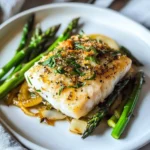
- Serve and Garnish: Divide among four bowls. Top with a sprig of thyme and lemon wedge. Serve immediately and enjoy!
- Serving Suggestion: Divide the baked cod and vegetables among four bowls. Garnish each serving with a fresh sprig of thyme and a lemon wedge. The lemon wedge allows for an extra squeeze of lemon juice at the table, if desired. Serve immediately while it’s hot and flavorful. This dish is delicious on its own or served with your choice of accompaniments like creamy polenta, basmati rice, quinoa, or cauliflower rice.
Nutrition
- Serving Size: One Normal Portion
- Calories: 350-400
- Fat: 15-20 grams
- Carbohydrates: 10-15 grams
- Fiber: 3-5 grams
- Protein: 30-35 grams