
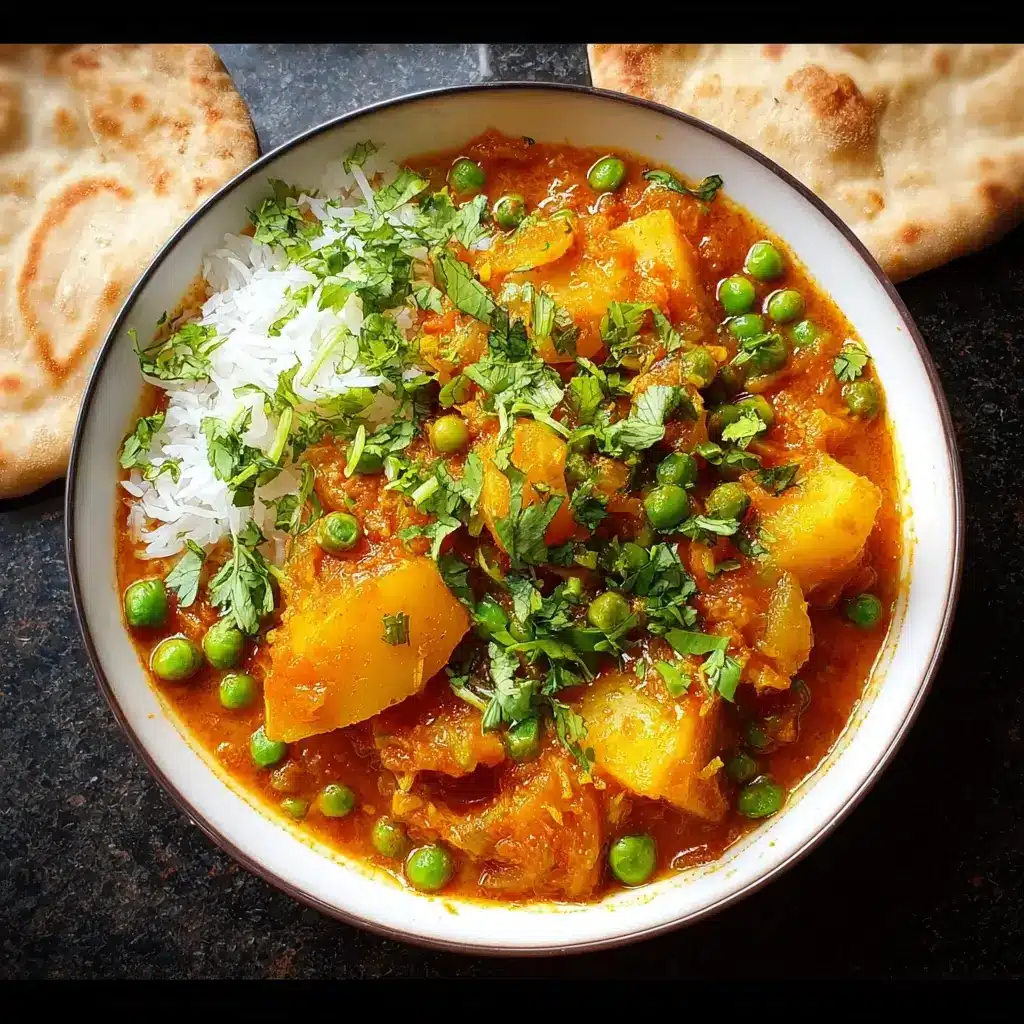

This Vegetarian Potato Curry with Peas, or “Aloo Matar” as it’s affectionately known in many households, is more than just a recipe to me; it’s a warm embrace on a chilly evening, a comforting constant in the ever-changing tapestry of life. I remember the first time I attempted to make it, guided by my grandmother’s patient instructions over a crackling phone line. The aroma that filled my kitchen that day – a symphony of earthy potatoes, sweet peas, and a chorus of fragrant spices – was intoxicating. It instantly transported me back to her kitchen, a place of warmth, laughter, and an endless supply of delicious food. Over the years, I’ve tweaked and refined this recipe, making it my own, yet it retains that core essence of simple, wholesome goodness. It has become a firm family favorite, requested for weeknight dinners and special gatherings alike. The beauty of this dish lies in its simplicity and its ability to satisfy both the palate and the soul. The creamy potatoes, the sweet pop of peas, and the rich, aromatic sauce create a delightful harmony of textures and flavors. It’s a testament to how humble ingredients can be transformed into something truly magical with a little love and the right blend of spices. My children, who can sometimes be picky eaters, absolutely devour this curry, often fighting over the last spoonful. Seeing their happy faces, sauce-smeared and content, is the ultimate reward. This recipe isn’t just about feeding the body; it’s about creating memories, sharing joy, and celebrating the simple pleasures of a home-cooked meal.
**Ingredients for Our Delicious Vegetarian Potato Curry with Peas**
This recipe is designed to serve 4-6 people and highlights the beautiful simplicity of Indian home cooking. The key is fresh ingredients and a good understanding of your spices.
- For the Potatoes and Peas:
- Potatoes: 3 large potatoes (about 500-600g or 1.2 lbs), peeled and diced into 1-inch cubes (Yukon Gold, Russet, or any starchy potato works well)
- Green Peas: 1 cup (about 150g) frozen or fresh green peas
- For the Aromatic Base (Tadka/Masala):
- Oil: 2-3 tablespoons vegetable oil, canola oil, or coconut oil
- Cumin Seeds (Jeera): 1 teaspoon
- Asafoetida (Hing): ¼ teaspoon (optional, but authentic and aids digestion)
- Onion: 1 large onion (about 150g), finely chopped
- Ginger: 1-inch piece, freshly grated or minced (about 1 tablespoon)
- Garlic: 3-4 cloves, freshly grated or minced (about 1 tablespoon)
- Green Chilies: 1-2, slit lengthwise or finely chopped (adjust to your spice preference)
- For the Spice Blend:
- Turmeric Powder (Haldi): ½ teaspoon
- Coriander Powder (Dhania): 2 teaspoons
- Cumin Powder (Jeera Powder): 1 teaspoon
- Kashmiri Red Chili Powder: 1 teaspoon (for color and mild heat, or use regular chili powder and adjust)
- Garam Masala: ½ – 1 teaspoon (to be added towards the end)
- For the Curry Sauce:
- Tomatoes: 2 medium ripe tomatoes (about 200g), finely chopped or pureed, OR 1 can (14.5 oz / 400g) diced or crushed tomatoes
- Tomato Paste: 1 tablespoon (optional, for deeper color and flavor)
- Water or Vegetable Broth: 1.5 – 2 cups, or as needed to reach desired consistency
- Full-Fat Coconut Milk: ½ cup (optional, for a creamier, richer curry)
- Salt: To taste (start with 1 teaspoon)
- Sugar: ½ teaspoon (optional, to balance acidity)
- For Garnish (Optional but Recommended):
- Fresh Cilantro (Coriander Leaves): ¼ cup, chopped
- Lemon Juice: 1-2 teaspoons, freshly squeezed
**Step-by-Step Instructions: Crafting Your Perfect Potato and Pea Curry**
Follow these detailed steps to create a truly memorable Aloo Matar. The process involves preparing the vegetables, creating an aromatic spice base, and then simmering everything to perfection.
- Prepare the Vegetables:
- Peel the potatoes and dice them into uniform 1-inch cubes. Rinse them under cold water to remove excess starch and keep them submerged in water until ready to use to prevent browning.
- If using fresh peas, shell them. Frozen peas can be used directly.
- Finely chop the onion. Grate or mince the ginger and garlic. Slit or chop the green chilies. Chop or purée the tomatoes. Keep all these aromatics ready.
- Sauté the Aromatics (Building the Flavor Base):
- Heat the oil in a large, heavy-bottomed pot, Dutch oven, or deep skillet over medium heat.
- Once the oil is hot (it should shimmer), add the cumin seeds. Allow them to splutter and turn golden brown for about 30 seconds. This step, called “tempering” or “tadka,” releases their essential oils and fragrance.
- If using asafoetida (hing), add it now and sauté for a few seconds.
- Add the finely chopped onions to the pot. Sauté for 5-7 minutes, stirring occasionally, until they become soft, translucent, and lightly golden. Don’t rush this step, as well-caramelized onions form a crucial flavor foundation.
- Add the grated ginger, minced garlic, and green chilies. Sauté for another 1-2 minutes until the raw smell disappears and they become fragrant. Be careful not to burn the garlic.
- Bloom the Spices:
- Reduce the heat to low. Add the turmeric powder, coriander powder, cumin powder, and Kashmiri red chili powder to the pot.
- Stir continuously and sauté the spices for about 30-60 seconds. This “blooming” process cooks the raw spices, deepens their color, and intensifies their flavor. You’ll notice a wonderful aroma. Be careful not to burn them, as this will make them bitter. If the pan seems too dry, you can add a tablespoon of water.
- Incorporate Tomatoes and Cook the Masala:
- Add the chopped or puréed tomatoes and tomato paste (if using) to the pot. Mix well with the spices.
- Increase the heat to medium-low. Cook the tomatoes, stirring occasionally, for about 5-8 minutes, or until they soften, break down, and the oil starts to separate from the masala (this is a key indicator that the base is well-cooked). If the mixture sticks, add a splash of water.
- Add salt and sugar (if using) at this stage. The salt helps the tomatoes release their moisture and cook down.
- Add Potatoes and Simmer:
- Drain the diced potatoes and add them to the pot. Stir gently to coat them thoroughly with the spice masala. Sauté for 2-3 minutes, allowing the potatoes to absorb some of the flavors.
- Pour in 1.5 cups of water or vegetable broth. Stir well, ensuring the potatoes are mostly submerged. Bring the curry to a gentle boil.
- Once boiling, reduce the heat to low, cover the pot with a lid, and let it simmer for 15-20 minutes, or until the potatoes are almost tender when pierced with a fork. Stir occasionally to prevent sticking.
- Add Peas and Coconut Milk (if using):
- Once the potatoes are about 80% cooked, add the green peas (fresh or frozen).
- If you desire a creamier curry, now is the time to stir in the ½ cup of full-fat coconut milk. Mix gently.
- Continue to simmer, covered, for another 5-7 minutes, or until the potatoes are fully cooked and tender, and the peas are cooked through but still vibrant green. The curry sauce should have thickened to your desired consistency. If it’s too thick, add a little more hot water or broth. If it’s too thin, simmer uncovered for a few more minutes.
- Finishing Touches:
- Once the potatoes and peas are perfectly cooked and the sauce has reached your preferred consistency, stir in the garam masala. This spice blend is added at the end to preserve its delicate aroma and flavor.
- Turn off the heat. Stir in the freshly squeezed lemon juice (if using) and most of the chopped fresh cilantro, reserving some for garnish.
- Taste the curry and adjust salt or other seasonings if necessary.
- Rest and Serve:
- Let the curry rest for at least 5-10 minutes before serving. This allows the flavors to meld together beautifully.
- Garnish with the remaining fresh cilantro before serving.
**Nutritional Insights: Understanding Your Potato Pea Curry (Approximate)**
Understanding the nutritional profile of what we eat is increasingly important for maintaining a healthy lifestyle. This Vegetarian Potato Curry with Peas, while hearty and comforting, offers a good balance of macronutrients and some essential micronutrients.
- Servings: This recipe typically yields 4 to 6 servings, depending on appetite and what it’s served with.
- Calories per Serving (Approximate):
- If serving 4 people: Approximately 350-450 calories per serving.
- If serving 6 people: Approximately 230-300 calories per serving.
Important Considerations:
- These values are estimates and can vary significantly based on the exact quantities of ingredients used, the type of oil, whether coconut milk is added, and the specific brands of packaged goods (like canned tomatoes or coconut milk).
- Potatoes are the primary source of carbohydrates, providing energy. They also offer potassium and Vitamin C.
- Peas contribute plant-based protein, fiber, and various vitamins and minerals, including Vitamin K, Vitamin A, and manganese.
- Onions, Garlic, Ginger, and Tomatoes are packed with antioxidants, vitamins, and phytonutrients that offer various health benefits.
- Spices like turmeric, cumin, and coriander are not just for flavor; they possess anti-inflammatory and antioxidant properties. Turmeric, in particular, contains curcumin, a powerful bioactive compound.
- Coconut Milk (if used): Adds creaminess and healthy fats (medium-chain triglycerides or MCTs), but also increases the calorie and saturated fat content. Opting for light coconut milk can reduce this if desired.
- Oil: The type and amount of oil will impact the fat content. Using heart-healthy oils like olive oil (though less traditional for this specific curry, canola or sunflower are common) or coconut oil in moderation is key.
- Fiber: This dish is a good source of dietary fiber, thanks to the potatoes (especially if skins are partially left on, though not typical for this curry), peas, and other vegetables, aiding digestion and promoting satiety.
To get a more precise nutritional breakdown, you can use online nutritional calculators where you input each ingredient and its exact quantity. However, this general overview should give you a good idea of what this wholesome curry offers. It’s a relatively balanced vegetarian meal, especially when paired with whole grains like brown rice or whole wheat roti.
**Preparation and Cooking Time: Planning Your Culinary Journey**
Efficiently planning your cooking process ensures a stress-free and enjoyable experience in the kitchen. Here’s a breakdown of the time you’ll need for this Vegetarian Potato Curry with Peas:
- Preparation Time: Approximately 20-25 minutes
- This includes:
- Peeling and dicing potatoes: 8-10 minutes
- Chopping onion, tomatoes (if using fresh), mincing/grating ginger and garlic, slitting/chopping green chilies: 10-12 minutes
- Measuring out spices and other ingredients: 2-3 minutes
- Shelling fresh peas (if using, frozen peas require no prep): Add 5-7 minutes if applicable.
- This includes:
- Cooking Time: Approximately 35-45 minutes
- Sautéing aromatics (onions, ginger, garlic, chilies): 8-10 minutes
- Blooming spices and cooking tomatoes (masala preparation): 8-10 minutes
- Sautéing potatoes with masala: 2-3 minutes
- Simmering potatoes until almost tender: 15-20 minutes
- Adding peas and simmering until everything is cooked through: 5-7 minutes
- Finishing touches (garam masala, cilantro, lemon juice): 1-2 minutes
- Resting Time: 5-10 minutes (Highly Recommended)
- This allows the flavors to meld and deepen.
- Total Time (Excluding Resting): Approximately 55 minutes to 1 hour 10 minutes
- Total Time (Including Resting): Approximately 1 hour to 1 hour 20 minutes
Tips for Efficient Time Management:
- Mise en Place: Do all your chopping and measuring before you start cooking. This is the single most effective way to streamline the cooking process.
- Multitasking: While onions are sautéing, you can finish chopping tomatoes or measure out spices if you haven’t already.
- Hot Water: Keep some hot water ready in a kettle. If your curry becomes too thick during simmering, adding hot water prevents the cooking temperature from dropping significantly.
This Aloo Matar curry is well-suited for a weeknight meal if you manage your prep time effectively, and it’s certainly a rewarding dish for a more leisurely weekend cooking session.
**How to Serve Your Heartwarming Vegetarian Potato Curry with Peas**
Serving this Aloo Matar curry thoughtfully can elevate the entire dining experience. Its versatile nature allows it to be paired with a variety of accompaniments. Here are some popular and delicious ways to serve it:
- With Indian Breads:
- Roti/Chapati: Soft, unleavened whole wheat flatbreads are a classic pairing. They are perfect for scooping up the curry and soaking up the delicious gravy.
- Naan: Fluffy, leavened oven-baked flatbread (plain, garlic, or butter naan) offers a more indulgent option. Its slightly chewy texture complements the soft potatoes beautifully.
- Paratha: Layered, pan-fried flatbreads (plain or stuffed) add richness and a delightful flakiness.
- Puri: Deep-fried, puffed bread that creates a wonderful contrast in texture. This is often a festive choice.
- With Rice:
- Steamed Basmati Rice: The fragrant, long grains of basmati rice are an ideal canvas for the flavorful curry.
- Jeera Rice (Cumin Rice): Basmati rice tempered with cumin seeds and sometimes whole spices adds another layer of aromatic complexity.
- Brown Rice: For a healthier, fiber-rich option.
- Plain White Rice: Any simple steamed white rice works well.
- As Part of a Thali or Larger Meal:
- Include the potato curry as one of the main dishes in a traditional Indian thali, alongside other curries, dal (lentils), raita, salad, and pickles.
- Accompaniments and Garnishes:
- Fresh Cilantro (Coriander Leaves): A generous sprinkle of freshly chopped cilantro adds a burst of freshness and color. This is almost essential.
- Lemon/Lime Wedges: A squeeze of fresh lemon or lime juice just before eating brightens up the flavors.
- Plain Yogurt or Raita: A dollop of plain yogurt (dairy or non-dairy) or a side of cucumber raita can provide a cooling contrast, especially if your curry is spicy.
- Indian Pickle (Achaar): A small amount of mango, lime, or mixed vegetable pickle adds a tangy, spicy kick.
- Simple Kachumber Salad: A refreshing salad made with chopped onions, tomatoes, cucumbers, and a light lemon-coriander dressing.
- Creative Serving Ideas:
- Curry Bowls: Serve in individual deep bowls to capture all the delicious gravy.
- With Quinoa: For a modern, protein-packed twist.
- As a Filling: Cooled and slightly mashed, this curry can even be used as a filling for wraps or savory pastries, though it’s best enjoyed fresh with traditional accompaniments.
No matter how you choose to serve it, ensure the curry is warm. The inviting aroma and comforting heat are key to its charm.
**Additional Tips for an Even More Amazing Potato Curry Experience**
While the recipe provided will yield a delicious Vegetarian Potato Curry with Peas, these additional tips can help you customize it to your preference, troubleshoot common issues, and elevate your dish from great to truly exceptional.
- Choosing the Right Potatoes:
- The type of potato you use can significantly impact the texture of your curry. Starchy potatoes like Russets or Idaho potatoes will break down more easily, contributing to a thicker, creamier gravy. Waxy potatoes like Yukon Gold, red potatoes, or new potatoes hold their shape better during cooking, resulting in distinct potato cubes in the curry. For Aloo Matar, many prefer potatoes that hold their shape somewhat but also release some starch to thicken the sauce – Yukon Gold is an excellent all-around choice. Avoid very waxy varieties if you want some natural thickening from the potatoes.
- Mastering the Spice Level:
- This curry can be easily adapted to your preferred heat level.
- For Milder Curry: Reduce or omit the green chilies. Use Kashmiri red chili powder primarily for color, as it’s milder than regular chili powder. You can also add a touch more coconut milk or a dollop of yogurt (dairy or non-dairy) when serving to temper the heat.
- For Spicier Curry: Increase the number of green chilies (consider using hotter varieties like bird’s eye chilies, but use sparingly). Add a pinch more of regular hot red chili powder along with or instead of Kashmiri chili powder. You can also add a tiny pinch of black pepper along with the garam masala at the end.
- This curry can be easily adapted to your preferred heat level.
- Achieving the Perfect Curry Consistency:
- The desired thickness of the curry gravy can be a personal preference.
- For a Thicker Gravy: Simmer the curry uncovered for the last 5-10 minutes to allow excess liquid to evaporate. You can also lightly mash a few pieces of cooked potato against the side of the pot and stir them back into the curry; the starch will help thicken it. Adding a tablespoon or two of cashew paste (soaked cashews blended with a little water) or a bit more coconut milk can also create a richer, thicker sauce.
- For a Thinner Gravy: Simply add more hot water or vegetable broth until you reach your desired consistency. Always add hot liquid to a simmering curry to maintain the cooking temperature.
- The desired thickness of the curry gravy can be a personal preference.
- Enhancing Flavor Depth:
- Roast Your Spices: Before grinding (if using whole spices to make your own powders), lightly dry roast cumin seeds and coriander seeds until fragrant. This significantly boosts their flavor.
- Use Whole Spices in Tempering: Beyond just cumin seeds, consider adding a small cinnamon stick, a couple of green cardamom pods, or a bay leaf to the oil at the beginning for a more complex aromatic base. Remove them before serving if desired.
- A Touch of Tang: Besides lemon juice, a tiny bit of tamarind paste (diluted in warm water and strained) can add a lovely tangy depth, characteristic of some South Indian curries. Use sparingly as it’s quite potent.
- Kasuri Methi (Dried Fenugreek Leaves): Crushing a teaspoon of Kasuri Methi between your palms and adding it along with the garam masala at the end imparts a unique, slightly bitter, and aromatic flavor that is very popular in North Indian cuisine.
- Storage and Reheating for Best Results:
- Storage: Allow the curry to cool completely before transferring it to an airtight container. It can be refrigerated for up to 3-4 days. Like many curries, the flavors often meld and improve by the next day.
- Reheating: Reheat gently on the stovetop over low heat, adding a splash of water or vegetable broth if it has thickened too much. Stir occasionally to prevent sticking and ensure even heating. Microwaving is also an option, but stovetop reheating often yields better results in terms of texture. Avoid boiling vigorously, which can cause the potatoes to break down too much. If using coconut milk, gentle reheating is especially important to prevent it from splitting.
By keeping these tips in mind, you can fine-tune your Vegetarian Potato Curry with Peas to perfectly suit your taste and ensure a delightful culinary outcome every time.
**Frequently Asked Questions (FAQ) about Vegetarian Potato Curry with Peas**
Here are answers to some common questions you might have about making this delightful Aloo Matar curry:
- Q: Can I make this potato curry vegan?
- A: Absolutely! This recipe is inherently very close to being vegan. The primary things to ensure are:
- Oil: Use vegetable oil, canola oil, sunflower oil, or coconut oil instead of ghee (clarified butter), which is sometimes used in Indian cooking. This recipe already suggests these oils.
- Coconut Milk: If you choose to use it for creaminess, full-fat coconut milk is perfectly vegan.
- Yogurt (for serving): If you plan to serve with yogurt, opt for a plant-based yogurt (e.g., coconut, soy, or almond yogurt).
As written, following the ingredient list above (using oil and optional coconut milk), the curry itself is vegan.
- A: Absolutely! This recipe is inherently very close to being vegan. The primary things to ensure are:
- Q: What if I don’t have all the individual spices? Can I use a pre-made curry powder?
- A: While using individual spices allows for better control over the flavor profile, you can use a good quality pre-made curry powder as a substitute if you’re in a pinch. Start with 1-2 tablespoons of curry powder in place of the coriander powder, cumin powder, and turmeric powder. Taste and adjust. Keep in mind that “curry powder” varies greatly in composition and heat level, so the flavor will be different from the recipe as written. You might still want to add a little extra turmeric for color and garam masala at the end for that characteristic warmth.
- Q: My potatoes either get too mushy or stay too hard. What am I doing wrong?
- A: This usually comes down to two factors: the type of potato and cooking time/method.
- Potato Type: As mentioned in the tips, very starchy potatoes (like some Russets) can become mushy quickly. Waxy potatoes take longer to cook. Yukon Gold or a similar all-purpose potato is often a good balance.
- Cooking: Ensure your potato cubes are of a relatively uniform size for even cooking. Don’t boil the curry too vigorously; a gentle simmer is best. Start checking for doneness after about 15 minutes of simmering. They should be tender enough to be easily pierced with a fork but not falling apart. If they’re still hard, continue simmering and check every few minutes. If they are getting too soft before the gravy has thickened, you can remove the potatoes temporarily, thicken the gravy, and then add them back.
- A: This usually comes down to two factors: the type of potato and cooking time/method.
- Q: Can I add other vegetables to this curry?
- A: Yes, this curry is quite versatile! You can add other vegetables along with or in place of some potatoes or peas. Good additions include:
- Carrots: Dice and add them with the potatoes as they take a similar time to cook.
- Cauliflower Florets: Add them about 10 minutes into the potato cooking time.
- Green Beans: Add them along with the peas.
- Bell Peppers (Capsicum): Add chopped bell peppers in the last 5-7 minutes of cooking for a slight crunch.
- Spinach: Stir in fresh spinach leaves at the very end until they wilt.
Adjust cooking times based on the vegetable. This can make the dish even more nutritious and colorful.
- A: Yes, this curry is quite versatile! You can add other vegetables along with or in place of some potatoes or peas. Good additions include:
- Q: How can I store leftovers, and can I freeze this curry?
- A:
- Refrigeration: Cool the curry completely and store it in an airtight container in the refrigerator for up to 3-4 days. The flavors often develop further, making it even tastier the next day.
- Freezing: Yes, this potato curry can be frozen, but there’s a slight caveat. Potatoes can sometimes become a bit watery or change texture slightly upon thawing.
- To Freeze: Cool completely, transfer to freezer-safe containers, leaving some headspace. It can be frozen for up to 2-3 months.
- To Thaw & Reheat: Thaw overnight in the refrigerator. Reheat gently on the stovetop, adding a splash of water or broth if needed. If you’ve used coconut milk, reheat very gently to prevent splitting. While the texture might be slightly different for the potatoes, it will still be delicious. Curries made without coconut milk tend to freeze and reheat with less change in texture.
- A:
Vegetarian Potato Curry with Peas Recipe
Ingredients
- For the Potatoes and Peas:
- Potatoes: 3 large potatoes (about 500-600g or 1.2 lbs), peeled and diced into 1-inch cubes (Yukon Gold, Russet, or any starchy potato works well)
- Green Peas: 1 cup (about 150g) frozen or fresh green peas
- For the Aromatic Base (Tadka/Masala):
- Oil: 2-3 tablespoons vegetable oil, canola oil, or coconut oil
- Cumin Seeds (Jeera): 1 teaspoon
- Asafoetida (Hing): ¼ teaspoon (optional, but authentic and aids digestion)
- Onion: 1 large onion (about 150g), finely chopped
- Ginger: 1-inch piece, freshly grated or minced (about 1 tablespoon)
- Garlic: 3-4 cloves, freshly grated or minced (about 1 tablespoon)
- Green Chilies: 1-2, slit lengthwise or finely chopped (adjust to your spice preference)
- For the Spice Blend:
- Turmeric Powder (Haldi): ½ teaspoon
- Coriander Powder (Dhania): 2 teaspoons
- Cumin Powder (Jeera Powder): 1 teaspoon
- Kashmiri Red Chili Powder: 1 teaspoon (for color and mild heat, or use regular chili powder and adjust)
- Garam Masala: ½ – 1 teaspoon (to be added towards the end)
- For the Curry Sauce:
- Tomatoes: 2 medium ripe tomatoes (about 200g), finely chopped or pureed, OR 1 can (14.5 oz / 400g) diced or crushed tomatoes
- Tomato Paste: 1 tablespoon (optional, for deeper color and flavor)
- Water or Vegetable Broth: 1.5 – 2 cups, or as needed to reach desired consistency
- Full-Fat Coconut Milk: ½ cup (optional, for a creamier, richer curry)
- Salt: To taste (start with 1 teaspoon)
- Sugar: ½ teaspoon (optional, to balance acidity)
- For Garnish (Optional but Recommended):
- Fresh Cilantro (Coriander Leaves): ¼ cup, chopped
- Lemon Juice: 1-2 teaspoons, freshly squeezed
Instructions
- Prepare the Vegetables:
- Peel the potatoes and dice them into uniform 1-inch cubes. Rinse them under cold water to remove excess starch and keep them submerged in water until ready to use to prevent browning.
- If using fresh peas, shell them. Frozen peas can be used directly.
- Finely chop the onion. Grate or mince the ginger and garlic. Slit or chop the green chilies. Chop or purée the tomatoes. Keep all these aromatics ready.
- Sauté the Aromatics (Building the Flavor Base):
- Heat the oil in a large, heavy-bottomed pot, Dutch oven, or deep skillet over medium heat.
- Once the oil is hot (it should shimmer), add the cumin seeds. Allow them to splutter and turn golden brown for about 30 seconds. This step, called “tempering” or “tadka,” releases their essential oils and fragrance.
- If using asafoetida (hing), add it now and sauté for a few seconds.
- Add the finely chopped onions to the pot. Sauté for 5-7 minutes, stirring occasionally, until they become soft, translucent, and lightly golden. Don’t rush this step, as well-caramelized onions form a crucial flavor foundation.
- Add the grated ginger, minced garlic, and green chilies. Sauté for another 1-2 minutes until the raw smell disappears and they become fragrant. Be careful not to burn the garlic.
- Bloom the Spices:
- Reduce the heat to low. Add the turmeric powder, coriander powder, cumin powder, and Kashmiri red chili powder to the pot.
- Stir continuously and sauté the spices for about 30-60 seconds. This “blooming” process cooks the raw spices, deepens their color, and intensifies their flavor. You’ll notice a wonderful aroma. Be careful not to burn them, as this will make them bitter. If the pan seems too dry, you can add a tablespoon of water.
- Incorporate Tomatoes and Cook the Masala:
- Add the chopped or puréed tomatoes and tomato paste (if using) to the pot. Mix well with the spices.
- Increase the heat to medium-low. Cook the tomatoes, stirring occasionally, for about 5-8 minutes, or until they soften, break down, and the oil starts to separate from the masala (this is a key indicator that the base is well-cooked). If the mixture sticks, add a splash of water.
- Add salt and sugar (if using) at this stage. The salt helps the tomatoes release their moisture and cook down.
- Add Potatoes and Simmer:
- Drain the diced potatoes and add them to the pot. Stir gently to coat them thoroughly with the spice masala. Sauté for 2-3 minutes, allowing the potatoes to absorb some of the flavors.
- Pour in 1.5 cups of water or vegetable broth. Stir well, ensuring the potatoes are mostly submerged. Bring the curry to a gentle boil.
- Once boiling, reduce the heat to low, cover the pot with a lid, and let it simmer for 15-20 minutes, or until the potatoes are almost tender when pierced with a fork. Stir occasionally to prevent sticking.
- Add Peas and Coconut Milk (if using):
- Once the potatoes are about 80% cooked, add the green peas (fresh or frozen).
- If you desire a creamier curry, now is the time to stir in the ½ cup of full-fat coconut milk. Mix gently.
- Continue to simmer, covered, for another 5-7 minutes, or until the potatoes are fully cooked and tender, and the peas are cooked through but still vibrant green. The curry sauce should have thickened to your desired consistency. If it’s too thick, add a little more hot water or broth. If it’s too thin, simmer uncovered for a few more minutes.
- Finishing Touches:
- Once the potatoes and peas are perfectly cooked and the sauce has reached your preferred consistency, stir in the garam masala. This spice blend is added at the end to preserve its delicate aroma and flavor.
- Turn off the heat. Stir in the freshly squeezed lemon juice (if using) and most of the chopped fresh cilantro, reserving some for garnish.
- Taste the curry and adjust salt or other seasonings if necessary.
- Rest and Serve:
- Let the curry rest for at least 5-10 minutes before serving. This allows the flavors to meld together beautifully.
- Garnish with the remaining fresh cilantro before serving.
Nutrition
- Serving Size: One Normal Portion
- Calories: 350-450