

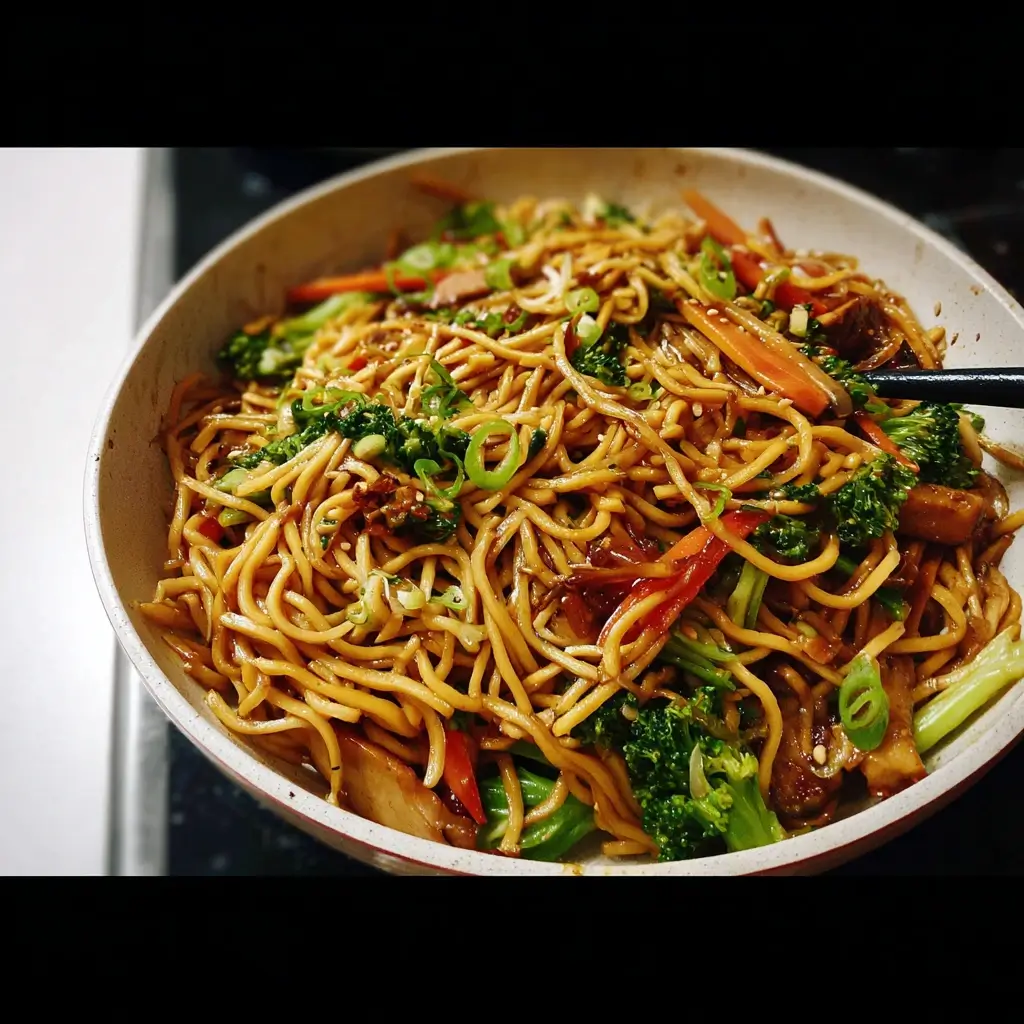
Of all the dishes that bring a wave of comforting nostalgia, a steaming plate of chow mein sits right at the top of my list. For years, it was our family’s go-to takeout order for busy Friday nights. But as we started cooking more at home, I became determined to replicate that same magic in my own kitchen, but with a healthier, fresher, and entirely vegetarian twist. After countless attempts—some too salty, some with soggy noodles, others with limp vegetables—I finally landed on this recipe. The first time I served it, the reaction was pure gold. My husband, a self-proclaimed noodle connoisseur, declared it “better than takeout,” and my kids, who usually push vegetables around their plates, were twirling strands of noodle-wrapped carrots and cabbage with glee. This isn’t just a recipe; it’s our family’s solution to the weeknight dinner dilemma. It’s vibrant, packed with flavor, and comes together faster than you can decide on a delivery order. The secret lies in the sauce—a perfect symphony of savory, sweet, and tangy notes—and the technique of getting the noodles and vegetables perfectly crisp-tender. This Vegetarian Chow Mein has become a staple in our home, a testament to the fact that homemade can truly be more satisfying, delicious, and joyful than anything that comes in a cardboard box.
The Ultimate Vegetarian Chow Mein Recipe
This recipe is designed for maximum flavor and texture, bringing the restaurant experience right into your home kitchen. It’s a versatile dish that invites you to play with different vegetables based on what’s fresh and in season.
Ingredients
This recipe is broken down into three key components: the noodles, the sauce, and the vegetable stir-fry. Preparing these elements separately before you start cooking is the key to a flawless stir-fry.
For the Noodles:
- 8 ounces (approx. 225g) Dried Chow Mein Noodles or Yakisoba Noodles. You can also use spaghetti or ramen noodles in a pinch.
- 1 tablespoon Sesame Oil
For the Signature Chow Mein Sauce:
- ¼ cup (60ml) Low-Sodium Soy Sauce or Tamari for a gluten-free option
- 2 tablespoons (30ml) Hoisin Sauce
- 1 tablespoon (15ml) Rice Vinegar
- 1 tablespoon (15g) Brown Sugar or Maple Syrup
- 2 teaspoons (10ml) Toasted Sesame Oil
- 1 teaspoon Cornstarch
- ¼ teaspoon White Pepper (optional, but recommended for authentic flavor)
- ¼ cup (60ml) Vegetable Broth or Water
For the Vegetable Stir-Fry:
- 2 tablespoons High-Heat Cooking Oil (like avocado, canola, or peanut oil)
- 4 cloves Garlic, minced
- 1 tablespoon Fresh Ginger, grated
- 1 Medium Onion, thinly sliced
- 2 Medium Carrots, julienned or thinly sliced on a diagonal
- 1 Red Bell Pepper, thinly sliced
- 4 cups Finely Shredded Cabbage (Napa or green cabbage work well)
- 2 cups Fresh Bean Sprouts
- 3 Scallions (Green Onions), chopped, with white and green parts separated
Optional Garnishes:
- Toasted Sesame Seeds
- Extra Chopped Scallions
- Chili Garlic Sauce or Sriracha
Step-by-Step Instructions for Perfect Chow Mein
Stir-frying is a fast process. The most important step is having all your ingredients prepped and ready to go before you turn on the heat. This French culinary concept, known as “mise en place” (everything in its place), is non-negotiable for a successful chow mein.
Phase 1: Prepare Your Components
- Cook the Noodles: Bring a large pot of water to a rolling boil. Add the dried chow mein noodles and cook according to the package directions. It’s crucial to cook them until they are just al dente (still have a slight bite). They will cook further in the wok. Overcooking them now will result in mushy chow mein.
- Rinse and Dry: Immediately drain the cooked noodles in a colander and rinse them thoroughly with cold water. This stops the cooking process and washes away excess starch, preventing them from clumping together. Toss the rinsed noodles with 1 tablespoon of sesame oil. This adds flavor and further ensures they remain separate. Set aside.
- Mix the Sauce: In a small bowl or liquid measuring cup, whisk together all the sauce ingredients: low-sodium soy sauce, hoisin sauce, rice vinegar, brown sugar, toasted sesame oil, cornstarch, white pepper, and vegetable broth. The cornstarch is key to thickening the sauce so it beautifully coats every noodle and vegetable. Whisk until the sugar and cornstarch are fully dissolved. Set aside.
- Prep the Vegetables: This is the time-consuming part, but it’s worth it. Wash and chop all your vegetables as described in the ingredients list. Keep the garlic, ginger, and the white parts of the scallions together, as they will be cooked first. Keep the other vegetables ready in a separate bowl.
Phase 2: The Stir-Fry Assembly
- Heat the Wok: Place a large wok or a wide, heavy-bottomed skillet over high heat. Let it get screaming hot. You’ll know it’s ready when a drop of water evaporates in a second or two.
- Sauté the Aromatics: Add the 2 tablespoons of high-heat cooking oil to the hot wok. Swirl to coat the surface. Immediately add the minced garlic, grated ginger, and the white parts of the scallions. Stir-fry constantly for about 30 seconds until they are fragrant. Be careful not to burn the garlic.
- Cook the Hard Vegetables: Add the sliced onion and julienned carrots to the wok. Continue to stir-fry over high heat for 2-3 minutes. You want them to become crisp-tender, not soft. The high heat will char them slightly, which adds a wonderful “wok hei” or “breath of the wok” flavor.
- Add Softer Vegetables: Now, add the sliced red bell pepper and the shredded cabbage. Continue to toss and stir-fry for another 2-3 minutes. The cabbage will wilt down significantly. The goal is to keep the vegetables vibrant and with a slight crunch.
- Incorporate Noodles and Sauce: Push the vegetables to the sides of the wok to create a well in the center. Pour the prepared sauce mixture into the well and let it bubble for about 15-20 seconds. This allows the sauce to thicken slightly.
- Combine Everything: Add the cooked and oiled noodles to the wok, along with the fresh bean sprouts and the green parts of the scallions. Using tongs or two large spoons, toss everything together vigorously to coat the noodles and vegetables completely in the thickened sauce. Continue to toss for 1-2 minutes until the bean sprouts are just wilted and everything is heated through.
- Serve Immediately: Remove the wok from the heat. Your Vegetarian Chow Mein is ready to be served hot and fresh.
Nutrition Facts
- Servings: 4 large servings
- Calories per serving: Approximately 450-500 kcal
Please note that these nutritional values are an estimate. The actual figures can vary based on the specific brands of ingredients used, the type of oil, and any optional additions.
Preparation and Cooking Time
- Preparation Time: 20 minutes (for chopping vegetables and preparing the sauce)
- Cooking Time: 10-12 minutes
- Total Time: Approximately 30-35 minutes
This makes it an ideal recipe for a busy weeknight when you’re craving something wholesome and delicious without spending hours in the kitchen.
How to Serve Your Homemade Vegetarian Chow Mein
Serving chow mein is all about presentation and pairing. You’ve created a beautiful, colorful dish, so let it shine! Here are some ideas:
- Family-Style Platter: The best way to serve a crowd. Pile the hot chow mein onto a large platter and place it in the center of the table. Provide tongs or serving spoons and let everyone help themselves. Garnish the entire platter with a generous sprinkle of toasted sesame seeds and fresh scallions.
- Individual Bowls: For a more restaurant-style experience, divide the chow mein among individual shallow bowls. This is great for portion control and allows for personalized garnishes.
- Accompaniments and Side Dishes: Elevate your meal by serving it with complementary sides.
- Crispy Spring Rolls: A classic pairing. The crunch of the spring rolls is a perfect contrast to the soft noodles.
- Simple Cucumber Salad: A refreshing side of thinly sliced cucumbers with a dash of rice vinegar and sesame oil can cut through the richness of the chow mein.
- Steamed or Pan-Fried Dumplings: Vegetable gyoza or potstickers are a fantastic addition.
- Edamame: A bowl of steamed and lightly salted edamame adds extra protein and is fun to eat.
- A “Toppings Bar”: Set out small bowls of various garnishes so everyone can customize their own bowl.
- Sriracha or Chili Garlic Sauce for heat.
- Extra soy sauce or tamari for saltiness.
- Chopped peanuts or cashews for crunch.
- Crispy fried onions or shallots for texture and flavor.
- A wedge of lime to add a bright, acidic finish.
Additional Tips for Chow Mein Perfection
After making this dish dozens of times, I’ve learned a few tricks that take it from good to absolutely unforgettable.
1. The Secret to Crispy-Chewy Noodles
The texture of the noodles is paramount. The goal is a delightful contrast between slightly crispy, pan-fried bits and soft, chewy strands. After tossing the noodles with the vegetables and sauce, let them sit undisturbed in one layer in the hot wok for 30-45 seconds. This allows the bottom layer to get slightly browned and crispy before you give it a final toss and serve. Don’t be afraid of a little char!
2. Don’t Crowd the Pan
This is the number one rule of stir-frying. If you overload your wok or skillet, the ingredients will steam instead of fry. This leads to soggy vegetables and a watery sauce. If your wok isn’t large enough to handle all the vegetables at once, it’s better to cook them in two batches, remove the first batch, cook the second, and then combine everything at the end. High heat and ample space are your best friends.
3. The Power of “Wok Hei”
“Wok hei” translates to “breath of the wok” and refers to the complex, smoky flavor that comes from cooking food in a seasoned wok over a very high flame. While a professional kitchen’s jet-engine burner is hard to replicate, you can get close. Use a carbon steel wok if you have one, get it incredibly hot before adding oil, use an oil with a high smoke point, and don’t move the food around too much initially, allowing it to get a slight char.
4. Uniform Vegetable Cuts
The way you cut your vegetables matters for both cooking time and the overall eating experience. By julienning or thinly slicing everything to a relatively uniform size, you ensure that every vegetable cooks evenly and that you get a perfect mix of carrot, bell pepper, and cabbage in every bite. It takes a few extra minutes but makes a world of difference.
5. Make the Sauce Ahead
The stir-frying process is lightning fast. You won’t have time to measure out soy sauce and vinegar while your garlic is sizzling. Mix your sauce ahead of time—even a day or two in advance—and store it in a jar in the refrigerator. This not only saves you time during the cooking process but also allows the flavors to meld together more deeply.
Frequently Asked Questions (FAQ)
Here are answers to some common questions you might have about making this Vegetarian Chow Mein.
1. What is the difference between Chow Mein and Lo Mein?
This is a very common point of confusion! The main difference lies in the preparation of the noodles.
- Chow Mein: The name translates to “fried noodles.” In authentic chow mein, the noodles are often pan-fried separately to become crispy before being combined with the other ingredients, or they are fried together with the ingredients as in this recipe. The result is a dish with a drier texture and a mix of soft and crispy noodles.
- Lo Mein: The name translates to “tossed noodles.” In lo mein, fully cooked, soft noodles are tossed with a more abundant sauce and the other ingredients right at the end of cooking. The result is a saucier dish with a softer, chewier noodle texture throughout.
2. Can I make this recipe vegan?
Absolutely! This recipe is very close to being vegan already. The only ingredient you need to double-check is the chow mein noodles. Some brands of dried or fresh egg noodles contain, as the name suggests, egg. Simply look for noodles that are made with only flour and water, or opt for noodles that are explicitly labeled “vegan.” Yakisoba or many types of ramen noodles are often egg-free. The rest of the ingredients, including the hoisin sauce (which is typically vegan), are plant-based.
3. How can I make this gluten-free?
Making a delicious gluten-free version is easy. You’ll need to make two key substitutions:
- Noodles: Swap the wheat-based chow mein noodles for gluten-free noodles. Rice noodles (like those used for Pad Thai, but not the very thin vermicelli) are an excellent choice. You could also use gluten-free spaghetti.
- Sauce: Replace the soy sauce with Tamari, which is a Japanese soy sauce that is typically brewed without wheat. You should also double-check your hoisin sauce, as some brands can contain wheat. Look for a certified gluten-free brand.
4. How do I store and reheat leftovers?
Leftover chow mein can be stored in an airtight container in the refrigerator for up to 3 days. However, reheating noodles can be tricky. The microwave often makes them rubbery or soggy. The best way to reheat chow mein is in a skillet or wok over medium-high heat. Add a splash of oil and a teaspoon or two of water or vegetable broth to the pan. Add the leftovers and toss frequently until heated through. This method helps to revive the texture of the noodles and vegetables.
5. Can I add a plant-based protein to make it more filling?
Yes, and it’s highly recommended for a more substantial meal! The best way to do this is to prepare your protein separately and add it in at the end. Here are some great options:
- Firm or Extra-Firm Tofu: Press the tofu to remove excess water, cut it into cubes or slabs, and pan-fry, bake, or air-fry it until golden and crispy. You can toss it in a little soy sauce and cornstarch before cooking for extra flavor and crispiness. Add it to the chow mein during the final toss.
- Edamame: Shelled edamame can be added directly with the softer vegetables like cabbage and bell peppers. It adds a wonderful pop of color, texture, and protein.
- Seitan: Store-bought or homemade seitan, sliced thinly, can be pan-fried until browned and added to the wok. Its chewy, meaty texture is a fantastic addition.
Vegetarian Chow Mein Recipe
Ingredients
For the Noodles:
- 8 ounces (approx. 225g) Dried Chow Mein Noodles or Yakisoba Noodles. You can also use spaghetti or ramen noodles in a pinch.
- 1 tablespoon Sesame Oil
For the Signature Chow Mein Sauce:
- ¼ cup (60ml) Low-Sodium Soy Sauce or Tamari for a gluten-free option
- 2 tablespoons (30ml) Hoisin Sauce
- 1 tablespoon (15ml) Rice Vinegar
- 1 tablespoon (15g) Brown Sugar or Maple Syrup
- 2 teaspoons (10ml) Toasted Sesame Oil
- 1 teaspoon Cornstarch
- ¼ teaspoon White Pepper (optional, but recommended for authentic flavor)
- ¼ cup (60ml) Vegetable Broth or Water
For the Vegetable Stir-Fry:
- 2 tablespoons High-Heat Cooking Oil (like avocado, canola, or peanut oil)
- 4 cloves Garlic, minced
- 1 tablespoon Fresh Ginger, grated
- 1 Medium Onion, thinly sliced
- 2 Medium Carrots, julienned or thinly sliced on a diagonal
- 1 Red Bell Pepper, thinly sliced
- 4 cups Finely Shredded Cabbage (Napa or green cabbage work well)
- 2 cups Fresh Bean Sprouts
- 3 Scallions (Green Onions), chopped, with white and green parts separated
Instructions
Phase 1: Prepare Your Components
- Cook the Noodles: Bring a large pot of water to a rolling boil. Add the dried chow mein noodles and cook according to the package directions. It’s crucial to cook them until they are just al dente (still have a slight bite). They will cook further in the wok. Overcooking them now will result in mushy chow mein.
- Rinse and Dry: Immediately drain the cooked noodles in a colander and rinse them thoroughly with cold water. This stops the cooking process and washes away excess starch, preventing them from clumping together. Toss the rinsed noodles with 1 tablespoon of sesame oil. This adds flavor and further ensures they remain separate. Set aside.
- Mix the Sauce: In a small bowl or liquid measuring cup, whisk together all the sauce ingredients: low-sodium soy sauce, hoisin sauce, rice vinegar, brown sugar, toasted sesame oil, cornstarch, white pepper, and vegetable broth. The cornstarch is key to thickening the sauce so it beautifully coats every noodle and vegetable. Whisk until the sugar and cornstarch are fully dissolved. Set aside.
- Prep the Vegetables: This is the time-consuming part, but it’s worth it. Wash and chop all your vegetables as described in the ingredients list. Keep the garlic, ginger, and the white parts of the scallions together, as they will be cooked first. Keep the other vegetables ready in a separate bowl.
Phase 2: The Stir-Fry Assembly
- Heat the Wok: Place a large wok or a wide, heavy-bottomed skillet over high heat. Let it get screaming hot. You’ll know it’s ready when a drop of water evaporates in a second or two.
- Sauté the Aromatics: Add the 2 tablespoons of high-heat cooking oil to the hot wok. Swirl to coat the surface. Immediately add the minced garlic, grated ginger, and the white parts of the scallions. Stir-fry constantly for about 30 seconds until they are fragrant. Be careful not to burn the garlic.
- Cook the Hard Vegetables: Add the sliced onion and julienned carrots to the wok. Continue to stir-fry over high heat for 2-3 minutes. You want them to become crisp-tender, not soft. The high heat will char them slightly, which adds a wonderful “wok hei” or “breath of the wok” flavor.
- Add Softer Vegetables: Now, add the sliced red bell pepper and the shredded cabbage. Continue to toss and stir-fry for another 2-3 minutes. The cabbage will wilt down significantly. The goal is to keep the vegetables vibrant and with a slight crunch.
- Incorporate Noodles and Sauce: Push the vegetables to the sides of the wok to create a well in the center. Pour the prepared sauce mixture into the well and let it bubble for about 15-20 seconds. This allows the sauce to thicken slightly.
- Combine Everything: Add the cooked and oiled noodles to the wok, along with the fresh bean sprouts and the green parts of the scallions. Using tongs or two large spoons, toss everything together vigorously to coat the noodles and vegetables completely in the thickened sauce. Continue to toss for 1-2 minutes until the bean sprouts are just wilted and everything is heated through.
- Serve Immediately: Remove the wok from the heat. Your Vegetarian Chow Mein is ready to be served hot and fresh.
Nutrition
- Serving Size: One Normal Portion
- Calories: 450-500