


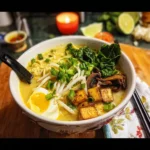
I still remember the first truly cold evening of fall last year. The kind of damp, bone-chilling cold that makes you crave something deeply warming, something that feels like a hug in a bowl. My family, while supportive of my plant-based journey, was still a bit skeptical when I announced, “We’re having vegan ramen for dinner!” I saw the looks—polite but questioning. They were imagining a thin, vegetable-soup-like concoction, a pale imitation of the rich, pork-based tonkotsu they knew. But as I brought the steaming bowls to the table, the aroma filled the kitchen first: a complex scent of toasted sesame, deep savory mushroom, and a hint of the sea. They watched as I ladled the milky, opaque broth over perfectly cooked noodles, arranging the glistening miso-glazed tofu, vibrant green bok choy, and a swirl of dark aroma oil on top. The first slurp was met with silence, followed by wide eyes. “This… is vegan?” my partner asked, already going in for another spoonful. It wasn’t just good; it was a revelation. This recipe isn’t about compromise; it’s a celebration of how incredibly deep, complex, and satisfying plant-based cooking can be. It has become our go-to comfort meal, the dish we make to impress guests, and the recipe that proved to my family once and for all that vegan food lacks nothing in flavor or heart.
The Philosophy Behind the Ultimate Vegan Ramen
Before we dive into the ingredients, it’s crucial to understand that phenomenal ramen is not just one thing; it’s a harmony of four distinct elements working together. Many home cooks make the mistake of focusing only on the broth, but a true ramen experience requires attention to each part. In this recipe, we will build a bowl of ramen from the ground up, ensuring every single component is packed with flavor.
- The Broth: This is the soul of the ramen. We are not making a simple vegetable stock. We are creating a deep, layered, and savory foundation using charred aromatics, umami-rich dried mushrooms, and the magic of kombu.
- The Tare (Pronounced “tah-reh”): This is the secret weapon. Tare is the concentrated, salty, flavor base that sits at the bottom of the bowl. When the hot broth is poured over it, it dissolves and seasons the entire soup. It’s the difference between a bland soup and a professional-tasting ramen.
- The Aroma Oil: This is the final flourish that elevates the entire experience. A fragrant, infused oil drizzled on top adds a powerful aromatic punch, a luxurious mouthfeel, and a beautiful visual appeal.
- The Toppings: This is where you bring texture, color, and even more flavor. Our star will be a savory and slightly sweet Miso-Glazed Baked Tofu, but the supporting cast is just as important.
By building each of these components with care, you will create a bowl of vegan ramen that is not just a substitute, but a culinary masterpiece in its own right.
Complete Vegan Ramen Recipe
This recipe is designed to be a weekend project or a meal you can prep in stages. The results are absolutely worth the effort.
Ingredients for the Rich Umami Broth (Makes ~6 cups)
- 1 large yellow onion, skin on, halved
- 1 4-inch piece of ginger, unpeeled, halved lengthwise
- 6-8 large cloves of garlic, skin on, lightly smashed
- 2 medium carrots, roughly chopped
- 1 large leek (white and light green parts only), well-rinsed and roughly chopped
- 1 oz (about 30g) dried shiitake mushrooms
- 1 6×6 inch piece of kombu (dried sea kelp)
- 10 cups of filtered water
- 2 tablespoons light soy sauce or tamari
- 1 tablespoon mirin
Ingredients for the Shio Tare (Salt Seasoning Base)
- ½ cup filtered water
- ¼ cup high-quality sea salt or kosher salt
- 2 tablespoons sake (or dry sherry)
- 1 tablespoon mirin
- 1 2×2 inch piece of kombu
Ingredients for the Scallion-Garlic Aroma Oil
- ½ cup neutral oil (like canola, grapeseed, or avocado oil)
- 4 cloves garlic, thinly sliced
- ½ cup chopped scallions (green parts only)
Ingredients for the Miso-Glazed Tofu
- 1 14-16 oz block of extra-firm tofu, pressed for at least 30 minutes
- 2 tablespoons white or yellow miso paste
- 2 tablespoons mirin
- 1 tablespoon soy sauce or tamari
- 1 tablespoon maple syrup
- 1 teaspoon toasted sesame oil
For Assembly & Other Toppings
- 4 servings of fresh or dried ramen noodles
- 2 heads of baby bok choy, halved lengthwise
- 1 cup frozen or fresh corn
- 4 sheets of nori (roasted seaweed), cut in half
- ½ cup sliced menma (seasoned bamboo shoots), optional
- ¼ cup thinly sliced scallions (for garnish)
- Toasted sesame seeds (for garnish)
- Chili oil or Shichimi Togarashi (Japanese seven-spice), for serving
Step-by-Step Instructions: Crafting Your Ramen Masterpiece
Follow these steps in order for the best workflow. The tofu can bake while the broth simmers, making the process efficient.
Step 1: Prepare the Miso-Glazed Tofu (The Star Topping)
- Preheat and Prepare: Preheat your oven to 400°F (200°C). Line a baking sheet with parchment paper.
- Press the Tofu: This is a non-negotiable step! Pressing the tofu removes excess water, allowing it to absorb the marinade better and achieve a firmer, chewier texture. You can use a dedicated tofu press or wrap the block in paper towels, place it on a plate, and put something heavy on top (like a cast-iron skillet or a few books) for at least 30 minutes.
- Cut the Tofu: Once pressed, slice the tofu into 8 rectangular slabs or 1-inch cubes, depending on your preference.
- Mix the Glaze: In a small bowl, whisk together the miso paste, mirin, soy sauce, maple syrup, and toasted sesame oil until a smooth paste forms.
- Coat the Tofu: Gently toss the tofu pieces in the miso glaze until they are evenly coated. A silicone spatula is great for this to prevent the tofu from breaking.
- Bake to Perfection: Arrange the coated tofu in a single layer on the prepared baking sheet. Bake for 20-25 minutes, flipping halfway through, until the edges are golden brown and caramelized. Set aside.
Step 2: Create the Rich Umami Broth
- Char the Aromatics: Heat a large, heavy-bottomed pot or Dutch oven over medium-high heat. Place the onion halves (cut-side down), ginger halves (cut-side down), and smashed garlic cloves directly into the dry pot. Allow them to char for 5-7 minutes without moving them. You want deep, dark brown, almost black spots. This step is critical for developing a smoky, complex flavor base. Do not be afraid of the color!
- Build the Broth: Add the chopped carrots, leeks, and the charred aromatics to the pot. Pour in the 10 cups of filtered water.
- Add the Umami Bombs: Add the dried shiitake mushrooms to the pot. Bring the mixture to a boil, then immediately reduce the heat to a low simmer.
- Simmer Gently: Cover the pot partially and let the broth simmer gently for at least 1 hour, or up to 1.5 hours. The longer it simmers, the more flavor will be extracted. Skim off any foam or scum that rises to the surface during the first few minutes.
- Infuse the Kombu: In the last 15 minutes of simmering, turn off the heat and add the piece of kombu to the pot. It is crucial not to boil the kombu, as it can make the broth bitter and slimy. Let it steep in the hot broth as it cools slightly.
- Strain and Season: Carefully strain the broth through a fine-mesh sieve into a large, clean bowl or pot. Press down on the vegetables with the back of a spoon to extract every last drop of flavorful liquid. Discard the solids (or save them for a future vegetable stock). Stir the 2 tablespoons of soy sauce and 1 tablespoon of mirin into the finished broth. Keep warm over low heat.
Step 3: Make the Shio Tare
- Combine Ingredients: While the broth is simmering, make the tare. In a small saucepan, combine the ½ cup of water, sea salt, sake, and mirin.
- Dissolve and Infuse: Heat over medium heat, stirring until the salt is completely dissolved. Do not let it boil.
- Steep the Kombu: Remove the saucepan from the heat and add the small piece of kombu. Let it steep for at least 20 minutes to infuse its savory flavor into the tare. Remove the kombu before using. This tare will be very salty, as it’s a concentrate.
Step 4: Infuse the Scallion-Garlic Aroma Oil
- Gentle Infusion: In another small saucepan, combine the neutral oil, thinly sliced garlic, and chopped scallions.
- Heat Slowly: Place over low heat. The goal is not to fry the garlic and scallions, but to gently infuse their flavor into the oil. You should see tiny, lazy bubbles. Let it infuse for 10-15 minutes, stirring occasionally, until the garlic is fragrant and just beginning to turn a very pale golden color. Do not let it brown, or the oil will become bitter.
- Strain (Optional): You can either use the oil as is with the garlic and scallion pieces, or strain it through a fine-mesh sieve for a clear, potent oil.
Step 5: Cook the Noodles & Prepare Final Toppings
- Noodle Time: Bring a large pot of unsalted water to a rolling boil. (The broth and tare are salty enough). Cook the ramen noodles according to package directions. Fresh noodles often cook in just 1-2 minutes, so watch them closely. They should be cooked until al dente (with a slight bite), as they will continue to cook in the hot broth.
- Blanch the Bok Choy: In the last 30-45 seconds of the noodles cooking, drop the halved baby bok choy into the same pot to quickly blanch them. They should be bright green and crisp-tender.
- Drain and Divide: Drain the noodles and bok choy well. Immediately divide the noodles among four large, deep serving bowls.
Step 6: The Art of Assembly
This is the final, exciting step where everything comes together. Work quickly so everything stays hot.
- Tare First: Add 2-3 tablespoons of the Shio Tare to the bottom of each empty ramen bowl.
- Broth Second: Ladle about 1.5 to 2 cups of the hot umami broth into each bowl, pouring it directly over the tare. Stir gently with chopsticks to combine.
- Noodles Third: Add a portion of the freshly cooked noodles to the center of each bowl. Use chopsticks to lift and fold them slightly to prevent clumping.
- Arrange Toppings: Now, artfully arrange your toppings. Place a few pieces of the Miso-Glazed Tofu on one side. Stand the blanched bok choy halves up against the side of the bowl. Add a small pile of corn, a few slices of menma, and tuck the nori sheet in at the back.
- Final Flourish: Drizzle about a teaspoon of the Scallion-Garlic Aroma Oil over the surface of the soup. Garnish with a sprinkle of fresh, thinly sliced scallions and toasted sesame seeds.
- Serve Immediately: Ramen waits for no one! Serve immediately with chili oil or shichimi togarashi on the side for those who like extra heat.
Nutrition Facts
- Servings: 4 large bowls
- Calories per serving: Approximately 680 kcal
(Disclaimer: The nutritional information is an estimate and can vary depending on the specific ingredients used, such as the type of noodles and the exact brands of miso and soy sauce.)
Preparation Time
- Prep Time: 45 minutes (includes pressing tofu and chopping vegetables)
- Cook Time: 1 hour 30 minutes
- Total Time: 2 hours 15 minutes
How to Serve
Serving ramen is an experience in itself. Paying attention to a few small details can make your homemade meal feel like it came from a specialty ramen shop.
- The Right Bowl: Use a deep, wide bowl, often called a ramen-bachi. This gives you enough space to hold the broth and noodles without crowding the toppings.
- Pre-warm Your Bowls: Before assembling, fill your serving bowls with very hot tap water and let them sit for a few minutes. Pour out the water and dry them just before you add the tare. A warm bowl keeps your ramen hot for longer.
- The Quadrant Method for Toppings: To make the bowl visually stunning, imagine it divided into quadrants or sections.
- Place the protein (Miso-Glazed Tofu) in one section.
- Place the greens (bok choy) in another.
- Use another spot for colorful accents like corn.
- Tuck the nori sheet standing up in the back so it doesn’t get soggy too quickly.
- Leave a small area of the broth surface clear to showcase the aroma oil and broth itself.
- Utensils are Key: Serve with both a pair of chopsticks for the solids (noodles, toppings) and a deep, Asian-style soup spoon (a renge) for the broth.
- Embrace the Slurp: Encourage everyone to slurp their noodles! In Japanese culture, slurping is not considered rude; it’s a sign of enjoyment. It also helps cool the hot noodles slightly as you eat them and aerates the broth, enhancing its flavor.
- Side Condiments: Offer a small tray of extra condiments on the table so everyone can customize their bowl. Good options include:
- Chili oil or rayu
- Shichimi Togarashi
- Extra sliced scallions
- A small dish of pickled ginger (beni shoga)
Additional Tips for Ramen Perfection
- Meal Prep Magic for Weeknight Ramen: This recipe can seem daunting, but it’s incredibly prep-friendly. You can make the Umami Broth, Shio Tare, and Aroma Oil up to 3-4 days in advance and store them in airtight containers in the refrigerator. The Miso-Glazed Tofu can also be made a day or two ahead. When you’re ready to eat, simply reheat the broth, cook a fresh batch of noodles, and assemble. This turns a 2-hour project into a 15-minute weeknight meal.
- Achieving a Creamier Broth (The “Paitan” Hack): If you prefer a richer, opaque, and creamy broth similar to a tonkotsu style, here’s a fantastic vegan hack. After you’ve strained the broth and seasoned it, transfer about 2 cups of the hot broth to a blender. Add 1/4 cup of raw cashews (soaked in hot water for 20 minutes) OR 3 tablespoons of tahini OR 1/2 cup of unsweetened, plain soy milk. Blend on high until completely smooth and creamy. Pour this creamy mixture back into the main pot of broth and stir to combine. It will instantly transform the texture and richness.
- Don’t Rush the Aromatics: The charring step for the onion, ginger, and garlic is where so much of the foundational flavor is built. It creates a smokiness and sweetness that you can’t get from simply boiling them. Use a dry pot and be patient. Let them sit undisturbed until you have significant browning. This single step will elevate your broth from good to unforgettable.
- The Importance of Fresh, Bouncy Noodles: While dried ramen packets work in a pinch, investing in good quality fresh or frozen ramen noodles will make a world of difference. They have a superior chewiness and “bounciness” (koshi in Japanese) that holds up better in the hot broth. Look for them in the refrigerated or frozen section of an Asian grocery store or a well-stocked supermarket.
- Customize Your Toppings – The Possibilities are Endless: The toppings listed are classics, but feel free to get creative and use what you have on hand. This is a great way to use up leftover vegetables. Some other fantastic vegan topping ideas include:
- Sautéed king oyster mushrooms, pulled apart to resemble pulled pork.
- Blanched spinach or bean sprouts.
- Roasted sweet potato cubes.
- Crispy fried onions or shallots for crunch.
- A drizzle of black garlic oil for an even deeper flavor.
- Avocado slices for creaminess.
- Lightly pan-fried tempeh.
Frequently Asked Questions (FAQ)
1. Can I make this vegan ramen recipe gluten-free?
Absolutely! The recipe is very easy to adapt. Simply make these two substitutions: use gluten-free tamari instead of soy sauce in all components (broth and tofu glaze), and use gluten-free ramen noodles. Brown rice and millet ramen noodles are widely available and have a wonderful texture. All other ingredients are naturally gluten-free.
2. My broth tastes a little bland. What did I do wrong?
There are a few potential culprits. First, check your seasoning. Did you add enough tare to your bowl? The broth itself is only lightly seasoned; the tare is what provides the main saltiness. Try adding another teaspoon of tare. Second, did you char the aromatics sufficiently? A deep char is essential for flavor. Third, did you use enough umami ingredients like the dried shiitake mushrooms and kombu? Finally, ensure you simmered the broth for at least an hour to give the flavors time to meld.
3. What is the difference between the broth and the tare? Why do I need both?
This is a fantastic question and central to authentic ramen making. The broth is the large-volume liquid base, designed to provide depth, body, and foundational flavor (from the vegetables, mushrooms, etc.). It is intentionally under-seasoned. The tare is a small-volume, highly concentrated seasoning agent (in this case, salt-based). By keeping them separate, you have complete control. You season each individual bowl just before serving, which ensures a perfectly balanced and fresh flavor every time. Pouring the hot broth over the tare is what activates it and creates the final, perfectly seasoned soup.
4. Can I use other types of mushrooms besides dried shiitake?
You can, but it will change the flavor profile significantly. Dried shiitake mushrooms are used specifically for their intense, smoky, and savory umami flavor, which is very different from fresh mushrooms. They are a powerhouse ingredient for creating a “meaty” vegan broth. If you can’t find them, you could try using a combination of fresh cremini mushrooms and a tablespoon of dark miso paste or a splash of mushroom-soaking liquid to help boost the umami, but the unique flavor of dried shiitakes is hard to replicate.
5. How do I store and reheat leftover ramen?
The key to good leftovers is to store the components separately. If you combine everything, the noodles will become bloated and mushy. Store the leftover broth, tofu, and other toppings in separate airtight containers in the refrigerator for up to 3 days. Do not save the cooked noodles. When you’re ready to eat, reheat the broth on the stove until simmering hot. Cook a fresh serving of noodles. Assemble the bowl just as you did the first time with the reheated broth and cold toppings (the hot broth will warm them up). This method ensures your second bowl is nearly as good as the first.
Vegan Ramen Recipe
Ingredients
Ingredients for the Rich Umami Broth (Makes ~6 cups)
- 1 large yellow onion, skin on, halved
- 1 4-inch piece of ginger, unpeeled, halved lengthwise
- 6–8 large cloves of garlic, skin on, lightly smashed
- 2 medium carrots, roughly chopped
- 1 large leek (white and light green parts only), well-rinsed and roughly chopped
- 1 oz (about 30g) dried shiitake mushrooms
- 1 6×6 inch piece of kombu (dried sea kelp)
- 10 cups of filtered water
- 2 tablespoons light soy sauce or tamari
- 1 tablespoon mirin
Ingredients for the Shio Tare (Salt Seasoning Base)
- ½ cup filtered water
- ¼ cup high-quality sea salt or kosher salt
- 2 tablespoons sake (or dry sherry)
- 1 tablespoon mirin
- 1 2×2 inch piece of kombu
Ingredients for the Scallion-Garlic Aroma Oil
- ½ cup neutral oil (like canola, grapeseed, or avocado oil)
- 4 cloves garlic, thinly sliced
- ½ cup chopped scallions (green parts only)
Ingredients for the Miso-Glazed Tofu
- 1 14-16 oz block of extra-firm tofu, pressed for at least 30 minutes
- 2 tablespoons white or yellow miso paste
- 2 tablespoons mirin
- 1 tablespoon soy sauce or tamari
- 1 tablespoon maple syrup
- 1 teaspoon toasted sesame oil
For Assembly & Other Toppings
- 4 servings of fresh or dried ramen noodles
- 2 heads of baby bok choy, halved lengthwise
- 1 cup frozen or fresh corn
- 4 sheets of nori (roasted seaweed), cut in half
- ½ cup sliced menma (seasoned bamboo shoots), optional
- ¼ cup thinly sliced scallions (for garnish)
- Toasted sesame seeds (for garnish)
- Chili oil or Shichimi Togarashi (Japanese seven-spice), for serving
Instructions
Step 1: Prepare the Miso-Glazed Tofu (The Star Topping)
- Preheat and Prepare: Preheat your oven to 400°F (200°C). Line a baking sheet with parchment paper.
- Press the Tofu: This is a non-negotiable step! Pressing the tofu removes excess water, allowing it to absorb the marinade better and achieve a firmer, chewier texture. You can use a dedicated tofu press or wrap the block in paper towels, place it on a plate, and put something heavy on top (like a cast-iron skillet or a few books) for at least 30 minutes.
- Cut the Tofu: Once pressed, slice the tofu into 8 rectangular slabs or 1-inch cubes, depending on your preference.
- Mix the Glaze: In a small bowl, whisk together the miso paste, mirin, soy sauce, maple syrup, and toasted sesame oil until a smooth paste forms.
- Coat the Tofu: Gently toss the tofu pieces in the miso glaze until they are evenly coated. A silicone spatula is great for this to prevent the tofu from breaking.
- Bake to Perfection: Arrange the coated tofu in a single layer on the prepared baking sheet. Bake for 20-25 minutes, flipping halfway through, until the edges are golden brown and caramelized. Set aside.
Step 2: Create the Rich Umami Broth
- Char the Aromatics: Heat a large, heavy-bottomed pot or Dutch oven over medium-high heat. Place the onion halves (cut-side down), ginger halves (cut-side down), and smashed garlic cloves directly into the dry pot. Allow them to char for 5-7 minutes without moving them. You want deep, dark brown, almost black spots. This step is critical for developing a smoky, complex flavor base. Do not be afraid of the color!
- Build the Broth: Add the chopped carrots, leeks, and the charred aromatics to the pot. Pour in the 10 cups of filtered water.
- Add the Umami Bombs: Add the dried shiitake mushrooms to the pot. Bring the mixture to a boil, then immediately reduce the heat to a low simmer.
- Simmer Gently: Cover the pot partially and let the broth simmer gently for at least 1 hour, or up to 1.5 hours. The longer it simmers, the more flavor will be extracted. Skim off any foam or scum that rises to the surface during the first few minutes.
- Infuse the Kombu: In the last 15 minutes of simmering, turn off the heat and add the piece of kombu to the pot. It is crucial not to boil the kombu, as it can make the broth bitter and slimy. Let it steep in the hot broth as it cools slightly.
- Strain and Season: Carefully strain the broth through a fine-mesh sieve into a large, clean bowl or pot. Press down on the vegetables with the back of a spoon to extract every last drop of flavorful liquid. Discard the solids (or save them for a future vegetable stock). Stir the 2 tablespoons of soy sauce and 1 tablespoon of mirin into the finished broth. Keep warm over low heat.
Step 3: Make the Shio Tare
- Combine Ingredients: While the broth is simmering, make the tare. In a small saucepan, combine the ½ cup of water, sea salt, sake, and mirin.
- Dissolve and Infuse: Heat over medium heat, stirring until the salt is completely dissolved. Do not let it boil.
- Steep the Kombu: Remove the saucepan from the heat and add the small piece of kombu. Let it steep for at least 20 minutes to infuse its savory flavor into the tare. Remove the kombu before using. This tare will be very salty, as it’s a concentrate.
Step 4: Infuse the Scallion-Garlic Aroma Oil
- Gentle Infusion: In another small saucepan, combine the neutral oil, thinly sliced garlic, and chopped scallions.
- Heat Slowly: Place over low heat. The goal is not to fry the garlic and scallions, but to gently infuse their flavor into the oil. You should see tiny, lazy bubbles. Let it infuse for 10-15 minutes, stirring occasionally, until the garlic is fragrant and just beginning to turn a very pale golden color. Do not let it brown, or the oil will become bitter.
- Strain (Optional): You can either use the oil as is with the garlic and scallion pieces, or strain it through a fine-mesh sieve for a clear, potent oil.
Step 5: Cook the Noodles & Prepare Final Toppings
- Noodle Time: Bring a large pot of unsalted water to a rolling boil. (The broth and tare are salty enough). Cook the ramen noodles according to package directions. Fresh noodles often cook in just 1-2 minutes, so watch them closely. They should be cooked until al dente (with a slight bite), as they will continue to cook in the hot broth.
- Blanch the Bok Choy: In the last 30-45 seconds of the noodles cooking, drop the halved baby bok choy into the same pot to quickly blanch them. They should be bright green and crisp-tender.
- Drain and Divide: Drain the noodles and bok choy well. Immediately divide the noodles among four large, deep serving bowls.
Step 6: The Art of Assembly
This is the final, exciting step where everything comes together. Work quickly so everything stays hot.
- Tare First: Add 2-3 tablespoons of the Shio Tare to the bottom of each empty ramen bowl.
- Broth Second: Ladle about 1.5 to 2 cups of the hot umami broth into each bowl, pouring it directly over the tare. Stir gently with chopsticks to combine.
- Noodles Third: Add a portion of the freshly cooked noodles to the center of each bowl. Use chopsticks to lift and fold them slightly to prevent clumping.
- Arrange Toppings: Now, artfully arrange your toppings. Place a few pieces of the Miso-Glazed Tofu on one side. Stand the blanched bok choy halves up against the side of the bowl. Add a small pile of corn, a few slices of menma, and tuck the nori sheet in at the back.
- Final Flourish: Drizzle about a teaspoon of the Scallion-Garlic Aroma Oil over the surface of the soup. Garnish with a sprinkle of fresh, thinly sliced scallions and toasted sesame seeds.
- Serve Immediately: Ramen waits for no one! Serve immediately with chili oil or shichimi togarashi on the side for those who like extra heat.
Nutrition
- Serving Size: One Normal Portion
- Calories: 680