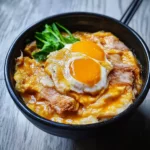
Ingredients
Scale
- 250g (approx. 0.55 lbs) boneless, skin-on chicken thighs, cut into 1-inch pieces
- 1/2 medium yellow onion, thinly sliced (about 1 cup sliced)
- 4 large fresh eggs
- 2 cups cooked Japanese short-grain rice, hot
- For the Dashi Broth:
- 120 ml (1/2 cup) Dashi stock (homemade or from granules)
- 2 tablespoons Japanese soy sauce
- 2 tablespoons mirin
- 1 tablespoon sake (optional)
- 1 teaspoon granulated sugar (adjust to taste)
- For Garnish (Optional):
- Mitsuba leaves or chopped green onions
- Shichimi Togarashi (Japanese seven-spice blend)
Instructions
- Prepare Ingredients (Mise en Place):
- Cut the chicken thighs into 1-inch bite-sized pieces.
- Thinly slice the onion.
- In a small bowl, lightly beat the eggs. You don’t want them fully homogenized; aim for streaks of yolk and white. Some prefer to beat them very gently, just breaking the yolks.
- In another small bowl or measuring cup, combine the dashi stock, soy sauce, mirin, sake (if using), and sugar. Stir until the sugar is dissolved. This is your Oyakodon sauce.
- Divide the hot cooked rice between two donburi bowls.
- Cook the Chicken and Onions (Individual Servings):
- Note: Oyakodon is best cooked one serving at a time for optimal egg texture. If your skillet is large enough, you might manage two, but individual preparation is recommended. Divide the chicken, onion, sauce, and beaten egg in half if cooking sequentially.
- Place half of the sliced onions in a small (6-8 inch) non-stick skillet or Oyakodon pan. Pour half of the Oyakodon sauce over the onions.
- Arrange half of the chicken pieces in a single layer over the onions.
- Bring the sauce to a simmer over medium heat. Once simmering, reduce the heat to medium-low, cover the pan, and cook for 5-7 minutes, or until the chicken is cooked through and the onions are tender. Stir occasionally if needed to prevent sticking and ensure even cooking.
- Add the Egg:
- Uncover the pan. Give the chicken and onions a gentle stir to ensure they are evenly distributed.
- Bring the sauce back to a gentle simmer if it has cooled.
- Drizzle about two-thirds of one serving’s beaten egg (i.e., half of the total beaten eggs if doing one serving at a time) in a circular motion over the chicken and onions. Try to cover everything evenly.
- Cover the pan again and cook for 1-2 minutes, or until the egg is about 70-80% set. You want the bottom to be cooked but the top still quite runny and jiggly.
- Uncover and drizzle the remaining one-third of the egg over the top, focusing on areas that look less eggy.
- Cover again and cook for another 30 seconds to 1 minute, or just until the second pour of egg is barely set but still very soft and slightly translucent in places. Be careful not to overcook; the eggs should be silky and custardy. The residual heat will continue to cook them slightly after plating.
- Serve Immediately:
- Carefully slide the chicken and egg mixture from the skillet directly over one bowl of prepared hot rice. If using a traditional Oyakodon pan, the sloped sides make this easy. With a regular skillet, you might need a spatula to help guide it.
- Garnish with fresh mitsuba leaves, chopped green onions, and a sprinkle of shichimi togarashi, if desired.
- Repeat steps 2-4 for the second serving using the remaining ingredients.
Nutrition
- Serving Size: One Normal Portion
- Calories: 650-750