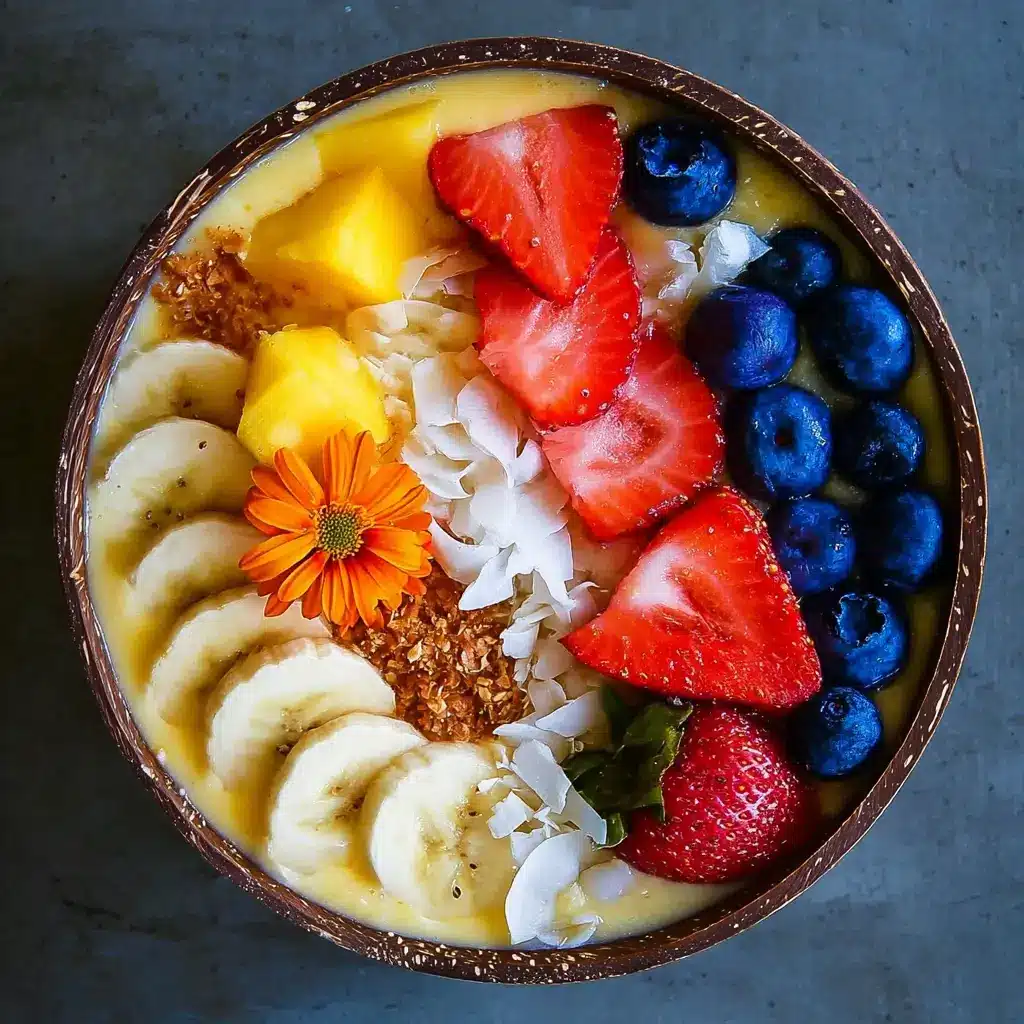
There’s a specific kind of magic that happens on a dreary morning when you blend up a bowl of pure, unadulterated sunshine. For our family, this Tropical Smoothie Bowl has become more than just a breakfast; it’s a mini-vacation. I’ll never forget the first time I made it. The kids, usually picky about anything green or overly “healthy,” were mesmerized by the vibrant, golden-yellow hue. Their eyes widened as I decorated the top with a rainbow of fresh fruits and a sprinkle of coconut. The first spoonful was met with silence, then an enthusiastic “Whoa! This tastes like a holiday!” Since that day, it’s been our go-to for a weekend treat, a post-workout refuel, and a surefire way to brighten a cloudy day. It’s creamy, sweet without any refined sugar, and so satisfyingly thick you have to eat it with a spoon. It’s the recipe that proves healthy eating can feel like the most decadent indulgence.
The Ultimate Tropical Smoothie Bowl: A Taste of Paradise
This isn’t just a recipe; it’s a blueprint for the perfect escape. A thick, creamy, ice-cream-like base bursting with the flavors of mango, pineapple, and banana, all swirled together into a vibrant, nutrient-packed breakfast or snack. It’s designed to be scooped, not sipped, and serves as the perfect canvas for your favorite toppings. Get ready to transport your taste buds to a sun-drenched beach with every single spoonful.
Why This Recipe Will Become Your Favorite Breakfast
Before we dive into the how-to, let’s talk about the why. This Tropical Smoothie Bowl isn’t just another breakfast trend; it’s a lifestyle upgrade in a bowl.
- Incredibly Delicious: It genuinely tastes like a dessert. The natural sweetness from the mango and banana means you don’t need to add any sugar, yet it satisfies any sweet craving.
- Packed with Nutrients: You’re getting a powerful dose of Vitamin C from the mango and pineapple, potassium from the banana, and healthy fats from the coconut milk. It’s a powerhouse of antioxidants and fiber.
- Endlessly Customizable: The recipe provided is a perfect base, but the real fun begins with the toppings and mix-ins. You can tailor it to your dietary needs, flavor preferences, or simply what you have in the fridge.
- Naturally Vegan & Dairy-Free: By using coconut milk, this recipe is accessible to almost everyone, regardless of dietary restrictions. It’s naturally free from dairy, gluten, and soy.
- Stunningly Beautiful: Let’s be honest, we eat with our eyes first! The bright yellow color and the artfully arranged toppings make this a breakfast that’s as beautiful as it is delicious. It’s an Instagram-worthy meal that will make you feel like a food artist.
A Deep Dive Into Our Tropical Ingredients
The magic of this bowl lies in the simplicity and quality of its ingredients. Understanding what each component brings to the party is key to mastering the perfect texture and flavor.
Frozen Mango Chunks
The star of the show. Mango provides the signature sweet, tropical flavor and a beautiful golden color. Using frozen mango is non-negotiable for a thick, frosty texture. It’s packed with Vitamin C, which is fantastic for your immune system, and Vitamin A for eye health. When buying frozen mango, look for bags with individual chunks rather than a solid block, which indicates it has thawed and been refrozen.
Frozen Pineapple Tidbits
Pineapple adds a delightful tangy counterpoint to the sweet mango, creating a balanced and complex tropical flavor profile. It contains bromelain, a unique enzyme known for its anti-inflammatory properties and ability to aid digestion. Again, frozen is essential here. The smaller “tidbits” or chunks are easier on your blender blades than large rings.
Frozen Banana
This is the secret weapon for ultimate creaminess. A frozen banana, when blended, creates a texture remarkably similar to soft-serve ice cream. It also contributes natural sweetness and a healthy dose of potassium, which is vital for heart health and maintaining proper fluid balance. For the best results, peel a ripe banana, break it into chunks, and freeze it in a reusable bag or container for at least 4-6 hours, or overnight. The riper the banana, the sweeter your smoothie bowl will be.
Full-Fat Coconut Milk
This is what binds everything together and adds a luxurious, creamy richness. Using full-fat coconut milk from a can provides the necessary healthy fats that not only contribute to the texture but also help keep you feeling full and satisfied for hours. The subtle coconut flavor enhances the overall tropical vibe. You can use light coconut milk or another plant-based milk, but you will sacrifice some of the decadent creaminess.
Complete Tropical Smoothie Bowl Recipe
Here is the foundational recipe for your perfect bowl. Remember that the quality of your frozen fruit is paramount to the final result.
Ingredients
- 1 ½ cups (approx. 225g) frozen mango chunks
- 1 cup (approx. 150g) frozen pineapple chunks
- 1 large ripe banana, peeled, chopped, and frozen
- ⅓ to ½ cup (80-120ml) full-fat canned coconut milk (start with less and add more if needed)
- Optional Boosters:
- 1 scoop vanilla or unflavored protein powder
- 1 tablespoon chia seeds or ground flax seeds
- A small handful of fresh spinach (you won’t taste it, but it adds nutrients!)
Step-by-Step Instructions for the Perfect Bowl
Achieving that signature thick, scoopable texture requires a slightly different technique than making a drinkable smoothie. Follow these steps closely for flawless results.
- Prepare Your Blender: Add your liquid—the ⅓ cup of coconut milk—to the bottom of a high-speed blender first. This is a crucial step! The liquid at the bottom helps the blades catch the frozen fruit and start the blending process without struggling.
- Layer the Solids: Add the softer frozen fruit next, which is typically the banana. Then, add the harder frozen mango and pineapple chunks on top. If you’re using any optional boosters like protein powder or chia seeds, add them now.
- Blend on Low: Start your blender on its lowest setting. This will begin to break up the frozen fruit without immediately liquifying everything. You may need to use your blender’s tamper (the plastic stick that comes with many high-speed blenders) to push the ingredients down towards the blades. If your blender doesn’t have a tamper, you’ll need to stop, scrape down the sides with a spatula, and restart a few times.
- Increase Speed Gradually: Once the mixture starts to move and combine, you can slowly increase the speed. Blend until the mixture is completely smooth and has a thick, sorbet-like consistency. The key is to blend for the shortest amount of time possible to achieve smoothness. Over-blending will generate heat and melt the fruit, resulting in a soupy texture.
- Check Consistency: If the blender is struggling and the mixture is too thick to move, add another tablespoon of coconut milk at a time until it just starts to blend smoothly. Be very conservative with the liquid—you can always add more, but you can’t take it out.
- Pour and Serve Immediately: Once blended to perfection, use a spatula to scoop the thick smoothie mixture out of the blender and into a chilled bowl. Work quickly, as it will start to melt. Smooth the top with the back of a spoon and get ready for the best part: the toppings!
Nutrition Facts
- Servings: 1 large bowl or 2 smaller bowls
- Calories per serving (for 1 large bowl, base only): Approximately 450-500 kcal
Disclaimer: The nutritional information is an estimate and will vary depending on the exact ingredients used, optional add-ins, and your chosen toppings.
Preparation Time
- Prep Time: 5 minutes (if fruit is pre-frozen)
- Blending Time: 2-3 minutes
- Total Time: Approximately 8-10 minutes
This makes it one of the fastest and most rewarding meals you can make from scratch, perfect for busy mornings when you still crave something special.
The Art of Serving: How to Garnish Your Smoothie Bowl
The joy of a smoothie bowl is half in the making, half in the decorating. This is your chance to be creative and add extra flavor, texture, and nutrition. A well-garnished bowl is a feast for the senses.
The Foundation: Choosing Your Bowl
Believe it or not, the bowl matters! A wider, shallower bowl provides more surface area for toppings. For a truly tropical feel, consider serving it in a coconut shell bowl. Chilling your bowl in the freezer for 10 minutes before adding the smoothie will also help keep it from melting too quickly.
The Topping Extravaganza: A Universe of Options
Think in terms of texture, color, and flavor. A good rule of thumb is to include something fresh, something crunchy, and something a little extra special.
- Fresh & Juicy Fruits:
- Thinly sliced banana or kiwi rounds
- Fresh strawberry halves or slices
- A spoonful of passion fruit pulp
- Fresh mango or pineapple chunks
- Vibrant berries like raspberries or blueberries
- Dragon fruit (pitaya) balls, scooped with a melon baller
- Pomegranate arils for a juicy, jewel-like pop
- Irresistible Crunch & Texture:
- Homemade or store-bought granola: Look for low-sugar options.
- Toasted coconut flakes: These are a must for a tropical bowl! Toasting them brings out a nutty, rich flavor.
- Chopped nuts: Almonds, macadamia nuts, or cashews work beautifully.
- Seeds: Chia seeds, hemp hearts, or pumpkin seeds (pepitas) add a great textural element and a nutritional punch of fiber and protein.
- Superfood Boosts:
- Goji berries: For a chewy texture and antioxidant boost.
- Cacao nibs: They provide a deep, chocolatey crunch without the sugar of chocolate chips.
- Bee pollen: Adds a unique floral flavor and a pop of yellow color (note: not vegan).
- Mulberries: A chewy, sweet, and nutrient-dense dried fruit.
- Delicious Drizzles:
- A swirl of creamy almond or cashew butter
- A drizzle of local honey or pure maple syrup for a touch of extra sweetness
- Melted coconut butter (it will harden into a “magic shell” on the cold smoothie)
- Passion fruit coulis for an intense tropical tang
5 Essential Tips for Smoothie Bowl Success
Avoid common pitfalls and guarantee a perfect, thick, and creamy bowl every single time with these pro tips.
1. The Frozen Fruit Non-Negotiable
This is the most important rule. Using fresh fruit will result in a drinkable smoothie, not a thick bowl. Your fruit needs to be frozen solid. I recommend buying large bags of frozen fruit and keeping your freezer stocked. For bananas, peel and chop them before freezing on a tray so they don’t stick together, then transfer to a bag. This ensures your ingredients are always ready to go.
2. Master the Liquid Ratio
The biggest mistake people make is adding too much liquid. You need just enough to allow the blender blades to do their job. Start with the absolute minimum amount your recipe calls for (in this case, ⅓ cup). Only add more, one tablespoon at a time, if the blender is genuinely stuck. A powerful blender will need less liquid than a standard one. Patience is key; it takes a minute or two for the magic to happen.
3. The Power of a Good Blender (and How to Help It)
While you don’t need the most expensive blender on the market, a high-speed blender (like a Vitamix, Blendtec, or powerful Ninja) makes a world of difference. They have stronger motors and better blade designs for pulverizing frozen ingredients. If you have a standard blender, you can still succeed! Just be prepared to stop and scrape down the sides more often, and you might need to add a splash more liquid. Using the tamper if you have one is the single best way to get a thick result without adding more liquid.
4. Work Quickly to Avoid a Soupy Mess
The enemy of a thick smoothie bowl is heat and time. Heat from the friction of the blender blades and heat from the ambient room temperature will start to melt your frozen creation immediately. Don’t over-blend, and once it’s smooth, transfer it to your (preferably chilled) bowl right away. Have your toppings prepped and ready to go so you can decorate and enjoy it at its peak frosty texture.
5. Taste and Adjust Before You Pour
Once the bowl is blended but before you scoop it out, give it a quick taste. Is it sweet enough for you? If your fruit wasn’t perfectly ripe, you might want to add half a pitted Medjool date or a tiny drizzle of maple syrup and give it one last quick pulse. Does it need more tang? A small squeeze of lime juice can brighten all the flavors beautifully.
Frequently Asked Questions (FAQ)
Here are answers to some of the most common questions about making the perfect Tropical Smoothie Bowl.
1. Can I make a smoothie bowl without a banana?
Absolutely! The banana is primarily for creaminess and sweetness. If you have an allergy or dislike the taste, you can substitute it. To replicate the creaminess, use an extra ½ cup of frozen mango, or try adding ¼ of a ripe avocado (it adds creaminess without a strong flavor) or a few tablespoons of thick coconut cream or yogurt. You may need to add a date or a touch of maple syrup to compensate for the lost sweetness.
2. How do I make my smoothie bowl even thicker?
Thickness is a function of the frozen-to-liquid ratio. To make it thicker, you can either reduce the amount of coconut milk slightly or add more frozen fruit. Another fantastic trick is to add a tablespoon or two of psyllium husk, chia seeds, or even old-fashioned rolled oats to the blender. These ingredients absorb liquid and act as natural thickeners, creating an incredibly dense and satisfying texture.
3. Can I meal prep or make this ahead of time?
Partially, yes. While a smoothie bowl is best enjoyed fresh, you can definitely prep the ingredients. Create “smoothie packs” by portioning out the frozen mango, pineapple, and banana into individual freezer bags. When you’re ready for a bowl, just dump the contents of one bag into the blender, add your coconut milk, and blend. You cannot, however, blend the entire bowl and store it in the fridge; it will melt and separate. You can pour the blended mixture into popsicle molds for a frozen treat or freeze it in an airtight container for a tropical sorbet later.
4. Is a smoothie bowl actually healthy?
It can be one of the healthiest meals you eat, but it can also quickly turn into a sugar bomb if you’re not mindful. The base of this recipe, made from whole fruits and coconut milk, is incredibly healthy. The key is to be smart about your additions and toppings. Stick to nutrient-dense toppings like nuts, seeds, and fresh fruit, and be cautious with high-sugar granolas and excessive drizzles of sweeteners like honey and syrup. When made correctly, it’s a fantastic source of fiber, vitamins, minerals, and healthy fats.
5. What’s the best type of protein powder to add?
Adding protein is a great way to make your smoothie bowl a more complete and satiating meal, especially post-workout. A clean, minimally-processed protein powder is best. For this tropical bowl, a vanilla-flavored plant-based protein powder (like pea, brown rice, or a blend) works beautifully and complements the flavors. A collagen peptide powder is another great option as it’s typically unflavored and dissolves perfectly, adding a protein boost without altering the taste or texture. Always choose a brand you trust with minimal additives and artificial sweeteners.
Tropical Smoothie Bowl Recipe
Ingredients
- 1 ½ cups (approx. 225g) frozen mango chunks
- 1 cup (approx. 150g) frozen pineapple chunks
- 1 large ripe banana, peeled, chopped, and frozen
- ⅓ to ½ cup (80-120ml) full-fat canned coconut milk (start with less and add more if needed)
- Optional Boosters:
- 1 scoop vanilla or unflavored protein powder
- 1 tablespoon chia seeds or ground flax seeds
- A small handful of fresh spinach (you won’t taste it, but it adds nutrients!)
Instructions
- Prepare Your Blender: Add your liquid—the ⅓ cup of coconut milk—to the bottom of a high-speed blender first. This is a crucial step! The liquid at the bottom helps the blades catch the frozen fruit and start the blending process without struggling.
- Layer the Solids: Add the softer frozen fruit next, which is typically the banana. Then, add the harder frozen mango and pineapple chunks on top. If you’re using any optional boosters like protein powder or chia seeds, add them now.
- Blend on Low: Start your blender on its lowest setting. This will begin to break up the frozen fruit without immediately liquifying everything. You may need to use your blender’s tamper (the plastic stick that comes with many high-speed blenders) to push the ingredients down towards the blades. If your blender doesn’t have a tamper, you’ll need to stop, scrape down the sides with a spatula, and restart a few times.
- Increase Speed Gradually: Once the mixture starts to move and combine, you can slowly increase the speed. Blend until the mixture is completely smooth and has a thick, sorbet-like consistency. The key is to blend for the shortest amount of time possible to achieve smoothness. Over-blending will generate heat and melt the fruit, resulting in a soupy texture.
- Check Consistency: If the blender is struggling and the mixture is too thick to move, add another tablespoon of coconut milk at a time until it just starts to blend smoothly. Be very conservative with the liquid—you can always add more, but you can’t take it out.
- Pour and Serve Immediately: Once blended to perfection, use a spatula to scoop the thick smoothie mixture out of the blender and into a chilled bowl. Work quickly, as it will start to melt. Smooth the top with the back of a spoon and get ready for the best part: the toppings!
Nutrition
- Serving Size: One Normal Portion
- Calories: 450-500 kcal