



Of all the traditions my family looks forward to each October, planning our annual Halloween party menu ranks highest on the list. For years, I searched for that one perfect, show-stopping appetizer—something that screamed “Halloween” without being overly complicated, and something that kids and adults would genuinely devour. I tried countless spooky snacks, from ghoulishly green pasta to creepy-crawly cookies. While they were fun, nothing had the universal “wow” factor I was craving. That all changed the year I discovered the Spider Web Taco Dip. The first time I placed that beautifully layered, spookily decorated platter on the table, the room went silent for a second, followed by a chorus of “Whoa!” and “You made that?!” It was an instant smash hit. The kids loved dipping their chips around the “scary” spider, and the adults appreciated the classic, savory flavors of a well-made seven-layer dip. It has since become the non-negotiable centerpiece of our Halloween spread, a recipe so requested that I find myself making a double batch every single year. It’s the perfect blend of festive fun and surefire deliciousness, and I’m thrilled to share the secrets to making this crowd-pleasing masterpiece with you.
The Ultimate Spider Web Taco Dip Recipe
This recipe breaks down the classic seven-layer dip into its essential, flavorful components, then provides the simple yet dramatic technique for creating the iconic spider web decoration. Don’t be intimidated by the layers; they come together quickly and the final result is well worth the minimal effort.
Ingredients
For the Dip Layers:
- Cream Cheese Base:
- 1 package (8 ounces) full-fat cream cheese, softened to room temperature
- 1 cup full-fat sour cream, divided
- 1 packet (1 ounce) taco seasoning (or 2-3 tablespoons of a homemade blend)
- Bean Layer:
- 1 can (16 ounces) refried beans
- Guacamole Layer:
- 2 large ripe avocados
- 1 tablespoon fresh lime juice
- 1/4 cup finely chopped red onion
- 1/4 cup chopped fresh cilantro
- 1 small jalapeño, minced (optional, for a kick)
- Salt and black pepper to taste
- Quick Tip: You can substitute 1.5 cups of store-bought guacamole in a pinch.
- Salsa Layer:
- 1 ½ cups of your favorite thick and chunky salsa, drained of excess liquid
- Cheese Layer:
- 2 cups shredded Mexican cheese blend (or a mix of sharp cheddar and Monterey Jack)
- Toppings Layer:
- 1 cup shredded iceberg or romaine lettuce
- 1/2 cup diced tomatoes
- 1/4 cup sliced green onions
For the Spider Web Decoration:
- Web:
- The remaining 1/4 to 1/2 cup of sour cream from the base layer
- Spider Body:
- 1 large black olive, pitted
- Spider Legs:
- 2-3 additional black olives, pitted and sliced
Instructions
Follow these step-by-step instructions to assemble your spooky and delicious dip. The key is to create even, distinct layers for the best visual effect and flavor in every bite.
Step 1: Prepare Your Serving Dish
Select a shallow, round serving dish, approximately 9-10 inches in diameter. A glass pie plate is perfect as it allows your guests to see the beautiful layers you’ve created.
Step 2: Mix the Cream Cheese Base
In a medium bowl, combine the softened 8 ounces of cream cheese, 3/4 cup of the sour cream, and the entire packet of taco seasoning. Using an electric hand mixer or a sturdy whisk, beat the ingredients together until they are smooth, creamy, and well-combined. Spread this mixture evenly across the bottom of your serving dish, creating the foundation for your dip. Set aside the remaining sour cream for the web decoration later.
Step 3: Add the Refried Bean Layer
Carefully spoon the refried beans over the cream cheese layer. Using the back of the spoon or an offset spatula, gently spread the beans into an even layer. Try not to mix it with the cream cheese layer below. Pro Tip: If your refried beans are very thick, you can stir in a tablespoon of water or salsa to make them more spreadable.
Step 4: Prepare and Spread the Guacamole
In a separate bowl, mash the avocados with a fork until they reach your desired consistency (chunky or smooth). Immediately stir in the lime juice to prevent browning. Fold in the chopped red onion, cilantro, optional jalapeño, salt, and pepper. Gently spread the guacamole over the bean layer, creating the third colorful stripe in your dip.
Step 5: Add the Salsa and Cheese Layers
Pour your drained, thick and chunky salsa over the guacamole. Spreading it gently will prevent the layers from mixing. Next, sprinkle the entire 2 cups of shredded Mexican cheese blend over the salsa, creating a thick, cheesy blanket that covers the dip from edge to edge. This cheese layer is the canvas for your web design.
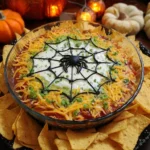
Step 6: Create the Sour Cream Spider Web
This is the fun part! Place the reserved 1/4 to 1/2 cup of sour cream into a small plastic sandwich bag or a piping bag. If the sour cream is too thick to pipe easily, stir in a tiny bit of milk or lime juice (1/2 teaspoon at a time) until it reaches a smooth, ketchup-like consistency. Snip a very small corner off the plastic bag.
- Pipe the Circles: Starting from the center of the dip, pipe a small dot of sour cream. Then, pipe concentric circles of sour cream, moving outwards towards the edge of the dish. You should have about 4-5 circles in total, like a bullseye. Don’t worry if they aren’t perfectly round.
- Drag the “Web”: Take a toothpick or a sharp knife. Start from the center dot and gently drag the tip outwards to the edge of the dish. This will pull the sour cream lines, creating the web effect. Wipe the toothpick clean.
- Repeat: Turn the dish about an inch and repeat the process, dragging the toothpick from the center to the edge. Continue this all the way around the dip until your web is complete. You will typically make 8-12 “drags” to form the web.
Step 7: Build the Olive Spider
To create the spider, place the whole, pitted black olive in the center of the web (or slightly off-center for a more realistic look) for the body. Slice your other black olives in half lengthwise. Then, slice each half into thin, curved strips. These will be the spider’s legs. Arrange four of these thin slices on each side of the spider’s body to create eight spooky legs.
Step 8: Add the Final Toppings and Chill
Carefully arrange the shredded lettuce, diced tomatoes, and sliced green onions around the outer edge of the dip, creating a colorful border. This frames your spider web beautifully. Cover the dip with plastic wrap (try to “tent” it so it doesn’t touch the web) and refrigerate for at least 30 minutes. This allows the flavors to meld together and the dip to firm up before serving.
Nutrition Facts
- Servings: Approximately 16 servings
- Calories per serving: Approximately 220-250 calories
Disclaimer: The nutritional information provided is an estimate and can vary based on the specific brands of ingredients used, such as the type of cheese, sour cream, and salsa.
Preparation Time
- Active Preparation Time: 25 minutes
- Chilling Time: 30 minutes
- Total Time: 55 minutes
This recipe is designed to be quick and efficient, making it perfect for busy party preparation. The majority of the time is spent on simple assembly, with the decoration taking only a few minutes.
How to Serve Your Spider Web Taco Dip
Presentation and accompaniments can elevate this simple dip into a full-fledged appetizer experience. Here are some fantastic ways to serve it:
- The Classic Chip Platter:
- Tortilla Chips: The quintessential partner. Offer a variety of blue corn, yellow corn, and white corn tortilla chips for a colorful display.
- Scoop-Style Chips: Sturdy chips like Fritos Scoops or Tostitos Scoops are perfect for grabbing a generous amount of all the layers in one go.
- A Healthier Dipper Selection:
- Vegetable Sticks: Offer a vibrant array of fresh veggie dippers. Bell pepper strips (orange, yellow, and red), carrot sticks, celery sticks, and cucumber slices are all excellent, crunchy choices.
- Jicama Sticks: These crisp, slightly sweet sticks are a fantastic and refreshing alternative to chips.
- As Part of a Halloween Snack Board:
- Make the Spider Web Taco Dip the star attraction and build a spooky board around it.
- Surround it with:
- Mummy Jalapeño Poppers
- Witch Finger Pretzels
- A bowl of “monster mix” (popcorn, candy corn, pretzels)
- Cheese cubes and crackers cut into Halloween shapes with small cookie cutters.
- Serving Dish Suggestions:
- Glass Pie Plate: The best option for showing off all seven distinct layers from the side.
- Trifle Bowl: For a more dramatic, vertical presentation, you can build the dip in a clear trifle bowl. This creates a stunning centerpiece but can be a bit more challenging for guests to dip into.
- 13×9 Inch Casserole Dish: If you’re doubling the recipe for a large crowd, a rectangular glass baking dish works perfectly. You can pipe a larger, oval-shaped web or even two smaller webs.
Additional Tips for a Flawless Dip
These five tips will help you troubleshoot common issues and customize the recipe to perfection.
1. Master the Sour Cream Consistency: The biggest challenge in making the web is the sour cream’s texture. If it’s too thick, it will be hard to pipe and won’t drag nicely. If it’s too thin, it will bleed into the cheese. The goal is the consistency of craft glue or ketchup. Test a small amount on a plate first. If it holds its shape but is still smooth, it’s perfect. Use a tiny bit of milk or lime juice to thin it if needed.
2. Make-Ahead Magic for a Stress-Free Party: You can assemble the majority of this dip ahead of time. Prepare all the layers—from the cream cheese base up to the shredded cheese layer—in your serving dish. Cover it tightly with plastic wrap, pressing the wrap directly onto the surface of the cheese to prevent air from getting in. Store in the refrigerator for up to 24 hours. When you’re ready to serve, simply remove the plastic wrap and proceed with creating the sour cream web, spider, and adding the fresh toppings around the edge. This saves you precious time on party day!
3. Customize Your Layers: This recipe is a fantastic template, but feel free to make it your own!
* Add Protein: Add a layer of cooked and seasoned ground beef or turkey between the bean and guacamole layers.
* Spice It Up: Use a “hot” salsa, add a can of diced green chiles to the cream cheese layer, or use a habanero-infused cheese.
* Bean Variations: Don’t like refried beans? Use a can of rinsed and drained black beans, or mash them with a bit of lime juice and cumin to create your own black bean layer.
4. The Guacamole Guardian Trick: To ensure your guacamole layer stays vibrant green, especially if making it slightly ahead, the key is to limit its exposure to air. After spreading the guacamole, take a piece of plastic wrap and press it directly against the entire surface of the guacamole, smoothing out any air bubbles. Then, continue with the subsequent layers. The lime juice also helps, but direct contact with the plastic wrap is the most effective method.
5. No Piping Bag? No Problem!: Don’t let a lack of fancy equipment stop you. A standard Ziploc-style sandwich bag is the perfect disposable piping bag. Simply spoon the thinned sour cream into the bag, push it down to one corner, twist the top to create pressure, and snip a minuscule piece off the corner. The smaller the snip, the more control you’ll have over the thickness of your web lines.
Frequently Asked Questions (FAQ)
Here are answers to some of the most common questions about making Spider Web Taco Dip.
1. Can I use a different base instead of cream cheese and sour cream?
Absolutely. While the cream cheese and sour cream base provides a classic tangy and creamy foundation, you can easily substitute it. A popular alternative is to simply use 2 cups of sour cream mixed with the taco seasoning. For a slightly healthier, higher-protein option, you could use plain Greek yogurt (full-fat works best for texture) mixed with the seasoning. Be aware that Greek yogurt will have a tangier, less rich flavor than the cream cheese version.
2. How long will the Spider Web Taco Dip last in the refrigerator?
Once fully assembled, the taco dip is best enjoyed within 24-48 hours. Store it tightly covered in the refrigerator. After the second day, the layers (especially the guacamole and lettuce) may begin to weep and become watery, affecting the overall texture and appearance. It will still be safe to eat for up to 3-4 days, but it is at its absolute best on the day it is made.
3. My sour cream web is runny and bleeding into the other layers. What went wrong?
This is a common issue and usually has one of two causes. First, your salsa layer may have been too wet. It’s crucial to drain any excess liquid from your chunky salsa before spreading it. This liquid can pool on the cheese and cause the sour cream to run. Second, you may have thinned your sour cream too much. It only needs a tiny bit of liquid to become pipeable. If you suspect it’s too thin, try thickening it back up by stirring in another tablespoon of sour cream from the tub.
4. Is this recipe gluten-free?
Yes, the dip itself is naturally gluten-free! All the standard ingredients (beans, cheese, vegetables, sour cream, avocado) are gluten-free. The one thing to double-check is your taco seasoning packet. While most are gluten-free, some brands use flour or gluten-containing thickeners. To be 100% sure, choose a certified gluten-free brand or make your own seasoning blend. Remember to serve it with certified gluten-free tortilla chips or vegetables for a fully gluten-free appetizer.
5. What’s a good alternative to the black olive for the spider?
If you have an olive aversion or just don’t have any on hand, you have a few creative options. The easiest and most popular alternative is a plastic spider ring (just be sure to wash it thoroughly before placing it on the food and warn guests that it isn’t edible!). For an edible alternative, you could try to fashion a spider out of black licorice pieces, use a dollop of black bean dip for the body, or even carefully arrange some dark-colored raisins or currants, though the effect won’t be quite as dramatic.
Spider Web Taco Dip Recipe
Ingredients
For the Dip Layers:
- Cream Cheese Base:
- 1 package (8 ounces) full-fat cream cheese, softened to room temperature
- 1 cup full-fat sour cream, divided
- 1 packet (1 ounce) taco seasoning (or 2–3 tablespoons of a homemade blend)
- Bean Layer:
- 1 can (16 ounces) refried beans
- Guacamole Layer:
- 2 large ripe avocados
- 1 tablespoon fresh lime juice
- 1/4 cup finely chopped red onion
- 1/4 cup chopped fresh cilantro
- 1 small jalapeño, minced (optional, for a kick)
- Salt and black pepper to taste
- Quick Tip: You can substitute 1.5 cups of store-bought guacamole in a pinch.
- Salsa Layer:
- 1 ½ cups of your favorite thick and chunky salsa, drained of excess liquid
- Cheese Layer:
- 2 cups shredded Mexican cheese blend (or a mix of sharp cheddar and Monterey Jack)
- Toppings Layer:
- 1 cup shredded iceberg or romaine lettuce
- 1/2 cup diced tomatoes
- 1/4 cup sliced green onions
For the Spider Web Decoration:
- Web:
- The remaining 1/4 to 1/2 cup of sour cream from the base layer
- Spider Body:
- 1 large black olive, pitted
- Spider Legs:
- 2–3 additional black olives, pitted and sliced
Instructions
Step 1: Prepare Your Serving Dish
Select a shallow, round serving dish, approximately 9-10 inches in diameter. A glass pie plate is perfect as it allows your guests to see the beautiful layers you’ve created.
Step 2: Mix the Cream Cheese Base
In a medium bowl, combine the softened 8 ounces of cream cheese, 3/4 cup of the sour cream, and the entire packet of taco seasoning. Using an electric hand mixer or a sturdy whisk, beat the ingredients together until they are smooth, creamy, and well-combined. Spread this mixture evenly across the bottom of your serving dish, creating the foundation for your dip. Set aside the remaining sour cream for the web decoration later.
Step 3: Add the Refried Bean Layer
Carefully spoon the refried beans over the cream cheese layer. Using the back of the spoon or an offset spatula, gently spread the beans into an even layer. Try not to mix it with the cream cheese layer below. Pro Tip: If your refried beans are very thick, you can stir in a tablespoon of water or salsa to make them more spreadable.
Step 4: Prepare and Spread the Guacamole
In a separate bowl, mash the avocados with a fork until they reach your desired consistency (chunky or smooth). Immediately stir in the lime juice to prevent browning. Fold in the chopped red onion, cilantro, optional jalapeño, salt, and pepper. Gently spread the guacamole over the bean layer, creating the third colorful stripe in your dip.
Step 5: Add the Salsa and Cheese Layers
Pour your drained, thick and chunky salsa over the guacamole. Spreading it gently will prevent the layers from mixing. Next, sprinkle the entire 2 cups of shredded Mexican cheese blend over the salsa, creating a thick, cheesy blanket that covers the dip from edge to edge. This cheese layer is the canvas for your web design.
Step 6: Create the Sour Cream Spider Web
This is the fun part! Place the reserved 1/4 to 1/2 cup of sour cream into a small plastic sandwich bag or a piping bag. If the sour cream is too thick to pipe easily, stir in a tiny bit of milk or lime juice (1/2 teaspoon at a time) until it reaches a smooth, ketchup-like consistency. Snip a very small corner off the plastic bag.
- Pipe the Circles: Starting from the center of the dip, pipe a small dot of sour cream. Then, pipe concentric circles of sour cream, moving outwards towards the edge of the dish. You should have about 4-5 circles in total, like a bullseye. Don’t worry if they aren’t perfectly round.
- Drag the “Web”: Take a toothpick or a sharp knife. Start from the center dot and gently drag the tip outwards to the edge of the dish. This will pull the sour cream lines, creating the web effect. Wipe the toothpick clean.
- Repeat: Turn the dish about an inch and repeat the process, dragging the toothpick from the center to the edge. Continue this all the way around the dip until your web is complete. You will typically make 8-12 “drags” to form the web.
Step 7: Build the Olive Spider
To create the spider, place the whole, pitted black olive in the center of the web (or slightly off-center for a more realistic look) for the body. Slice your other black olives in half lengthwise. Then, slice each half into thin, curved strips. These will be the spider’s legs. Arrange four of these thin slices on each side of the spider’s body to create eight spooky legs.
Step 8: Add the Final Toppings and Chill
Carefully arrange the shredded lettuce, diced tomatoes, and sliced green onions around the outer edge of the dip, creating a colorful border. This frames your spider web beautifully. Cover the dip with plastic wrap (try to “tent” it so it doesn’t touch the web) and refrigerate for at least 30 minutes. This allows the flavors to meld together and the dip to firm up before serving.
Nutrition
- Serving Size: One Normal Portion
- Calories: 220-250