
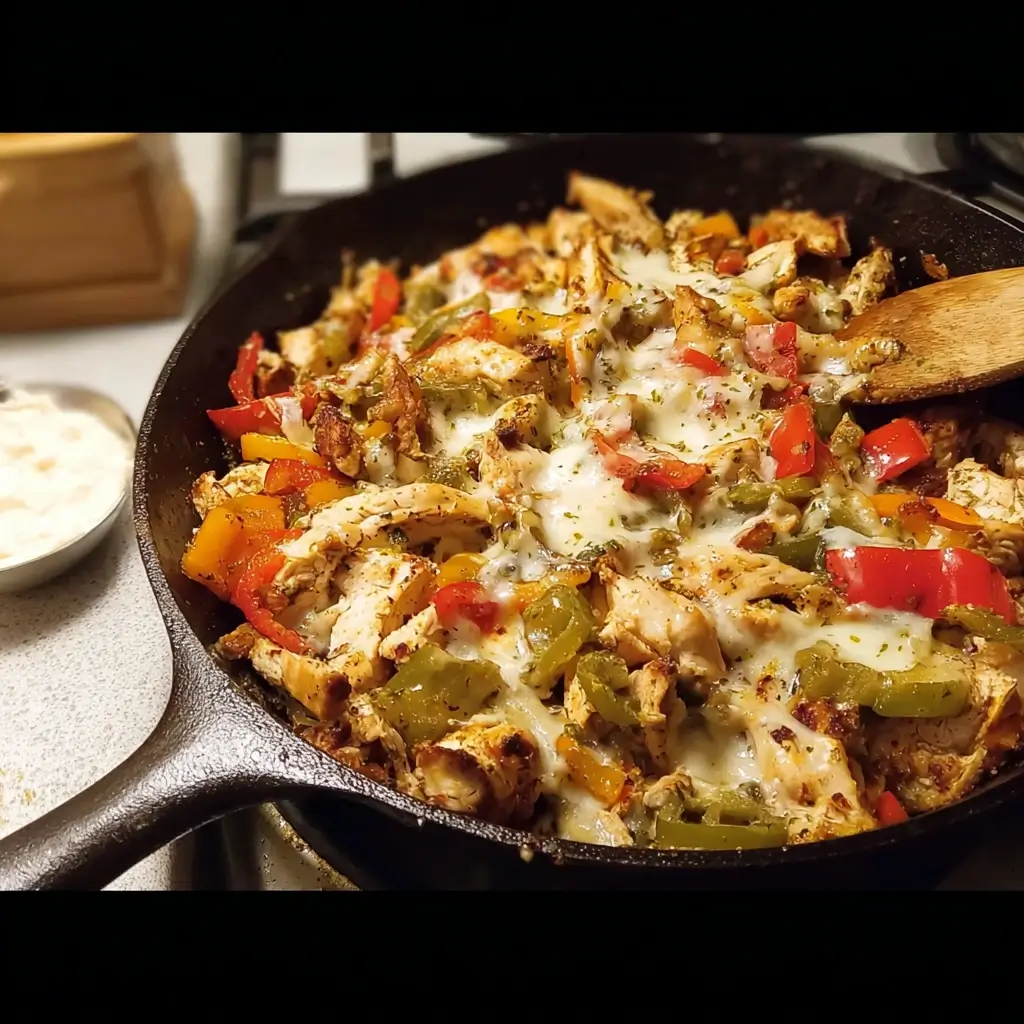
Of all the weeknight dinner dilemmas I face, finding a meal that is fast, flavorful, and loved by everyone in the family is the trifecta of success. For the longest time, I thought this was an unattainable goal. Then, the Chicken Cheesesteak Skillet entered our lives, and our dinner routine was forever changed. I’ll never forget the first time I made it. The kitchen filled with the incredible aroma of sizzling chicken, sweet caramelized onions, and tender bell peppers. My husband, a die-hard fan of the classic Philly cheesesteak, was skeptical at first. “A cheesesteak… without the steak? In a pan?” But as he watched the provolone cheese melt into a gooey, glorious blanket over the entire skillet, his skepticism melted away, too. The first bite sealed the deal. It had all the savory, cheesy, comforting goodness of the original but felt lighter, brighter, and came together in under 30 minutes with only one pan to clean. Now, it’s a non-negotiable part of our monthly meal rotation, a recipe I’m genuinely excited to share because I know it will become a favorite in your home, just as it has in mine.
The Ultimate One-Pan Chicken Cheesesteak Skillet Recipe
This recipe is designed for maximum flavor with minimum cleanup. It captures the essence of a classic cheesesteak—savory meat, sautéed veggies, and melted cheese—in a versatile, easy-to-make skillet format. We’ve perfected the ratios of chicken, vegetables, and seasoning to create a balanced and utterly delicious meal.
Ingredients
Here is the complete list of ingredients you’ll need to create this masterpiece. The quality of your ingredients, especially the chicken and cheese, will significantly impact the final flavor.
- For the Chicken and Marinade:
- Chicken: 2 lbs (about 4 medium) boneless, skinless chicken breasts, sliced very thinly
- Olive Oil: 1 tablespoon
- Garlic Powder: 1 teaspoon
- Onion Powder: 1 teaspoon
- Smoked Paprika: ½ teaspoon (optional, for a smoky flavor)
- Salt: 1 teaspoon, divided
- Black Pepper: ½ teaspoon, freshly ground, divided
- For the Vegetables:
- Olive Oil: 1 tablespoon
- Yellow Onion: 1 large, thinly sliced
- Green Bell Pepper: 1 large, thinly sliced
- Red Bell Pepper: 1 large, thinly sliced
- Mushrooms: 8 oz cremini mushrooms, sliced
- Garlic: 3 cloves, minced
- For the Cheesy Finish:
- Provolone Cheese: 8-10 slices of high-quality, mild provolone cheese
- Fresh Parsley: 2 tablespoons, chopped (for garnish)
Step-by-Step Instructions
Follow these detailed instructions carefully to ensure your skillet turns out perfectly every time. The key is to cook the components separately at first to develop the best flavor and texture, then bring them all together for the final, cheesy melt.
Step 1: Prepare and Season the Chicken
First, focus on the star of the show: the chicken. For the best texture, you need to slice it as thinly as possible. (Pro Tip: Place the chicken breasts in the freezer for 15-20 minutes before slicing. This firms them up and makes it significantly easier to get those paper-thin slices). Place the thinly sliced chicken in a medium bowl. Add 1 tablespoon of olive oil, garlic powder, onion powder, smoked paprika (if using), ½ teaspoon of salt, and ¼ teaspoon of black pepper. Toss everything together with your hands or a pair of tongs until every piece of chicken is evenly coated. Set aside to marinate while you prepare the vegetables.
Step 2: Sauté the Vegetables
Heat a large, heavy-bottomed skillet (a 12-inch cast-iron skillet works wonders here) over medium-high heat. Add the remaining 1 tablespoon of olive oil. Once the oil is shimmering, add the sliced yellow onion and both bell peppers to the pan. Sauté, stirring occasionally, for about 5-7 minutes, until the vegetables begin to soften and the onions become translucent.
Step 3: Add Mushrooms and Garlic
Add the sliced cremini mushrooms to the skillet with the onions and peppers. Continue to cook, stirring frequently, for another 5-8 minutes. The mushrooms will release their water and then begin to brown and caramelize. This step is crucial for developing a deep, savory flavor. Once the vegetables are tender and have some nice browning, add the minced garlic and the remaining ½ teaspoon of salt and ¼ teaspoon of black pepper. Stir constantly for about 1 minute until the garlic is fragrant. Be careful not to burn the garlic.
Step 4: Cook the Chicken
Using a slotted spoon, remove the cooked vegetables from the skillet and transfer them to a plate or bowl. Set them aside. There should be enough residual oil and fond (the tasty brown bits) in the pan. If the pan looks dry, add another small drizzle of oil. Turn the heat up to high. Add the seasoned chicken to the hot skillet in a single layer. It’s very important not to crowd the pan. If necessary, cook the chicken in two batches. Let the chicken cook undisturbed for 2-3 minutes per side, until it’s golden brown and cooked through. Overcrowding the pan will cause the chicken to steam instead of sear, and you’ll miss out on that beautiful browning.
Step 5: Combine and Melt
Once all the chicken is cooked, reduce the heat to medium. Return the cooked vegetables to the skillet with the chicken. Stir everything together to combine, creating an even layer of the chicken and veggie mixture across the bottom of the pan. Now for the best part: lay the slices of provolone cheese over the top of the mixture, overlapping them to ensure complete coverage.
Step 6: The Final Melt and Serve
Turn the heat down to low and cover the skillet with a lid (or a piece of aluminum foil if you don’t have a lid). Let it sit for 2-4 minutes, or until the cheese is perfectly melted, gooey, and irresistible. The steam trapped inside the skillet will create the perfect melting environment. Once melted, remove the skillet from the heat. Garnish generously with fresh chopped parsley for a pop of color and freshness. Serve immediately.
Nutrition Facts
This nutritional information is an estimate and can vary based on the specific ingredients used, such as the type of oil and the leanness of the chicken.
- Servings: 6
- Calories per serving: Approximately 485 kcal
This calorie count makes it a substantial and satisfying meal, packed with protein and vegetables, while still being a great option for those mindful of their intake.
Preparation Time
One of the best features of this recipe is how quickly it comes together, making it a perfect solution for busy weeknights.
- Prep Time: 15 minutes (slicing vegetables and chicken)
- Cook Time: 20 minutes
- Total Time: 35 minutes
How to Serve Your Chicken Cheesesteak Skillet
While this skillet is fantastic on its own, its true beauty lies in its versatility. Here are some of the best ways to serve it, catering to different dietary needs and preferences.
- The Traditional Way (Classic Hoagie):
- Spoon the hot, cheesy mixture directly into toasted hoagie rolls or sub buns.
- For an authentic touch, toast the rolls with a little garlic butter before filling.
- This is the ultimate comfort food experience, mimicking the classic Philly cheesesteak.
- Low-Carb and Keto-Friendly Options:
- Lettuce Wraps: Serve the skillet filling in large, crisp leaves of iceberg or butter lettuce for a crunchy, low-carb “taco.”
- Stuffed Peppers: Halve bell peppers, remove the seeds, and roast them until tender. Then, pile the chicken cheesesteak mixture inside and top with a little extra cheese.
- Over Zucchini Noodles: Serve a generous portion over a bed of sautéed or raw spiralized zucchini (“zoodles”).
- With a Side Salad: Simply serve a scoop alongside a fresh green salad with a light vinaigrette for a complete, healthy meal.
- Hearty and Comforting Bowls:
- Over Rice: Serve over a bed of fluffy white or brown rice to soak up all the delicious juices.
- With Roasted Potatoes: Spoon the mixture over crispy, oven-roasted potato wedges or diced potatoes.
- On Top of Quinoa: For a healthier, protein-packed grain option, serve it over cooked quinoa.
- Creative and Fun Ideas:
- Cheesesteak Quesadillas: Spoon the mixture onto a large flour tortilla, fold it over, and pan-fry until golden and crispy.
- Cheesesteak Nachos: Spread the mixture over a bed of tortilla chips, top with extra cheese, and bake until bubbly. Add jalapeños, sour cream, and salsa for the full experience.
- Mixed with Pasta: Stir the skillet contents into a pot of cooked penne or rigatoni for a cheesy, satisfying pasta dish.
Additional Tips for a Perfect Skillet Every Time
These five expert tips will elevate your Chicken Cheesesteak Skillet from great to absolutely unforgettable.
- The Freeze-Slice Technique is Non-Negotiable: We mentioned it in the instructions, but it bears repeating. Partially freezing your chicken for 15-20 minutes is the single best trick for achieving uniformly thin slices. Thin slices cook faster, are more tender, and provide the classic texture you expect from a cheesesteak.
- High Heat is Your Friend (At First): To get a beautiful, flavorful sear on your chicken and vegetables, you need to start with a screaming hot pan. Don’t be afraid to let your skillet heat up properly. This high-heat searing process, known as the Maillard reaction, creates the complex, savory flavors that form the foundation of the dish. You’ll reduce the heat later for the cheese-melting phase.
- Season in Layers: Instead of dumping all the seasoning in at once, season your components as you go. Season the chicken during its marinade, and then season the vegetables as they cook. This ensures that every single element in the skillet is perfectly flavored, leading to a much more dynamic and delicious final product.
- Choose Your Cheese Wisely: While classic provolone is the go-to for its mild flavor and excellent meltability, don’t be afraid to experiment.
- White American Cheese: Melts into an incredibly creamy, smooth sauce that’s second to none.
- Cheese Whiz: For the most authentic, street-cart Philly experience, a drizzle of warm Cheese Whiz over the top is a must-try.
- Pepper Jack: If you like a little kick, Pepper Jack adds a creamy texture with a hint of spice.
- Don’t Skip the Deglazing Step (Implicitly): After you cook the chicken and vegetables, you’ll notice browned bits stuck to the bottom of the pan. This is called “fond,” and it’s pure flavor. As you combine the ingredients and the cheese melts, the moisture released will naturally help scrape up these bits. Make sure to stir them back into the mixture to incorporate all that concentrated, savory goodness.
Frequently Asked Questions (FAQ)
Here are answers to some of the most common questions about making this recipe.
1. Can I use chicken thighs instead of breasts?
Absolutely! Chicken thighs are a fantastic substitute. They contain more fat than breasts, which makes them inherently more flavorful and forgiving—they are much harder to overcook. If using thighs, make sure they are boneless and skinless, and slice them thinly just as you would the breasts. The cooking time will be very similar.
2. How can I make this recipe ahead of time for meal prep?
This skillet is excellent for meal prep. You can cook the entire recipe as directed, let it cool completely, and then portion it into airtight containers. It will last in the refrigerator for up to 4 days. When you’re ready to eat, you can reheat it in the microwave or, for best results, in a skillet over medium heat until warmed through. If you plan to serve it in hoagies, wait to fill the bread until just before eating to prevent it from getting soggy.
3. My vegetables ended up soggy. What did I do wrong?
Soggy vegetables are usually the result of two things: overcrowding the pan or overcooking. When you add too many vegetables to the skillet at once, they steam in their own liquid instead of sautéing. To fix this, make sure your pan is large enough and don’t be afraid to cook the veggies in batches if needed. Secondly, cook them until they are “tender-crisp”—softened but still with a slight bite—before moving on to the next step. They will continue to cook a little more when you combine everything at the end.
4. Can I add other vegetables to this skillet?
Yes, this recipe is a great base for clearing out your vegetable drawer! Feel free to add or substitute with other veggies. Some great additions include:
- Sliced jalapeños or serrano peppers for heat.
- Broccoli florets (add them with the peppers).
- Sliced zucchini or yellow squash (add them with the mushrooms).
- A few handfuls of fresh spinach (stir it in at the very end until it wilts).
5. What is the best type of skillet to use for this recipe?
A large (12-inch) cast-iron skillet is the ideal choice. Cast iron retains heat incredibly well, which is perfect for getting a great sear on the chicken and vegetables. It also goes from stovetop to oven (if you wanted to melt the cheese under the broiler) and provides even cooking. If you don’t have cast iron, a heavy-bottomed stainless steel or non-stick skillet will also work well. The key is to use a large pan to avoid overcrowding.

One-Pan Chicken Cheesesteak Skillet Recipe
Ingredients
- For the Chicken and Marinade:
- Chicken: 2 lbs (about 4 medium) boneless, skinless chicken breasts, sliced very thinly
- Olive Oil: 1 tablespoon
- Garlic Powder: 1 teaspoon
- Onion Powder: 1 teaspoon
- Smoked Paprika: ½ teaspoon (optional, for a smoky flavor)
- Salt: 1 teaspoon, divided
- Black Pepper: ½ teaspoon, freshly ground, divided
- For the Vegetables:
- Olive Oil: 1 tablespoon
- Yellow Onion: 1 large, thinly sliced
- Green Bell Pepper: 1 large, thinly sliced
- Red Bell Pepper: 1 large, thinly sliced
- Mushrooms: 8 oz cremini mushrooms, sliced
- Garlic: 3 cloves, minced
- For the Cheesy Finish:
- Provolone Cheese: 8-10 slices of high-quality, mild provolone cheese
- Fresh Parsley: 2 tablespoons, chopped (for garnish)
Instructions
Step 1: Prepare and Season the Chicken
First, focus on the star of the show: the chicken. For the best texture, you need to slice it as thinly as possible. (Pro Tip: Place the chicken breasts in the freezer for 15-20 minutes before slicing. This firms them up and makes it significantly easier to get those paper-thin slices). Place the thinly sliced chicken in a medium bowl. Add 1 tablespoon of olive oil, garlic powder, onion powder, smoked paprika (if using), ½ teaspoon of salt, and ¼ teaspoon of black pepper. Toss everything together with your hands or a pair of tongs until every piece of chicken is evenly coated. Set aside to marinate while you prepare the vegetables.
Step 2: Sauté the Vegetables
Heat a large, heavy-bottomed skillet (a 12-inch cast-iron skillet works wonders here) over medium-high heat. Add the remaining 1 tablespoon of olive oil. Once the oil is shimmering, add the sliced yellow onion and both bell peppers to the pan. Sauté, stirring occasionally, for about 5-7 minutes, until the vegetables begin to soften and the onions become translucent.
Step 3: Add Mushrooms and Garlic
Add the sliced cremini mushrooms to the skillet with the onions and peppers. Continue to cook, stirring frequently, for another 5-8 minutes. The mushrooms will release their water and then begin to brown and caramelize. This step is crucial for developing a deep, savory flavor. Once the vegetables are tender and have some nice browning, add the minced garlic and the remaining ½ teaspoon of salt and ¼ teaspoon of black pepper. Stir constantly for about 1 minute until the garlic is fragrant. Be careful not to burn the garlic.
Step 4: Cook the Chicken
Using a slotted spoon, remove the cooked vegetables from the skillet and transfer them to a plate or bowl. Set them aside. There should be enough residual oil and fond (the tasty brown bits) in the pan. If the pan looks dry, add another small drizzle of oil. Turn the heat up to high. Add the seasoned chicken to the hot skillet in a single layer. It’s very important not to crowd the pan. If necessary, cook the chicken in two batches. Let the chicken cook undisturbed for 2-3 minutes per side, until it’s golden brown and cooked through. Overcrowding the pan will cause the chicken to steam instead of sear, and you’ll miss out on that beautiful browning.
Step 5: Combine and Melt
Once all the chicken is cooked, reduce the heat to medium. Return the cooked vegetables to the skillet with the chicken. Stir everything together to combine, creating an even layer of the chicken and veggie mixture across the bottom of the pan. Now for the best part: lay the slices of provolone cheese over the top of the mixture, overlapping them to ensure complete coverage.
Step 6: The Final Melt and Serve
Turn the heat down to low and cover the skillet with a lid (or a piece of aluminum foil if you don’t have a lid). Let it sit for 2-4 minutes, or until the cheese is perfectly melted, gooey, and irresistible. The steam trapped inside the skillet will create the perfect melting environment. Once melted, remove the skillet from the heat. Garnish generously with fresh chopped parsley for a pop of color and freshness. Serve immediately.
Nutrition
- Serving Size: One Normal Portion
- Calories: 485