
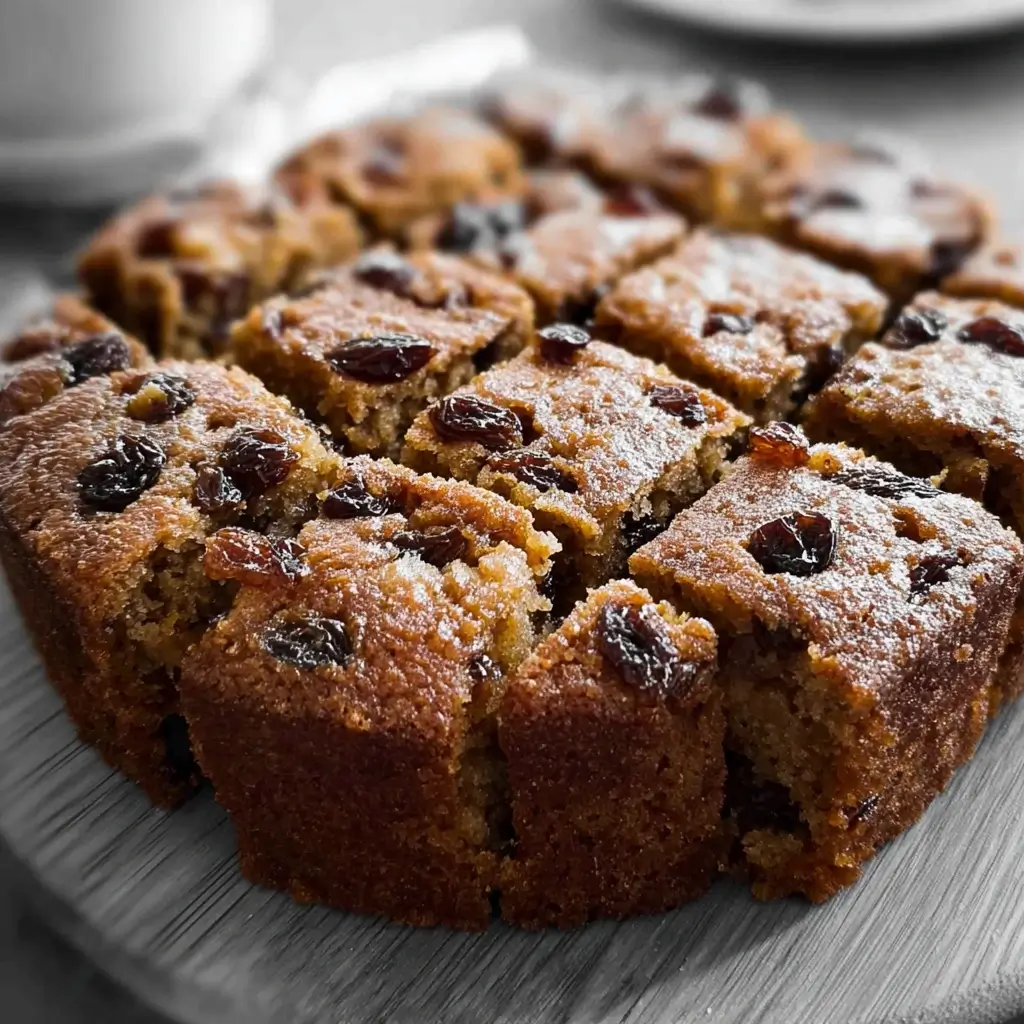
There are certain aromas that transport you instantly back in time, and for me, the scent of cinnamon, brown sugar, and warm raisins baking in the oven is a direct line to my grandmother’s kitchen. This Old-Fashioned Raisin Cake isn’t just a dessert; it’s a tangible piece of family history, a recipe passed down through generations on a flour-dusted, handwritten card. I remember standing on a stool as a child, my job to “test” the raisins to make sure they were plump and juicy enough for the batter. When the cake finally came out of the oven, the entire house would fill with a warm, comforting fragrance that signaled love and togetherness. The first bite was always magic—an incredibly moist, tender crumb packed with sweet, spiced flavor, punctuated by the delightful chew of those perfectly prepared raisins. It wasn’t overly fancy, often topped with a simple, rustic brown sugar frosting that melted ever so slightly into the warm cake. When I bake it for my own family now, the reaction is exactly the same. Eyes close, smiles spread, and for a moment, everyone is connected by the simple joy of a truly timeless, heartwarming treat. This cake is proof that the best recipes are not just about ingredients and instructions, but about the memories and comfort they bring to the table.
A Slice of History: The Humble Origins of Raisin Cake
Before we dive into the mixing bowls, it’s worth appreciating the rich history behind this simple cake. The Old-Fashioned Raisin Cake, in its many forms, is often referred to as a “Depression Cake” or “War Cake.” Its origins are rooted in times of scarcity, particularly during the Great Depression and the World Wars, when fresh, expensive ingredients like eggs, butter, and milk were heavily rationed or simply unavailable.
Resourceful home bakers needed to create comforting treats using only what they had in their pantries. Dried fruits, like raisins, were shelf-stable, affordable, and provided a natural sweetness and moisture. Many early recipes for this cake were “boiled,” a technique where the raisins, sugar, water, and spices were boiled together before the flour was added. This process served two purposes: it plumped the raisins to an incredible juiciness, and it helped to dissolve the sugar and meld the spice flavors, creating a surprisingly rich base without the need for creaming butter.
These cakes were a testament to ingenuity and the deep-seated human need for comfort in trying times. They were hearty, flavorful, and kept well, making them a practical and beloved staple. The recipe we are making today pays homage to that tradition, employing the boiling method to ensure the moistest cake and plumpest raisins imaginable, while incorporating the richness of butter and eggs that we are fortunate to have readily available today. Every slice is a delicious link to the past, a celebration of resilience and the enduring power of a good, honest cake.
Complete Recipe: Old-Fashioned Spiced Raisin Cake with Brown Sugar Frosting
This recipe yields one 9×13-inch sheet cake or two 8-inch round cakes. It’s designed to be incredibly moist and flavorful, staying true to its classic roots. The simple brown sugar frosting is the perfect complement, but the cake is also delicious with a simple dusting of powdered sugar.
Ingredients for the Raisin Cake
- 2 cups (320g) seedless raisins
- 1 ½ cups (355ml) water
- ½ cup (113g) unsalted butter, cut into cubes
- 1 cup (200g) granulated sugar
- ½ cup (100g) packed light brown sugar
- 2 large eggs, at room temperature
- 1 teaspoon vanilla extract
- 2 ½ cups (300g) all-purpose flour
- 1 ½ teaspoons baking soda
- 1 teaspoon ground cinnamon
- ½ teaspoon ground nutmeg
- ½ teaspoon ground allspice
- ¼ teaspoon ground cloves
- ½ teaspoon salt
Ingredients for the Brown Sugar Frosting
- ½ cup (113g) unsalted butter
- 1 cup (200g) packed light brown sugar
- ¼ cup (60ml) whole milk or heavy cream
- 1 teaspoon vanilla extract
- 1 ½ – 2 cups (180-240g) powdered sugar, sifted
Step-by-Step Instructions for the Perfect Cake
Following these instructions carefully, especially the boiling and cooling steps, is the key to achieving the signature moist texture of this classic cake.
Part 1: Preparing the Boiled Raisin Base
- Combine and Boil: In a medium-sized saucepan, combine the 2 cups of raisins, 1 ½ cups of water, ½ cup of cubed unsalted butter, 1 cup of granulated sugar, and ½ cup of light brown sugar.
- Heat Gently: Place the saucepan over medium heat. Stir occasionally as the butter melts and the sugar dissolves.
- Simmer: Bring the mixture to a gentle boil. Once it’s boiling, reduce the heat to low and let it simmer for exactly 5 minutes. This step is crucial for plumping the raisins and creating a flavorful, syrupy base for the cake.
- Cool Completely: Remove the saucepan from the heat. This is the most important step for the success of the cake. You must let this mixture cool down to room temperature. This can take 45 minutes to an hour. If you add the eggs while the mixture is hot, they will scramble. You can speed up the process by placing the saucepan in a cold water bath, but be patient—cool is key!
Part 2: Mixing and Baking the Cake
- Preheat and Prepare Pan: While the raisin mixture is cooling, preheat your oven to 350°F (175°C). Grease and flour a 9×13-inch baking pan. Alternatively, you can line it with parchment paper, leaving an overhang on the sides to easily lift the cake out later.
- Combine Dry Ingredients: In a large mixing bowl, whisk together the 2 ½ cups of all-purpose flour, 1 ½ teaspoons of baking soda, 1 teaspoon of cinnamon, and all the other ground spices (nutmeg, allspice, cloves), and the ½ teaspoon of salt. Whisking thoroughly ensures the leavening and spices are evenly distributed, preventing pockets of baking soda or clumps of spice in the final cake.
- Add Eggs and Vanilla: Once the boiled raisin mixture has cooled completely to room temperature, whisk in the 2 room-temperature eggs one at a time, followed by the 1 teaspoon of vanilla extract. The mixture should look glossy and slightly thickened.
- Combine Wet and Dry: Pour the cooled, wet raisin mixture into the bowl with the dry ingredients. Using a rubber spatula or wooden spoon, fold the ingredients together until just combined. Be careful not to overmix. A few small lumps in the batter are perfectly fine. Overmixing will develop the gluten in the flour and result in a tough, dense cake.
- Pour and Spread: Pour the batter into your prepared baking pan and use the spatula to spread it into an even layer, making sure it reaches all the corners.
- Bake: Place the cake in the preheated oven and bake for 30-40 minutes. The baking time can vary depending on your oven. The cake is done when a wooden skewer or toothpick inserted into the center comes out clean or with a few moist crumbs attached. The top should be golden brown and spring back lightly when touched.
- Cool the Cake: Remove the cake from the oven and place the pan on a wire rack to cool completely before frosting. If you try to frost a warm cake, the frosting will melt and slide right off.
Part 3: Making the Creamy Brown Sugar Frosting
- Melt Butter and Brown Sugar: In a small saucepan, melt the ½ cup of unsalted butter over medium heat. Add the 1 cup of packed light brown sugar and stir until it’s completely dissolved and the mixture is smooth.
- Boil the Base: Bring the mixture to a boil, then add the ¼ cup of milk or heavy cream. Return to a boil and cook for exactly 2 minutes, stirring constantly. This step creates a rich, caramel-like base for the frosting.
- Cool Slightly: Remove the saucepan from the heat and stir in the 1 teaspoon of vanilla extract. Let the mixture cool for about 10-15 minutes, until it’s warm but not hot.
- Whisk in Powdered Sugar: Transfer the brown sugar mixture to a mixing bowl. Using an electric hand mixer or a stand mixer, gradually beat in the sifted powdered sugar. Start with 1 ½ cups and add more as needed until you reach your desired spreading consistency. The frosting should be thick, creamy, and spreadable.
- Frost the Cake: Once the cake is completely cool, spread the brown sugar frosting evenly over the top. You can make decorative swirls with the back of a spoon for a rustic look. Allow the frosting to set for about 30 minutes before slicing and serving.
Nutrition Facts
- Servings: 16 slices
- Calories per serving (approximate): 410 kcal
Disclaimer: The nutritional information provided is an estimate and can vary based on the specific ingredients and brands used. This calculation includes the cake and the brown sugar frosting.
Preparation Time
- Prep Time: 20 minutes
- Boiling & Cooling Time: 1 hour
- Cook Time: 35 minutes
- Total Time: Approximately 1 hour 55 minutes
How to Serve This Nostalgic Delight
This Old-Fashioned Raisin Cake is wonderfully versatile. Its spiced, hearty character pairs well with a variety of accompaniments. Here are some of the best ways to serve it:
- Classic and Simple: The best way to enjoy it for the first time is just as it is, at room temperature, with the rich brown sugar frosting. This allows the complex spice flavors and moist texture to shine.
- A La Mode: Serve a slightly warm slice of the cake with a generous scoop of high-quality vanilla bean ice cream. The contrast between the warm, spiced cake and the cold, creamy ice cream is absolutely divine.
- With a Hot Beverage: This cake was made for coffee or tea. A slice alongside a steaming mug of black coffee, a creamy latte, or a cup of spiced chai tea makes for the perfect afternoon pick-me-up or a cozy end to a meal.
- A Dollop of Cream: If the brown sugar frosting feels too sweet, you can serve an unfrosted slice with a dollop of freshly whipped cream or a spoonful of tangy crème fraîche to balance the sweetness of the raisins.
- Holiday Dessert Platter: Because of its warm spices (cinnamon, nutmeg, cloves), this cake is a fantastic addition to a Thanksgiving or Christmas dessert table. It offers a wonderful, comforting alternative to pies and cookies.
- Simple Dusting: For a lighter option, skip the frosting altogether and give the cooled cake a simple, elegant dusting of powdered sugar right before serving.
Additional Tips for a Perfect Old-Fashioned Raisin Cake
Achieve baking perfection with these five essential tips that address the most common pitfalls and questions.
- Do Not Rush the Cooling Process: This is the golden rule of this recipe. The boiled raisin mixture must be completely at room temperature before you add the eggs. If it’s even slightly warm, it will start to cook the eggs, resulting in a strange texture and an eggy flavor. Be patient; good things come to those who wait.
- Measure Your Flour Correctly: How you measure flour can dramatically affect your cake’s texture. Instead of scooping the measuring cup directly into the flour bag (which compacts it and adds too much flour), use the “spoon and level” method. Use a spoon to fluff up the flour in its container, then spoon it into your measuring cup until it’s overflowing. Use the back of a knife to level it off. This prevents a dry, dense cake.
- Embrace Room Temperature Ingredients: For the eggs, using them at room temperature allows them to incorporate more fully into the batter. A room-temperature egg emulsifies better with the fats in the batter, creating a more uniform structure and a smoother, more tender crumb. To quickly bring eggs to room temperature, place them in a bowl of warm (not hot) water for 5-10 minutes.
- Customize Your Spice Blend: While the recipe calls for a classic combination of cinnamon, nutmeg, allspice, and cloves, feel free to make it your own. If you love ginger, add a half teaspoon of ground ginger. A pinch of cardamom can add a lovely, complex aroma. You could even add a teaspoon of orange zest to the batter to brighten the flavors and complement the raisins.
- Check for Doneness Properly: Ovens can be notoriously inaccurate. Don’t rely solely on the baking time in the recipe. Start checking your cake about 5 minutes before the suggested time is up. The “toothpick test” is your best friend. Insert a toothpick into the very center of the cake. If it comes out with wet batter, it needs more time. If it comes out completely clean, it might be slightly overbaked. The sweet spot is when it comes out with a few moist, tender crumbs attached. This indicates a perfectly moist cake.
Frequently Asked Questions (FAQ)
Here are answers to some of the most common questions about making this delightful raisin cake.
1. Can I use other dried fruits instead of or in addition to raisins?
Absolutely! This recipe is very forgiving and works beautifully with other dried fruits. You can substitute part or all of the raisins with an equal amount of chopped dried dates, figs, apricots, or even dried cranberries for a tarter flavor. A mix of raisins and chopped dates is particularly delicious. Just ensure the fruit is chopped into raisin-sized pieces for even distribution.
2. I’m not a fan of overly sweet frosting. Are there any alternatives?
Yes, there are several wonderful alternatives. The cake is moist and flavorful enough to stand on its own with just a simple dusting of powdered sugar. For a bit more flair, you can make a simple glaze by whisking about 1 cup of powdered sugar with 1-2 tablespoons of milk or orange juice until you have a drizzling consistency. A cream cheese frosting also pairs wonderfully with the spice cake, offering a tangy contrast.
3. How should I store the raisin cake to keep it fresh?
This cake stores exceptionally well due to its high moisture content. To store it, cover the cake tightly with plastic wrap or store it in an airtight container at room temperature. It will stay fresh and moist for up to 4-5 days. If your kitchen is very warm, you may prefer to store it in the refrigerator, where it will last for up to a week. For longer storage, you can freeze the unfrosted cake. Wrap it tightly in plastic wrap, then a layer of aluminum foil, and it will keep in the freezer for up to 3 months. Thaw it at room temperature before frosting and serving.
4. My cake turned out dry. What did I do wrong?
A dry cake is usually caused by one of two things: overbaking or using too much flour. Be sure to use the “spoon and level” method for measuring your flour, as mentioned in the tips section. Secondly, start checking for doneness early. As soon as a toothpick comes out with moist crumbs, pull the cake from the oven. It will continue to cook slightly from the residual heat in the pan (this is called carryover cooking).
5. Can I bake this recipe in a different type of pan, like a Bundt pan or cupcakes?
Yes, this batter is very versatile.
- For a Bundt Pan: Grease and flour a 10- or 12-cup Bundt pan thoroughly. The baking time will be longer, likely around 50-60 minutes. Start checking for doneness at the 45-minute mark.
- For Cupcakes: Line a muffin tin with paper liners. Fill each liner about two-thirds full. The baking time will be much shorter, around 18-22 minutes. You should get approximately 24 cupcakes from this recipe. Let them cool completely before frosting.
Old-Fashioned Raisin Cake Recipe
Ingredients
Ingredients for the Raisin Cake
- 2 cups (320g) seedless raisins
- 1 ½ cups (355ml) water
- ½ cup (113g) unsalted butter, cut into cubes
- 1 cup (200g) granulated sugar
- ½ cup (100g) packed light brown sugar
- 2 large eggs, at room temperature
- 1 teaspoon vanilla extract
- 2 ½ cups (300g) all-purpose flour
- 1 ½ teaspoons baking soda
- 1 teaspoon ground cinnamon
- ½ teaspoon ground nutmeg
- ½ teaspoon ground allspice
- ¼ teaspoon ground cloves
- ½ teaspoon salt
Ingredients for the Brown Sugar Frosting
- ½ cup (113g) unsalted butter
- 1 cup (200g) packed light brown sugar
- ¼ cup (60ml) whole milk or heavy cream
- 1 teaspoon vanilla extract
- 1 ½ – 2 cups (180-240g) powdered sugar, sifted
Instructions
Part 1: Preparing the Boiled Raisin Base
- Combine and Boil: In a medium-sized saucepan, combine the 2 cups of raisins, 1 ½ cups of water, ½ cup of cubed unsalted butter, 1 cup of granulated sugar, and ½ cup of light brown sugar.
- Heat Gently: Place the saucepan over medium heat. Stir occasionally as the butter melts and the sugar dissolves.
- Simmer: Bring the mixture to a gentle boil. Once it’s boiling, reduce the heat to low and let it simmer for exactly 5 minutes. This step is crucial for plumping the raisins and creating a flavorful, syrupy base for the cake.
- Cool Completely: Remove the saucepan from the heat. This is the most important step for the success of the cake. You must let this mixture cool down to room temperature. This can take 45 minutes to an hour. If you add the eggs while the mixture is hot, they will scramble. You can speed up the process by placing the saucepan in a cold water bath, but be patient—cool is key!
Part 2: Mixing and Baking the Cake
- Preheat and Prepare Pan: While the raisin mixture is cooling, preheat your oven to 350°F (175°C). Grease and flour a 9×13-inch baking pan. Alternatively, you can line it with parchment paper, leaving an overhang on the sides to easily lift the cake out later.
- Combine Dry Ingredients: In a large mixing bowl, whisk together the 2 ½ cups of all-purpose flour, 1 ½ teaspoons of baking soda, 1 teaspoon of cinnamon, and all the other ground spices (nutmeg, allspice, cloves), and the ½ teaspoon of salt. Whisking thoroughly ensures the leavening and spices are evenly distributed, preventing pockets of baking soda or clumps of spice in the final cake.
- Add Eggs and Vanilla: Once the boiled raisin mixture has cooled completely to room temperature, whisk in the 2 room-temperature eggs one at a time, followed by the 1 teaspoon of vanilla extract. The mixture should look glossy and slightly thickened.
- Combine Wet and Dry: Pour the cooled, wet raisin mixture into the bowl with the dry ingredients. Using a rubber spatula or wooden spoon, fold the ingredients together until just combined. Be careful not to overmix. A few small lumps in the batter are perfectly fine. Overmixing will develop the gluten in the flour and result in a tough, dense cake.
- Pour and Spread: Pour the batter into your prepared baking pan and use the spatula to spread it into an even layer, making sure it reaches all the corners.
- Bake: Place the cake in the preheated oven and bake for 30-40 minutes. The baking time can vary depending on your oven. The cake is done when a wooden skewer or toothpick inserted into the center comes out clean or with a few moist crumbs attached. The top should be golden brown and spring back lightly when touched.
- Cool the Cake: Remove the cake from the oven and place the pan on a wire rack to cool completely before frosting. If you try to frost a warm cake, the frosting will melt and slide right off.
Part 3: Making the Creamy Brown Sugar Frosting
- Melt Butter and Brown Sugar: In a small saucepan, melt the ½ cup of unsalted butter over medium heat. Add the 1 cup of packed light brown sugar and stir until it’s completely dissolved and the mixture is smooth.
- Boil the Base: Bring the mixture to a boil, then add the ¼ cup of milk or heavy cream. Return to a boil and cook for exactly 2 minutes, stirring constantly. This step creates a rich, caramel-like base for the frosting.
- Cool Slightly: Remove the saucepan from the heat and stir in the 1 teaspoon of vanilla extract. Let the mixture cool for about 10-15 minutes, until it’s warm but not hot.
- Whisk in Powdered Sugar: Transfer the brown sugar mixture to a mixing bowl. Using an electric hand mixer or a stand mixer, gradually beat in the sifted powdered sugar. Start with 1 ½ cups and add more as needed until you reach your desired spreading consistency. The frosting should be thick, creamy, and spreadable.
- Frost the Cake: Once the cake is completely cool, spread the brown sugar frosting evenly over the top. You can make decorative swirls with the back of a spoon for a rustic look. Allow the frosting to set for about 30 minutes before slicing and serving.
Nutrition
- Serving Size: One Normal Portion
- Calories: 410