
This Lobster and Scallop Pasta is, without a doubt, one of the most triumphant dishes to ever grace my dining table. The first time I made it, I was a little nervous – lobster and scallops feel so luxurious, and I desperately wanted to do them justice. The aroma that filled my kitchen as the garlic, white wine, and seafood mingled was intoxicating, a promising prelude to the feast to come. When I finally presented the glistening, parsley-flecked pasta to my family, their eyes widened. The silence that followed the first few bites, punctuated only by appreciative murmurs, was the highest compliment. The lobster was sweet and succulent, the scallops perfectly seared with a tender interior, and the light, creamy, lemony sauce coated every strand of linguine, tying everything together in a harmonious symphony of flavors. It’s become our go-to for special occasions, or simply when we crave a taste of something truly extraordinary. It feels like a five-star restaurant experience, right in the comfort of our own home.
The Ultimate Lobster & Scallop Pasta: A Symphony of the Sea
Prepare to indulge in a dish that epitomizes oceanic luxury. This Lobster and Scallop Pasta combines the sweet, delicate flavor of lobster meat with the rich, buttery tenderness of seared scallops, all enveloped in a luscious, yet surprisingly light, white wine and garlic cream sauce. It’s a showstopper meal perfect for impressing guests or treating yourself to something truly special.
Ingredients for an Unforgettable Seafood Pasta
This recipe is designed to generously serve 4 people, or provide a more indulgent portion for 2-3.
- For the Seafood:
- Lobster: 2 medium lobster tails (approx. 4-6 oz each), fresh or frozen (thawed)
- Scallops: 1 lb large sea scallops (U10 or U15 size), fresh, patted very dry
- Butter: 2 tablespoons, unsalted (for cooking seafood)
- Olive Oil: 1 tablespoon (for cooking seafood)
- For the Pasta:
- Pasta: 12 oz linguine, fettuccine, or spaghetti (high-quality dry pasta recommended)
- Salt: For boiling pasta water
- For the Sauce:
- Olive Oil: 2 tablespoons, extra virgin
- Butter: 2 tablespoons, unsalted
- Garlic: 4-5 cloves, thinly sliced or minced
- Shallot: 1 large or 2 small, finely chopped (about 1/4 cup)
- Red Pepper Flakes: 1/4 – 1/2 teaspoon (adjust to your spice preference)
- Dry White Wine: 3/4 cup (such as Pinot Grigio, Sauvignon Blanc, or unoaked Chardonnay)
- Heavy Cream: 3/4 cup
- Lemon: 1 medium, zest and juice (use half the juice initially, add more to taste)
- Fresh Parsley: 1/2 cup, chopped, plus more for garnish
- Fresh Chives: 2 tablespoons, snipped (optional, for garnish)
- Reserved Pasta Water: About 1 cup
- Salt and Freshly Ground Black Pepper: To taste
Step-by-Step Instructions to Culinary Perfection
Crafting this exquisite Lobster and Scallop Pasta is a journey of flavors. Follow these detailed steps for a restaurant-quality result every time.
1. Prepare the Lobster:
* If using frozen lobster tails, ensure they are fully thawed in the refrigerator overnight.
* Using kitchen shears, cut lengthwise through the top of the lobster shell, from the wide end towards the tail fins, stopping just before the fin. Be careful not to cut through the bottom shell.
* Gently separate the shell halves and carefully lift the meat out, keeping it attached at the base of the tail.
* Lift the meat and place it on top of the shell (piggyback style). Alternatively, you can remove the meat completely and chop it into bite-sized pieces after cooking. For this recipe, we’ll cook it on the shell initially for presentation and flavor, then chop.
* Rinse the lobster meat lightly under cold water and pat dry with paper towels. Season lightly with salt and pepper.
2. Prepare the Scallops:
* If your scallops have the small, tough side muscle (the adductor muscle), remove it. It will be a little rectangular tag on the side and will feel firmer than the rest of the scallop.
* Rinse the scallops under cold water and pat them very dry with paper towels. This is crucial for achieving a good sear.
* Season one side of the scallops with salt and freshly ground black pepper.
3. Cook the Pasta:
* Bring a large pot of generously salted water to a rolling boil.
* Add the linguine (or your pasta of choice) and cook according to package directions until al dente – typically 8-10 minutes. It should have a slight bite.
* Crucially: Before draining the pasta, reserve about 1.5 cups of the starchy pasta water. This liquid gold is essential for creating a silky sauce.
* Drain the pasta and set aside. You can toss it with a tiny drizzle of olive oil to prevent sticking if it will sit for more than a couple of minutes.
4. Cook the Seafood (while pasta is cooking or just after):
* Lobster: In a large skillet (cast iron is excellent), melt 1 tablespoon of butter with 1/2 tablespoon of olive oil over medium-high heat.
* Place the lobster tails, meat-side down, in the hot skillet. Cook for 2-3 minutes until the meat starts to turn opaque and slightly golden.
* Flip the tails and cook for another 2-4 minutes, or until the lobster meat is opaque and cooked through (internal temperature of 140-145°F / 60-63°C). Baste with the pan butter during the last minute.
* Remove the lobster tails from the skillet and set them aside on a cutting board. Once cool enough to handle, remove the meat from the shells and chop it into bite-sized chunks. You can reserve the shells for a future seafood stock if desired.
* Scallops: Wipe out the skillet if there are any burnt bits (or use a clean one). Add the remaining 1 tablespoon of butter and 1/2 tablespoon of olive oil to the skillet and heat over medium-high to high heat until the butter is melted and foamy, and the oil is shimmering.
* Carefully place the seasoned scallops in a single layer in the hot skillet, seasoned-side down. Do not overcrowd the pan; cook in batches if necessary.
* Sear the scallops for 1.5 – 2 minutes per side, without moving them, until they develop a deep golden-brown crust and are just opaque throughout. They should still be slightly translucent in the very center. Overcooked scallops become rubbery.
* Remove the scallops from the skillet and set them aside with the cooked lobster meat.
5. Build the Luscious Sauce:
* In the same skillet used for the scallops (no need to clean, the fond adds flavor!), reduce the heat to medium. Add the 2 tablespoons of olive oil and 2 tablespoons of butter.
* Once the butter is melted, add the chopped shallots and cook for 2-3 minutes, stirring occasionally, until softened and translucent.
* Add the sliced or minced garlic and red pepper flakes. Cook for another 1-2 minutes until the garlic is fragrant. Be careful not to burn the garlic, as it will turn bitter.
* Pour in the dry white wine. Increase the heat to medium-high and bring to a simmer, scraping up any browned bits (fond) from the bottom of the pan with a wooden spoon. Let the wine reduce by about half, which should take 3-5 minutes. This concentrates the flavor and cooks off the alcohol.
* Reduce the heat to low. Stir in the heavy cream and the zest of one lemon. Let it gently simmer for 2-3 minutes to thicken slightly. Do not let it boil vigorously.
* Add about 1/2 cup of the reserved pasta water to the sauce. Whisk to combine. The starch from the pasta water will help the sauce emulsify and cling to the pasta. Add more pasta water, a tablespoon at a time, if the sauce seems too thick.
* Stir in half of the fresh lemon juice. Taste the sauce and season with salt and freshly ground black pepper as needed. Remember that the pasta water is already salty.
6. Combine and Serve:
* Add the cooked pasta to the skillet with the sauce. Toss gently to coat every strand thoroughly. If the sauce is too thick, add a little more reserved pasta water until it reaches your desired consistency.
* Add the chopped cooked lobster meat and the seared scallops to the pasta. Stir in most of the chopped fresh parsley, reserving some for garnish. Gently toss everything together to combine and allow the seafood to heat through for about 1-2 minutes. Be gentle to avoid breaking up the delicate scallops.
* Taste one last time and adjust seasoning if necessary – perhaps a bit more salt, pepper, or lemon juice to brighten the flavors.
7. Plating:
* Divide the Lobster and Scallop Pasta among warmed serving bowls or plates.
* Garnish generously with the remaining fresh parsley, snipped chives (if using), and an extra grating of lemon zest if desired. A small drizzle of high-quality extra virgin olive oil on top can also elevate the dish.
* Serve immediately and watch your guests revel in delight!
Nutrition Facts (Estimated)
- Servings: 4
- Calories per serving: Approximately 750-900 kcal (This is an estimate and can vary based on exact ingredient sizes, brands, and pasta type.)
This dish is an indulgence, rich in protein from the seafood and carbohydrates from the pasta. The sauce contributes fats from the butter and cream. While not a low-calorie meal, it’s packed with flavor and makes for a memorable culinary experience.
Preparation & Cooking Time
- Preparation Time: 25-30 minutes (includes thawing time if lobster is frozen, chopping vegetables, preparing seafood)
- Cooking Time: 25-30 minutes (includes cooking pasta, searing seafood, and making the sauce)
- Total Time: Approximately 50-60 minutes
This timeline assumes you work efficiently and can multitask (e.g., start preparing the sauce ingredients while the pasta water comes to a boil).
How to Serve Your Masterpiece
Serving this Lobster and Scallop Pasta is all about enhancing its luxurious appeal. Here are some suggestions:
- Individual Portions:
- Serve in wide, shallow pasta bowls to showcase the beautiful ingredients.
- Use tongs to twirl the pasta into a neat nest in the center of the bowl.
- Artfully arrange the lobster chunks and seared scallops on top and around the pasta.
- Ensure each serving gets a good distribution of sauce.
- Garnishes:
- Fresh Herbs: A generous sprinkle of freshly chopped parsley is essential. Chives add a mild oniony note and visual appeal. A few tarragon leaves can also complement seafood beautifully.
- Lemon: Offer lemon wedges on the side for those who like an extra citrusy zing. A final grating of lemon zest over the dish just before serving brightens the aroma.
- Chili Flakes: A small pinch of red pepper flakes on top for those who enjoy a little extra heat.
- High-Quality Olive Oil: A very light drizzle of your best extra virgin olive oil can add a peppery, fruity finish.
- Accompaniments:
- Crusty Bread: Serve with slices of warm, crusty artisan bread (like a baguette or ciabatta) for soaking up every last bit of the delicious sauce. Garlic bread would also be a fantastic pairing.
- Simple Green Salad: A light, crisp green salad with a simple vinaigrette (lemon juice, olive oil, salt, pepper) provides a refreshing contrast to the richness of the pasta. Avoid creamy dressings.
- Steamed Asparagus or Green Beans: Lightly steamed or blanched green vegetables, tossed with a little olive oil and lemon, make a great side.
- Wine Pairing:
- Crisp White Wines: A dry, crisp white wine is the classic pairing. Consider:
- Pinot Grigio: Light, zesty, and refreshing.
- Sauvignon Blanc: Herbaceous notes and bright acidity cut through the richness.
- Unoaked Chardonnay (like Chablis): Offers good body and minerality without oaky heaviness.
- Vermentino: A lovely Italian white with citrus and saline notes that complement seafood.
- Dry Rosé: A Provence-style dry rosé can also be a delightful match, especially in warmer weather.
- Sparkling Wine: For a truly celebratory feel, a Brut Champagne or Prosecco pairs wonderfully.
- Crisp White Wines: A dry, crisp white wine is the classic pairing. Consider:
Additional Tips for a Flawless Dish
- Source Quality Seafood: The success of this dish hinges on the quality of your lobster and scallops. Opt for fresh, wild-caught if possible. If using frozen, ensure they are properly thawed. For scallops, “dry” scallops (not treated with sodium tripolyphosphate or STP) will sear much better and have a purer flavor.
- Don’t Overcook the Seafood: This is paramount. Lobster and scallops cook very quickly and become tough and rubbery if overdone. Aim for just cooked through for the lobster and a beautiful sear with a slightly translucent center for the scallops. It’s better to slightly undercook them initially, as they will cook a little more when added back to the warm sauce.
- The Magic of Pasta Water: Never underestimate the power of reserved pasta water. The starches in the water help to emulsify the sauce, making it creamy and ensuring it clings beautifully to the pasta. Always reserve more than you think you’ll need.
- Mise en Place is Your Friend: With seafood cooking so quickly and multiple components coming together, having all your ingredients prepped and ready (vegetables chopped, lemon zested/juiced, herbs chopped) before you start cooking will make the process smoother and less stressful.
- Taste and Adjust Seasoning Throughout: Cooking is an iterative process. Taste the sauce at various stages and adjust salt, pepper, lemon juice, and red pepper flakes as needed. What tastes good at one stage might need a slight tweak once other ingredients are added. Your palate is your best guide.
Frequently Asked Questions (FAQ)
Q1: Can I use frozen lobster and scallops for this recipe?
A1: Absolutely! Frozen lobster tails and scallops can be excellent, especially if fresh, high-quality options aren’t readily available. Ensure lobster tails are completely thawed in the refrigerator (preferably overnight) before cooking. Scallops should also be thawed, then rinsed and patted extremely dry with paper towels to ensure a good sear. The key is proper thawing and drying.
Q2: What if I don’t have white wine? Can I substitute it?
A2: While white wine adds a specific depth of flavor and acidity, you can substitute it if necessary. A good option is to use an equal amount of seafood stock or chicken broth, with an added teaspoon or two of white wine vinegar or extra lemon juice to mimic the acidity. The flavor profile will be slightly different but still delicious.
Q3: Can I use a different type of pasta?
A3: Yes, certainly. Linguine, fettuccine, and spaghetti are classic choices as their long strands hold the sauce well. However, other shapes like bucatini, pappardelle, or even shorter cuts like penne or rigatoni could work. Just ensure you cook it al dente and reserve the pasta water.
Q4: How do I prevent my scallops from becoming rubbery?
A4: The two main culprits for rubbery scallops are overcooking and not getting a good sear. First, ensure your scallops are very dry before seasoning and adding them to the pan. Use high heat and don’t overcrowd the pan. Sear them for just 1.5-2 minutes per side, until they have a nice golden crust and are just opaque. They should still feel slightly springy to the touch.
Q5: Can I make parts of this dish ahead of time?
A5: While this dish is best enjoyed freshly made, you can do some prep work ahead.
* Vegetables: Chop the shallots, garlic, and parsley a few hours in advance and store them in airtight containers in the fridge.
* Sauce Base: You could make the sauce up to the point before adding the cream and seafood. Reheat it gently, then proceed with adding cream, pasta water, and seafood.
* Seafood: It’s best to cook the lobster and scallops just before serving for optimal texture and flavor.
* Avoid cooking the pasta too far in advance as it can become gummy, though you can cook it just before making the sauce. Tossing it with a tiny bit of olive oil can prevent sticking if it sits for a short while.
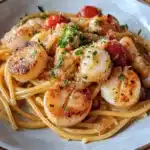
Lobster & Scallop Pasta Recipe
Ingredients
- For the Seafood:
- Lobster: 2 medium lobster tails (approx. 4-6 oz each), fresh or frozen (thawed)
- Scallops: 1 lb large sea scallops (U10 or U15 size), fresh, patted very dry
- Butter: 2 tablespoons, unsalted (for cooking seafood)
- Olive Oil: 1 tablespoon (for cooking seafood)
- For the Pasta:
- Pasta: 12 oz linguine, fettuccine, or spaghetti (high-quality dry pasta recommended)
- Salt: For boiling pasta water
- For the Sauce:
- Olive Oil: 2 tablespoons, extra virgin
- Butter: 2 tablespoons, unsalted
- Garlic: 4-5 cloves, thinly sliced or minced
- Shallot: 1 large or 2 small, finely chopped (about 1/4 cup)
- Red Pepper Flakes: 1/4 – 1/2 teaspoon (adjust to your spice preference)
- Dry White Wine: 3/4 cup (such as Pinot Grigio, Sauvignon Blanc, or unoaked Chardonnay)
- Heavy Cream: 3/4 cup
- Lemon: 1 medium, zest and juice (use half the juice initially, add more to taste)
- Fresh Parsley: 1/2 cup, chopped, plus more for garnish
- Fresh Chives: 2 tablespoons, snipped (optional, for garnish)
- Reserved Pasta Water: About 1 cup
- Salt and Freshly Ground Black Pepper: To taste
Instructions
1. Prepare the Lobster:
* If using frozen lobster tails, ensure they are fully thawed in the refrigerator overnight.
* Using kitchen shears, cut lengthwise through the top of the lobster shell, from the wide end towards the tail fins, stopping just before the fin. Be careful not to cut through the bottom shell.
* Gently separate the shell halves and carefully lift the meat out, keeping it attached at the base of the tail.
* Lift the meat and place it on top of the shell (piggyback style). Alternatively, you can remove the meat completely and chop it into bite-sized pieces after cooking. For this recipe, we’ll cook it on the shell initially for presentation and flavor, then chop.
* Rinse the lobster meat lightly under cold water and pat dry with paper towels. Season lightly with salt and pepper.
2. Prepare the Scallops:
* If your scallops have the small, tough side muscle (the adductor muscle), remove it. It will be a little rectangular tag on the side and will feel firmer than the rest of the scallop.
* Rinse the scallops under cold water and pat them very dry with paper towels. This is crucial for achieving a good sear.
* Season one side of the scallops with salt and freshly ground black pepper.
3. Cook the Pasta:
* Bring a large pot of generously salted water to a rolling boil.
* Add the linguine (or your pasta of choice) and cook according to package directions until al dente – typically 8-10 minutes. It should have a slight bite.
* Crucially: Before draining the pasta, reserve about 1.5 cups of the starchy pasta water. This liquid gold is essential for creating a silky sauce.
* Drain the pasta and set aside. You can toss it with a tiny drizzle of olive oil to prevent sticking if it will sit for more than a couple of minutes.
4. Cook the Seafood (while pasta is cooking or just after):
* Lobster: In a large skillet (cast iron is excellent), melt 1 tablespoon of butter with 1/2 tablespoon of olive oil over medium-high heat.
* Place the lobster tails, meat-side down, in the hot skillet. Cook for 2-3 minutes until the meat starts to turn opaque and slightly golden.
* Flip the tails and cook for another 2-4 minutes, or until the lobster meat is opaque and cooked through (internal temperature of 140-145°F / 60-63°C). Baste with the pan butter during the last minute.
* Remove the lobster tails from the skillet and set them aside on a cutting board. Once cool enough to handle, remove the meat from the shells and chop it into bite-sized chunks. You can reserve the shells for a future seafood stock if desired.
* Scallops: Wipe out the skillet if there are any burnt bits (or use a clean one). Add the remaining 1 tablespoon of butter and 1/2 tablespoon of olive oil to the skillet and heat over medium-high to high heat until the butter is melted and foamy, and the oil is shimmering.
* Carefully place the seasoned scallops in a single layer in the hot skillet, seasoned-side down. Do not overcrowd the pan; cook in batches if necessary.
* Sear the scallops for 1.5 – 2 minutes per side, without moving them, until they develop a deep golden-brown crust and are just opaque throughout. They should still be slightly translucent in the very center. Overcooked scallops become rubbery.
* Remove the scallops from the skillet and set them aside with the cooked lobster meat.
5. Build the Luscious Sauce:
* In the same skillet used for the scallops (no need to clean, the fond adds flavor!), reduce the heat to medium. Add the 2 tablespoons of olive oil and 2 tablespoons of butter.
* Once the butter is melted, add the chopped shallots and cook for 2-3 minutes, stirring occasionally, until softened and translucent.
* Add the sliced or minced garlic and red pepper flakes. Cook for another 1-2 minutes until the garlic is fragrant. Be careful not to burn the garlic, as it will turn bitter.
* Pour in the dry white wine. Increase the heat to medium-high and bring to a simmer, scraping up any browned bits (fond) from the bottom of the pan with a wooden spoon. Let the wine reduce by about half, which should take 3-5 minutes. This concentrates the flavor and cooks off the alcohol.
* Reduce the heat to low. Stir in the heavy cream and the zest of one lemon. Let it gently simmer for 2-3 minutes to thicken slightly. Do not let it boil vigorously.
* Add about 1/2 cup of the reserved pasta water to the sauce. Whisk to combine. The starch from the pasta water will help the sauce emulsify and cling to the pasta. Add more pasta water, a tablespoon at a time, if the sauce seems too thick.
* Stir in half of the fresh lemon juice. Taste the sauce and season with salt and freshly ground black pepper as needed. Remember that the pasta water is already salty.
6. Combine and Serve:
* Add the cooked pasta to the skillet with the sauce. Toss gently to coat every strand thoroughly. If the sauce is too thick, add a little more reserved pasta water until it reaches your desired consistency.
* Add the chopped cooked lobster meat and the seared scallops to the pasta. Stir in most of the chopped fresh parsley, reserving some for garnish. Gently toss everything together to combine and allow the seafood to heat through for about 1-2 minutes. Be gentle to avoid breaking up the delicate scallops.
* Taste one last time and adjust seasoning if necessary – perhaps a bit more salt, pepper, or lemon juice to brighten the flavors.
7. Plating:
* Divide the Lobster and Scallop Pasta among warmed serving bowls or plates.
* Garnish generously with the remaining fresh parsley, snipped chives (if using), and an extra grating of lemon zest if desired. A small drizzle of high-quality extra virgin olive oil on top can also elevate the dish.
* Serve immediately and watch your guests revel in delight!
Nutrition
- Serving Size: One Normal Portion
- Calories: 750-900 kcal