
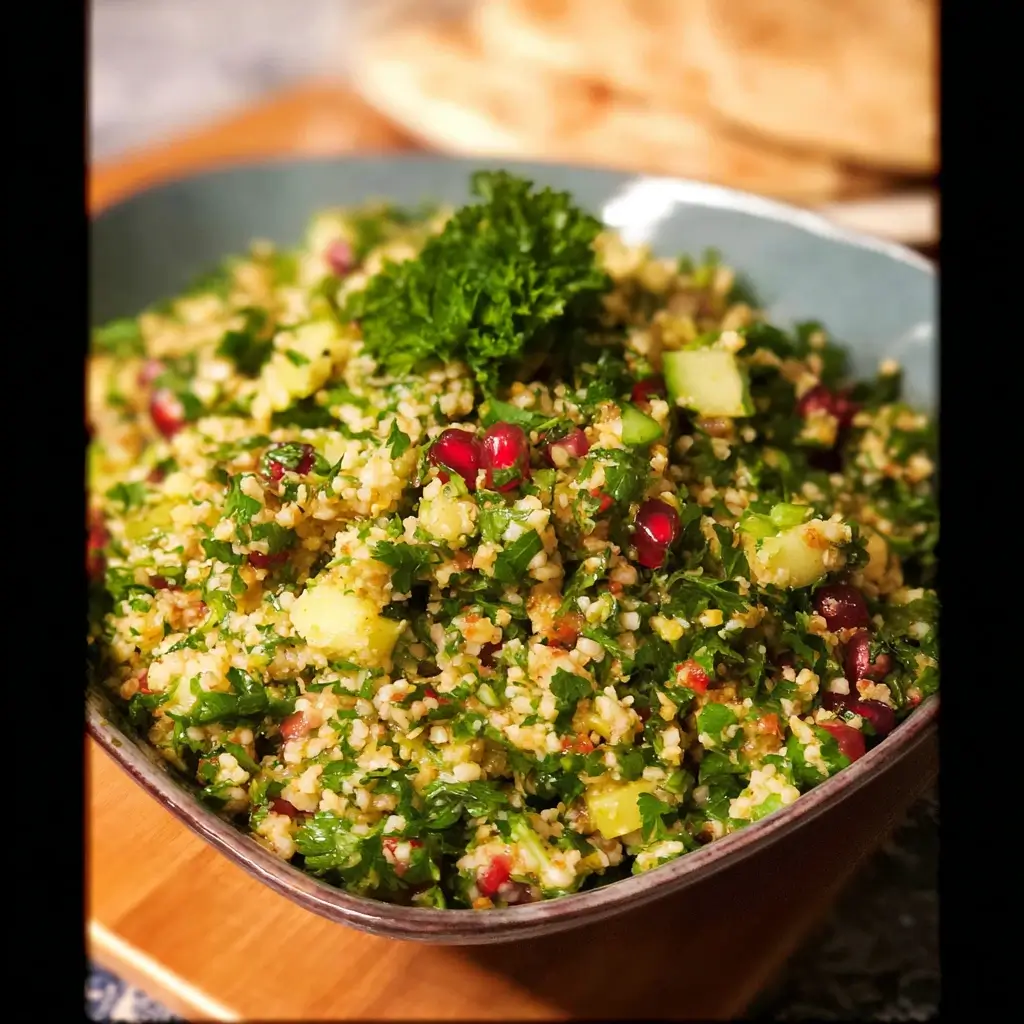

Of all the dishes that transport me straight to a sun-drenched afternoon in the Levant, none does so more vividly than this vegan parsley and bulgur salad, known lovingly around the world as Tabbouleh. I first encountered its authentic form not in a restaurant, but in the bustling home of a family friend in Beirut. The air was thick with the scent of freshly chopped parsley, the sharp zest of lemons, and the happy chatter of generations gathering for a meal. What I was served wasn’t the grain-heavy version I’d known, but a vibrant, herb-forward celebration. It was a sea of green, jeweled with specs of ruby-red tomato and ivory onion, all bound by the most fragrant olive oil. My first bite was a revelation—a zesty, refreshing, and profoundly satisfying explosion of flavor. It instantly became a staple in my own home, a dish my family requests for everything from summer barbecues to holiday potlucks. It’s the salad that proves “healthy” and “incredibly delicious” are not mutually exclusive. This recipe is my homage to that memory, a guide to creating a truly authentic Levantine Vegan Parsley and Bulgur Salad that is, in a word, unforgettable.
The Authentic Levantine Vegan Parsley and Bulgur Salad (Tabbouleh)
This recipe honors the traditional Lebanese method, where parsley is the undisputed star of the show, and bulgur is a humble supporting actor. The key is in the freshness of the ingredients and the fineness of the chop.
Ingredients
- For the Salad:
- 4 large, dense bunches of fresh flat-leaf (Italian) parsley (approximately 400-500g)
- 1 large bunch of fresh mint (approximately 100g)
- 1/2 cup of fine (#1) bulgur wheat
- 4 firm, ripe Roma tomatoes (or 3 medium round tomatoes)
- 1 medium white or yellow onion, or 4-5 green onions (scallions)
- 1/2 English cucumber, finely diced (optional, for a refreshing crunch)
- For the Dressing (Zayt w’ Hamod):
- 1/2 cup of high-quality extra virgin olive oil
- 1/2 cup of freshly squeezed lemon juice (from 2-3 large lemons)
- 1 teaspoon of fine sea salt, or to taste
- 1/2 teaspoon of freshly ground black pepper
- A pinch of allspice or Baharat (7-spice) (optional, for a traditional warm note)
Instructions
Crafting the perfect Tabbouleh is a labor of love, with the process being as important as the ingredients. Follow these steps for a flawless result.
- Prepare the Bulgur: Place the 1/2 cup of fine bulgur in a small bowl. Do not cook it. Simply rinse it quickly under cold water and drain it thoroughly in a fine-mesh sieve, pressing down to remove all excess water. Set it aside. The moisture from the washed parsley and the dressing will be enough to soften it to the perfect chewy texture.
- Wash and Dry the Herbs: This is the most crucial step. Wash the parsley and mint bunches thoroughly in a large bowl of cold water, swishing them around to dislodge any dirt. Lift them out of the water (don’t pour the water over them, as the dirt will settle back on). Repeat this process 2-3 times until the water is completely clear. To dry, you can either use a salad spinner (the most effective method) or pat them dry meticulously between layers of clean kitchen towels. The herbs must be as dry as possible to prevent a soggy salad.
- Chop the Herbs: Once dry, remove the thickest stems from the parsley. Gather a large handful, bunch it tightly together, and using a very sharp knife, finely chop it. Do not use a food processor, as this will bruise the herbs and release too much water, turning your salad into a paste. Repeat with the remaining parsley and the mint leaves. Place the chopped herbs in your largest salad bowl.
- Prepare the Vegetables: Finely dice the tomatoes into small, uniform pieces (about 1/4-inch). The smaller the dice, the better they will integrate into the salad. Finely chop the onion (or the white and light green parts of the green onions). If using cucumber, deseed it and dice it very finely as well.
- Combine the Ingredients: Add the finely diced tomatoes, onion, and cucumber (if using) to the bowl with the chopped herbs. Add the rinsed and drained bulgur on top. Do not mix yet.
- Make the Dressing: In a separate small bowl or jar, whisk together the extra virgin olive oil, freshly squeezed lemon juice, salt, pepper, and optional allspice. Taste and adjust the seasoning. It should be bright, zesty, and well-seasoned.
- Dress and Toss: Just before you are ready to serve, pour the dressing over the salad ingredients. Gently toss everything together with two large spoons, using a lifting motion from the bottom to combine everything without crushing the delicate herbs and tomatoes.
- Final Taste and Serve: Give the salad one final taste. You may need a little more salt or a squeeze more lemon juice depending on the sweetness of your tomatoes. Serve immediately for the best texture and flavor.
Nutrition Facts
- Servings: 6-8 side servings
- Calories per serving (approximate): 180-220 kcal (This can vary based on the exact amount of olive oil used).
Preparation Time
- Soaking/Resting Time for Bulgur: 15 minutes
- Preparation & Chopping Time: 30-40 minutes
- Total Time: Approximately 45-55 minutes
How to Serve
This Levantine Vegan Parsley and Bulgur Salad is incredibly versatile. It shines as a standalone dish but also complements a wide array of foods. Here are the best ways to serve it:
- As Part of a Classic Mezze Platter:
- Arrange a large platter with a generous bowl of Tabbouleh at its center.
- Surround it with bowls of creamy hummus, smoky baba ghanoush, and labneh (strained yogurt).
- Add falafel, stuffed grape leaves (warak enab), and kibbeh.
- Complete the platter with warm pita bread or pita chips for scooping.
- As a Refreshing Side Dish:
- Tabbouleh is the perfect counterpoint to rich, savory main courses.
- Pair it with grilled meats like shish tawook (chicken skewers), kafta (beef skewers), or lamb chops.
- Serve it alongside grilled fish or roasted chicken for a light, healthy meal.
- It beautifully cuts through the richness of fried foods like falafel or fried kibbeh.
- As a Light and Healthy Lunch:
- Enjoy a large bowl of Tabbouleh on its own for a nutritious and satisfying lunch.
- To make it more substantial, top it with a scoop of hummus, a handful of chickpeas, or some crumbled feta cheese (if not strictly vegan).
- In Wraps and Sandwiches:
- Use Tabbouleh as a filling in a pita pocket. Spread the inside of the pita with hummus, then stuff it with Tabbouleh and perhaps some grilled halloumi or falafel patties.
- It adds a burst of freshness and texture to wraps and can replace lettuce in sandwiches.
- Using Crisp Lettuce Cups:
- For a low-carb and elegant presentation, serve scoops of Tabbouleh in crisp lettuce cups, like romaine hearts or iceberg lettuce. This creates a natural, edible spoon and is a popular way to serve it in the Levant.
A Deeper Dive into the Heart of Tabbouleh
To truly appreciate this Levantine vegan parsley and bulgur salad, it’s worth understanding the soul of its components and the culture it comes from. This isn’t just a recipe; it’s a practice in freshness and balance.
The Soul of the Salad: The Ingredients
- Parsley: This is not a garnish; it is the main event. Use flat-leaf (Italian) parsley, not curly. It has a more robust, less bitter flavor and a softer texture. The vibrant green color and fresh, peppery taste are the essence of Tabbouleh. It’s also a nutritional powerhouse, packed with Vitamin K, Vitamin C, and antioxidants.
- Bulgur: The specific type of bulgur is non-negotiable for an authentic texture. You must use fine bulgur, often labeled as #1. This fine grain doesn’t require cooking; it softens perfectly with a brief rinse and the moisture from the other ingredients, providing a delightful, subtle chew that complements the soft herbs. Coarser bulgur (#2, #3, or #4) will remain too hard and will dominate the salad, shifting the balance away from the herbs.
- Mint: Fresh mint is the cooling counterpoint to the peppery parsley and zesty lemon. It adds a layer of aromatic sweetness and complexity. Never be tempted to use dried mint; the flavor profile is completely different and will not work in this fresh salad.
- Tomatoes and Onions: These provide sweetness, acidity, and a textural contrast. Use firm, flavorful tomatoes that won’t turn to mush when diced. Roma tomatoes are an excellent choice due to their lower water content. The onion (white, yellow, or green) should be chopped extremely fine to provide a sharp bite without overpowering the delicate herbs.
- The Dressing (Zayt w’ Hamod): In Arabic, the dressing is simply called “Zayt w’ Hamod,” meaning “Oil and Lemon.” This simplicity is its strength. The quality of your extra virgin olive oil will make or break the salad. Use a fruity, peppery olive oil that you love the taste of on its own. The lemon juice must be freshly squeezed. The bottled variety has a dull, metallic taste that will flatten the salad’s vibrant flavors.
The Rich History of Tabbouleh: More Than Just a Salad
Tabbouleh originates from the mountainous regions of Lebanon and Syria, where herbs like parsley and mint grew in abundance. Its name is derived from the Arabic word taabil, which means “to spice” or “to season.” Initially, it was a simple foraged-herb salad, a staple in the diet of the people of the Levant.
Over time, with the introduction of new crops, tomatoes became a key ingredient, adding color, moisture, and sweetness. Bulgur, a parboiled, dried, and cracked wheat, was a pantry staple in the region for centuries and was incorporated sparingly to add substance and texture.
Today, Tabbouleh is more than a dish; it is a symbol of Lebanese cuisine and hospitality. It is a cornerstone of the mezze, the elaborate spread of small dishes that kicks off a celebratory meal. Its presence on a table signifies freshness, generosity, and a connection to the land. While variations exist across the Middle East, the Lebanese version is internationally recognized for its overwhelming proportion of parsley, establishing it firmly as an herb salad, not a grain salad.
Additional Tips for Tabbouleh Perfection
- The Sharp Knife is Your Best Friend: A dull knife will bruise and crush the delicate parsley and mint leaves instead of slicing them cleanly. This releases excess water and chlorophyll, leading to a dark, soggy, and sometimes bitter salad. Take the time to sharpen your knife before you begin; the results are worth it.
- Dry, Dry, Dry Your Herbs: We cannot stress this enough. After washing, moisture is the enemy of a good Tabbouleh. A high-quality salad spinner is the most efficient tool for this job. If you don’t have one, lay the herbs in a single layer on clean kitchen towels, place another towel on top, and gently press down. Let them air dry for a bit if necessary. The drier the herbs, the fluffier and fresher your final salad will be.
- Dress Just Before Serving: The salt in the dressing will immediately start to draw water out of the tomatoes and parsley. To maintain the best possible texture and prevent the salad from becoming watery at the bottom of the bowl, toss the Tabbouleh with the dressing right before you plan to eat it. If you need to prepare it in advance, chop all the components and store them separately in the refrigerator. Make the dressing and store it in a jar. Combine everything when it’s time to serve.
- The Art of “Tasting and Adjusting”: A recipe provides a guideline, but the final flavor depends on your ingredients. Are your lemons extra tart? Are your tomatoes very sweet? Always taste the dressing before you add it. Then, after tossing the salad, taste it again. It might need a pinch more salt to bring out the flavors, another squeeze of lemon for brightness, or even a drizzle more olive oil for richness. Authentic home cooking is all about adjusting to taste.
- Let it Mingle (Briefly): While you should dress the salad at the last minute, allowing it to sit for 5-10 minutes after tossing can be beneficial. This brief period allows the bulgur to absorb the flavors of the dressing and the vegetables to meld together. Don’t let it sit for too long, but this short resting period can elevate the salad from a collection of ingredients to a cohesive, harmonious dish.
Frequently Asked Questions (FAQ)
1. Can I make this Levantine Parsley and Bulgur Salad gluten-free?
Absolutely. While it won’t be traditional Tabbouleh, you can achieve a similar and delicious result. The best gluten-free substitute for fine bulgur is quinoa. Cook the quinoa according to package directions and let it cool completely. Use about 3/4 to 1 cup of cooked quinoa to replace the 1/2 cup of dry bulgur. Another excellent, grain-free option is to use finely minced “cauliflower rice.” You would use it raw in place of the bulgur for a super light and modern twist.
2. How long does Tabbouleh last in the refrigerator?
Tabbouleh is best enjoyed the day it is made, ideally within a few hours of being dressed. However, leftovers can be stored in an airtight container in the refrigerator for up to 2 days. Be aware that the texture will change. The herbs will wilt, and the salad will become more compact and watery. While still tasty, it will lose that fresh, fluffy quality of a newly made Tabbouleh.
3. My Tabbouleh turned out watery and soggy. What went wrong?
There are a few common culprits for a watery Tabbouleh. The most likely reason is that the herbs were not dried properly after washing. Any residual water on the leaves will pool at the bottom of the bowl. The second reason could be using overripe or very juicy tomatoes. Using firm Roma tomatoes and deseeding them can help. Finally, letting the salad sit for too long after dressing it will cause the salt to draw out moisture from the vegetables, creating a puddle of liquid.
4. Can I use dried parsley or mint?
No, this is one recipe where fresh herbs are absolutely essential. The entire character of this Levantine salad—its freshness, vibrant color, texture, and aroma—comes from the large quantity of fresh parsley and mint. Dried herbs have a completely different, more concentrated and earthy flavor and will result in a dish that is not Tabbouleh.
5. What is the main difference between Lebanese Tabbouleh and other bulgur salads?
The key difference lies in the ratio of ingredients. Authentic Lebanese Tabbouleh is an herb salad with a little bit of bulgur. The dominant color should be a deep green from the parsley. In many other regions or Western adaptations, Tabbouleh is treated as a bulgur salad with some herbs mixed in, where the dominant ingredient is the grain. If your salad is more yellow/brown than green, it is likely not the traditional Lebanese style.

Levantine Vegan Parsley and Bulgur Salad Recipe
Ingredients
-
- For the Salad:
-
- 4 large, dense bunches of fresh flat-leaf (Italian) parsley (approximately 400-500g)
-
- 1 large bunch of fresh mint (approximately 100g)
-
- 1/2 cup of fine (#1) bulgur wheat
-
- 4 firm, ripe Roma tomatoes (or 3 medium round tomatoes)
-
- 1 medium white or yellow onion, or 4-5 green onions (scallions)
-
- 1/2 English cucumber, finely diced (optional, for a refreshing crunch)
-
- For the Salad:
-
- For the Dressing (Zayt w’ Hamod):
-
- 1/2 cup of high-quality extra virgin olive oil
-
- 1/2 cup of freshly squeezed lemon juice (from 2–3 large lemons)
-
- 1 teaspoon of fine sea salt, or to taste
-
- 1/2 teaspoon of freshly ground black pepper
-
- A pinch of allspice or Baharat (7-spice) (optional, for a traditional warm note)
-
- For the Dressing (Zayt w’ Hamod):
Instructions
-
- Prepare the Bulgur: Place the 1/2 cup of fine bulgur in a small bowl. Do not cook it. Simply rinse it quickly under cold water and drain it thoroughly in a fine-mesh sieve, pressing down to remove all excess water. Set it aside. The moisture from the washed parsley and the dressing will be enough to soften it to the perfect chewy texture.
-
- Wash and Dry the Herbs: This is the most crucial step. Wash the parsley and mint bunches thoroughly in a large bowl of cold water, swishing them around to dislodge any dirt. Lift them out of the water (don’t pour the water over them, as the dirt will settle back on). Repeat this process 2-3 times until the water is completely clear. To dry, you can either use a salad spinner (the most effective method) or pat them dry meticulously between layers of clean kitchen towels. The herbs must be as dry as possible to prevent a soggy salad.
-
- Chop the Herbs: Once dry, remove the thickest stems from the parsley. Gather a large handful, bunch it tightly together, and using a very sharp knife, finely chop it. Do not use a food processor, as this will bruise the herbs and release too much water, turning your salad into a paste. Repeat with the remaining parsley and the mint leaves. Place the chopped herbs in your largest salad bowl.
-
- Prepare the Vegetables: Finely dice the tomatoes into small, uniform pieces (about 1/4-inch). The smaller the dice, the better they will integrate into the salad. Finely chop the onion (or the white and light green parts of the green onions). If using cucumber, deseed it and dice it very finely as well.
-
- Combine the Ingredients: Add the finely diced tomatoes, onion, and cucumber (if using) to the bowl with the chopped herbs. Add the rinsed and drained bulgur on top. Do not mix yet.
-
- Make the Dressing: In a separate small bowl or jar, whisk together the extra virgin olive oil, freshly squeezed lemon juice, salt, pepper, and optional allspice. Taste and adjust the seasoning. It should be bright, zesty, and well-seasoned.
-
- Dress and Toss: Just before you are ready to serve, pour the dressing over the salad ingredients. Gently toss everything together with two large spoons, using a lifting motion from the bottom to combine everything without crushing the delicate herbs and tomatoes.
-
- Final Taste and Serve: Give the salad one final taste. You may need a little more salt or a squeeze more lemon juice depending on the sweetness of your tomatoes. Serve immediately for the best texture and flavor.
Nutrition
- Serving Size: One Normal Portion
- Calories: 180-220