
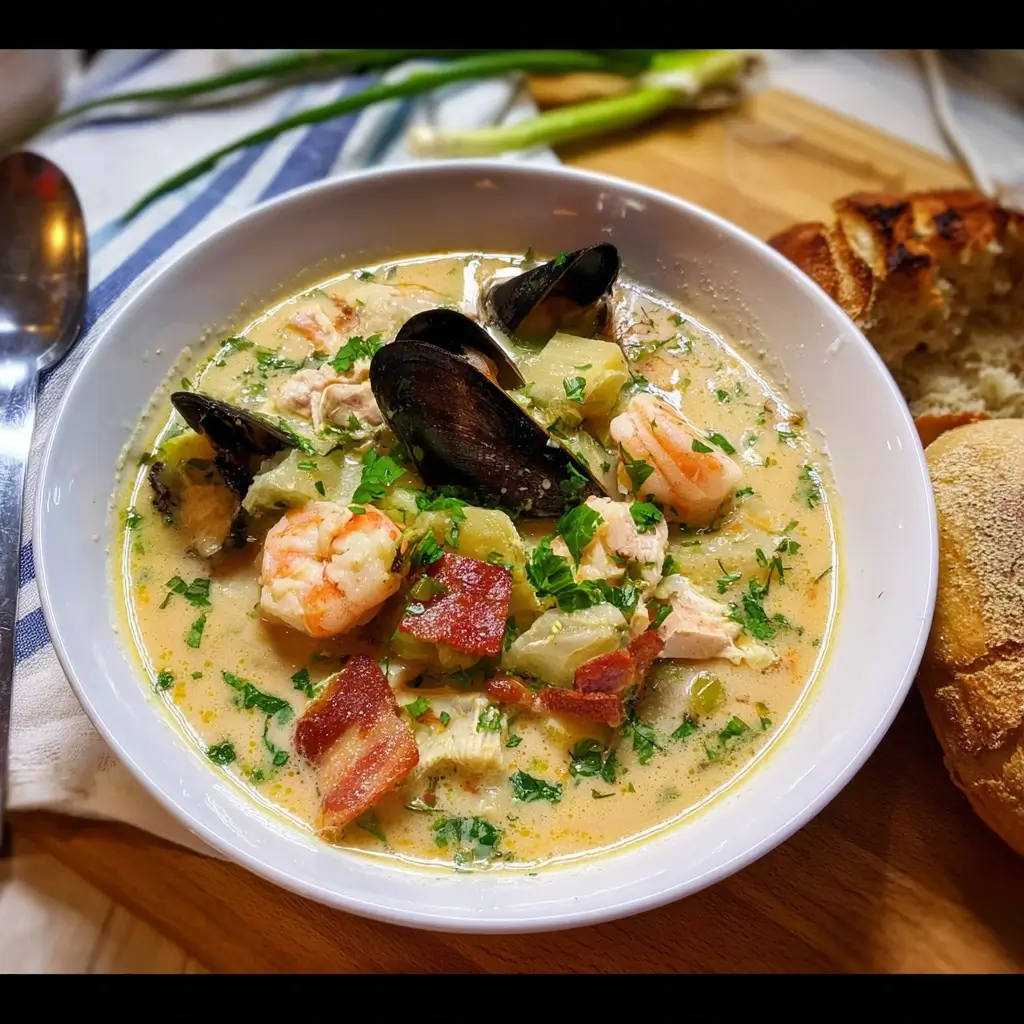

Of all the dishes that transport you straight to the windswept, ruggedly beautiful coast of Ireland, none does so more powerfully than a steaming bowl of seafood chowder. I still remember the first time I truly understood its magic. It was on a blustery afternoon in a small pub just outside Galway, with rain lashing against the windows. The air was thick with the scent of a peat fire and the cheerful hum of conversation. A bowl was placed in front of me—creamy, white, and brimming with fish, its surface dotted with fresh parsley and a slick of golden butter. That first spoonful was a revelation. It wasn’t just soup; it was a warm, briny hug. It was rich but not heavy, packed with tender flakes of salmon, firm white fish, and the unmistakable, deeply savoury note of smoked haddock. Every bite was a taste of the sea, balanced by the earthy sweetness of vegetables and the comforting creaminess of the broth. When I brought this recipe home, it became an instant family legend. It’s the dish we make to celebrate, to comfort, and to bring a little piece of the Emerald Isle into our own kitchen. This isn’t just a recipe; it’s a memory in a bowl, and I am thrilled to share it with you.
The Soul of Ireland in a Bowl: The Ultimate Irish Seafood Chowder
An authentic Irish Seafood Chowder is a masterclass in balance. It’s about letting high-quality, fresh seafood be the star, supported by a creamy, flavourful broth that is rich without being overpowering. Unlike thinner, brothier American-style chowders, the Irish version is characteristically thick, creamy, and satisfying enough to be a meal in itself, especially when served with a hearty slice of traditional brown bread for dipping. This recipe is designed to replicate that perfect pub-style experience, creating a chowder that is deeply comforting and utterly delicious.
Ingredients for Authentic Irish Seafood Chowder
This recipe yields a generous portion, perfect for a family meal or for having delicious leftovers. The key is to use a mix of fish for texture and flavour, with smoked haddock being the non-negotiable star for that authentic taste.
- For the Seafood:
- Smoked Haddock: 250g (about 9 oz), skinless and boneless, preferably undyed.
- Fresh Salmon Fillet: 250g (about 9 oz), skinless and boneless.
- Firm White Fish (Cod, Haddock, or Pollack): 250g (about 9 oz), skinless and boneless.
- Raw Prawns/Shrimp: 150g (about 5 oz), peeled and deveined.
- Fresh Mussels (Optional): 250g (about 9 oz), scrubbed and debearded.
- For the Chowder Base:
- Butter: 50g (about 3.5 tbsp).
- Streaky Bacon or Pancetta: 4 slices, finely chopped (optional, but adds a wonderful smoky depth).
- Onion: 1 large, finely chopped.
- Celery: 2 stalks, finely chopped.
- Carrot: 1 large, finely chopped.
- Leek: 1 medium, white and light green parts only, washed and finely sliced.
- All-Purpose Flour: 40g (about 1/3 cup).
- Potatoes: 500g (about 1.1 lbs), such as Maris Piper or Russets, peeled and diced into 1cm (1/2 inch) cubes.
- Fish or Vegetable Stock: 600ml (about 2.5 cups), good quality.
- Whole Milk: 300ml (about 1 1/4 cups).
- Heavy Cream (Double Cream): 300ml (about 1 1/4 cups).
- For Flavour and Garnish:
- Bay Leaf: 1.
- Fresh Dill: 2 tbsp, finely chopped.
- Fresh Parsley: 2 tbsp, finely chopped, plus extra for garnish.
- Lemon Juice: 1 tbsp, freshly squeezed.
- Salt: To taste.
- Freshly Ground Black Pepper: To taste.
- A knob of butter for finishing (optional).
Step-by-Step Instructions for the Perfect Chowder
Follow these instructions carefully to build layers of flavour, resulting in a perfectly textured and balanced chowder. The key is patience and not rushing the initial stages.
Step 1: Prepare the Fish and Poaching Liquid
- Cut the Fish: Begin by preparing your seafood. Cut the salmon, smoked haddock, and white fish fillets into bite-sized chunks, approximately 2-3 cm (about 1 inch). Keep them separate for now.
- Infuse the Milk: In a medium saucepan, combine the milk and the fish or vegetable stock. Add the bay leaf. Bring the liquid to a gentle simmer over medium-low heat. Do not let it boil.
- Poach the Fish: Add the chunks of smoked haddock and white fish to the simmering milk/stock mixture. Poach gently for 3-4 minutes, or until the fish is just beginning to flake. You are not trying to cook it through completely at this stage.
- Strain and Reserve: Using a slotted spoon, carefully remove the fish from the liquid and set it aside on a plate. The smoked haddock will have beautifully infused the liquid. Strain this precious poaching liquid through a fine-mesh sieve into a jug or bowl and set it aside. Discard the bay leaf. This liquid is the secret to a deeply flavourful chowder base.
Step 2: Build the Chowder Base
- Sauté the Aromatics: In a large, heavy-bottomed pot or Dutch oven, melt the 50g of butter over medium heat. If using, add the chopped bacon or pancetta and cook until it’s crispy and the fat has rendered, about 5-7 minutes.
- Sweat the Vegetables: Add the chopped onion, celery, carrot, and leek to the pot. Stir to coat them in the butter and bacon fat. Reduce the heat to low, cover the pot, and let the vegetables “sweat” for about 10-12 minutes. You want them to become very soft and translucent without browning, as this releases their natural sweetness.
- Create the Roux: Sprinkle the all-purpose flour over the softened vegetables. Stir continuously for 2 minutes. This is a crucial step to cook out the raw flour taste and create a roux, which will thicken your chowder.
Step 3: Combine and Simmer
- Incorporate the Liquid: Gradually pour the reserved poaching liquid into the pot, whisking constantly as you go to prevent any lumps from forming. Once all the liquid is incorporated and the mixture is smooth, turn the heat up to medium.
- Add Potatoes and Simmer: Add the diced potatoes to the pot. Bring the mixture to a gentle simmer, then reduce the heat to low, cover, and let it cook for 15-20 minutes, or until the potatoes are completely tender when pierced with a fork. Stir occasionally to prevent sticking.
- Add the Cream: Once the potatoes are soft, pour in the heavy cream and stir to combine. Let the chowder heat through gently, but do not allow it to boil, as this can cause the cream to curdle or split.
Step 4: Add the Seafood and Finish
- Final Cook of the Seafood: Gently add the reserved poached fish (smoked haddock and white fish), the raw salmon chunks, and the raw prawns to the chowder. Stir gently. The residual heat of the chowder will cook them perfectly. Let it simmer very gently (no boiling!) for another 3-5 minutes, until the salmon is opaque and the prawns are pink and curled.
- Add Mussels (If Using): If you are using mussels, you can steam them separately in a little white wine or water until they open (discard any that don’t). Remove them from their shells and stir the mussel meat into the chowder at the very end. Alternatively, add the live mussels directly to the chowder in this final step, cover the pot, and cook for 3-4 minutes until they open.
- Final Seasoning and Herbs: Turn off the heat. Stir in the chopped fresh dill, fresh parsley, and the freshly squeezed lemon juice. The lemon juice is vital for cutting through the richness of the cream and brightening all the flavours.
- Taste and Adjust: Have a final taste of the chowder. Add salt and plenty of freshly ground black pepper as needed. The smoked haddock and bacon are already salty, so be sure to taste before adding more salt. For an extra touch of Irish luxury, stir in a final knob of butter until it melts.
- Rest: Let the chowder sit off the heat for 5-10 minutes before serving. This allows the flavours to meld together beautifully.
Nutrition Facts
- Servings: 6 large bowls
- Calories per serving: Approximately 650-750 kcal
Disclaimer: The nutritional information provided is an estimate and can vary based on the specific ingredients used, such as the fat content of the fish and cream.
Preparation Time
- Prep Time: 25 minutes (chopping vegetables, cutting fish)
- Cook Time: 50 minutes
- Total Time: 1 hour 15 minutes
How to Serve Irish Seafood Chowder for the Full Experience
Serving this chowder is just as important as making it. It’s a rustic, hearty dish that deserves a presentation to match.
- The Bread is Essential: You cannot serve Irish chowder without bread for dipping. It is the law of the land.
- Traditional Irish Brown Bread: This is the ultimate pairing. Its dense, slightly sweet, and wheaty flavour is the perfect counterpoint to the creamy chowder.
- Crusty Sourdough: A great alternative with a tangy flavour that cuts through the richness.
- Soda Bread Farls: Light, fluffy, and perfect when toasted and slathered in Irish butter.
- Garnishes for Flavour and Beauty: A simple garnish elevates the dish from a simple soup to a restaurant-quality meal.
- Fresh Herbs: A generous sprinkle of finely chopped fresh parsley or dill adds a burst of freshness and colour. Chives are also a wonderful addition.
- A Drizzle of Oil or Butter: A small swirl of high-quality extra virgin olive oil or, for true decadence, a small knob of Irish butter allowed to melt on top, adds a final layer of richness.
- A Grind of Pepper: Finish with a final, coarse grind of black pepper just before serving.
- The Perfect Drink Pairing:
- A Pint of Stout: The classic. A pint of Guinness or Murphy’s, with its roasted, slightly bitter notes, is the traditional and perfect accompaniment.
- Crisp White Wine: A dry, crisp white wine like a Sauvignon Blanc or a Pinot Grigio works beautifully, its acidity cutting through the creaminess of the chowder.
- Irish Craft Cider: A dry or medium-dry Irish cider provides a lovely, fruity counterpoint.
Additional Tips for Chowder Perfection
Take your chowder from great to unforgettable with these five professional tips.
- The Power of Smoked Fish is Non-Negotiable: For a truly authentic Irish chowder, you must use smoked haddock or another smoked white fish like smoked cod. The process of poaching it in the milk/stock mixture creates a flavour base that you simply cannot replicate with unsmoked fish alone. It imparts a deep, savoury, umami quality that is the hallmark of the dish.
- Don’t Overcook the Seafood: This is the most common mistake. Seafood cooks incredibly quickly. By poaching the firmer fish lightly at the beginning and then adding all the seafood back into the hot (but not boiling) chowder at the very end, you ensure every piece is perfectly tender. The salmon should be just opaque, and the prawns should be plump and juicy, not rubbery.
- Build Your Flavour Base Slowly: The initial step of sweating the vegetables (onion, celery, carrot, leek) is not one to be rushed. Cooking them slowly over low heat without browning coaxes out their inherent sweetness, creating a complex and flavourful foundation for your chowder. This sweet vegetable base is what balances the salty, briny notes of the seafood.
- Let It Rest for Deeper Flavour: Like a good stew or curry, seafood chowder is even better the next day. If you have the time, make it a day in advance (see FAQ on how to do this properly). Even if you’re eating it straight away, letting it stand for at least 10-15 minutes off the heat before serving allows the myriad of flavours to settle, meld, and deepen.
- Balance the Richness: A great chowder is rich, but it shouldn’t be cloying. The secret to balancing the creamy, fatty elements is acidity and freshness. The final squeeze of fresh lemon juice is not optional—it cuts through the richness and makes the seafood flavours pop. Similarly, the generous addition of fresh herbs like dill and parsley at the end lifts the entire dish.
Frequently Asked Questions (FAQ)
Here are answers to some of the most common questions about making Irish Seafood Chowder.
1. Can I make seafood chowder ahead of time?
Yes, absolutely! In fact, the flavour is often better the next day. To do this, follow the recipe right up until the final step of adding the seafood. Cool the chowder base completely and store it in an airtight container in the refrigerator for up to 2 days. When you are ready to serve, gently reheat the base on the stove until it is hot (but not boiling). Then, add your raw salmon, prawns, and pre-poached fish and simmer for 3-5 minutes until the seafood is cooked through. Finish with the fresh herbs and lemon juice.
2. Can I freeze seafood chowder?
This is a tricky one. Chowders with a cream and potato base do not freeze well. The cream can split and become grainy upon reheating, and the potatoes can break down and become mushy, ruining the texture. Therefore, it’s not recommended to freeze the finished chowder. However, you can freeze the chowder base before the cream and potatoes are added. Make the recipe up to the point of adding the poaching liquid, cool it, and freeze that vegetable and roux base.
3. What is the best type of white fish to use for chowder?
You want a firm-fleshed white fish that will hold its shape in the chowder and not disintegrate into mush. Excellent choices include cod, haddock, pollack, and hake. These fish provide lovely, meaty flakes. Avoid more delicate fish like sole or tilapia, as they will fall apart too easily during cooking.
4. How do I stop the fish from falling apart and becoming mushy?
The key is gentle cooking and minimal stirring. First, cut the fish into reasonably large, uniform chunks (about 1 inch). Second, follow the two-stage cooking process in the recipe: a brief initial poach, followed by a final, short cook in the hot chowder base. Once the fish is in the chowder for its final cook, stir very gently and as little as possible. You just want to submerge it in the hot liquid to cook. This method ensures the fish remains in distinct, tender pieces.
5. Is it better to use milk, cream, or a combination of both?
For the best Irish seafood chowder, a combination is ideal. Using only milk can result in a chowder that is too thin. Using only heavy cream can make it overly rich and heavy. This recipe uses a foundation of fish stock and whole milk to create the flavourful poaching liquid and chowder base, with a generous amount of heavy (double) cream added near the end for that signature luxurious, creamy texture and richness. This combination provides the perfect balance of flavour and mouthfeel.
Print
Irish Seafood Chowder Recipe
Ingredients
- For the Seafood:
- Smoked Haddock: 250g (about 9 oz), skinless and boneless, preferably undyed.
- Fresh Salmon Fillet: 250g (about 9 oz), skinless and boneless.
- Firm White Fish (Cod, Haddock, or Pollack): 250g (about 9 oz), skinless and boneless.
- Raw Prawns/Shrimp: 150g (about 5 oz), peeled and deveined.
- Fresh Mussels (Optional): 250g (about 9 oz), scrubbed and debearded.
- For the Chowder Base:
- Butter: 50g (about 3.5 tbsp).
- Streaky Bacon or Pancetta: 4 slices, finely chopped (optional, but adds a wonderful smoky depth).
- Onion: 1 large, finely chopped.
- Celery: 2 stalks, finely chopped.
- Carrot: 1 large, finely chopped.
- Leek: 1 medium, white and light green parts only, washed and finely sliced.
- All-Purpose Flour: 40g (about 1/3 cup).
- Potatoes: 500g (about 1.1 lbs), such as Maris Piper or Russets, peeled and diced into 1cm (1/2 inch) cubes.
- Fish or Vegetable Stock: 600ml (about 2.5 cups), good quality.
- Whole Milk: 300ml (about 1 1/4 cups).
- Heavy Cream (Double Cream): 300ml (about 1 1/4 cups).
- For Flavour and Garnish:
- Bay Leaf: 1.
- Fresh Dill: 2 tbsp, finely chopped.
- Fresh Parsley: 2 tbsp, finely chopped, plus extra for garnish.
- Lemon Juice: 1 tbsp, freshly squeezed.
- Salt: To taste.
- Freshly Ground Black Pepper: To taste.
- A knob of butter for finishing (optional).
Instructions
Step 1: Prepare the Fish and Poaching Liquid
- Cut the Fish: Begin by preparing your seafood. Cut the salmon, smoked haddock, and white fish fillets into bite-sized chunks, approximately 2-3 cm (about 1 inch). Keep them separate for now.
- Infuse the Milk: In a medium saucepan, combine the milk and the fish or vegetable stock. Add the bay leaf. Bring the liquid to a gentle simmer over medium-low heat. Do not let it boil.
- Poach the Fish: Add the chunks of smoked haddock and white fish to the simmering milk/stock mixture. Poach gently for 3-4 minutes, or until the fish is just beginning to flake. You are not trying to cook it through completely at this stage.
- Strain and Reserve: Using a slotted spoon, carefully remove the fish from the liquid and set it aside on a plate. The smoked haddock will have beautifully infused the liquid. Strain this precious poaching liquid through a fine-mesh sieve into a jug or bowl and set it aside. Discard the bay leaf. This liquid is the secret to a deeply flavourful chowder base.
Step 2: Build the Chowder Base
- Sauté the Aromatics: In a large, heavy-bottomed pot or Dutch oven, melt the 50g of butter over medium heat. If using, add the chopped bacon or pancetta and cook until it’s crispy and the fat has rendered, about 5-7 minutes.
- Sweat the Vegetables: Add the chopped onion, celery, carrot, and leek to the pot. Stir to coat them in the butter and bacon fat. Reduce the heat to low, cover the pot, and let the vegetables “sweat” for about 10-12 minutes. You want them to become very soft and translucent without browning, as this releases their natural sweetness.
- Create the Roux: Sprinkle the all-purpose flour over the softened vegetables. Stir continuously for 2 minutes. This is a crucial step to cook out the raw flour taste and create a roux, which will thicken your chowder.
Step 3: Combine and Simmer
- Incorporate the Liquid: Gradually pour the reserved poaching liquid into the pot, whisking constantly as you go to prevent any lumps from forming. Once all the liquid is incorporated and the mixture is smooth, turn the heat up to medium.
- Add Potatoes and Simmer: Add the diced potatoes to the pot. Bring the mixture to a gentle simmer, then reduce the heat to low, cover, and let it cook for 15-20 minutes, or until the potatoes are completely tender when pierced with a fork. Stir occasionally to prevent sticking.
- Add the Cream: Once the potatoes are soft, pour in the heavy cream and stir to combine. Let the chowder heat through gently, but do not allow it to boil, as this can cause the cream to curdle or split.
Step 4: Add the Seafood and Finish
- Final Cook of the Seafood: Gently add the reserved poached fish (smoked haddock and white fish), the raw salmon chunks, and the raw prawns to the chowder. Stir gently. The residual heat of the chowder will cook them perfectly. Let it simmer very gently (no boiling!) for another 3-5 minutes, until the salmon is opaque and the prawns are pink and curled.
- Add Mussels (If Using): If you are using mussels, you can steam them separately in a little white wine or water until they open (discard any that don’t). Remove them from their shells and stir the mussel meat into the chowder at the very end. Alternatively, add the live mussels directly to the chowder in this final step, cover the pot, and cook for 3-4 minutes until they open.
- Final Seasoning and Herbs: Turn off the heat. Stir in the chopped fresh dill, fresh parsley, and the freshly squeezed lemon juice. The lemon juice is vital for cutting through the richness of the cream and brightening all the flavours.
- Taste and Adjust: Have a final taste of the chowder. Add salt and plenty of freshly ground black pepper as needed. The smoked haddock and bacon are already salty, so be sure to taste before adding more salt. For an extra touch of Irish luxury, stir in a final knob of butter until it melts.
- Rest: Let the chowder sit off the heat for 5-10 minutes before serving. This allows the flavours to meld together beautifully.
Nutrition
- Serving Size: One Normal Portion
- Calories: 650-750