
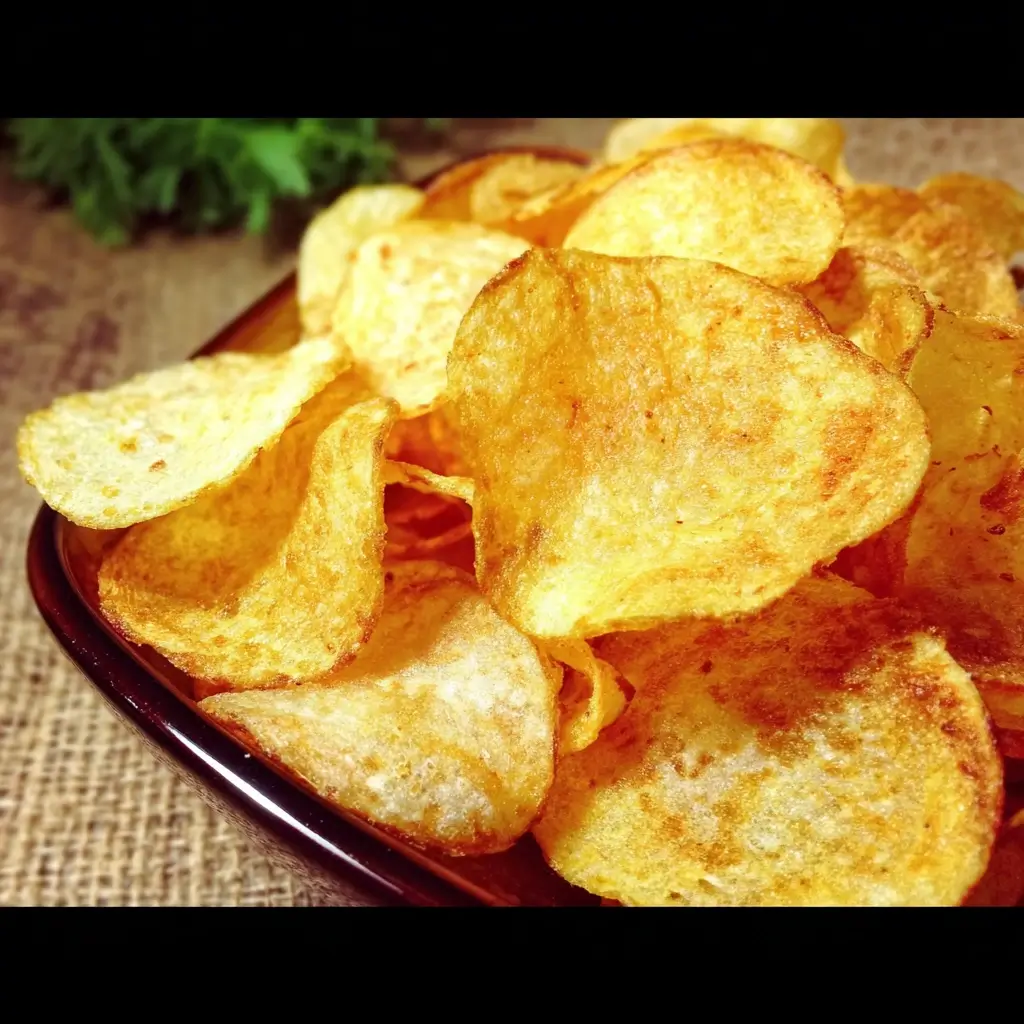
Of all the snacks in the world, there’s something primally satisfying about a truly perfect potato chip. I’m talking about that shatteringly crisp, audibly loud crunch that gives way to a delicate, salty, potato-forward flavor. For years, I was a loyalist to my favorite store-bought brands, convinced that achieving that level of perfection at home was a culinary myth reserved for professional kitchens. Then came the rainy Saturday afternoon when, on a whim, I decided to challenge that notion. With a few humble potatoes and a pot of oil, I embarked on a journey. The first batch was… a learning experience. But the second? Oh, the second batch was a revelation. When my family came into the kitchen, drawn by the irresistible aroma, their eyes widened. The sound of a dozen hands diving into the bowl, followed by a chorus of “Wow, you made these?!” was all the validation I needed. These aren’t just potato chips; they’re a crunchy, salty declaration that the best things in life are often the ones you make with your own two hands. They’ve since become our non-negotiable movie night staple, a celebrated side for summer barbecues, and my personal proof that a little effort can yield spectacularly delicious results.
Why This Is the Only Potato Chip Recipe You’ll Ever Need
Before we dive into the nitty-gritty of slicing and frying, let’s talk about why this recipe stands out. This isn’t just a list of steps; it’s a masterclass in the science and art of chip-making.
- Unbeatable Crunch: We’ll unlock the secrets to removing excess starch and moisture, the two mortal enemies of a crispy chip, ensuring a satisfying snap in every single bite.
- Pure Potato Flavor: When you make them yourself, you taste the potato. It’s a clean, earthy, and deeply satisfying flavor that often gets lost in mass-produced chips.
- Total Control: You control the thickness, the saltiness, the type of oil, and the seasonings. You are the master of your chip destiny, free from preservatives and artificial flavors.
- Surprisingly Simple: While it requires attention to detail, the process itself is straightforward. Once you understand the “why” behind each step, it becomes second nature.
- Endlessly Versatile: This base recipe is a blank canvas. We’ll cover the classic salted chip, but also explore a world of seasonings to customize your creations.
The Science Behind the Perfect Crunch
Understanding a little bit of food science transforms you from a cook into a chef. For potato chips, three elements are key: starch, water, and temperature. Mastering them is the difference between a sad, soggy chip and a golden, crispy one.
The Starch Situation: Why We Rinse
Potatoes are full of starch. When you slice a potato, you rupture its cell walls, releasing starch molecules onto the surface. If you fry the potatoes with this starchy coating, a few things happen. The starch will gelatinize and form a sticky layer, causing the chips to clump together in the fryer. It also browns very quickly—often before the interior of the chip is fully cooked and dehydrated—leading to unevenly cooked, sometimes burnt-tasting chips that lack a lasting crispness.
The solution is a cold-water bath. Soaking and rinsing the sliced potatoes washes away this excess surface starch. Cold water is crucial because it keeps the remaining starch within the potato’s cellular structure intact, preventing the slices from becoming mushy. This single step is arguably the most important for achieving a clean fry and a light, crispy texture.
The Water Enemy: The Importance of Being Dry
The goal of frying is to replace the water inside the potato with oil, dehydrating it until it becomes brittle and crisp. If you introduce wet potato slices into hot oil, you create a violent, steamy reaction. This steam bubble effect does two negative things. First, it dramatically lowers the oil’s temperature, leading to a longer cooking time and oil-logged, greasy chips. Second, the steam prevents the surface of the chip from making direct, intense contact with the hot oil, hindering the formation of a crispy crust.
Therefore, drying your potato slices isn’t just a suggestion; it’s a command. After their bath, the slices must be dried meticulously. Whether you use a salad spinner, layers of paper towels, or clean kitchen towels, the goal is to remove as much surface moisture as humanly possible before they hit the oil.
The Temperature Tango: Oil is Everything
Frying is a high-temperature cooking method. The oil’s temperature is critical and must be managed carefully.
- If the oil is too cool (below 325°F / 163°C): The potato slices will absorb oil like a sponge before they have a chance to cook through and crisp up. The result is a heavy, greasy, and limp chip.
- If the oil is too hot (above 375°F / 190°C): The outside of the chip will burn before the inside has fully dehydrated. You’ll get a chip that is dark brown or black on the outside but still soft and chewy in the center.
The ideal temperature range for frying potato chips is between 350°F and 365°F (175°C – 185°C). This is the sweet spot where the water inside the potato is rapidly converted to steam and escapes, while the exterior undergoes the Maillard reaction, creating that beautiful golden-brown color and complex, toasty flavor. Using a deep-fry or candy thermometer is non-negotiable for consistent, perfect results.
Choosing Your Tools and Ingredients
Greatness begins with the right foundation. The quality of your potatoes and oil will directly impact the final product.
The Best Potatoes for Frying
Not all potatoes are created equal in the world of chip-making. You’re looking for a potato with high starch content and low moisture.
- Russet Potatoes (The Gold Standard): This is the quintessential frying potato. Their high starch content and low water content result in a light, fluffy, and exceptionally crispy chip. Their long, oval shape also produces nicely sized chips. This is the top recommendation.
- Idaho Potatoes: Essentially a type of Russet grown in Idaho, these are also a perfect choice for all the same reasons.
- Kennebec Potatoes: A favorite among chefs and chip connoisseurs. They have a thin skin, a high starch content, and hold their shape beautifully, frying up to a lovely pale-golden color. They can be harder to find in regular grocery stores but are worth seeking out.
- What to Avoid: Waxy potatoes like Red Bliss or new potatoes. They have a higher moisture and sugar content and lower starch. This makes them great for boiling or roasting, but for frying, they tend to become dark and chewy rather than light and crisp.
The Right Oil for the Job
You need a neutral-flavored oil with a high smoke point (the temperature at which it begins to break down and smoke).
- Peanut Oil: A classic choice for deep-frying. It has a high smoke point (around 450°F / 232°C) and a very neutral flavor that lets the potato shine.
- Canola Oil / Vegetable Oil: Excellent, affordable, and readily available options. They both have high smoke points (around 400°F / 205°C) and neutral flavors.
- Safflower or Sunflower Oil: Great alternatives with high smoke points and clean taste profiles.
- What to Avoid: Oils with low smoke points or strong flavors, like extra virgin olive oil. Olive oil will burn at frying temperatures and impart a flavor that can be overpowering for a simple potato chip.
Salt: The Finishing Touch
The type of salt you use matters. You want a salt that will adhere to the hot, oily surface of the chip.
- Fine Sea Salt or Popcorn Salt: These are ideal. The fine grains stick evenly to the chips, providing consistent seasoning in every bite.
- Flaky Sea Salt (e.g., Maldon): Can be used for a more “gourmet” finish, but it’s best applied right before serving for its textural crunch, as it doesn’t adhere as well as fine salt.
- Avoid: Coarse kosher salt or table salt. Coarse salt tends to bounce right off, and table salt can contain anti-caking agents that can impart a slightly metallic taste.
The Ultimate Homemade Potato Chip Recipe
Here it is: the detailed, step-by-step guide to achieving potato chip nirvana. Read through all the steps before you begin.
Ingredients
- 2 pounds (about 900g) Russet potatoes (approximately 3-4 medium-large potatoes)
- 8 cups (2 quarts / 2 Liters) neutral frying oil (such as peanut, canola, or vegetable oil)
- 1 tablespoon fine sea salt, or to taste
- Cold water and ice for soaking
Instructions
Step 1: Prepare Your Station
Before you even touch a potato, set yourself up for success. Line two large baking sheets with several layers of paper towels or clean, lint-free kitchen towels. Place a wire cooling rack over another baking sheet. This will be your draining and seasoning station.
Step 2: Wash and Slice the Potatoes
Scrub the potatoes thoroughly under cold running water. You can choose to peel them for a classic, uniform look, or leave the skin on for a more rustic, flavorful chip. Using a mandoline slicer is highly recommended for this step. Set it to its thinnest setting, about 1/16th of an inch (1.5mm). Slice the potatoes, working carefully and always using the safety guard. Uniformity is the key to even cooking. If you don’t have a mandoline, use your sharpest knife and slice as thinly and evenly as you possibly can.
Step 3: The Critical Soak
Immediately transfer the potato slices into a large bowl of cold water as you slice them. This prevents them from oxidizing and turning brown. Once all potatoes are sliced, drain the cloudy, starchy water. Refill the bowl with fresh cold water, add a handful of ice cubes, and let the slices soak for at least 30 minutes, or up to 2 hours. You will see the water become cloudy again—this is the excess starch being released.
Step 4: Drain and Dry Meticulously
Drain the potatoes thoroughly in a colander. Now comes the most crucial drying phase. For best results, use a salad spinner (working in batches) to spin off the excess water. After spinning, lay the potato slices in a single layer on your prepared towel-lined baking sheets. Place another layer of towels on top and gently but firmly press down to blot away as much moisture as possible. The drier the slices, the crispier the chip.
Step 5: Heat the Oil
Pour the oil into a large, heavy-bottomed pot or Dutch oven. The oil should be at least 2-3 inches deep. Attach a deep-fry or candy thermometer to the side of the pot, ensuring the tip is submerged in the oil but not touching the bottom. Heat the oil over medium-high heat until it reaches a steady 350°F (175°C).
Step 6: Fry in Batches
Once the oil is at temperature, carefully add a single handful of potato slices to the pot. Do not overcrowd the pan! This will drop the oil temperature and result in soggy chips. The oil will bubble vigorously at first. Use a spider strainer or long-handled slotted spoon to gently stir the chips, separating them.
Fry for 3-5 minutes, adjusting the burner as needed to maintain the oil temperature between 325°F and 365°F. The chips are done when the bubbling has subsided significantly (a sign that most of the moisture has evaporated), and they are a light golden brown. They will not be completely rigid in the oil but will crisp up as they cool.
Step 7: Drain and Season Immediately
Using your spider strainer, lift the finished chips out of the oil, allowing the excess oil to drip back into the pot for a moment. Immediately transfer them to the wire rack-lined baking sheet. While they are still hot and glistening with oil, sprinkle them generously with fine sea salt. The heat and oil are what make the salt stick.
Repeat the frying process with the remaining potato slices, making sure to let the oil come back up to 350°F between each batch.
Nutrition Facts
- Servings: 6-8
- Calories per serving: Approximately 280-320 kcal
Disclaimer: The nutritional information is an estimate and can vary significantly based on the type of potato, the amount of oil absorbed during frying, and the quantity of salt used.
Preparation Time
- Prep Time: 20 minutes (washing, slicing)
- Soaking Time: 30 minutes
- Cook Time: 20-25 minutes (in batches)
- Total Time: Approximately 1 hour 15 minutes
How to Serve Your Homemade Potato Chips
The beauty of a perfect, classic chip is its versatility. Here are some fantastic ways to serve your golden creations:
- With Classic Dips:
- French Onion Dip: The ultimate creamy, savory pairing.
- Ketchup: Simple, classic, and always a crowd-pleaser.
- Ranch Dressing: A cool and herby counterpoint to the salty crunch.
- Spicy Mayo: Mix mayonnaise with a touch of sriracha and lime juice for a zesty kick.
- As a Perfect Side Dish:
- Burgers and Hot Dogs: Elevate your barbecue from standard to spectacular.
- Deli-Style Sandwiches: The perfect partner for a Reuben, turkey club, or Italian sub.
- Steak Dinner: Serve alongside a perfectly cooked steak for a steakhouse-at-home experience.
- As a Gourmet Garnish:
- On Top of Soups: Crumble a few chips over a creamy tomato or potato-leek soup for a delightful textural contrast.
- In Salads: Use in place of croutons for a gluten-free crunch.
- On Casseroles: Sprinkle over mac and cheese or a tuna casserole in the last few minutes of baking for a crispy topping.
5 Additional Tips for Chip Perfection
- Mandoline Safety First: If using a mandoline, always, always use the hand guard it came with. Those blades are incredibly sharp. When the potato gets too small to hold safely with the guard, it’s better to stop slicing than to risk an injury.
- Don’t Overcrowd the Pot: This is the most common mistake. Frying in small batches is the key to maintaining oil temperature, which in turn is the key to a crispy, non-greasy chip. Be patient; it’s worth it.
- The Double-Fry Method (Advanced): For an even crispier, more stable chip (like a kettle-style chip), you can try the double-fry method. First, blanch the chips in oil at a lower temperature (around 300°F / 150°C) for 3-4 minutes, until soft but not browned. Remove and drain. Then, increase the oil temperature to 365°F / 185°C and fry them a second time until golden brown and crispy.
- Filter and Reuse Your Oil: Don’t throw out that expensive oil! Once it has completely cooled, you can strain it through a coffee filter or a few layers of cheesecloth to remove any food particles. Store it in a sealed, light-proof container and reuse it 2-3 more times for frying.
- Experiment with Thickness: While 1/16th of an inch is a great starting point, feel free to experiment. A slightly thicker slice (closer to 1/8th of an inch) will yield a sturdier chip with a more potato-forward flavor, though it will require a slightly longer cooking time.
Frequently Asked Questions (FAQ)
1. Why are my homemade chips soggy and greasy?
This is almost always due to one of two things (or both): the potato slices were not dry enough before frying, or the oil temperature was too low. Ensure your slices are bone-dry and use a thermometer to maintain the oil at a steady 350°F (175°C). Also, avoid overcrowding the pot.
2. Can I bake these potato chips instead of frying them?
Yes, you can make baked potato chips for a healthier alternative, though the texture will be different—more cracker-like than shatteringly crisp. After soaking and drying the slices, toss them with a tablespoon or two of oil. Arrange them in a single layer on a parchment-lined baking sheet (do not overlap). Bake at 400°F (200°C) for 15-20 minutes, flipping halfway through, until golden and crispy at the edges.
3. What about making them in an air fryer?
Absolutely! The air fryer is a great option. After soaking and drying the slices, toss them in about a teaspoon of oil (you need very little). Place them in a single layer in the air fryer basket. Cook at 375°F (190°C) for 10-15 minutes, shaking the basket every 5 minutes to ensure even cooking, until they are golden and crisp. You will need to work in several batches.
4. What is the best way to store homemade potato chips?
Homemade potato chips are best enjoyed the day they are made. However, if you have leftovers, let them cool completely to room temperature. Store them in a paper bag (which helps absorb any excess oil and moisture) or an airtight container at room temperature for up to 2-3 days. Do not refrigerate them, as this will make them soggy.
5. Can I prepare the potatoes in advance?
Yes, you can do some of the prep work ahead of time. You can slice the potatoes and leave them soaking in the bowl of cold water in the refrigerator for up to 24 hours. When you’re ready to cook, simply proceed with the draining, drying, and frying steps as instructed.

Homemade Potato Chips Recipe
Ingredients
- 2 pounds (about 900g) Russet potatoes (approximately 3–4 medium-large potatoes)
- 8 cups (2 quarts / 2 Liters) neutral frying oil (such as peanut, canola, or vegetable oil)
- 1 tablespoon fine sea salt, or to taste
- Cold water and ice for soaking
Instructions
Step 1: Prepare Your Station
Before you even touch a potato, set yourself up for success. Line two large baking sheets with several layers of paper towels or clean, lint-free kitchen towels. Place a wire cooling rack over another baking sheet. This will be your draining and seasoning station.
Step 2: Wash and Slice the Potatoes
Scrub the potatoes thoroughly under cold running water. You can choose to peel them for a classic, uniform look, or leave the skin on for a more rustic, flavorful chip. Using a mandoline slicer is highly recommended for this step. Set it to its thinnest setting, about 1/16th of an inch (1.5mm). Slice the potatoes, working carefully and always using the safety guard. Uniformity is the key to even cooking. If you don’t have a mandoline, use your sharpest knife and slice as thinly and evenly as you possibly can.
Step 3: The Critical Soak
Immediately transfer the potato slices into a large bowl of cold water as you slice them. This prevents them from oxidizing and turning brown. Once all potatoes are sliced, drain the cloudy, starchy water. Refill the bowl with fresh cold water, add a handful of ice cubes, and let the slices soak for at least 30 minutes, or up to 2 hours. You will see the water become cloudy again—this is the excess starch being released.
Step 4: Drain and Dry Meticulously
Drain the potatoes thoroughly in a colander. Now comes the most crucial drying phase. For best results, use a salad spinner (working in batches) to spin off the excess water. After spinning, lay the potato slices in a single layer on your prepared towel-lined baking sheets. Place another layer of towels on top and gently but firmly press down to blot away as much moisture as possible. The drier the slices, the crispier the chip.
Step 5: Heat the Oil
Pour the oil into a large, heavy-bottomed pot or Dutch oven. The oil should be at least 2-3 inches deep. Attach a deep-fry or candy thermometer to the side of the pot, ensuring the tip is submerged in the oil but not touching the bottom. Heat the oil over medium-high heat until it reaches a steady 350°F (175°C).
Step 6: Fry in Batches
Once the oil is at temperature, carefully add a single handful of potato slices to the pot. Do not overcrowd the pan! This will drop the oil temperature and result in soggy chips. The oil will bubble vigorously at first. Use a spider strainer or long-handled slotted spoon to gently stir the chips, separating them.
Fry for 3-5 minutes, adjusting the burner as needed to maintain the oil temperature between 325°F and 365°F. The chips are done when the bubbling has subsided significantly (a sign that most of the moisture has evaporated), and they are a light golden brown. They will not be completely rigid in the oil but will crisp up as they cool.
Step 7: Drain and Season Immediately
Using your spider strainer, lift the finished chips out of the oil, allowing the excess oil to drip back into the pot for a moment. Immediately transfer them to the wire rack-lined baking sheet. While they are still hot and glistening with oil, sprinkle them generously with fine sea salt. The heat and oil are what make the salt stick.
Repeat the frying process with the remaining potato slices, making sure to let the oil come back up to 350°F between each batch.
Nutrition
- Serving Size: One Normal Portion
- Calories: 280-320 kcal