
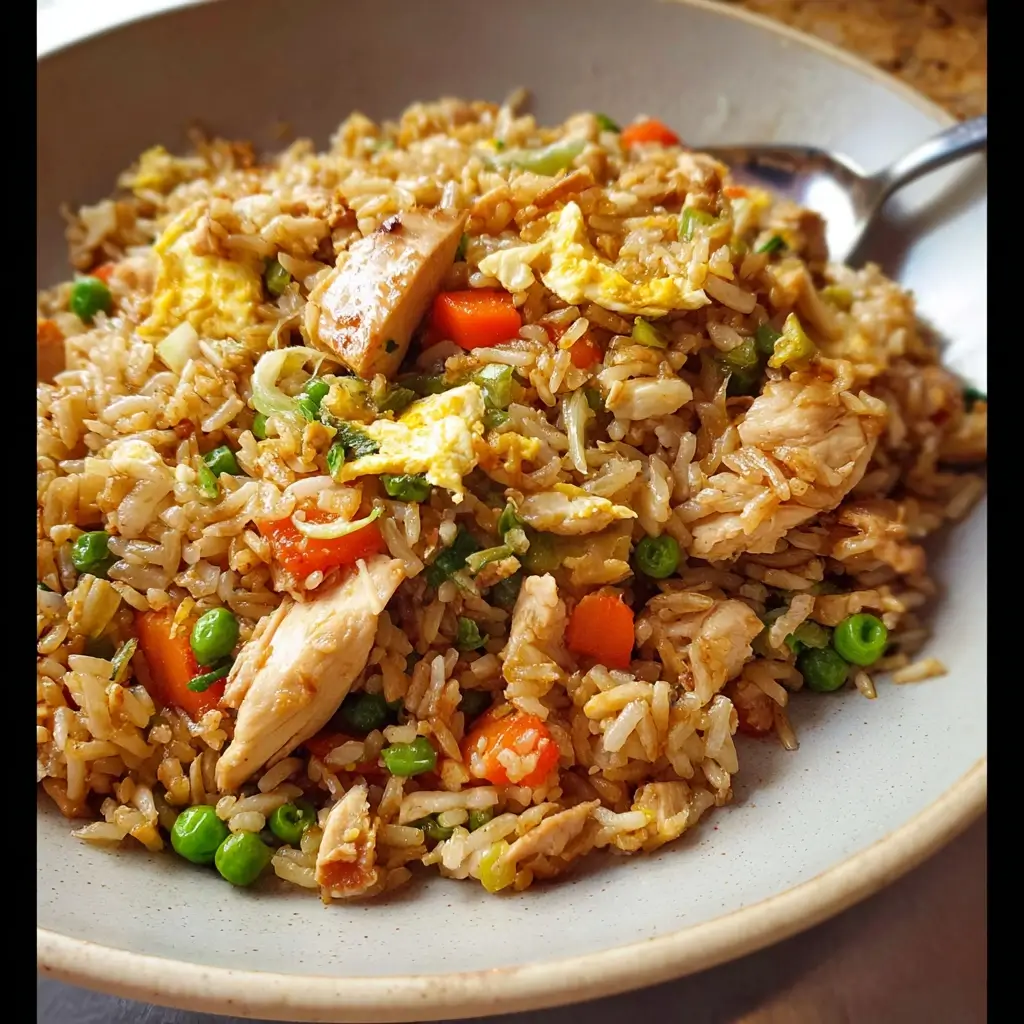

Of all the dishes in my weeknight dinner rotation, this Chicken Fried Rice holds a special place in my heart—and in my family’s stomachs. I remember the first time I truly nailed it. It was a chaotic Tuesday evening, the kind where takeout feels like the only viable option. But I had some leftover rice in the fridge and a couple of chicken breasts that needed to be used. I decided to give homemade fried rice another shot, determined to replicate that elusive, savory, slightly smoky flavor from our favorite Chinese restaurant. As the garlic, ginger, and scallions hit the hot, shimmering oil in my wok, the entire kitchen filled with an aroma that had my kids wandering in from the living room asking, “What smells so good?” That night, as we sat around the table, passing a huge platter of fluffy, perfectly seasoned rice studded with tender chicken and crisp vegetables, my youngest declared it “better than the restaurant.” That was it. That was the moment this recipe became a legend in our house. It’s not just a meal; it’s a solution. It’s a budget-friendly way to use up leftovers, a meal that comes together faster than a delivery driver can find your house, and a guaranteed crowd-pleaser that I can adapt based on whatever I have on hand. This isn’t just a recipe; it’s a testament to the magic of simple, well-cooked ingredients coming together to create something truly spectacular.
The Ultimate Homemade Chicken Fried Rice Recipe
This recipe is designed to be a definitive guide, helping you achieve that perfect balance of flavors and textures that define exceptional fried rice. We’ll break down not just the “how” but the “why” behind each step, ensuring you can recreate this takeout classic with confidence in your own kitchen. Forget gummy, bland, or oily fried rice; this is the real deal.
Gather Your Ingredients: The Keys to Perfect Fried Rice
The quality of your fried rice is directly linked to the quality of your ingredients and their preparation. Here’s exactly what you’ll need, with notes on why each component is crucial.
- For the Chicken and Marinade:
- 1 lb (about 450g) boneless, skinless chicken breasts or thighs: Cut into small, uniform ½-inch cubes. Chicken thighs are more forgiving and contain more fat, resulting in more tender, flavorful bites. Breasts are leaner but work wonderfully when not overcooked. The key is small, even pieces so they cook quickly.
- 1 tablespoon soy sauce (or tamari for gluten-free): This is the first layer of seasoning for the chicken, infusing it with a savory, salty flavor from the inside out.
- 1 teaspoon cornstarch: This is a secret weapon. A light coating of cornstarch helps to create a very thin, protective barrier around the chicken. When it hits the hot oil, it creates a subtle, velvety crust that locks in moisture, ensuring the chicken stays incredibly tender.
- ½ teaspoon white pepper: White pepper has a more earthy, floral heat than black pepper and is a classic flavor in Chinese cooking. It provides a background warmth without being overpowering.
- For the Fried Rice:
- 3 tablespoons neutral oil: Divided for cooking. Use an oil with a high smoke point, such as canola, grapeseed, avocado, or peanut oil. Olive oil is not recommended as its flavor is too strong and its smoke point is too low for the high heat required.
- 4 cloves garlic, minced: Fresh garlic is non-negotiable. Its pungent, aromatic flavor is foundational. Mince it finely so it distributes evenly and doesn’t burn.
- 1 tablespoon fresh ginger, minced or grated: Ginger adds a warm, zesty, and slightly spicy note that cuts through the richness and brightens the entire dish.
- 1 medium yellow onion, finely diced: The onion provides a sweet, aromatic base layer of flavor when sautéed.
- 1 cup frozen pea and carrot mix: A classic for a reason. Using frozen vegetables is a fantastic shortcut. There’s no need to thaw them; just add them directly to the hot wok. They will thaw and cook in moments, retaining a pleasant, crisp-tender texture.
- 4 cups cooked and chilled long-grain white rice: This is the single most important ingredient. Day-old, refrigerated rice is essential. When rice cools, its starches undergo a process called retrogradation, which makes the grains firm up and separate. This allows them to fry into distinct, fluffy grains instead of clumping together into a mushy paste. Jasmine or other long-grain white rice varieties are ideal.
- 3 large eggs, lightly beaten: The eggs add richness, protein, and a wonderful soft texture that contrasts with the other ingredients.
- 3 scallions (green onions), thinly sliced: Separate the white/light green parts from the dark green parts. The white parts are cooked with the aromatics for a mild onion flavor, while the dark green tops are used at the end as a fresh, sharp garnish.
- For the Signature Fried Rice Sauce:
- 3 tablespoons low-sodium soy sauce: The primary source of salty, umami flavor. Low-sodium is recommended so you can control the salt level more effectively, as other ingredients (like oyster sauce) also contain sodium.
- 1 tablespoon oyster sauce: This is the secret to a deep, complex, restaurant-quality flavor. It’s thick, slightly sweet, and packed with a savory, briny umami that soy sauce alone cannot provide. Do not skip this if you can help it.
- 2 teaspoons sesame oil: A finishing oil, not a cooking oil. Sesame oil has a low smoke point and a powerful, nutty, and toasty aroma. It’s added at the very end, off the heat, to preserve its delicate flavor.
- 1 teaspoon granulated sugar (optional): A tiny amount of sugar doesn’t make the dish sweet; it balances the saltiness of the soy and oyster sauces, creating a more well-rounded and complex flavor profile.
- A pinch of white pepper: Another small pinch in the sauce reinforces that classic flavor.
Instructions: Step-by-Step Guide to Takeout-Worthy Chicken Fried Rice
Follow these steps precisely for the best results. The key to fried rice is high heat and speed, so having everything prepped and ready to go (a concept known as mise en place) is critical.
Step 1: Prepare the Chicken
In a medium bowl, combine the diced chicken pieces with 1 tablespoon of soy sauce, 1 teaspoon of cornstarch, and ½ teaspoon of white pepper. Toss everything together until the chicken is evenly coated. Set it aside to marinate for at least 10 minutes while you prepare the other ingredients. This short marination period is enough to begin tenderizing the chicken and infusing it with flavor.
Step 2: Mix the Sauce
In a small bowl, whisk together all the sauce ingredients: the low-sodium soy sauce, oyster sauce, sesame oil, optional sugar, and the pinch of white pepper. Combining the sauce ahead of time is crucial. It ensures even flavor distribution and saves you from fumbling with multiple bottles during the fast-paced cooking process. Set the sauce aside.
Step 3: Scramble the Eggs
Place a large wok or a 12-inch non-stick skillet over medium-high heat. Add 1 tablespoon of the neutral oil and swirl to coat the surface. Once the oil is hot and shimmering, pour in the lightly beaten eggs. Let them cook for about 20-30 seconds until the bottom is set, then gently push and fold them with a spatula to create soft curds. Cook until they are just set but still slightly moist. Immediately remove the scrambled eggs from the wok and set them aside on a plate. Do not overcook them, as they will be added back to the dish later.
Step 4: Cook the Chicken
Return the wok to high heat. Add another tablespoon of neutral oil. When the oil is very hot (it should be shimmering and almost smoking), carefully add the marinated chicken in a single layer. Let it sear for 1-2 minutes without moving to develop a beautiful golden-brown crust. Then, stir-fry the chicken for another 2-3 minutes until it is cooked through and no longer pink inside. Use a slotted spoon to remove the cooked chicken from the wok and set it aside with the scrambled eggs.
Step 5: Sauté the Aromatics and Vegetables
Reduce the heat to medium-high. Add the final tablespoon of oil to the wok. Add the diced yellow onion and the white/light green parts of the scallions. Stir-fry for 1-2 minutes until the onion begins to soften and become translucent. Add the minced garlic and ginger and continue to stir-fry for another 30-60 seconds until fragrant. Be careful not to burn the garlic. Immediately add the frozen pea and carrot mix and stir-fry for 2 minutes, until the vegetables are heated through and crisp-tender.
Step 6: Fry the Rice
Add the chilled, cooked rice to the wok with the vegetables. Use your spatula to press and break up any large clumps of rice. This is a critical step. Spread the rice out across the surface of the wok to maximize contact with the heat. Let it fry, undisturbed, for a minute or two to allow some of the grains to get slightly toasty and crisp. Then, continue to stir-fry, tossing everything together for about 3-4 minutes. The rice should be heated through, and you should hear a light crackling sound.
Step 7: Combine and Finish
Pour the pre-mixed sauce evenly over the rice. Immediately start tossing and stirring to coat every single grain. Continue to stir-fry for another minute until the sauce is fully absorbed and the rice has taken on a uniform brown color. Return the cooked chicken and scrambled eggs to the wok. Add the dark green parts of the scallions. Toss everything together one last time to combine and heat through, about 1 minute.
Step 8: Serve Immediately
Remove the wok from the heat. Give the fried rice a final taste and adjust seasoning if necessary (though it should be well-balanced). Serve immediately while it’s piping hot.
Nutrition Facts
- Servings: This recipe yields 4 large servings or 6 smaller servings.
- Calories per Serving (approximate): Approximately 550-650 calories per large serving.
Disclaimer: The nutritional information is an estimate and can vary significantly based on the specific ingredients used (e.g., chicken thighs vs. breasts, specific brands of sauces, amount of oil).
This homemade version gives you complete control over the ingredients, allowing you to reduce sodium by using low-sodium soy sauce, control the amount and type of oil used, and pack in more vegetables, making it a considerably healthier option than most restaurant versions.
Preparation Time
One of the greatest appeals of chicken fried rice is its speed, making it a perfect weeknight meal.
- Prep Time: 15 minutes (for dicing chicken, chopping vegetables, and mixing the sauce)
- Cook Time: 15 minutes
- Total Time: 30 minutes
This timeline assumes you are using pre-cooked, chilled rice. If you need to cook rice from scratch, factor in an additional 20-30 minutes for cooking and at least 1-2 hours for cooling.
How to Serve
Chicken fried rice is a fantastic one-pan meal, but it can also be the star of a larger spread. Here are some serving suggestions to elevate your meal:
- Garnish Generously: A simple garnish can make the dish look and taste more vibrant.
- Freshly sliced green onions: The sharp, fresh bite contrasts beautifully with the savory rice.
- Toasted sesame seeds: Adds a nutty crunch and visual appeal.
- A drizzle of sriracha or chili garlic sauce: For those who enjoy a kick of heat.
- A drizzle of chili oil: Adds a fragrant, numbing heat and a beautiful red sheen.
- Crispy fried shallots or garlic: Provides an incredible textural contrast.
- Serve as a Main Course:
- Dish it out into individual bowls for a simple, satisfying dinner.
- Serve it family-style on a large platter in the center of the table, allowing everyone to help themselves.
- Pair with Classic Side Dishes: Create a full takeout-style experience at home by pairing it with other favorites.
- Egg Drop Soup: A light, comforting soup that complements the fried rice perfectly.
- Crispy Spring Rolls or Egg Rolls: Serve with sweet and sour or duck sauce for dipping.
- Steamed or Stir-fried Greens: A side of simple steamed broccoli, bok choy, or gai lan with a touch of oyster sauce provides a healthy, fresh counterpoint.
- Spicy Cucumber Salad: A refreshing, tangy, and spicy salad to cleanse the palate between bites.
Additional Tips for Restaurant-Quality Chicken Fried Rice
Master the recipe with these five insider tips that separate good fried rice from great fried rice.
- The Rice is Everything (Seriously): We cannot stress this enough. Using warm, freshly cooked rice is the number one mistake people make. The excess moisture turns the dish into a gummy, sticky mess. Day-old rice that has had time to chill and dry out in the refrigerator is the gold standard. The grains become firm and separate easily, allowing them to be stir-fried to perfection. Pro-Hack: If you’re in a pinch and don’t have leftover rice, cook a fresh batch, spread it in a thin layer on a baking sheet, and place it in the freezer for 15-20 minutes or the refrigerator for about an hour to rapidly cool and dry it out.
- High Heat is Your Friend: The signature flavor of great fried rice, often referred to as wok hei (“breath of the wok”), comes from a combination of high heat and rapid stir-frying. This process caramelizes the ingredients and imparts a subtle, smoky flavor that cannot be achieved with low or medium heat. Get your wok or skillet screaming hot before you add your ingredients. You should hear a loud sizzle the moment the food hits the pan.
- Don’t Crowd the Pan: Cooking everything at once, especially in a smaller pan, will lower the temperature and cause the ingredients to steam rather than sear. This is why we cook the eggs, chicken, and vegetables in stages. By cooking in batches, you maintain the high heat necessary for proper browning and texture. If you are doubling the recipe, it is especially important to work in batches to ensure everything fries properly.
- The Perfect Fried Rice Sauce is Pre-Mixed: The cooking process for fried rice is incredibly fast. There is no time to be measuring and pouring individual liquids into the hot wok. By pre-mixing your soy sauce, oyster sauce, sesame oil, and sugar, you ensure that the flavor is perfectly balanced and can be added in one swift motion, coating every grain of rice evenly.
- Mise en Place is Non-Negotiable: This French culinary term means “everything in its place.” Before you even think about turning on the stove, have every single ingredient chopped, measured, and ready in small bowls. The chicken should be marinating, the sauce mixed, the eggs beaten, and the vegetables diced. Stir-frying waits for no one, and having everything at your fingertips is the key to a smooth, stress-free cooking process and a perfectly executed dish.
FAQ: Your Chicken Fried Rice Questions Answered
1. Can I use brown rice or other grains for this recipe?
Yes, you absolutely can, but the texture will be different. Brown rice has a chewier, nuttier texture and will not get as light and fluffy as white rice. Quinoa can also be used for a high-protein alternative. The key, regardless of the grain, remains the same: it must be cooked and thoroughly chilled beforehand to prevent mushiness.
2. What’s the best pan to use if I don’t have a wok?
A traditional carbon steel wok is ideal because its bowl shape allows for excellent heat distribution and easy tossing. However, if you don’t own one, the next best option is a large (12-inch or wider), heavy-bottomed skillet. A cast-iron skillet is a fantastic choice as it retains heat exceptionally well, which is crucial for getting a good sear. A large non-stick skillet also works well, especially for preventing the eggs and rice from sticking. The goal is to have a large surface area so the ingredients can fry in a single layer.
3. How can I customize this recipe with different vegetables or proteins?
This recipe is an excellent template for customization!
- Vegetables: Feel free to add or substitute other quick-cooking vegetables. Finely chopped broccoli florets, sliced mushrooms, diced bell peppers, edamame, corn, or bean sprouts are all wonderful additions. Add heartier vegetables like broccoli or bell peppers along with the onions to give them enough time to cook.
- Proteins: You can easily swap the chicken for diced shrimp (add it near the end as it cooks very quickly), thinly sliced beef (like flank steak), or diced pork. For a vegetarian option, omit the chicken and add cubed firm tofu (press it first to remove excess water) or more eggs.
4. How do I store and reheat leftovers for the best results?
Store leftover chicken fried rice in an airtight container in the refrigerator for up to 3-4 days. The best way to reheat it is not in the microwave, which can make it soggy. Instead, heat a tablespoon of oil in a skillet or wok over medium-high heat. Add the leftover fried rice and stir-fry for 2-4 minutes, breaking it up with a spatula, until it’s heated through. This method helps to re-crisp the rice and brings its texture back to life.
5. How can I make this recipe gluten-free?
Making this chicken fried rice gluten-free is very simple. You just need to make two key substitutions:
- Soy Sauce: Use gluten-free tamari or coconut aminos in place of regular soy sauce. They provide a similar savory, umami flavor.
- Oyster Sauce: Traditional oyster sauce contains wheat. Look for a brand that is specifically labeled “gluten-free,” which are becoming much more common in well-stocked grocery stores or online. Always double-check the labels of your sauces.
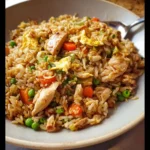
Homemade Chicken Fried Rice Recipe
Ingredients
- For the Chicken and Marinade:
- 1 lb (about 450g) boneless, skinless chicken breasts or thighs: Cut into small, uniform ½-inch cubes. Chicken thighs are more forgiving and contain more fat, resulting in more tender, flavorful bites. Breasts are leaner but work wonderfully when not overcooked. The key is small, even pieces so they cook quickly.
- 1 tablespoon soy sauce (or tamari for gluten-free): This is the first layer of seasoning for the chicken, infusing it with a savory, salty flavor from the inside out.
- 1 teaspoon cornstarch: This is a secret weapon. A light coating of cornstarch helps to create a very thin, protective barrier around the chicken. When it hits the hot oil, it creates a subtle, velvety crust that locks in moisture, ensuring the chicken stays incredibly tender.
- ½ teaspoon white pepper: White pepper has a more earthy, floral heat than black pepper and is a classic flavor in Chinese cooking. It provides a background warmth without being overpowering.
- For the Fried Rice:
- 3 tablespoons neutral oil: Divided for cooking. Use an oil with a high smoke point, such as canola, grapeseed, avocado, or peanut oil. Olive oil is not recommended as its flavor is too strong and its smoke point is too low for the high heat required.
- 4 cloves garlic, minced: Fresh garlic is non-negotiable. Its pungent, aromatic flavor is foundational. Mince it finely so it distributes evenly and doesn’t burn.
- 1 tablespoon fresh ginger, minced or grated: Ginger adds a warm, zesty, and slightly spicy note that cuts through the richness and brightens the entire dish.
- 1 medium yellow onion, finely diced: The onion provides a sweet, aromatic base layer of flavor when sautéed.
- 1 cup frozen pea and carrot mix: A classic for a reason. Using frozen vegetables is a fantastic shortcut. There’s no need to thaw them; just add them directly to the hot wok. They will thaw and cook in moments, retaining a pleasant, crisp-tender texture.
- 4 cups cooked and chilled long-grain white rice: This is the single most important ingredient. Day-old, refrigerated rice is essential. When rice cools, its starches undergo a process called retrogradation, which makes the grains firm up and separate. This allows them to fry into distinct, fluffy grains instead of clumping together into a mushy paste. Jasmine or other long-grain white rice varieties are ideal.
- 3 large eggs, lightly beaten: The eggs add richness, protein, and a wonderful soft texture that contrasts with the other ingredients.
- 3 scallions (green onions), thinly sliced: Separate the white/light green parts from the dark green parts. The white parts are cooked with the aromatics for a mild onion flavor, while the dark green tops are used at the end as a fresh, sharp garnish.
- For the Signature Fried Rice Sauce:
- 3 tablespoons low-sodium soy sauce: The primary source of salty, umami flavor. Low-sodium is recommended so you can control the salt level more effectively, as other ingredients (like oyster sauce) also contain sodium.
- 1 tablespoon oyster sauce: This is the secret to a deep, complex, restaurant-quality flavor. It’s thick, slightly sweet, and packed with a savory, briny umami that soy sauce alone cannot provide. Do not skip this if you can help it.
- 2 teaspoons sesame oil: A finishing oil, not a cooking oil. Sesame oil has a low smoke point and a powerful, nutty, and toasty aroma. It’s added at the very end, off the heat, to preserve its delicate flavor.
- 1 teaspoon granulated sugar (optional): A tiny amount of sugar doesn’t make the dish sweet; it balances the saltiness of the soy and oyster sauces, creating a more well-rounded and complex flavor profile.
- A pinch of white pepper: Another small pinch in the sauce reinforces that classic flavor.
Instructions
Step 1: Prepare the Chicken
In a medium bowl, combine the diced chicken pieces with 1 tablespoon of soy sauce, 1 teaspoon of cornstarch, and ½ teaspoon of white pepper. Toss everything together until the chicken is evenly coated. Set it aside to marinate for at least 10 minutes while you prepare the other ingredients. This short marination period is enough to begin tenderizing the chicken and infusing it with flavor.
Step 2: Mix the Sauce
In a small bowl, whisk together all the sauce ingredients: the low-sodium soy sauce, oyster sauce, sesame oil, optional sugar, and the pinch of white pepper. Combining the sauce ahead of time is crucial. It ensures even flavor distribution and saves you from fumbling with multiple bottles during the fast-paced cooking process. Set the sauce aside.
Step 3: Scramble the Eggs
Place a large wok or a 12-inch non-stick skillet over medium-high heat. Add 1 tablespoon of the neutral oil and swirl to coat the surface. Once the oil is hot and shimmering, pour in the lightly beaten eggs. Let them cook for about 20-30 seconds until the bottom is set, then gently push and fold them with a spatula to create soft curds. Cook until they are just set but still slightly moist. Immediately remove the scrambled eggs from the wok and set them aside on a plate. Do not overcook them, as they will be added back to the dish later.
Step 4: Cook the Chicken
Return the wok to high heat. Add another tablespoon of neutral oil. When the oil is very hot (it should be shimmering and almost smoking), carefully add the marinated chicken in a single layer. Let it sear for 1-2 minutes without moving to develop a beautiful golden-brown crust. Then, stir-fry the chicken for another 2-3 minutes until it is cooked through and no longer pink inside. Use a slotted spoon to remove the cooked chicken from the wok and set it aside with the scrambled eggs.
Step 5: Sauté the Aromatics and Vegetables
Reduce the heat to medium-high. Add the final tablespoon of oil to the wok. Add the diced yellow onion and the white/light green parts of the scallions. Stir-fry for 1-2 minutes until the onion begins to soften and become translucent. Add the minced garlic and ginger and continue to stir-fry for another 30-60 seconds until fragrant. Be careful not to burn the garlic. Immediately add the frozen pea and carrot mix and stir-fry for 2 minutes, until the vegetables are heated through and crisp-tender.
Step 6: Fry the Rice
Add the chilled, cooked rice to the wok with the vegetables. Use your spatula to press and break up any large clumps of rice. This is a critical step. Spread the rice out across the surface of the wok to maximize contact with the heat. Let it fry, undisturbed, for a minute or two to allow some of the grains to get slightly toasty and crisp. Then, continue to stir-fry, tossing everything together for about 3-4 minutes. The rice should be heated through, and you should hear a light crackling sound.
Step 7: Combine and Finish
Pour the pre-mixed sauce evenly over the rice. Immediately start tossing and stirring to coat every single grain. Continue to stir-fry for another minute until the sauce is fully absorbed and the rice has taken on a uniform brown color. Return the cooked chicken and scrambled eggs to the wok. Add the dark green parts of the scallions. Toss everything together one last time to combine and heat through, about 1 minute.
Step 8: Serve Immediately
Remove the wok from the heat. Give the fried rice a final taste and adjust seasoning if necessary (though it should be well-balanced). Serve immediately while it’s piping hot.
Nutrition
- Serving Size: One Normal Portion
- Calories: 550-650