
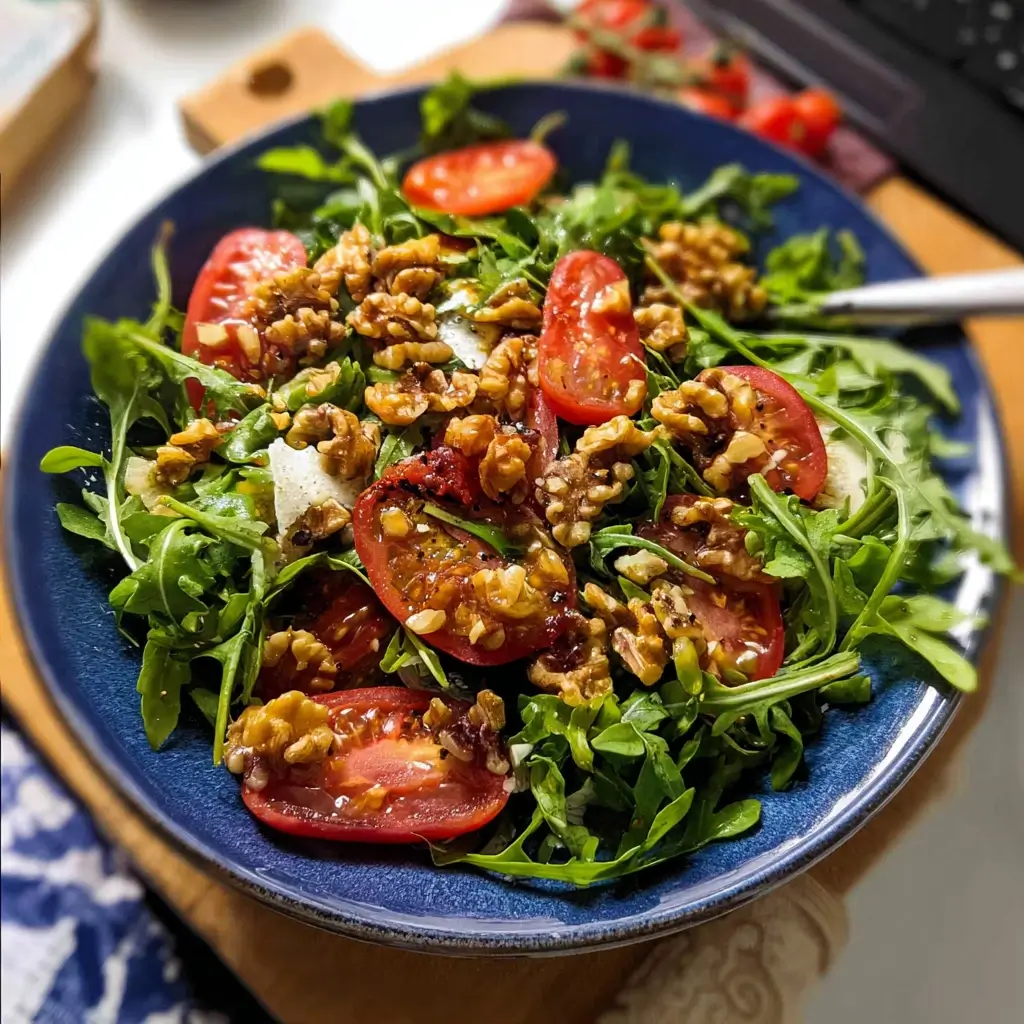

There are some dishes that feel like pure, unadulterated sunshine on a plate, and this Gluten-Free Tomato Arugula Salad with Walnuts is unequivocally one of them. I first threw this salad together on a warm Tuesday evening when I needed something quick, healthy, and satisfying without a lot of fuss. I wasn’t expecting it to become an instant classic in our home, but the reaction was immediate and enthusiastic. My husband, who usually considers a salad a prelude to the “real” meal, declared it a masterpiece of textures and tastes. The kids were surprisingly drawn to the sweet pop of the cherry tomatoes and the satisfying crunch of the toasted walnuts. For me, it was the perfect symphony: the bold, peppery kick of the arugula, the juicy sweetness of ripe tomatoes, the rich, earthy depth of the walnuts, and the salty, umami finish of shaved Parmesan, all brought together by a simple, tangy balsamic vinaigrette. It’s a recipe that proves that gluten-free eating is not about deprivation but about celebrating fresh, vibrant, and incredibly flavorful ingredients. It has since become our go-to for everything from a light solo lunch to a beautiful side dish for family barbecues, and every time I make it, I’m reminded of how the simplest combinations can often be the most profound.
The Ultimate Gluten-Free Tomato Arugula Salad with Walnuts
This recipe is a celebration of simplicity and quality. The key is to use the freshest ingredients possible to allow their natural flavors to shine. This isn’t just a salad; it’s a textural and flavorful journey in every single bite.
Ingredients
For the Salad:
- Arugula: 5 ounces (about 140g) fresh baby arugula, washed and thoroughly dried
- Cherry Tomatoes: 1 pint (about 2 cups or 300g), halved
- Walnuts: 3/4 cup (about 90g) raw walnut halves, toasted
- Red Onion: 1/4 of a large red onion, very thinly sliced
- Parmesan Cheese: 1/2 cup (about 50g) shaved Parmesan cheese (use a vegetable peeler for best results)
For the Simple Balsamic Vinaigrette:
- Extra Virgin Olive Oil: 6 tablespoons (90ml)
- Balsamic Vinegar: 2 tablespoons (30ml), good quality
- Dijon Mustard: 1 teaspoon (5ml)
- Maple Syrup or Honey: 1/2 teaspoon (optional, to balance acidity)
- Fine Sea Salt: 1/2 teaspoon, or to taste
- Freshly Ground Black Pepper: 1/4 teaspoon, or to taste
Instructions
Follow these simple steps to create a perfect salad every time. The process is quick, but the small details—like toasting the nuts and slicing the onion thinly—make all the difference.
- Toast the Walnuts: Place a dry, medium-sized skillet over medium heat. Add the walnut halves in a single layer. Toast for 4-6 minutes, tossing or stirring frequently, until they become fragrant and slightly browned. Be watchful as nuts can burn quickly. Once toasted, remove them from the skillet immediately and set them aside to cool. Once cooled, you can leave them as halves or give them a coarse chop for smaller pieces.
- Prepare the Vegetables: While the walnuts are toasting and cooling, prepare the rest of your salad components. Wash the arugula and dry it completely using a salad spinner or by gently patting it with clean kitchen towels. Wet greens will repel the dressing and result in a watery salad. Place the dried arugula in a large salad bowl.
- Slice the Tomatoes and Onion: Slice the cherry tomatoes in half and add them to the bowl with the arugula. Using a sharp knife or a mandoline, slice the red onion as thinly as possible. Thin slices will impart a mild onion flavor without overpowering the other ingredients. Add the sliced onion to the bowl.
- Make the Vinaigrette: In a small bowl or a glass jar with a tight-fitting lid, combine the extra virgin olive oil, balsamic vinegar, Dijon mustard, optional maple syrup, sea salt, and black pepper. Whisk vigorously or shake the jar until the dressing is well-emulsified and slightly thickened. The Dijon mustard acts as an emulsifier, helping the oil and vinegar stay combined. Taste and adjust seasoning if necessary. You might prefer it a bit more acidic (add a splash more vinegar) or a touch sweeter (add a little more maple syrup).
- Assemble the Salad: Just before serving, add the cooled, toasted walnuts and the shaved Parmesan cheese to the large salad bowl with the greens, tomatoes, and onion.
- Dress and Toss: Drizzle about half of the vinaigrette over the salad. Gently toss everything together using salad tongs or your hands until all the ingredients are lightly and evenly coated. Add more dressing as needed to reach your desired level of coating, but be careful not to oversaturate the delicate arugula.
- Serve Immediately: Transfer the salad to a serving platter or individual plates. Garnish with a few extra shavings of Parmesan and a final grind of black pepper. Serve immediately for the best texture and flavor.
Nutrition Facts
- Servings: 4 side-dish servings or 2 main-course servings
- Calories per Serving (approximate): 380 kcal (for a 4-serving portion)
Please note that these nutritional values are an estimate and can vary based on the specific ingredients and quantities used.
Preparation Time
- Prep Time: 10 minutes
- Cook Time (Toasting Walnuts): 5 minutes
- Total Time: 15 minutes
How to Serve This Vibrant Salad
This Gluten-Free Tomato Arugula Salad is incredibly versatile. Its bold flavors and satisfying textures make it a star in many different culinary settings. Here are some of our favorite ways to serve it:
- As a Standalone Light Meal:
- For a refreshing and nutritious lunch or light dinner, serve the salad in a large bowl.
- Pair it with a side of gluten-free crusty bread or crackers to soak up any leftover vinaigrette.
- Enjoy it alongside a warm cup of tomato basil soup or a clear vegetable broth for a complete and comforting meal.
- As an Elegant Side Dish:
- The peppery and acidic notes of the salad cut through rich flavors beautifully, making it an ideal companion for grilled or roasted meats.
- With Grilled Chicken or Steak: The salad provides a fresh, bright contrast to the smoky, savory flavors of the meat.
- With Seared Salmon or Shrimp: The lightness of the salad complements seafood perfectly without overpowering it.
- With Gluten-Free Pasta: Serve it alongside a simple gluten-free pasta dish, such as one tossed with garlic and olive oil, to add a fresh, vegetable-forward component.
- With Pizza Night: A fresh arugula salad is a classic Italian pizzeria accompaniment. It provides a healthy balance to a cheesy, delicious gluten-free pizza.
- As a Hearty Main Course:
- Transform this side into a substantial main course by adding a source of protein.
- Add Grilled Chicken: Top the salad with sliced, grilled chicken breast.
- Incorporate Chickpeas: For a vegetarian or vegan (omit cheese) option, add a can of rinsed and drained chickpeas for protein and fiber.
- Top with a Hard-Boiled Egg: A sliced or quartered hard-boiled egg adds richness and protein.
- Add Avocado: Cubed avocado can add creamy texture and healthy fats, making the salad even more filling.
- For Entertaining and Gatherings:
- To impress guests, arrange the salad on a large, flat platter instead of a deep bowl. This showcases all the beautiful ingredients.
- Serve the dressing in a small pitcher on the side, allowing guests to dress their own portions. This also prevents the salad from becoming soggy on a buffet table.
- It’s a perfect, vibrant addition to a potluck, barbecue, or holiday dinner spread.
A Deep Dive into Our Star Ingredients
Understanding why these specific ingredients work so well together elevates this recipe from a simple list of items to a true culinary creation.
Arugula: The Peppery Green Foundation
Also known as “rocket” or “rucola,” arugula is a member of the brassica family, alongside broccoli and kale. Its signature flavor is what sets it apart from other salad greens. It has a complex, peppery, and slightly bitter taste that adds a sophisticated kick. For this salad, we use baby arugula, which is harvested earlier for a more tender texture and a milder (though still distinct) peppery flavor compared to its more mature counterpart. Beyond its taste, arugula is a nutritional powerhouse, packed with nitrates that support cardiovascular health, Vitamin K for bone health, and antioxidants like beta-carotene.
Tomatoes: The Sweet and Juicy Jewels
While any good tomato will work, cherry or grape tomatoes are the best choice for this salad. Their small size means they have a higher skin-to-flesh ratio, which helps them hold their shape well when halved. They burst in your mouth with a concentrated sweetness that provides the perfect counterbalance to the peppery arugula and salty Parmesan. For the best flavor, always use tomatoes that are at room temperature. Refrigeration can dull their taste and give them a mealy texture. Look for tomatoes that are firm, fragrant, and have a deep, uniform color.
Walnuts: The Earthy, Brainy Crunch
Walnuts are the textural heart of this salad. Their distinctive, craggy shape offers a substantial, satisfying crunch that contrasts beautifully with the soft greens and juicy tomatoes. Their flavor is rich, earthy, and slightly tannic. Toasting them is a non-negotiable step; it awakens their natural oils, deepens their nutty flavor, and makes them even crunchier. Walnuts are also renowned for being a top source of plant-based omega-3 fatty acids (ALA), which are crucial for brain health and reducing inflammation, making this salad as smart as it is delicious.
Parmesan Cheese: The Salty, Umami Finish
True Parmigiano-Reggiano, or a good quality domestic Parmesan, adds an indispensable layer of flavor. Its salty, nutty, and profoundly savory (umami) character ties all the other ingredients together. For this salad, shaving the cheese with a vegetable peeler is far superior to grating it. The wide, thin ribbons of cheese provide a more luxurious mouthfeel and ensure you get a distinct taste of Parmesan in some bites, rather than having it disappear into the dressing. As a hard, aged cheese, Parmesan is naturally lactose-free and a safe, flavorful addition to a gluten-free diet.
The Balsamic Vinaigrette: The Tangy Unifier
A great dressing doesn’t just add flavor; it harmonizes the entire dish. This simple balsamic vinaigrette does exactly that. The extra virgin olive oil provides a fruity, smooth base and healthy monounsaturated fats. The balsamic vinegar offers a complex sweet-and-sour tanginess. The Dijon mustard is the magic ingredient—it’s not just for flavor, but its emulsifying properties help bind the oil and vinegar into a creamy, cohesive dressing that clings perfectly to the arugula leaves.
Additional Tips for Salad Perfection
Take your salad from great to unforgettable with these five professional tips.
- Don’t Dress the Salad Until the Last Second: This is the golden rule of delicate greens. Arugula is particularly susceptible to wilting once it comes into contact with an acidic dressing. For the crispest, freshest salad, toss it with the vinaigrette immediately before it hits the table. If you’re transporting the salad, keep the dressing separate and combine it upon arrival.
- Season in Layers: Don’t rely solely on the dressing for seasoning. When you add the tomatoes to the bowl, give them a tiny pinch of salt. This helps draw out their natural juices and sweetness, building a deeper flavor profile from the ground up before the dressing is even introduced.
- The Thinner the Onion, the Better: The role of the red onion is to provide a sharp, aromatic bite that cuts through the richness of the walnuts and cheese. However, a thick chunk of raw onion can be overwhelming. Slice it paper-thin. If you find raw onion too pungent, you can mellow its flavor by soaking the thin slices in a bowl of ice water for 10-15 minutes, then draining and patting them completely dry before adding them to the salad.
- Embrace Room Temperature Ingredients: As mentioned with the tomatoes, flavor is often muted by cold. For the best-tasting salad, let your ingredients sit out on the counter for about 20-30 minutes before assembling. This allows the tomatoes to become juicier and more flavorful and the cheese to soften slightly, releasing more of its nutty aroma.
- Invest in Good Balsamic Vinegar: Not all balsamic vinegars are created equal. For a dressing, you don’t need a syrupy, prohibitively expensive 25-year-aged balsamic, but you should avoid the very cheap, watery varieties that are often just white vinegar with caramel coloring. Look for a mid-range balsamic vinegar from Modena (Aceto Balsamico di Modena PGI) for a good balance of tang, sweetness, and complexity that will elevate your entire salad.
Creative Variations and Substitutions
While the original recipe is a classic, it also serves as a fantastic template for experimentation. Feel free to mix and match based on what you have on hand or what’s in season.
- Try Different Greens: If you’re not a fan of arugula’s peppery bite, substitute it with baby spinach, mixed spring greens, or even finely chopped Lacinato kale (be sure to massage the kale with a little olive oil first to soften it).
- Swap the Nuts: Toasted pecans or slivered almonds are excellent alternatives to walnuts. For a more luxurious touch, use toasted pine nuts. For a nut-free version, try using toasted pumpkin seeds (pepitas) or sunflower seeds.
- Experiment with Cheese: This salad is wonderful with other cheeses. Try creamy, tangy goat cheese crumbles, salty crumbled feta, or bold, funky gorgonzola or blue cheese for a completely different flavor profile.
- Add Some Fruit: Introduce another layer of sweetness by adding seasonal fruit. Thinly sliced pears or apples in the fall, fresh figs in late summer, or even juicy peach slices or strawberries in the spring and summer work beautifully.
- Change Up the Vinaigrette: While balsamic is classic, a bright lemon vinaigrette (lemon juice, olive oil, Dijon, salt, pepper) would also be fantastic, especially if you’re serving the salad with fish or chicken.
Frequently Asked Questions (FAQ)
Q1: Can I make this Gluten-Free Tomato Arugula Salad ahead of time?
A: You can prepare the components ahead of time, but you should not assemble or dress the salad until you are ready to serve. You can toast the walnuts, make the vinaigrette (store it in an airtight jar in the fridge), and slice the onions and tomatoes up to a day in advance. Store each component in separate airtight containers in the refrigerator. When it’s time to eat, simply combine everything in a bowl, toss with the dressing, and serve immediately.
Q2: How can I make this salad vegan?
A: This salad is very easy to adapt for a vegan diet. The only non-vegan ingredient is the Parmesan cheese. Simply omit the cheese entirely. The salad will still be incredibly flavorful. To add back some of that savory, umami depth, you can sprinkle in a tablespoon of nutritional yeast or add some capers or chopped olives. Also, if you use a sweetener in the dressing, ensure you use maple syrup instead of honey.
Q3: Is arugula supposed to be bitter?
A: Yes, arugula has a natural peppery and slightly bitter flavor, which is what many people love about it. This flavor can become more pronounced in more mature, larger-leafed arugula or in plants that have been stressed by heat. If you find it too strong, stick to “baby arugula,” which is milder. You can also balance the bitterness by ensuring your tomatoes are very sweet or by adding a little extra maple syrup or honey to your dressing.
Q4: Are walnuts naturally gluten-free?
A: Yes, walnuts in their natural state are 100% gluten-free. However, if you have celiac disease or a severe gluten sensitivity, it is always wise to purchase walnuts that are labeled “gluten-free.” This ensures they were processed in a facility that avoids cross-contamination with wheat, barley, or rye. Raw, shelled walnuts from the produce section are generally a safe bet.
Q5: What’s the best way to store leftovers?
A: Honestly, a dressed arugula salad does not store well. The delicate leaves will become very wilted and soggy within hours. It is best to only dress the amount of salad you plan to eat immediately. If you do have leftovers, it’s better to have undressed components. If you have leftover dressed salad, you can store it in the fridge, but it’s best eaten within a day and will have a significantly softer texture. It can be repurposed by wilting it into a warm gluten-free grain bowl or stirring it into a soup at the last minute.
Print
Gluten-Free Tomato Arugula Salad with Walnuts Recipe
Ingredients
For the Salad:
- Arugula: 5 ounces (about 140g) fresh baby arugula, washed and thoroughly dried
- Cherry Tomatoes: 1 pint (about 2 cups or 300g), halved
- Walnuts: 3/4 cup (about 90g) raw walnut halves, toasted
- Red Onion: 1/4 of a large red onion, very thinly sliced
- Parmesan Cheese: 1/2 cup (about 50g) shaved Parmesan cheese (use a vegetable peeler for best results)
For the Simple Balsamic Vinaigrette:
- Extra Virgin Olive Oil: 6 tablespoons (90ml)
- Balsamic Vinegar: 2 tablespoons (30ml), good quality
- Dijon Mustard: 1 teaspoon (5ml)
- Maple Syrup or Honey: 1/2 teaspoon (optional, to balance acidity)
- Fine Sea Salt: 1/2 teaspoon, or to taste
- Freshly Ground Black Pepper: 1/4 teaspoon, or to taste
Instructions
- Toast the Walnuts: Place a dry, medium-sized skillet over medium heat. Add the walnut halves in a single layer. Toast for 4-6 minutes, tossing or stirring frequently, until they become fragrant and slightly browned. Be watchful as nuts can burn quickly. Once toasted, remove them from the skillet immediately and set them aside to cool. Once cooled, you can leave them as halves or give them a coarse chop for smaller pieces.
- Prepare the Vegetables: While the walnuts are toasting and cooling, prepare the rest of your salad components. Wash the arugula and dry it completely using a salad spinner or by gently patting it with clean kitchen towels. Wet greens will repel the dressing and result in a watery salad. Place the dried arugula in a large salad bowl.
- Slice the Tomatoes and Onion: Slice the cherry tomatoes in half and add them to the bowl with the arugula. Using a sharp knife or a mandoline, slice the red onion as thinly as possible. Thin slices will impart a mild onion flavor without overpowering the other ingredients. Add the sliced onion to the bowl.
- Make the Vinaigrette: In a small bowl or a glass jar with a tight-fitting lid, combine the extra virgin olive oil, balsamic vinegar, Dijon mustard, optional maple syrup, sea salt, and black pepper. Whisk vigorously or shake the jar until the dressing is well-emulsified and slightly thickened. The Dijon mustard acts as an emulsifier, helping the oil and vinegar stay combined. Taste and adjust seasoning if necessary. You might prefer it a bit more acidic (add a splash more vinegar) or a touch sweeter (add a little more maple syrup).
- Assemble the Salad: Just before serving, add the cooled, toasted walnuts and the shaved Parmesan cheese to the large salad bowl with the greens, tomatoes, and onion.
- Dress and Toss: Drizzle about half of the vinaigrette over the salad. Gently toss everything together using salad tongs or your hands until all the ingredients are lightly and evenly coated. Add more dressing as needed to reach your desired level of coating, but be careful not to oversaturate the delicate arugula.
- Serve Immediately: Transfer the salad to a serving platter or individual plates. Garnish with a few extra shavings of Parmesan and a final grind of black pepper. Serve immediately for the best texture and flavor.
Nutrition
- Serving Size: One Normal Portion
- Calories: 380 kcal