

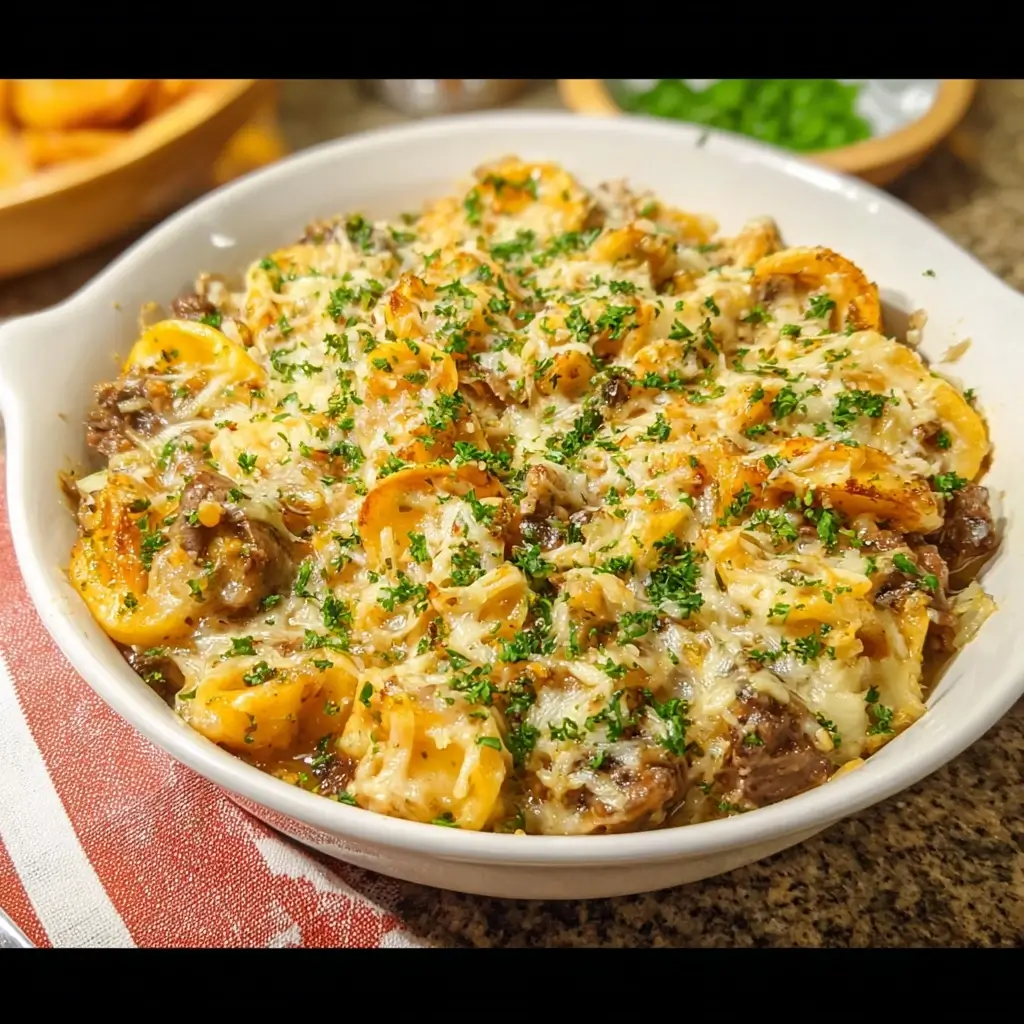

Of all the comfort foods that have graced my family’s dinner table, few have received the standing ovation that this French Onion Beef Casserole commands. The first time I made it, the entire house was filled with the most intoxicating aroma imaginable—a rich, savory scent of slow-cooked beef and deeply sweet, caramelized onions. My husband, typically a man of few words when it comes to food, looked up from his first bite with wide eyes and declared it “restaurant-level good.” The kids, who can sometimes be skeptical of new dishes, were completely won over by the gloriously gooey, golden-brown Gruyère cheese crust that blanketed the top. It was one of those rare, perfect meal moments where conversation lulled, replaced by the satisfying sounds of forks scraping against the casserole dish. This recipe isn’t just a meal; it’s an experience. It transforms the humble casserole into something truly decadent and memorable, combining the soul-warming essence of classic French onion soup with the hearty, satisfying nature of a robust beef bake. It has since become our go-to for chilly evenings, special family dinners, and whenever we need a culinary hug in a bowl.
The Magic Behind French Onion Beef Casserole
What makes this recipe so undeniably spectacular? It’s the masterful layering of flavors and textures, where each component plays a crucial role in creating the final, harmonious dish. This isn’t just a mixture of ingredients thrown into a pan; it’s a carefully orchestrated symphony of taste.
First, you have the foundation: the beef. We use ground beef for its convenience and ability to soak up all the surrounding flavors, creating a rich, meaty base that is both hearty and tender. It provides the savory, umami-rich backbone of the casserole.
The undisputed star of the show, however, is the onions. We’re not talking about quickly sautéed onions here. We are talking about the deep, complex, and luxuriously sweet flavor that can only be achieved through true caramelization. This slow-cooking process transforms the sharp, pungent allium into something jammy, sweet, and profoundly flavorful. This step is non-negotiable and is the very soul of the dish, mimicking the iconic soup it’s named after.
Next comes the sauce. A robust beef broth, enriched with a splash of dry red wine (or a non-alcoholic substitute), Worcestershire sauce for depth, and fragrant thyme, creates a liquid gold that envelops the beef and onions. This savory gravy is what keeps the casserole moist and ensures every single bite is packed with that signature French onion soup flavor.
Finally, the grand finale: the topping. Instead of a single “crouton” floating on top, we integrate toasted baguette cubes or sturdy croutons directly into the casserole’s surface. These act as sponges, soaking up the delicious sauce from below while maintaining a bit of their texture. This is all crowned with a generous, decadent blanket of nutty, salty, and slightly sweet Gruyère cheese. When baked, it melts into a bubbling, golden-brown crust that provides the perfect “cheese pull” and an irresistible savory crunch. It’s this combination of savory beef, sweet onions, rich gravy, and cheesy crust that elevates the dish from a simple casserole to a culinary masterpiece.
Complete Recipe: French Onion Beef Casserole
This recipe is designed to serve a hungry family, yielding a generous amount that’s perfect for a main course. Follow these steps closely, especially the caramelization of the onions, to achieve the deep, rich flavor that makes this dish a showstopper.
Ingredients
- For the Beef and Onion Base:
- 3 tablespoons unsalted butter
- 2 tablespoons olive oil
- 3 large yellow onions (about 2.5 – 3 lbs), thinly sliced
- 1 teaspoon granulated sugar
- 1 teaspoon salt
- 2 lbs (approx. 900g) lean ground beef (85/15 or 90/10 works well)
- 1 teaspoon black pepper, freshly ground
- 4 cloves garlic, minced
- 1/4 cup all-purpose flour
- For the Savory Sauce:
- 1/2 cup dry red wine, such as Merlot or Cabernet Sauvignon (optional, can substitute with extra beef broth)
- 4 cups (32 oz / approx. 1 liter) high-quality beef broth, preferably low-sodium
- 2 tablespoons Worcestershire sauce
- 1 tablespoon soy sauce (for extra umami depth)
- 1 teaspoon fresh thyme leaves (or 1/2 teaspoon dried thyme)
- For the Topping:
- 4 cups cubed day-old baguette or sturdy artisan bread (about 1-inch cubes)
- 2 cups (8 oz / 225g) Gruyère cheese, freshly grated
- 1 cup (4 oz / 115g) provolone or mozzarella cheese, shredded (for extra meltiness)
- Fresh parsley, chopped, for garnish (optional)
Step-by-Step Instructions
Part 1: Caramelizing the Onions (The Most Important Step)
- Melt Fat: In a large, heavy-bottomed pot or Dutch oven, melt the butter and olive oil over medium-low heat. The combination of fats prevents the butter from burning too quickly while adding rich flavor.
- Add Onions: Add the thinly sliced onions to the pot. It will look like an enormous amount, but they will cook down significantly. Stir to coat them evenly in the butter and oil.
- Slow Cook: Cook the onions, stirring occasionally (every 10-15 minutes), for 45-60 minutes. This is a slow and low process. Do not rush it by turning up the heat, as the onions will burn instead of caramelizing.
- Develop Flavor: After about 20 minutes, the onions will soften and become translucent. After 40 minutes, they will start to turn a beautiful golden-brown. At this point, sprinkle them with the 1 teaspoon of sugar and 1 teaspoon of salt. The sugar helps with browning, and the salt helps draw out more moisture.
- Finish Caramelizing: Continue cooking and stirring more frequently for another 15-20 minutes, until the onions are a deep, rich brown color and have a jam-like consistency. They should be incredibly sweet and fragrant. Once done, remove the onions from the pot and set them aside in a bowl.
Part 2: Preparing the Beef Filling
- Brown the Beef: Increase the heat under the same Dutch oven to medium-high. Add the ground beef to the pot. Use a wooden spoon to break it apart. Cook until the beef is thoroughly browned and cooked through, about 8-10 minutes. Drain off any excess grease from the pot.
- Add Aromatics: Add the minced garlic and freshly ground black pepper to the beef. Cook for another minute until the garlic is fragrant, being careful not to let it burn.
- Create the Roux: Sprinkle the 1/4 cup of all-purpose flour over the beef. Stir continuously for 2 minutes. This will cook out the raw flour taste and create a roux that will thicken the sauce beautifully.
Part 3: Building the Sauce and Assembling the Casserole
- Deglaze the Pan: If using, pour the red wine into the pot. Scrape the bottom of the pot with your wooden spoon to release all the browned bits (the “fond”). This is where a huge amount of flavor lives. Let the wine bubble and reduce by about half, which should take 2-3 minutes.
- Create the Gravy: Slowly whisk in the beef broth, Worcestershire sauce, and soy sauce. Continue to stir until the sauce is smooth and begins to thicken. Bring the mixture to a gentle simmer.
- Combine Ingredients: Return the caramelized onions to the pot. Add the fresh or dried thyme. Stir everything together until the beef and onions are fully coated in the luscious gravy. Let it simmer for 5 minutes for the flavors to meld. Taste and adjust seasoning with more salt or pepper if needed.
- Prepare the Baking Dish: Preheat your oven to 375°F (190°C). Lightly grease a 9×13 inch (or equivalent 3-quart) casserole dish.
- Assemble: Pour the beef and onion mixture into the prepared casserole dish and spread it into an even layer.
Part 4: Baking to Perfection
- Add Topping: Arrange the cubed bread evenly over the top of the beef mixture. Gently press them down slightly so they absorb some of the sauce.
- Add Cheese: In a bowl, toss the grated Gruyère and provolone/mozzarella cheese together. Sprinkle the cheese mixture evenly over the bread cubes, ensuring you cover everything right to the edges.
- Bake: Place the casserole dish on a baking sheet to catch any potential drips. Bake, uncovered, for 25-30 minutes, or until the sauce is bubbly and the cheese on top is completely melted, golden brown, and slightly crispy in spots.
- Rest and Serve: Remove the casserole from the oven and let it rest for at least 10 minutes before serving. This allows the sauce to set up slightly and makes it easier to serve. Garnish with fresh chopped parsley for a pop of color before bringing it to the table.
Nutrition Facts
- Servings: 8 generous servings
- Calories per serving: Approximately 620-750 kcal
Disclaimer: The nutritional information provided is an estimate and can vary based on the specific ingredients used, such as the fat content of the beef, the type of bread, and the exact amounts of cheese.
Preparation Time
- Prep Time (Chopping): 15 minutes
- Caramelization Time: 45-60 minutes
- Active Cook Time (Beef/Sauce): 20 minutes
- Bake Time: 25-30 minutes
- Total Time: Approximately 1 hour 45 minutes to 2 hours 5 minutes
How to Serve
This French Onion Beef Casserole is a rich and complete meal on its own, but pairing it with the right side dishes can elevate the dining experience and balance the flavors.
- With a Crisp Green Salad: A simple salad with a bright, acidic vinaigrette is the perfect counterpoint to the casserole’s richness. The acidity cuts through the fat from the beef and cheese, cleansing the palate.
- Example: Arugula with shaved parmesan, lemon juice, and olive oil.
- With Steamed or Roasted Vegetables: To add a touch of green and some healthy nutrients, serve alongside simple vegetables.
- Our Favorites: Steamed green beans (haricots verts), roasted asparagus with a sprinkle of sea salt, or tender-crisp broccoli florets.
- With Wine: A glass of wine that complements the dish is a fantastic addition for an adult dinner.
- Red Wine: A medium-bodied red like the Merlot or Cabernet Sauvignon you used in the recipe is a natural choice. A Beaujolais also works well.
- White Wine: If you prefer white, a dry, crisp Sauvignon Blanc can cut through the richness beautifully.
- Garnishes: Don’t underestimate the power of a final flourish.
- Fresh Herbs: A sprinkle of fresh parsley or even more fresh thyme leaves adds color and a light, fresh aroma.
- Extra Bread: Serve with extra slices of crusty baguette on the side for dipping into the incredible sauce.
Additional Tips for Casserole Perfection
- Patience is a Virtue (Especially with Onions): The single most important tip is not to rush the caramelization process. Cooking the onions low and slow is what develops their deep, sweet flavor, which is the cornerstone of this dish. If you rush them on high heat, they will simply burn and become bitter. Put on some music, pour a drink, and enjoy the process.
- The Power of Deglazing: When you’re browning the beef and later making the sauce, don’t be afraid of the brown bits (fond) that stick to the bottom of your pot. This is concentrated flavor. Using the wine or broth to “deglaze” the pan—scraping up those bits as the liquid sizzles—is a professional technique that will make your casserole taste infinitely richer.
- Cheese Choices Matter: While Gruyère is the classic and highly recommended choice for its nutty flavor and excellent melting properties, don’t be afraid to experiment. A mix of Gruyère and a milder cheese like Provolone or Fontina gives you both flavor and that epic “cheese pull.” For a sharper bite, consider adding some white cheddar or Parmesan to the mix. Always grate your own cheese from a block for the best melting results; pre-shredded cheeses often contain anti-caking agents that can make the topping greasy or grainy.
- Make-Ahead Magic for Easy Entertaining: This casserole is a fantastic make-ahead meal. You can prepare the entire beef and onion filling (Steps 1-3 in the “Building the Sauce” section), let it cool, and store it in an airtight container in the refrigerator for up to 2 days. When you’re ready to eat, simply pour the filling into your casserole dish, top with the bread and cheese, and bake as directed (you may need to add 5-10 minutes to the baking time if the filling is cold).
- Use High-Quality Broth: Since the beef broth forms the entire body of the sauce, its quality directly impacts the final taste. Whenever possible, opt for a high-quality, rich beef broth or stock over a watery, weak bouillon. If you ever have homemade beef stock on hand, this is the absolute perfect recipe to use it in. The difference in depth of flavor is remarkable.
FAQ: Your French Onion Beef Casserole Questions Answered
Q1: Can I use a different type of beef for this recipe?
A: Absolutely. While ground beef is quick and easy, you can easily substitute it with beef chuck roast cut into small, bite-sized cubes. If you use stew meat, you’ll want to brown it well and then simmer it in the sauce for at least 1.5-2 hours, or until it’s fork-tender, before assembling and baking the casserole. This will result in a more “beef bourguignon” style texture, which is also delicious.
Q2: I don’t cook with alcohol. What can I substitute for the red wine?
A: The red wine is used to add acidity and a deep, complex flavor note. If you prefer not to use it, you can simply substitute it with an equal amount (1/2 cup) of additional beef broth. To replicate some of the missing acidity and depth, consider adding a tablespoon of balsamic vinegar or an extra teaspoon of Worcestershire sauce to the broth mixture.
Q3: How do I properly store and reheat leftovers?
A: Leftovers are fantastic! Store any remaining casserole in an airtight container in the refrigerator for up to 4 days. To reheat, you can use the microwave for individual portions, but the best method is to place it back in an oven-safe dish, cover with foil, and bake at 350°F (175°C) for 15-20 minutes, or until heated through. For the last 5 minutes, remove the foil to help re-crisp the cheesy topping.
Q4: Can I freeze this French Onion Beef Casserole?
A: Yes, this casserole freezes very well. For best results, assemble the entire casserole but do not add the bread and cheese topping. Let the beef filling cool completely, then cover the dish tightly with a layer of plastic wrap followed by a layer of aluminum foil. It can be frozen for up to 3 months. To bake, let it thaw overnight in the refrigerator. Then, add the fresh bread cubes and cheese topping and bake as directed in the original recipe.
Q5: My onions aren’t turning brown, they’re just getting soft. What am I doing wrong?
A: This is a common issue and it usually comes down to two things: heat and time. Your heat might be a little too low, or you just haven’t given them enough time yet. The process can take a full hour. If they are very soft and have released a lot of water but aren’t browning, you can slightly increase the heat from medium-low to medium for the last 15-20 minutes of cooking. This will help evaporate the excess moisture and encourage the sugars to caramelize and brown. Just be sure to stir more frequently at this stage to prevent scorching.
French Onion Beef Casserole Recipe
Ingredients
- For the Beef and Onion Base:
- 3 tablespoons unsalted butter
- 2 tablespoons olive oil
- 3 large yellow onions (about 2.5 – 3 lbs), thinly sliced
- 1 teaspoon granulated sugar
- 1 teaspoon salt
- 2 lbs (approx. 900g) lean ground beef (85/15 or 90/10 works well)
- 1 teaspoon black pepper, freshly ground
- 4 cloves garlic, minced
- 1/4 cup all-purpose flour
- For the Savory Sauce:
- 1/2 cup dry red wine, such as Merlot or Cabernet Sauvignon (optional, can substitute with extra beef broth)
- 4 cups (32 oz / approx. 1 liter) high-quality beef broth, preferably low-sodium
- 2 tablespoons Worcestershire sauce
- 1 tablespoon soy sauce (for extra umami depth)
- 1 teaspoon fresh thyme leaves (or 1/2 teaspoon dried thyme)
- For the Topping:
- 4 cups cubed day-old baguette or sturdy artisan bread (about 1-inch cubes)
- 2 cups (8 oz / 225g) Gruyère cheese, freshly grated
- 1 cup (4 oz / 115g) provolone or mozzarella cheese, shredded (for extra meltiness)
- Fresh parsley, chopped, for garnish (optional)
Instructions
Part 1: Caramelizing the Onions (The Most Important Step)
- Melt Fat: In a large, heavy-bottomed pot or Dutch oven, melt the butter and olive oil over medium-low heat. The combination of fats prevents the butter from burning too quickly while adding rich flavor.
- Add Onions: Add the thinly sliced onions to the pot. It will look like an enormous amount, but they will cook down significantly. Stir to coat them evenly in the butter and oil.
- Slow Cook: Cook the onions, stirring occasionally (every 10-15 minutes), for 45-60 minutes. This is a slow and low process. Do not rush it by turning up the heat, as the onions will burn instead of caramelizing.
- Develop Flavor: After about 20 minutes, the onions will soften and become translucent. After 40 minutes, they will start to turn a beautiful golden-brown. At this point, sprinkle them with the 1 teaspoon of sugar and 1 teaspoon of salt. The sugar helps with browning, and the salt helps draw out more moisture.
- Finish Caramelizing: Continue cooking and stirring more frequently for another 15-20 minutes, until the onions are a deep, rich brown color and have a jam-like consistency. They should be incredibly sweet and fragrant. Once done, remove the onions from the pot and set them aside in a bowl.
Part 2: Preparing the Beef Filling
- Brown the Beef: Increase the heat under the same Dutch oven to medium-high. Add the ground beef to the pot. Use a wooden spoon to break it apart. Cook until the beef is thoroughly browned and cooked through, about 8-10 minutes. Drain off any excess grease from the pot.
- Add Aromatics: Add the minced garlic and freshly ground black pepper to the beef. Cook for another minute until the garlic is fragrant, being careful not to let it burn.
- Create the Roux: Sprinkle the 1/4 cup of all-purpose flour over the beef. Stir continuously for 2 minutes. This will cook out the raw flour taste and create a roux that will thicken the sauce beautifully.
Part 3: Building the Sauce and Assembling the Casserole
- Deglaze the Pan: If using, pour the red wine into the pot. Scrape the bottom of the pot with your wooden spoon to release all the browned bits (the “fond”). This is where a huge amount of flavor lives. Let the wine bubble and reduce by about half, which should take 2-3 minutes.
- Create the Gravy: Slowly whisk in the beef broth, Worcestershire sauce, and soy sauce. Continue to stir until the sauce is smooth and begins to thicken. Bring the mixture to a gentle simmer.
- Combine Ingredients: Return the caramelized onions to the pot. Add the fresh or dried thyme. Stir everything together until the beef and onions are fully coated in the luscious gravy. Let it simmer for 5 minutes for the flavors to meld. Taste and adjust seasoning with more salt or pepper if needed.
- Prepare the Baking Dish: Preheat your oven to 375°F (190°C). Lightly grease a 9×13 inch (or equivalent 3-quart) casserole dish.
- Assemble: Pour the beef and onion mixture into the prepared casserole dish and spread it into an even layer.
Part 4: Baking to Perfection
- Add Topping: Arrange the cubed bread evenly over the top of the beef mixture. Gently press them down slightly so they absorb some of the sauce.
- Add Cheese: In a bowl, toss the grated Gruyère and provolone/mozzarella cheese together. Sprinkle the cheese mixture evenly over the bread cubes, ensuring you cover everything right to the edges.
- Bake: Place the casserole dish on a baking sheet to catch any potential drips. Bake, uncovered, for 25-30 minutes, or until the sauce is bubbly and the cheese on top is completely melted, golden brown, and slightly crispy in spots.
- Rest and Serve: Remove the casserole from the oven and let it rest for at least 10 minutes before serving. This allows the sauce to set up slightly and makes it easier to serve. Garnish with fresh chopped parsley for a pop of color before bringing it to the table.
Nutrition
- Serving Size: One Normal Portion
- Calories: 620-750