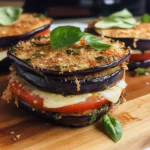
Ingredients
Scale
- Eggplant:
- 2 large (about 1–1.5 lbs each) or 3 medium, firm, glossy eggplants
- Salt (Kosher or sea salt recommended) for drawing out moisture
- 1/4 cup Extra Virgin Olive Oil, plus more for brushing if needed
- Ricotta Filling:
- 1 container (15 ounces) Whole Milk Ricotta Cheese (Good quality ricotta makes a difference!)
- 1 large Egg, lightly beaten (acts as a binder)
- 1/2 cup grated Parmesan Cheese, plus more for topping
- 2 cloves Garlic, minced finely
- 1/4 cup fresh Basil Leaves, chopped finely
- 1/4 teaspoon Nutmeg, freshly grated (optional, but adds warmth)
- 1/2 teaspoon Salt, or to taste
- 1/4 teaspoon Black Pepper, freshly ground
- Sauce & Cheese Topping:
- 1 jar (24-32 ounces) good quality Marinara Sauce (or your favorite homemade sauce)
- 1 cup shredded Mozzarella Cheese (low-moisture, part-skim or whole milk)
- Additional grated Parmesan Cheese for topping
- Fresh Basil Leaves for garnish
Instructions
1. Prepare the Eggplant (The Foundation):
- Wash and Slice: Thoroughly wash the eggplants and pat them dry. Trim off the stem and blossom ends. Slice the eggplants crosswise into rounds approximately 1/2-inch thick. Aim for uniform thickness so they cook evenly. You should get about 8-12 usable rounds per large eggplant, depending on its shape. Discard the very end pieces which are mostly skin.
- Salt and Drain (Crucial Step!): Arrange the eggplant slices in a single layer on baking sheets lined with paper towels or place them in a large colander. Sprinkle both sides of each slice generously with salt. Let the eggplant sit for at least 30 minutes, or up to 60 minutes. You will see beads of moisture forming on the surface – this is the salt drawing out excess water and some of the bitterness inherent in eggplant. This step prevents the eggplant from becoming soggy and helps it absorb less oil during cooking.
- Rinse and Dry: After the salting time, thoroughly rinse the eggplant slices under cold running water to remove all the salt. Pat them completely dry with paper towels or a clean kitchen towel. Don’t skip the drying; excess water will cause the eggplant to steam rather than roast and can make the final dish watery.
2. Roast the Eggplant:
- Preheat Oven: Preheat your oven to 400°F (200°C). Line two large baking sheets with parchment paper for easy cleanup and to prevent sticking.
- Oil and Arrange: Brush both sides of each dried eggplant slice lightly with extra virgin olive oil. Arrange the slices in a single layer on the prepared baking sheets. Do not overcrowd the pans; use two sheets if necessary. Overcrowding will lead to steaming instead of roasting, resulting in a less desirable texture.
- Roast: Place the baking sheets in the preheated oven. Roast for 20-30 minutes, flipping the slices halfway through. The eggplant should be tender when pierced with a fork, pliable, and lightly golden brown around the edges. Roasting time can vary depending on slice thickness and your oven. Keep an eye on them to prevent burning. Once roasted, remove from the oven and set aside. You can slightly reduce the oven temperature to 375°F (190°C) for baking the assembled Napoleons.
3. Prepare the Ricotta Filling:
- Combine Ingredients: In a medium-sized bowl, combine the whole milk ricotta cheese, the lightly beaten egg, 1/2 cup grated Parmesan cheese, minced garlic, chopped fresh basil, optional nutmeg, 1/2 teaspoon salt, and 1/4 teaspoon black pepper.
- Mix Well: Stir everything together until thoroughly combined. The mixture should be creamy but reasonably thick. Taste and adjust seasoning if needed (add more salt or pepper). The egg helps bind the filling so it doesn’t ooze out excessively during baking. The Parmesan adds salty, umami depth, while the basil provides fresh, aromatic notes.
4. Assemble the Eggplant Napoleons:
- Prepare Baking Dish: Lightly grease a 9×13 inch baking dish or individual oven-safe ramekins if making single servings. Spread a thin layer (about 1/2 cup) of marinara sauce evenly over the bottom of the dish. This prevents the bottom layer of eggplant from sticking and adds flavour from the base up.
- First Layer: Arrange a single layer of roasted eggplant slices over the sauce in the bottom of the dish. Overlap them slightly if necessary to cover the base. Select the largest, most uniform slices for the bottom layer if possible.
- Second Layer (Filling): Dollop spoonfuls of the ricotta mixture evenly over the eggplant layer. Gently spread it out with the back of a spoon or an offset spatula to create a relatively even layer of filling. Don’t press too hard.
- Third Layer (Sauce): Spoon a layer of marinara sauce over the ricotta mixture. Use enough to cover it lightly – about 1 cup.
- Fourth Layer (Eggplant): Place another layer of roasted eggplant slices over the sauce.
- Repeat Layers (Optional): Depending on the thickness of your slices and the depth of your dish, you might be able to add another layer of ricotta and sauce, followed by a final layer of eggplant. Typically, two layers of eggplant sandwiching one layer of ricotta works well for individual stacks or a standard casserole. For a taller “Napoleon,” aim for three layers of eggplant and two layers of filling.
- Final Topping: Finish with a final layer of marinara sauce spread over the top eggplant slices. Sprinkle generously with the shredded mozzarella cheese and the additional grated Parmesan cheese. The combination of cheeses creates a beautifully melted, golden-brown crust.
5. Bake the Eggplant Napoleon:
- Bake: Place the assembled dish in the preheated oven at 375°F (190°C). Bake for 25-35 minutes, or until the sauce is bubbling around the edges, the cheese is completely melted, golden brown, and slightly crusty in spots. If the top starts browning too quickly, you can loosely tent the dish with aluminum foil.
- Rest: Once baked, remove the Eggplant Napoleon from the oven and let it rest for at least 10-15 minutes before serving. This crucial resting period allows the layers to set slightly, making it much easier to cut and serve neatly. It also prevents scalding hot cheese and sauce from burning mouths! The flavors meld beautifully during this time too.
6. Garnish and Serve:
- Garnish: Just before serving, garnish generously with fresh chopped basil leaves or whole small basil leaves. A drizzle of good quality extra virgin olive oil over the top can also add a finishing touch of richness and shine.
- Serve: If baked in a large dish, carefully cut into squares or wedges using a sharp knife or spatula. If baked as individual stacks, use a spatula to lift each Napoleon onto a plate. Serve immediately while warm.
Nutrition
- Serving Size: One Normal Portion
- Calories: 350-450