


There’s something truly comforting about a warm bowl of Japanese miso noodle soup, especially when the day winds down and you crave something both nourishing and flavorful. The delicate umami of the miso broth combined with tender noodles and fresh, vibrant toppings creates a harmony that’s surprisingly simple to achieve right in your own kitchen. Whether you’re a seasoned chef or someone eager to break free from the fast-food cycle, this recipe offers an inviting way to savor authentic Japanese flavors without any fuss. Let me take you through how to craft this soul-soothing soup that’s quick, versatile, and perfect for sharing with loved ones any night of the week.

Why choose Japanese Miso Noodle Soup?
Comfort in a bowl: This soup warms your soul with every spoonful. Easy preparation means you can enjoy authentic Japanese flavors without hours in the kitchen. Versatility shines as you can customize toppings to suit your taste or whatever you have on hand. Nourishing ingredients offer a wholesome, satisfying meal that beats any fast food fix. Crowd-pleaser alert: It’s perfect for cozy family dinners or impressing guests with minimal effort.
Japanese Miso Noodle Soup Ingredients
For the Broth
- Miso paste – the heart of your Japanese miso noodle soup, choose red or white for varying depths of umami.
- Dashi stock – traditional Japanese broth that adds authentic savory notes; substitute with vegetable broth if needed.
- Soy sauce – enhances the umami flavor and balances the miso’s saltiness.
- Water – the base that brings the broth together and dilutes concentrated flavors for a comforting sip.
For the Noodles
- Udon noodles – thick and chewy noodles perfect for soaking up the rich broth; rice noodles work well too for a gluten-free option.
For the Toppings
- Green onions – add fresh, mild sharpness and a pop of green color.
- Tofu cubes – soft or firm, they bring protein and a delicate texture that soaks up the broth’s essence.
- Enoki or shiitake mushrooms – provide earthiness and an authentic Japanese touch.
- Spinach or bok choy – leafy greens that add vibrant color and nutrients.
- Sesame seeds – a sprinkle on top adds subtle nutty crunch and visual appeal.
- Soft-boiled egg – optional but highly recommended for richness and added comfort.
This carefully selected ingredient list ensures your Japanese miso noodle soup captures the soul-soothing warmth and rich umami that make this dish a family favorite.
How to Make Japanese Miso Noodle Soup
- Heat Broth: In a pot, bring dashi stock and water to a gentle simmer over medium heat, about 5 minutes until tiny bubbles form around the edges.
- Dissolve Miso: In a small bowl, whisk miso paste with a ladleful of hot broth until smooth and creamy, then stir back into the simmering stock.
- Cook Noodles: Boil udon noodles in a separate pot for 2–3 minutes until tender and chewy, then drain and rinse under cool water.
- Assemble Soup: Add noodles to the broth, return to a gentle simmer for 1 minute so flavors meld and soup turns a warm, golden color.
- Garnish Generously: Top with sliced green onions, tofu cubes, mushrooms, spinach, and soft-boiled egg, then sprinkle sesame seeds for a nutty crunch and color.
Optional: Drizzle chili oil for a spicy kick.
Exact quantities are listed in the recipe card below.

Variations & Substitutions for Japanese Miso Noodle Soup
Feel free to get creative and customize your Japanese miso noodle soup with these delightful variations that can awaken new flavors and textures.
- Gluten-Free: Substitute udon noodles with rice noodles or gluten-free ramen for a complete gluten-free experience.
- Spicy Kick: Add a few slices of fresh chili or a spoonful of spicy miso for a bold heat that complements the broth perfectly.
- Veggie Boost: Toss in assorted veggies like bell peppers or carrots for an added crunch and a pop of color.
- Protein Swap: Use tempeh or edamame instead of tofu for a different texture; they both soak up the broth beautifully.
- Creamy Twist: Stir in a splash of coconut milk to the soup for a rich, creamy broth with a hint of sweetness.
- Herb Infusion: Bad? Toss in a handful of fresh herbs like cilantro or parsley for an aromatic touch that elevates every bowl.
- Umami Enhancer: Add a dash of fish sauce for an extra boost of umami, making the broth incredibly savory.
- Zoodle Option: For a low-carb twist, replace the noodles with zucchini noodles (zoodles) for a fresh and light version of the soup.
Each variation offers a fun and delicious way to tailor this comforting dish to your taste and dietary needs!
Make Ahead Options
These Japanese Miso Noodle Soup meal prep tips are perfect for busy cooks who want to savor delicious comfort food without the rush! You can prepare the broth (without adding miso) and refrigerate it for up to 3 days. When you’re ready to enjoy your soup, simply heat the broth, whisk in the miso paste, and add cooked noodles that can also be prepared in advance. Store the cooked udon noodles separately in an airtight container to maintain their texture. Toppings like sliced green onions and soft-boiled eggs can also be prepped ahead of time—just refrigerate them overnight for maximum freshness. This way, you can whip up a warm, hearty bowl of Japanese Miso Noodle Soup with less effort on busy weeknights!
What to Serve with Japanese Miso Noodle Soup?
Complement your comforting bowl of Japanese miso noodle soup with delightful additions that enhance the meal experience.
- Crispy Tempura Vegetables: Lightly battered and fried, these veggies add a satisfying crunch that balances the soup’s warm flavors.
- Steamed Edamame: These tender, lightly salted soybeans offer a nutritious and protein-packed side, making your meal feel complete while keeping it fresh and light.
- Japanese Pickles: A tangy, crunchy side can cut through the richness of the soup and invigorate your palate, bringing a zesty contrast to every bite.
- Seaweed Salad: Soft, savory wakame tossed in sesame dressing brings a refreshing, umami-rich element that complements the miso broth beautifully.
- Ginger Tea: Pairing a cup of warm ginger tea heightens the cozy aspect of your meal, while the spice of ginger aids digestion and warms the soul.
- Miso Glazed Eggplant: For a heartier pairing, this dish brings a similar flavor profile while adding a smoky depth, perfect for those who crave more richness.
- Mochi Ice Cream: When it’s time for dessert, the chewy texture of mochi filled with ice cream delivers a sweet note that rounds out your meal nicely.
- Sake or Green Tea: Enhance your experience with a soothing green tea or a warm glass of sake, both of which elevate the comforting ambiance of your dining.
Expert Tips for Japanese Miso Noodle Soup
- Choose the right miso: Use white miso for a mild, sweet flavor or red miso for a stronger, richer umami that deepens your Japanese miso noodle soup.
- Temper miso paste: Always dissolve miso in warm broth before adding to the pot to avoid clumps and preserve its delicate probiotics.
- Don’t boil after adding miso: Keep the soup gently simmering or off the heat once miso is incorporated to prevent bitterness and maintain flavor.
- Noodles timing matters: Cook noodles just until tender to keep their chewy texture—overcooked ones become mushy and less enjoyable.
- Fresh toppings last: Add greens and tofu near the end to keep their vibrant color and texture fresh in the hot broth.
- Customize boldly: Feel free to swap veggies or protein based on what’s available; Japanese miso noodle soup is flexible and forgiving.
How to Store and Freeze Japanese Miso Noodle Soup
- Room Temperature: It’s best to avoid leaving Japanese miso noodle soup at room temperature; if left out, discard after 2 hours to prevent spoilage.
- Fridge: Store leftover soup in an airtight container for up to 3 days. To maintain the best flavor and texture, refrigerate noodles separately if possible.
- Freezer: You can freeze Japanese miso noodle soup for up to 1 month. Before freezing, separate noodles from broth to avoid mushiness. Thaw in the fridge overnight before reheating.
- Reheating: For best results, gently reheat on the stovetop, adding a splash of water or broth to thin the soup and help the flavors meld back together.

Japanese Miso Noodle Soup Recipe FAQs
How do I know if my miso paste is fresh and good to use?
Look for miso paste that’s stored in a sealed container in the fridge, with no off-putting sour smell or dark spots all over. Fresh miso has a pleasant, slightly sweet and salty aroma, and is smooth in texture. The color depends on the variety—white miso is pale, red miso is deeper brownish—but neither should have mold.
Can I store Japanese miso noodle soup with noodles already in it?
I recommend storing the noodles separately from the broth whenever possible. If they soak too long in the soup, they absorb water and become mushy. Keep broth and noodles in airtight containers in the fridge. Eat leftovers within 3 to 4 days for the best taste and texture.
Is it safe to freeze Japanese miso noodle soup?
Absolutely! Freeze the broth and noodles separately to keep the texture perfect. Pour the broth into a freezer-safe airtight container, and freeze noodles in a separate bag or container. You can store both for up to 1 month. To reheat, thaw in the fridge overnight, then warm the broth gently on the stove, adding noodles last just to heat through.
What should I do if my miso soup tastes too salty or too strong?
No worries—try diluting the broth with a bit of water or more dashi stock. Adding mild tofu cubes or extra greens like spinach can also mellow the saltiness and balance the flavor. If you overdo the miso paste, simmer gently off the boil to prevent bitterness and adjust with a splash of soy sauce or extra broth to find the perfect harmony.
Can I make Japanese miso noodle soup if I have allergies or dietary restrictions?
Very! This soup is highly adaptable. For gluten allergies, swap udon noodles for rice or gluten-free varieties. Use vegetable broth instead of dashi for vegetarian or vegan needs, and ensure the miso paste contains no allergens you react to. I often make a version without soy by replacing soy sauce with tamari or coconut aminos for friends with sensitivities.
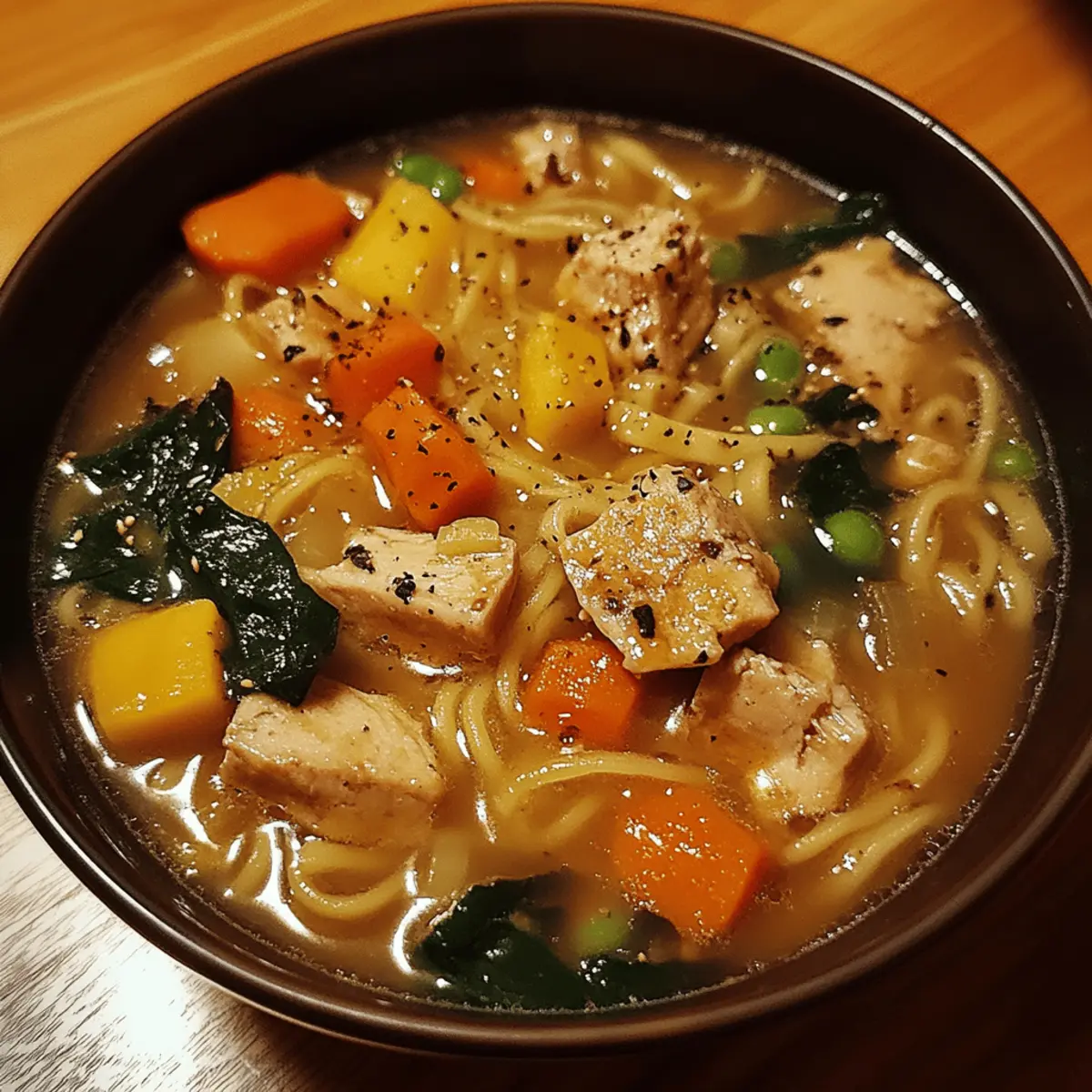
Easy Japanese Miso Noodle Soup Recipe for Cozy, Flavor-Packed Nights
Ingredients
Equipment
Method
- In a pot, bring dashi stock and water to a gentle simmer over medium heat, about 5 minutes until tiny bubbles form around the edges.
- In a small bowl, whisk miso paste with a ladleful of hot broth until smooth and creamy, then stir back into the simmering stock.
- Boil udon noodles in a separate pot for 2–3 minutes until tender and chewy, then drain and rinse under cool water.
- Add noodles to the broth, return to a gentle simmer for 1 minute so flavors meld and soup turns a warm, golden color.
- Top with sliced green onions, tofu cubes, mushrooms, spinach, and soft-boiled egg, then sprinkle sesame seeds for a nutty crunch and color.