
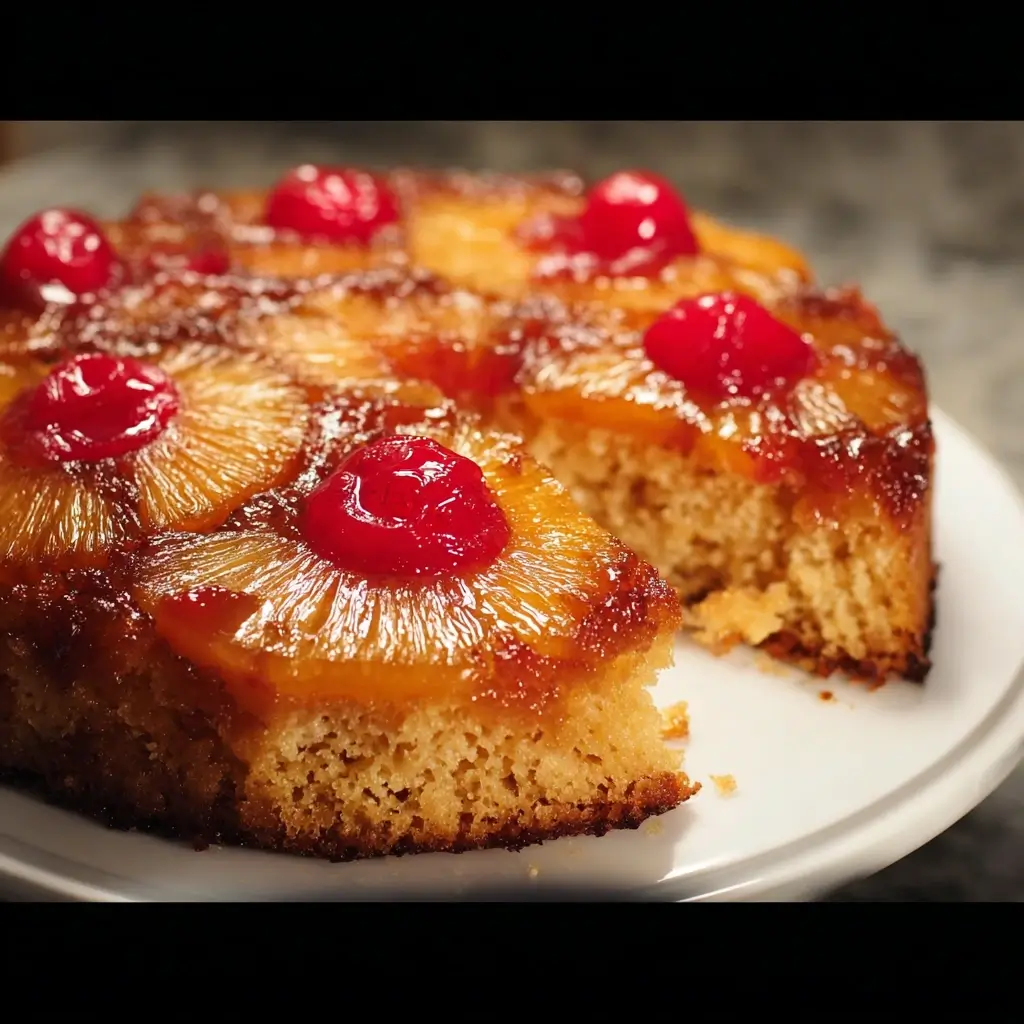
Of all the cakes that evoke a sense of pure, unadulterated nostalgia, the Pineapple Upside-Down Cake stands in a league of its own. I still remember the first time I saw one emerge from the oven at a family gathering. The dramatic flip, the collective gasp of anticipation, and the final reveal of glistening, caramelized pineapple rings and ruby-red cherries atop a golden, buttery cake—it was pure magic. For me, this isn’t just a dessert; it’s a centerpiece, a conversation starter, and a tangible piece of comfort. When I first started baking on my own, this was one of the recipes I was most determined to master. After a few attempts—one slightly too dry, another where I hesitated on the flip a moment too long—I finally perfected the balance. The result is this very recipe: a cake with a crumb so tender and moist it practically melts in your mouth, crowned with a rich, buttery brown sugar caramel that seeps just enough into the top layer to create an unforgettable texture. When I make this for my own family now, the kitchen fills with that same intoxicating aroma of baked butter, sugar, and pineapple, and I watch their eyes light up with the same wonder I felt as a child. It’s a timeless classic that never fails to impress, turning any simple dinner into a special occasion.
The Ultimate Classic Pineapple Upside-Down Cake Recipe
This recipe is broken down into two main parts: the iconic caramelized topping and the rich, tender cake batter that serves as its perfect foundation. Following these precise measurements will yield a flawless result every single time.
Ingredients for the Caramel Pineapple Topping
- Unsalted Butter: ½ cup (1 stick or 113g), melted
- Light Brown Sugar: 1 cup (200g), packed
- Pineapple Rings: 1 (20-ounce) can, packed in juice, drained
- Maraschino Cherries: 8-10, stems removed
Ingredients for the Buttery Vanilla Cake
- All-Purpose Flour: 1 ½ cups (180g)
- Baking Powder: 1 ½ teaspoons
- Salt: ½ teaspoon
- Unsalted Butter: ½ cup (1 stick or 113g), at room temperature
- Granulated Sugar: ¾ cup (150g)
- Large Eggs: 2, at room temperature
- Vanilla Extract: 2 teaspoons
- Whole Milk: ½ cup (120ml), at room temperature
Step-by-Step Instructions for a Perfect Bake
Baking an upside-down cake is a process of building layers of flavor from the bottom of the pan up. Don’t be intimidated by the flip; our detailed guide ensures a triumphant reveal.
H3: Part 1: Preparing the Pan and Caramel Topping
- Preheat and Prep: Begin by preheating your oven to 350°F (175°C). Position a rack in the center of the oven. Choose your pan wisely—a 9-inch or 10-inch cast-iron skillet is the traditional and arguably best choice due to its even heat distribution, which creates a perfect caramel. A 9-inch round cake pan (at least 2 inches deep) also works beautifully. Do not grease the pan; the melted butter in the topping will take care of that.
- Create the Caramel Base: In your chosen skillet or cake pan, pour the ½ cup of melted unsalted butter. Swirl the pan to ensure the entire bottom surface is coated evenly. Sprinkle the 1 cup of packed light brown sugar evenly over the melted butter. There is no need to stir at this stage; the heat of the oven will meld them into a luscious caramel layer.
- Arrange the Fruit: This is the artistic part of the process where you create the cake’s beautiful crown. Start by patting your drained pineapple rings gently with a paper towel. This is a crucial step to prevent the cake from becoming soggy. Arrange the pineapple rings in a single layer over the brown sugar. A classic pattern involves placing one ring in the center and arranging the others around it. Place a maraschino cherry in the center of each pineapple ring and fill any gaps between the rings with additional cherries if desired. Set the prepared pan aside while you make the cake batter.
H3: Part 2: Mixing the Tender Cake Batter
The secret to a truly spectacular Pineapple Upside-Down Cake is a tender, moist, and flavorful crumb that complements, rather than competes with, the topping.
- Combine Dry Ingredients: In a medium-sized bowl, whisk together the 1 ½ cups of all-purpose flour, 1 ½ teaspoons of baking powder, and ½ teaspoon of salt. Whisking (or sifting) aerates the flour and ensures the leavening agent and salt are evenly distributed, which is essential for a uniform rise and flavor.
- Cream Butter and Sugar: In a large bowl, using a stand mixer fitted with a paddle attachment or a hand mixer, beat the ½ cup of room temperature unsalted butter and ¾ cup of granulated sugar on medium-high speed. Continue beating for about 3-5 minutes, until the mixture is pale, light, and fluffy. This process, known as creaming, incorporates tiny air bubbles into the butter, which is the primary method of leavening for this style of cake, resulting in a fine, tender texture.
- Incorporate Eggs and Vanilla: Reduce the mixer speed to medium. Add the 2 room temperature eggs, one at a time, beating well after each addition until it is fully incorporated. Scrape down the sides and bottom of the bowl as needed. Adding eggs one by one helps create a stable emulsion, preventing the batter from curdling and ensuring a smooth texture. Once the eggs are mixed in, beat in the 2 teaspoons of vanilla extract.
- Alternate Wet and Dry Ingredients: This is a classic technique to prevent over-mixing and ensure a tender crumb. With the mixer on low speed, add the dry ingredients in three additions, alternating with the two additions of the ½ cup of room temperature milk. Begin and end with the dry ingredients (Flour mixture -> Milk -> Flour mixture -> Milk -> Flour mixture). Mix only until each addition is just combined. A few stray streaks of flour are acceptable. Over-mixing at this stage will develop the gluten in the flour, leading to a tough, chewy cake.
- Assemble and Bake: Gently pour the finished cake batter over the arranged fruit in your prepared pan. Use a spatula to spread the batter evenly, making sure it reaches all the edges of the pan. Place the pan on a baking sheet to catch any potential drips from the caramel. Bake in the preheated 350°F (175°C) oven for 40-50 minutes. The cake is done when it is a deep golden brown and a wooden skewer or toothpick inserted into the center of the cake (not the topping) comes out clean or with a few moist crumbs attached.
H3: Part 3: The Grand Finale – The Flip
This is the most critical and rewarding step. Timing is everything.
- Cool and Loosen: Remove the cake from the oven and place it on a wire cooling rack. Let it cool in the pan for exactly 10 minutes. This allows the cake to set up slightly, but the caramel topping is still molten. If you wait too long, the caramel will cool and harden, essentially gluing the cake to the pan. If you flip it too soon, the cake might be too delicate and could fall apart. After 10 minutes, run a thin knife or offset spatula around the edges of the cake to loosen it from the sides of the pan.
- Perform the Flip: Place a large, flat serving platter or cake stand upside down over the top of the pan. With oven mitts on both hands (the pan will still be very hot!), firmly grasp both the pan and the platter together. In one swift, confident motion, flip them over.
- The Reveal: Set the platter down on the counter and slowly lift the pan away. If any pieces of pineapple or caramel stick to the bottom of the pan, don’t panic! Simply use a spatula to scrape them off and arrange them back onto the cake while everything is still warm. Serve immediately for the best experience.
Nutrition Facts
- Servings: 8-10 slices
- Calories Per Serving: Approximately 450-500 kcal (This is an estimate and can vary based on the exact ingredients used, such as the juice content in the pineapple and the brand of butter.)
Preparation Time
- Active Prep Time: 25 minutes
- Baking Time: 40-50 minutes
- Cooling Time: 10 minutes
- Total Time: Approximately 1 hour and 25 minutes
How to Serve Your Pineapple Upside-Down Cake
Serving this cake is all about enhancing its inherent warmth and richness. While it’s magnificent on its own, a few simple accompaniments can elevate it to a truly decadent dessert experience.
- Warmth is Wonderful: This cake is at its absolute peak when served warm, about 15-20 minutes after it has been flipped. The caramel is gooey, the cake is soft, and the aromas are intoxicating.
- A La Mode: The quintessential pairing. A generous scoop of high-quality vanilla bean ice cream melting slowly over a warm slice of the cake is pure heaven. The cool creaminess provides a perfect contrast to the warm, rich cake and tangy pineapple.
- With a Dollop of Cream: For a slightly lighter but equally delicious option, serve with a large dollop of freshly whipped cream. Lightly sweeten the cream with a touch of powdered sugar and a splash of vanilla extract to complement the cake’s flavors.
- Crème Fraîche or Sour Cream: For a more sophisticated palate, a spoonful of tangy crème fraîche or even full-fat sour cream can cut through the sweetness of the caramel, providing a wonderful flavor balance.
- On a Pedestal: Presentation matters! This cake is a showstopper. Place it on a beautiful cake stand or a large, elegant platter to display its jewel-like topping. It deserves to be the center of attention.
- Drink Pairings: Complement your slice with a freshly brewed cup of coffee or a robust black tea. For an after-dinner treat, a small glass of dessert wine, like a Sauternes, or even a splash of dark rum can pair beautifully with the caramel notes.
Additional Tips for Guaranteed Success
Master the art of the upside-down cake with these five professional tips that address common pitfalls and ensure a perfect result.
- Room Temperature Ingredients are Non-Negotiable: This tip is mentioned in the instructions, but its importance cannot be overstated. Using room temperature butter, eggs, and milk is crucial for the cake’s final texture. Room temperature butter creams with sugar to create a light, aerated structure. Room temperature eggs and milk emulsify into the batter seamlessly, creating a uniform, smooth batter and a tender, moist crumb. Cold ingredients can cause the batter to curdle and result in a dense, heavy cake.
- Pat Your Pineapple Dry: Excess moisture is the enemy of a perfect upside-down cake. The juice from the canned pineapple can seep into the cake batter, creating a soggy, dense layer at the top (which becomes the bottom). After draining the pineapple rings, lay them on a plate lined with paper towels and gently pat the tops as well. This simple step makes a world of difference.
- Choose Your Pan Wisely: A heavy-bottomed, well-seasoned 10-inch cast-iron skillet is the gold standard for this recipe. It conducts and retains heat exceptionally well, which helps in creating a perfectly even and deeply browned caramel sauce without hot spots. If you don’t have cast iron, a heavy-duty, light-colored aluminum cake pan is the next best option. Avoid dark, non-stick pans as they can cause the bottom (the caramel) to burn before the cake is fully cooked.
- Don’t Fear the Flip, But Respect the Timing: The flip is the moment of truth. As detailed in the instructions, the 10-minute cooling window is the sweet spot. Too soon, and the cake’s structure is too weak. Too late, and you have a caramel-glued cake. When you perform the flip, be decisive. A quick, confident motion is much more effective than a slow, hesitant one. Trust the process!
- Embrace the Brown Butter Topping (Optional Upgrade): For an even deeper, nuttier, and more complex caramel flavor, take one extra step. Instead of just melting the butter for the topping, brown it. Melt the butter in a light-colored saucepan over medium heat. Continue to cook, swirling the pan occasionally, until the milk solids turn a toasty brown and it gives off a nutty aroma. Immediately pour this brown butter into your cake pan and proceed with the recipe. This small change adds an incredible layer of gourmet flavor.
Frequently Asked Questions (FAQ)
Here are answers to some of the most common questions about making Pineapple Upside-Down Cake from scratch.
1. Why did my cake stick to the bottom of the pan?
This is the most common issue and usually happens for one of two reasons. First, you may have waited too long to flip the cake. After that 10-15 minute mark, the brown sugar caramel begins to cool and solidify, acting like glue. Second, you might not have had a sufficient butter layer at the bottom. Ensure the entire bottom of the pan is coated with the melted butter before adding the brown sugar. Using a well-seasoned cast-iron skillet or a reliable cake pan also helps prevent sticking.
2. Can I use fresh pineapple instead of canned?
Yes, you absolutely can, but it requires a bit of extra work. Fresh pineapple contains an enzyme called bromelain, which can break down proteins in the milk and flour, potentially resulting in a mushy or dense cake texture. To deactivate this enzyme, you need to briefly cook the fresh pineapple slices. Simply sauté the fresh pineapple rings in a little butter for a few minutes per side until they are slightly softened and caramelized before arranging them in the pan.
3. My cake came out soggy. What went wrong?
Sogginess is almost always a moisture issue. The primary culprit is usually pineapple that wasn’t drained and patted dry properly. The excess juice seeps into the batter, weighing it down. Another potential cause is underbaking. If the cake isn’t cooked through, the center will be dense and wet. Always use the toothpick test in the center of the cake part (not the fruit) to ensure it’s fully baked.
4. Can I prepare this cake ahead of time?
Pineapple Upside-Down Cake is best enjoyed the day it is made, preferably served warm. However, you can make it a day ahead if necessary. Let the cake cool completely, then cover it loosely with plastic wrap or a cake dome and store it at room temperature. Do not refrigerate it, as the cold temperature can dry out the cake. To serve, you can gently reheat individual slices in the microwave for 15-20 seconds to restore some of that fresh-baked warmth and gooeyness.
5. Can I use dark brown sugar instead of light brown sugar for the topping?
Yes, you can, and it will create a delicious variation. Light brown sugar has a lower molasses content, resulting in a classic, buttery caramel flavor. Dark brown sugar has a higher molasses content, which will give your topping a deeper, more robust, and more intense caramel-toffee flavor with a slightly darker color. The choice comes down to personal preference—both are excellent options.

Classic Pineapple Upside-Down Cake Recipe
Ingredients
Ingredients for the Caramel Pineapple Topping
- Unsalted Butter: ½ cup (1 stick or 113g), melted
- Light Brown Sugar: 1 cup (200g), packed
- Pineapple Rings: 1 (20-ounce) can, packed in juice, drained
- Maraschino Cherries: 8-10, stems removed
Ingredients for the Buttery Vanilla Cake
- All-Purpose Flour: 1 ½ cups (180g)
- Baking Powder: 1 ½ teaspoons
- Salt: ½ teaspoon
- Unsalted Butter: ½ cup (1 stick or 113g), at room temperature
- Granulated Sugar: ¾ cup (150g)
- Large Eggs: 2, at room temperature
- Vanilla Extract: 2 teaspoons
- Whole Milk: ½ cup (120ml), at room temperature
Instructions
H3: Part 1: Preparing the Pan and Caramel Topping
- Preheat and Prep: Begin by preheating your oven to 350°F (175°C). Position a rack in the center of the oven. Choose your pan wisely—a 9-inch or 10-inch cast-iron skillet is the traditional and arguably best choice due to its even heat distribution, which creates a perfect caramel. A 9-inch round cake pan (at least 2 inches deep) also works beautifully. Do not grease the pan; the melted butter in the topping will take care of that.
- Create the Caramel Base: In your chosen skillet or cake pan, pour the ½ cup of melted unsalted butter. Swirl the pan to ensure the entire bottom surface is coated evenly. Sprinkle the 1 cup of packed light brown sugar evenly over the melted butter. There is no need to stir at this stage; the heat of the oven will meld them into a luscious caramel layer.
- Arrange the Fruit: This is the artistic part of the process where you create the cake’s beautiful crown. Start by patting your drained pineapple rings gently with a paper towel. This is a crucial step to prevent the cake from becoming soggy. Arrange the pineapple rings in a single layer over the brown sugar. A classic pattern involves placing one ring in the center and arranging the others around it. Place a maraschino cherry in the center of each pineapple ring and fill any gaps between the rings with additional cherries if desired. Set the prepared pan aside while you make the cake batter.
H3: Part 2: Mixing the Tender Cake Batter
The secret to a truly spectacular Pineapple Upside-Down Cake is a tender, moist, and flavorful crumb that complements, rather than competes with, the topping.
- Combine Dry Ingredients: In a medium-sized bowl, whisk together the 1 ½ cups of all-purpose flour, 1 ½ teaspoons of baking powder, and ½ teaspoon of salt. Whisking (or sifting) aerates the flour and ensures the leavening agent and salt are evenly distributed, which is essential for a uniform rise and flavor.
- Cream Butter and Sugar: In a large bowl, using a stand mixer fitted with a paddle attachment or a hand mixer, beat the ½ cup of room temperature unsalted butter and ¾ cup of granulated sugar on medium-high speed. Continue beating for about 3-5 minutes, until the mixture is pale, light, and fluffy. This process, known as creaming, incorporates tiny air bubbles into the butter, which is the primary method of leavening for this style of cake, resulting in a fine, tender texture.
- Incorporate Eggs and Vanilla: Reduce the mixer speed to medium. Add the 2 room temperature eggs, one at a time, beating well after each addition until it is fully incorporated. Scrape down the sides and bottom of the bowl as needed. Adding eggs one by one helps create a stable emulsion, preventing the batter from curdling and ensuring a smooth texture. Once the eggs are mixed in, beat in the 2 teaspoons of vanilla extract.
- Alternate Wet and Dry Ingredients: This is a classic technique to prevent over-mixing and ensure a tender crumb. With the mixer on low speed, add the dry ingredients in three additions, alternating with the two additions of the ½ cup of room temperature milk. Begin and end with the dry ingredients (Flour mixture -> Milk -> Flour mixture -> Milk -> Flour mixture). Mix only until each addition is just combined. A few stray streaks of flour are acceptable. Over-mixing at this stage will develop the gluten in the flour, leading to a tough, chewy cake.
- Assemble and Bake: Gently pour the finished cake batter over the arranged fruit in your prepared pan. Use a spatula to spread the batter evenly, making sure it reaches all the edges of the pan. Place the pan on a baking sheet to catch any potential drips from the caramel. Bake in the preheated 350°F (175°C) oven for 40-50 minutes. The cake is done when it is a deep golden brown and a wooden skewer or toothpick inserted into the center of the cake (not the topping) comes out clean or with a few moist crumbs attached.
H3: Part 3: The Grand Finale – The Flip
This is the most critical and rewarding step. Timing is everything.
- Cool and Loosen: Remove the cake from the oven and place it on a wire cooling rack. Let it cool in the pan for exactly 10 minutes. This allows the cake to set up slightly, but the caramel topping is still molten. If you wait too long, the caramel will cool and harden, essentially gluing the cake to the pan. If you flip it too soon, the cake might be too delicate and could fall apart. After 10 minutes, run a thin knife or offset spatula around the edges of the cake to loosen it from the sides of the pan.
- Perform the Flip: Place a large, flat serving platter or cake stand upside down over the top of the pan. With oven mitts on both hands (the pan will still be very hot!), firmly grasp both the pan and the platter together. In one swift, confident motion, flip them over.
- The Reveal: Set the platter down on the counter and slowly lift the pan away. If any pieces of pineapple or caramel stick to the bottom of the pan, don’t panic! Simply use a spatula to scrape them off and arrange them back onto the cake while everything is still warm. Serve immediately for the best experience.
Nutrition
- Serving Size: One Normal Portion
- Calories: 450-500 kcal