
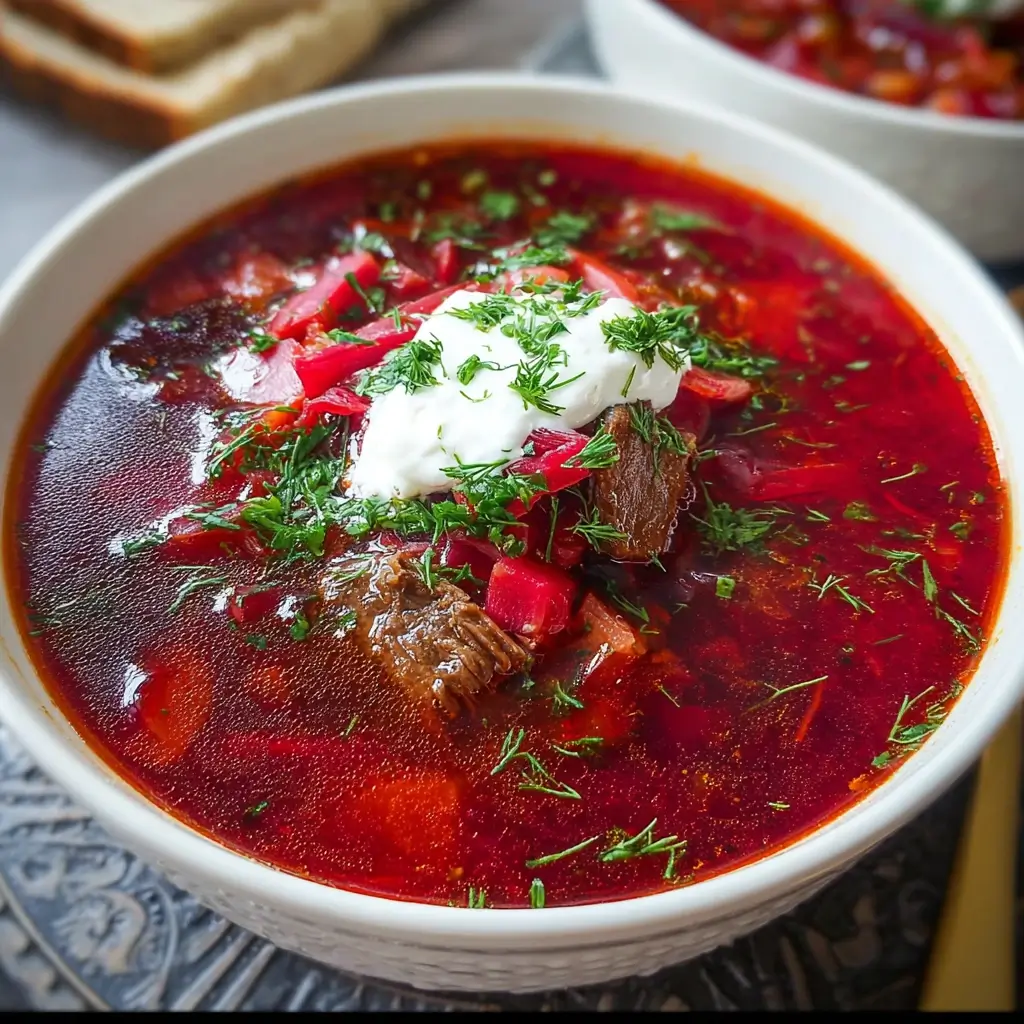
There’s a specific aroma that instantly transports me back to my grandmother’s kitchen: the earthy sweetness of beets simmering with the savory depth of a rich beef broth. That smell is the essence of this Classic Beef Borscht. For our family, this wasn’t just soup; it was an event. It was the crimson-jeweled centerpiece of countless Sunday dinners, a comforting hug in a bowl on a blustery winter day. I remember watching my grandmother, her hands stained a beautiful magenta from the beets, meticulously building the layers of flavor. She always said the secret was patience and love, and that the soup was always, without fail, better on the second day when the flavors had a chance to meld and deepen. When I first made this recipe for my own family, I was nervous I wouldn’t do it justice. But as the familiar, soul-warming scent filled my own home, and I saw my kids’ eyes light up at the vibrant color, I knew the tradition was in good hands. This recipe is more than just a set of instructions; it’s a legacy of comfort, a taste of heritage, and the most delicious way to bring everyone to the table.
The Ultimate Classic Beef Borscht: Ingredients for a Perfect Pot
Crafting the perfect borscht is all about layering flavors, and that starts with high-quality ingredients. This list is broken down into components to make the process clear and organized. While it may seem long, each element plays a crucial role in creating the soup’s signature complex, sweet, and savory taste.
For the Rich Beef Broth:
- Beef: 2 lbs (about 900g) bone-in beef chuck roast or beef shank, cut into 1.5-inch cubes. The bone adds incredible depth and collagen to the broth.
- Water: 12 cups, cold. Starting with cold water helps draw out more flavor from the beef and bones.
- Bay Leaves: 2 whole leaves.
- Black Peppercorns: 1 teaspoon, whole.
- Onion: 1 medium, peeled and halved.
- Carrot: 1 medium, peeled and roughly chopped.
- Celery Stalk: 1, roughly chopped.
For the Heart of the Borscht (The “Zazharka” and Vegetables):
- Beets: 4 medium (about 1.5 lbs or 700g), peeled and grated or julienned.
- Potatoes: 3 medium (about 1 lb or 450g), peeled and diced into ½-inch cubes. Yukon Gold or Russet work well.
- Cabbage: ½ of a medium head (about 1 lb or 450g), finely shredded.
- Carrots: 2 medium, peeled and grated or julienned.
- Onion: 1 large, finely chopped.
- Tomato Paste: 3 tablespoons. This adds a deep, umami-rich flavor and helps with the color.
- Beef Tallow or Unsalted Butter: 2 tablespoons. Using tallow rendered from the beef is traditional and adds amazing flavor.
- Sunflower or Vegetable Oil: 1 tablespoon.
- Garlic: 4 cloves, minced.
- White Vinegar or Apple Cider Vinegar: 2-3 tablespoons. This is the secret ingredient to lock in the beets’ vibrant red color and add a balancing tang.
- Sugar: 1 tablespoon (optional, but recommended). It balances the acidity of the vinegar and tomato paste and enhances the natural sweetness of the beets.
- Salt: To taste (start with 1.5 teaspoons).
- Freshly Ground Black Pepper: To taste (start with ½ teaspoon).
For Serving and Garnish:
- Fresh Dill: ½ cup, chopped. This is non-negotiable for an authentic flavor!
- Full-Fat Sour Cream or Smetana: For dolloping on top.
- Dark Rye Bread or Pampushky (Ukrainian Garlic Bread): For serving alongside.
Step-by-Step Instructions for Authentic Beef Borscht
Patience is the key. Follow these steps methodically, and you will be rewarded with a pot of borscht that tastes like it came straight from an Eastern European grandmother’s kitchen.
Part 1: Creating the Flavorful Beef Broth
- Prepare the Beef: Pat the beef cubes dry with a paper towel. This helps them get a better sear. Season them generously with salt and pepper.
- Sear the Beef: In a large, heavy-bottomed pot or Dutch oven, heat a tablespoon of oil over medium-high heat. Add the beef cubes in a single layer (work in batches if necessary to avoid overcrowding). Sear on all sides until a deep brown crust forms, about 5-7 minutes. This step, known as the Maillard reaction, is crucial for developing a deep, complex flavor base. Once seared, remove the beef and set it aside.
- Simmer the Broth: To the same pot, add the 12 cups of cold water, the seared beef and any bones, the halved onion, roughly chopped carrot, celery stalk, bay leaves, and whole peppercorns. Bring the mixture to a boil, then immediately reduce the heat to low.
- Skim and Simmer: As the broth comes to a simmer, foam and impurities will rise to the surface. Use a large spoon or skimmer to carefully remove this scum. This ensures a clear, clean-tasting broth.
- Patience is Key: Cover the pot partially and let it simmer gently for at least 2 to 2.5 hours. The beef should be fall-apart tender. The longer and slower it simmers, the richer your broth will be.
- Strain and Shred: Once the beef is tender, carefully strain the broth through a fine-mesh sieve into a large bowl or another pot. Discard the boiled vegetables, bay leaves, and peppercorns. Let the beef cool slightly, then shred it into bite-sized pieces, discarding any large pieces of fat or gristle. Set the beautiful, clear broth and the tender beef aside.
Part 2: Building the Borscht
- Prepare the “Zazharka” (Sautéed Base): Clean your large pot. Melt the beef tallow or butter with the remaining tablespoon of oil over medium heat. Add the chopped onion and sauté until it becomes soft and translucent, about 5-7 minutes.
- Add Carrots and Beets: Add the grated carrots and sauté for another 5 minutes until they begin to soften. Now, add the grated beets and cook, stirring occasionally, for about 10 minutes. The beets will soften and release their vibrant color.
- Incorporate Tomato Paste: Add the tomato paste to the pot. Stir it into the vegetables and cook for 2-3 minutes. This “toasts” the paste, deepening its flavor and removing any raw or metallic taste.
- The Secret to Red Borscht: Pour the vinegar and sprinkle the sugar over the beet mixture. Stir well and cook for another minute. The acid in the vinegar reacts with the pigments in the beets, “locking in” that beautiful ruby-red color and preventing it from turning a muddy brown during the final cooking.
- Combine Everything: Pour your reserved beef broth back into the pot with the sautéed vegetables. Add the diced potatoes and the shredded beef. Bring the soup to a simmer.
- Add Cabbage and Simmer: Once simmering, add the shredded cabbage. Reduce the heat to low, cover the pot, and let the soup simmer gently for 20-25 minutes, or until the potatoes are fork-tender and the cabbage is soft but not mushy.
- Final Seasoning: Stir in the minced garlic and most of the chopped fresh dill (reserve some for garnish). Let the soup cook for just one more minute—this keeps the garlic and dill flavors fresh and pungent. Turn off the heat. Taste the borscht and adjust the seasoning with salt and pepper as needed. Don’t be shy with the salt; this is a large pot of soup and it needs it to make the flavors pop.
- Let it Rest: This is a crucial, often-skipped step. Let the borscht rest, off the heat, for at least 30 minutes before serving. For the absolute best flavor, cool it down and refrigerate it overnight. The flavors will meld and deepen in a way that is truly magical.
Nutrition Facts
- Servings: This recipe makes a large batch, yielding approximately 10-12 generous servings.
- Calories per Serving: Approximately 350-450 kcal. (This is an estimate and can vary based on the cut of beef, amount of fat, and serving size.)
Preparation Time
- Prep Time: 45 minutes (chopping, grating, and searing)
- Cook Time: 3 hours (includes simmering the broth and the final soup)
- Total Time: 3 hours 45 minutes (plus optional overnight resting time)
How to Serve Classic Beef Borscht
Serving borscht is a ritual in itself. It’s more than just ladling soup into a bowl. Here’s how to present it for the most authentic and delicious experience:
- The Essential Dollop: The most iconic way to serve borscht is with a generous dollop of full-fat sour cream (or smetana, its Eastern European cousin) right in the center of each bowl. The cool, tangy cream cuts through the richness of the broth and melts beautifully into the hot soup.
- A Shower of Fresh Herbs: Sprinkle each bowl liberally with fresh, chopped dill. The bright, aromatic herb is the perfect counterpart to the earthy beets and savory beef. Some also enjoy adding fresh parsley.
- The Perfect Bread Companion: Borscht is almost always served with bread for dipping.
- Pampushky: For the ultimate authentic pairing, serve with warm pampushky—soft, fluffy Ukrainian garlic bread rolls, often brushed with garlic-infused oil and sprinkled with dill.
- Dark Rye Bread: A hearty, dense slice of dark rye or pumpernickel bread is a simpler but equally delicious option for sopping up every last drop of the flavorful broth.
- For a Heartier Meal: To turn this substantial soup into a full-blown feast, consider serving small side dishes.
- Salo: Thinly sliced cured pork fat, often served on rye bread with a clove of raw garlic, is a traditional and savory accompaniment.
- Perogies (Varenyky): A small side of potato and cheese perogies can be served alongside for a truly comforting meal.
- A Touch of Heat: For those who enjoy a little kick, offer a side of chili-infused oil, a small dish of freshly minced garlic, or a finely chopped hot pepper to be stirred into individual bowls.
Additional Tips for Borscht Perfection
- Embrace the “Day-After” Rule: This is the most important tip. Borscht is famously better the next day. The resting period allows the distinct flavors of the beef, beets, cabbage, and aromatics to meld together into a more harmonious and deeply flavorful soup. If you have the time, make it a day in advance.
- Grate vs. Julienning: The texture of your vegetables matters. Grating the beets and carrots on the large holes of a box grater is faster and allows them to melt into the soup, creating a thicker, more uniform broth. Julenning them (cutting into thin matchsticks) provides a more distinct texture in the final dish. Both are authentic; it’s a matter of personal preference.
- Don’t Overcook the Cabbage: Add the cabbage in the last 20-25 minutes of cooking. You want it to be tender and wilted, but not boiled into mush. It should still have a slight, pleasant texture.
- The Power of a Good Broth: While you can use store-bought beef broth in a pinch, making your own from bone-in beef is what elevates this recipe from good to unforgettable. The collagen from the bones adds body, and simmering it with aromatics creates a flavor foundation that cannot be replicated.
- Balance is Everything: Taste your borscht at the very end and adjust. Does it taste a little flat? It probably needs more salt. Is it too earthy? A small squeeze of fresh lemon juice or a tiny bit more vinegar can brighten it up. Is it too acidic? A pinch more sugar can balance it out. Trust your palate.
Frequently Asked Questions (FAQ) About Beef Borscht
1. Why isn’t my borscht bright red? It turned brownish-orange.
This is the most common borscht problem! The vibrant red color comes from the anthocyanin pigments in the beets, which are notoriously unstable and can turn brown when overcooked or in a non-acidic environment. The secret is to add an acid (vinegar or lemon juice) directly to the sautéed beets before you add the main broth. This “fixes” the color and keeps it a beautiful ruby red. Also, avoid a hard, rolling boil once all the ingredients are combined; a gentle simmer is all you need.
2. Can I make this beef borscht in a slow cooker or Instant Pot?
Absolutely! These are great tools for making borscht.
- Slow Cooker: Sear the beef first. Then, add all the broth ingredients to the slow cooker and cook on low for 6-8 hours. Strain the broth, shred the beef, and return them to the slow cooker. Add all the remaining vegetables and ingredients (sauté the beets/carrots/onions with tomato paste and vinegar on the stovetop first for best flavor) and cook on high for another 2-3 hours, until the vegetables are tender.
- Instant Pot: Use the “Sauté” function to sear the beef and cook the zazharka. Add the broth ingredients and pressure cook on high for 40-50 minutes to create a quick, rich broth. Do a natural release. Remove and shred the beef. Add the remaining vegetables (potatoes, cabbage) and pressure cook for another 5-7 minutes. Stir in the fresh garlic and dill at the end.
3. What is the main difference between Ukrainian and Russian borscht?
This is a topic of much passionate debate! While there are countless regional and family variations, a common distinction is that Ukrainian borscht is often characterized by its vibrant red color (from beets), its use of salo (pork fat), and is famously served with pampushky (garlic bread). Russian versions can sometimes be less beet-forward and may include other ingredients like sausage or different types of meat. However, the lines are very blurry, and both cultures share a deep and rich history with this iconic soup. This recipe is most closely aligned with a classic Ukrainian style.
4. Is beef borscht a healthy soup?
Yes, it is incredibly nutritious! It’s packed with a wide variety of vegetables, making it rich in vitamins, minerals, and fiber. Beets are a powerhouse of antioxidants and nitrates, which are great for cardiovascular health. The beef provides high-quality protein and iron. The bone broth is rich in collagen and amino acids, which are beneficial for joint and gut health. To make it lighter, you can use a leaner cut of beef and skim any excess fat from the surface of the broth.
5. What is the best cut of beef for borscht?
The best cuts are tougher, collagen-rich cuts that become incredibly tender and flavorful after a long, slow simmer.
- Beef Chuck: This is the ideal choice. It has a great balance of meat and fat, which adds immense flavor to the broth and results in tender, shreddable meat. A bone-in chuck roast is even better.
- Beef Shank: This cut is full of connective tissue and includes a marrow bone, which creates an exceptionally rich and gelatinous broth. The meat becomes very tender.
- Brisket: The point-cut of the brisket can also work well, as it has a good amount of fat and becomes very flavorful when slow-cooked. Avoid using expensive, lean cuts like sirloin or tenderloin, as they will become dry and tough in the long cooking process.
Classic Beef Borscht Recipe
Ingredients
For the Rich Beef Broth:
- Beef: 2 lbs (about 900g) bone-in beef chuck roast or beef shank, cut into 1.5-inch cubes. The bone adds incredible depth and collagen to the broth.
- Water: 12 cups, cold. Starting with cold water helps draw out more flavor from the beef and bones.
- Bay Leaves: 2 whole leaves.
- Black Peppercorns: 1 teaspoon, whole.
- Onion: 1 medium, peeled and halved.
- Carrot: 1 medium, peeled and roughly chopped.
- Celery Stalk: 1, roughly chopped.
For the Heart of the Borscht (The “Zazharka” and Vegetables):
- Beets: 4 medium (about 1.5 lbs or 700g), peeled and grated or julienned.
- Potatoes: 3 medium (about 1 lb or 450g), peeled and diced into ½-inch cubes. Yukon Gold or Russet work well.
- Cabbage: ½ of a medium head (about 1 lb or 450g), finely shredded.
- Carrots: 2 medium, peeled and grated or julienned.
- Onion: 1 large, finely chopped.
- Tomato Paste: 3 tablespoons. This adds a deep, umami-rich flavor and helps with the color.
- Beef Tallow or Unsalted Butter: 2 tablespoons. Using tallow rendered from the beef is traditional and adds amazing flavor.
- Sunflower or Vegetable Oil: 1 tablespoon.
- Garlic: 4 cloves, minced.
- White Vinegar or Apple Cider Vinegar: 2-3 tablespoons. This is the secret ingredient to lock in the beets’ vibrant red color and add a balancing tang.
- Sugar: 1 tablespoon (optional, but recommended). It balances the acidity of the vinegar and tomato paste and enhances the natural sweetness of the beets.
- Salt: To taste (start with 1.5 teaspoons).
- Freshly Ground Black Pepper: To taste (start with ½ teaspoon).
For Serving and Garnish:
- Fresh Dill: ½ cup, chopped. This is non-negotiable for an authentic flavor!
- Full-Fat Sour Cream or Smetana: For dolloping on top.
- Dark Rye Bread or Pampushky (Ukrainian Garlic Bread): For serving alongside.
Instructions
Part 1: Creating the Flavorful Beef Broth
- Prepare the Beef: Pat the beef cubes dry with a paper towel. This helps them get a better sear. Season them generously with salt and pepper.
- Sear the Beef: In a large, heavy-bottomed pot or Dutch oven, heat a tablespoon of oil over medium-high heat. Add the beef cubes in a single layer (work in batches if necessary to avoid overcrowding). Sear on all sides until a deep brown crust forms, about 5-7 minutes. This step, known as the Maillard reaction, is crucial for developing a deep, complex flavor base. Once seared, remove the beef and set it aside.
- Simmer the Broth: To the same pot, add the 12 cups of cold water, the seared beef and any bones, the halved onion, roughly chopped carrot, celery stalk, bay leaves, and whole peppercorns. Bring the mixture to a boil, then immediately reduce the heat to low.
- Skim and Simmer: As the broth comes to a simmer, foam and impurities will rise to the surface. Use a large spoon or skimmer to carefully remove this scum. This ensures a clear, clean-tasting broth.
- Patience is Key: Cover the pot partially and let it simmer gently for at least 2 to 2.5 hours. The beef should be fall-apart tender. The longer and slower it simmers, the richer your broth will be.
- Strain and Shred: Once the beef is tender, carefully strain the broth through a fine-mesh sieve into a large bowl or another pot. Discard the boiled vegetables, bay leaves, and peppercorns. Let the beef cool slightly, then shred it into bite-sized pieces, discarding any large pieces of fat or gristle. Set the beautiful, clear broth and the tender beef aside.
Part 2: Building the Borscht
- Prepare the “Zazharka” (Sautéed Base): Clean your large pot. Melt the beef tallow or butter with the remaining tablespoon of oil over medium heat. Add the chopped onion and sauté until it becomes soft and translucent, about 5-7 minutes.
- Add Carrots and Beets: Add the grated carrots and sauté for another 5 minutes until they begin to soften. Now, add the grated beets and cook, stirring occasionally, for about 10 minutes. The beets will soften and release their vibrant color.
- Incorporate Tomato Paste: Add the tomato paste to the pot. Stir it into the vegetables and cook for 2-3 minutes. This “toasts” the paste, deepening its flavor and removing any raw or metallic taste.
- The Secret to Red Borscht: Pour the vinegar and sprinkle the sugar over the beet mixture. Stir well and cook for another minute. The acid in the vinegar reacts with the pigments in the beets, “locking in” that beautiful ruby-red color and preventing it from turning a muddy brown during the final cooking.
- Combine Everything: Pour your reserved beef broth back into the pot with the sautéed vegetables. Add the diced potatoes and the shredded beef. Bring the soup to a simmer.
- Add Cabbage and Simmer: Once simmering, add the shredded cabbage. Reduce the heat to low, cover the pot, and let the soup simmer gently for 20-25 minutes, or until the potatoes are fork-tender and the cabbage is soft but not mushy.
- Final Seasoning: Stir in the minced garlic and most of the chopped fresh dill (reserve some for garnish). Let the soup cook for just one more minute—this keeps the garlic and dill flavors fresh and pungent. Turn off the heat. Taste the borscht and adjust the seasoning with salt and pepper as needed. Don’t be shy with the salt; this is a large pot of soup and it needs it to make the flavors pop.
- Let it Rest: This is a crucial, often-skipped step. Let the borscht rest, off the heat, for at least 30 minutes before serving. For the absolute best flavor, cool it down and refrigerate it overnight. The flavors will meld and deepen in a way that is truly magical.
Nutrition
- Serving Size: One Normal Portion
- Calories: 350-450