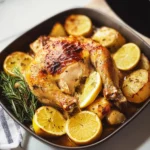
Ingredients
Scale
For the Flavorful Brine & Rub:
- 1 tbsp Kosher Salt: Salt is the cornerstone of flavor enhancement. Kosher salt, with its larger crystals, adheres nicely to the chicken and provides a clean, salty taste. It’s crucial for drawing out moisture and allowing the herb and citrus flavors to penetrate deeply into the meat, resulting in a more tender and flavorful chicken. Don’t substitute table salt directly without adjusting the quantity, as it’s denser and saltier.
- 1 tbsp Lemon Zest: The bright, aromatic zest of a lemon is essential for that signature citrusy lift. Make sure to zest only the yellow part of the peel, avoiding the bitter white pith underneath. Fresh lemon zest is key; the bottled lemon flavor simply won’t compare. The zest releases its oils during roasting, infusing the chicken with a vibrant, sunny flavor that cuts through the richness of the poultry.
- 1 tbsp Orange Zest: Adding orange zest introduces a touch of sweetness and a slightly different citrus profile that beautifully complements the lemon. Just like with the lemon, ensure you zest only the orange part of the peel. The combination of lemon and orange zest creates a balanced citrusy depth that is both refreshing and inviting.
- 1 tsp Freshly Ground Black Pepper: Pepper provides a crucial layer of spice and warmth. Freshly ground black pepper is always preferred for its bolder, more complex flavor compared to pre-ground pepper, which can often taste stale. The pepper complements the citrus and herbs, adding a subtle kick that enhances the overall flavor profile.
- ¼ tsp Cayenne Pepper: A pinch of cayenne pepper adds a gentle warmth without making the chicken overly spicy. It provides a subtle background heat that balances the citrus and herbs, adding another dimension of flavor. If you prefer no heat, you can omit it, but it truly adds a nuanced layer to the dish.
- 1 tsp Smoked Paprika: Smoked paprika is the secret ingredient for adding a hint of smoky depth and beautiful color to the chicken skin. Its smoky notes mimic the flavors you might get from a rotisserie, adding complexity and richness. It also contributes to the lovely reddish-brown hue of the roasted chicken.
- 3 cloves Garlic, Pressed or Minced: Garlic is a foundational aromatic that brings savory depth to the rub. Pressed or minced garlic releases its pungent oils, infusing the chicken with its unmistakable flavor. Fresh garlic is a must for this recipe; garlic powder will not provide the same robust flavor.
- 1 tbsp Minced Fresh Thyme: Thyme offers a classic, earthy, and slightly lemony herbaceousness that pairs perfectly with chicken and citrus. Fresh thyme is preferred for its vibrant aroma and flavor. If you must use dried thyme, reduce the quantity to 1 teaspoon as dried herbs are more concentrated.
- 2 tsp Minced Fresh Rosemary: Rosemary provides a piney, slightly pungent, and robust flavor that beautifully complements the thyme and citrus. Fresh rosemary is essential for its aromatic oils and vibrant flavor. If using dried rosemary, reduce the quantity to ¾ teaspoon.
- 3–4 lb Whole Chicken (giblets removed): The star of the show! Opt for a good quality whole chicken, ideally around 3–4 pounds, which is a manageable size for roasting and serving 6 people. Ensure the giblets (neck, gizzard, liver, heart) are removed from the cavity. Patting the chicken dry before applying the rub is crucial for crispy skin.
- 1 tbsp Neutral Oil: A neutral oil like vegetable, canola, or grapeseed oil is used to coat the skillet or sheet pan and to help the chicken skin crisp up beautifully during roasting. Avoid strongly flavored oils like olive oil, which can compete with the citrus and herb flavors.
For the Flavorful Basting Liquid:
- 4 tbsp Unsalted Butter: Butter is the key to rich flavor and golden-brown, crispy skin. Unsalted butter allows you to control the saltiness of the dish, especially since the chicken is already brined. The butter melts and bastes the chicken, creating a luscious, flavorful coating.
- 2 tbsp Fresh Lemon Juice: Fresh lemon juice reinforces the citrusy notes and adds a touch of acidity to balance the richness of the butter. It also helps tenderize the chicken and keeps it moist during roasting. Freshly squeezed lemon juice is far superior in flavor to bottled juice.
- 2 tbsp Fresh Orange Juice: Similar to lemon juice, fresh orange juice adds another layer of citrusy sweetness and acidity to the basting liquid, complementing the zest and enhancing the overall flavor profile. Freshly squeezed orange juice is essential for the best flavor.
- 2 sprigs Fresh Thyme: Adding fresh thyme sprigs to the basting liquid further intensifies the thyme flavor and infuses the butter with its aromatic oils. The sprigs release their flavor slowly as the butter simmers.
- 1 sprig Fresh Rosemary: Just like the thyme, fresh rosemary sprigs in the basting liquid enhance the rosemary flavor and add a fragrant, piney note to the butter. The sprigs infuse the butter as it simmers, creating a deeply flavorful basting liquid.
Instructions
Step 1: Crafting the Aromatic Herb & Citrus Rub
- In a medium-sized bowl, embark on creating your flavor base. Combine the 1 tbsp kosher salt, 1 tbsp lemon zest, 1 tbsp orange zest, 1 tsp freshly ground black pepper, ¼ tsp cayenne pepper, 1 tsp smoked paprika, 3 cloves pressed or minced garlic, 1 tbsp minced fresh thyme, and 2 tsp minced fresh rosemary.
- Using your fingers, work the mixture together diligently. Massage and rub the ingredients together until they are thoroughly combined and the salt begins to feel slightly moistened by the citrus zest and herb oils. This process helps release the aromas and meld the flavors of the rub, creating a potent flavor bomb for your chicken.
Step 2: Preparing the Chicken – Spatchcocking for Even Cooking and Crispy Skin
- Spatchcocking the Chicken: This technique, also known as butterflying, is a game-changer for roast chicken. It involves removing the backbone, which allows the chicken to lay flat and cook more evenly and quickly, resulting in crispier skin all over.
- Position the chicken breast-side down on a cutting board. Using heavy-duty kitchen shears or a sharp chef’s knife, locate the backbone. It runs along the center of the chicken’s back.
- Cut along one side of the backbone from the tail to the neck. Repeat on the other side of the backbone to completely remove it. You can save the backbone for making chicken stock later.
- Open the chicken up and flip it over so it’s breast-side up. Press firmly down on the breastbone to flatten the chicken. You should hear a slight crack as it flattens. This ensures even cooking.
- Separating the Skin for Maximum Flavor Infusion: This crucial step allows the flavorful rub to penetrate the meat directly, not just sit on the skin. It also facilitates crispier skin as the fat renders out more effectively.
- Gently and carefully lift the skin from the meat of the chicken, starting from the neck cavity and working your way down. Use your fingers to separate the skin from the breast, thighs, and legs. Take your time and be patient to avoid tearing the skin. It’s okay if you can’t separate the skin completely in some areas; the goal is to create pockets for the rub.
Step 3: Marinating for Deep Flavor Penetration
- Applying the Flavor Rub: Now it’s time to generously apply the aromatic rub you prepared.
- Using your hands, work the salt rub under the skin of the chicken, ensuring it comes into direct contact with the meat. Focus on the breast, thighs, and legs, pushing the rub into the pockets you created by separating the skin.
- Next, rub the remaining salt mixture all over the top of the skin of the chicken, ensuring every part is coated.
- Finally, flip the chicken over and rub the underside with any remaining rub.
- Refrigerating for Brining: Cover the chicken tightly with plastic wrap. Refrigerate the chicken for a minimum of 30 minutes and up to 4 hours. This brining time allows the salt to penetrate the meat, enhancing its flavor and moisture retention. Longer brining times (up to 4 hours) will result in even more flavorful and tender chicken. If you are short on time, even 30 minutes of brining will make a difference.
Step 4: Roasting to Golden Brown Perfection
- Preheating the Oven: Preheat your oven to 400°F (200°C). This high temperature is ideal for achieving crispy skin and roasting the chicken through without drying it out.
- Preparing for Roasting:
- Drizzle 1 tbsp neutral oil into a 12-inch cast iron skillet or a sheet pan. The cast iron skillet helps with heat retention and even cooking, but a sheet pan works well too.
- Place the marinated chicken skin-side down in the oiled skillet or sheet pan. This initial skin-down position helps render out the fat and promotes crispier skin on the breast.
- After a minute or two, flip the chicken over so it is skin-side up.
- Tucking the Wings: Tuck the tips of the chicken wings underneath the body of the chicken. This prevents the wing tips from burning during roasting, as they are thin and cook faster.
- Roasting and Basting:
- Place the skillet or sheet pan with the chicken in the preheated oven.
- Preparing the Basting Liquid: While the chicken is roasting, prepare the basting liquid. In a small saucepan, combine the 4 tbsp unsalted butter, 2 tbsp fresh lemon juice, 2 tbsp fresh orange juice, 2 sprigs fresh thyme, and 1 sprig fresh rosemary.
- Bring the mixture to a gentle simmer over medium-low heat. Once the butter is melted and the mixture is simmering, turn the heat to low to keep it warm.
- Basting Regularly: Every 10 minutes, remove the chicken from the oven and generously baste it with the warm butter mixture using a pastry brush or spoon. Be sure to baste all over the skin, allowing the flavorful liquid to coat the chicken. Return the chicken to the oven after each basting. Regular basting is crucial for keeping the chicken moist and developing that beautiful golden-brown, crispy skin.
- Checking for Doneness: Roast the chicken for approximately 1 hour, or until it is beautifully browned and cooked through. The most reliable way to check for doneness is to use a meat thermometer. Insert the thermometer into the thickest part of the thigh, avoiding the bone. The internal temperature should read 160°F (71°C). The juices should run clear when you pierce the thigh with a fork or knife.
Step 5: Resting – The Key to Juicy Chicken
- Once roasted and the internal temperature is reached, remove the chicken from the oven.
- Allow the chicken to rest for 15 minutes before carving. Resting is absolutely crucial! During resting, the juices redistribute throughout the meat, resulting in a much more tender and juicy chicken. If you cut into it immediately, the juices will run out, leaving you with drier meat. Tent the chicken loosely with foil while it rests to keep it warm.
Step 6: Carving and Serving
- After resting, carve the chicken into pieces. Separate the thighs, legs, wings, and breast.
- Serve immediately and enjoy your perfectly roasted Citrus & Herb Chicken!
Nutrition
- Serving Size: one normal portion
- Calories: 450-550