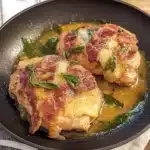
Ingredients
- Chicken Breasts: 4 boneless, skinless chicken breasts, about 6-8 ounces each. Opt for breasts that are of uniform thickness for even cooking. If your breasts are very thick, you’ll want to butterfly them or pound them thinner.
- Prosciutto: 8 thin slices of prosciutto. Prosciutto adds a salty, savory depth that is essential to Saltimbocca. Look for good quality prosciutto, as the flavor will really shine through. Avoid pre-shredded or diced prosciutto, as you want thin, intact slices.
- Fresh Sage Leaves: 8-12 fresh sage leaves. Sage provides a distinctively earthy and slightly peppery aroma that complements the chicken and prosciutto beautifully. Fresh sage is crucial here; dried sage won’t deliver the same bright, aromatic flavor.
- All-Purpose Flour: 1/4 cup, for dredging (optional). A light dusting of flour helps to create a slightly golden crust on the chicken and aids in thickening the sauce. If you prefer a gluten-free version or want to skip the flour, you can omit it.
- Dry White Wine: 1/2 cup. A dry white wine like Pinot Grigio, Sauvignon Blanc, or dry Vermouth adds acidity and complexity to the sauce. Choose a wine you would enjoy drinking, as its flavor will be prominent in the dish. Chicken broth can be substituted if you prefer to avoid alcohol, but the wine adds a characteristic depth of flavor.
- Butter: 4 tablespoons, unsalted. Butter contributes richness and flavor to both the chicken and the sauce. Unsalted butter allows you to control the saltiness of the dish, especially considering the prosciutto is already quite salty.
- Olive Oil: 2 tablespoons, extra virgin. Olive oil is used for searing the chicken and adds a fruity, subtle peppery note. Extra virgin olive oil is preferred for its flavor and health benefits.
- Salt: To taste. Be mindful of the saltiness of the prosciutto when seasoning. You may need less salt than you typically use.
- Black Pepper: Freshly ground, to taste. Freshly ground black pepper adds a more vibrant and aromatic pepper flavor compared to pre-ground pepper.
Instructions
- Prepare the Chicken: Place each chicken breast between two sheets of plastic wrap or parchment paper. Using a meat mallet or the bottom of a heavy skillet, gently pound the chicken breasts to an even thickness of about 1/4-inch to 1/2-inch. This ensures even cooking and tenderizes the chicken. Be careful not to pound them too thin, or they will become dry.
- Season and Assemble: Lightly season both sides of the pounded chicken breasts with salt and freshly ground black pepper. Remember that prosciutto is salty, so season cautiously. Place 1-2 fresh sage leaves on top of each chicken breast. Drape a slice of prosciutto over the sage leaves, ensuring it covers most of the chicken breast surface. Secure the prosciutto and sage to the chicken by gently pressing down. You can use toothpicks to secure them if needed, especially if the prosciutto is not sticking well, but often, gentle pressing is sufficient.
- Dredge in Flour (Optional): If using flour, lightly dredge the prosciutto-side of each chicken breast in all-purpose flour, shaking off any excess. This creates a light coating that will help the chicken brown and the sauce thicken slightly.
- Sear the Chicken: Heat olive oil and 2 tablespoons of butter in a large skillet over medium-high heat. Once the butter is melted and the pan is hot (but not smoking), carefully place the chicken breasts in the skillet, prosciutto-side down. Sear for 3-4 minutes, or until the prosciutto is crispy and golden brown and the chicken is nicely browned. Avoid overcrowding the pan; work in batches if necessary to ensure proper browning.
- Flip and Cook Through: Using tongs, carefully flip the chicken breasts over to the other side. Cook for another 3-5 minutes, or until the chicken is cooked through and no longer pink in the center. The internal temperature should reach 165°F (74°C). Avoid overcooking, as chicken breasts can become dry.
- Remove Chicken and Deglaze: Remove the cooked chicken breasts from the skillet and set aside on a plate, keeping them warm. Reduce the heat to medium. Add the remaining 2 tablespoons of butter to the skillet. Once melted, pour in the dry white wine (or chicken broth). Using a wooden spoon or spatula, scrape up any browned bits from the bottom of the pan (these are called “fond” and are packed with flavor). This process is called deglazing, and it creates the base for your sauce.
- Simmer the Sauce: Bring the wine sauce to a simmer and let it reduce slightly for 2-3 minutes, or until it thickens slightly. Taste the sauce and adjust seasoning with salt and pepper if needed. The sauce should be light and flavorful, not overly thick.
- Return Chicken and Serve: Return the cooked chicken breasts to the skillet with the sauce. Spoon the sauce over the chicken to coat. Heat through for another minute or two to ensure the chicken is warmed and coated in the sauce.
- Serve Immediately: Chicken Saltimbocca is best served immediately while it’s hot and the prosciutto is crispy. Garnish with extra fresh sage leaves, if desired. Serve over pasta, polenta, mashed potatoes, or alongside roasted vegetables for a complete and satisfying meal.
Nutrition
- Serving Size: One Normal Portion
- Calories: 450-550
- Sugar: Less than 2 grams
- Sodium: 700-900 mg
- Fat: 25-35 grams
- Saturated Fat: 10-15 grams
- Carbohydrates: 5-10 grams
- Fiber: Less than 1 gram
- Protein: 45-55 grams
- Cholesterol: 150-200 mg