
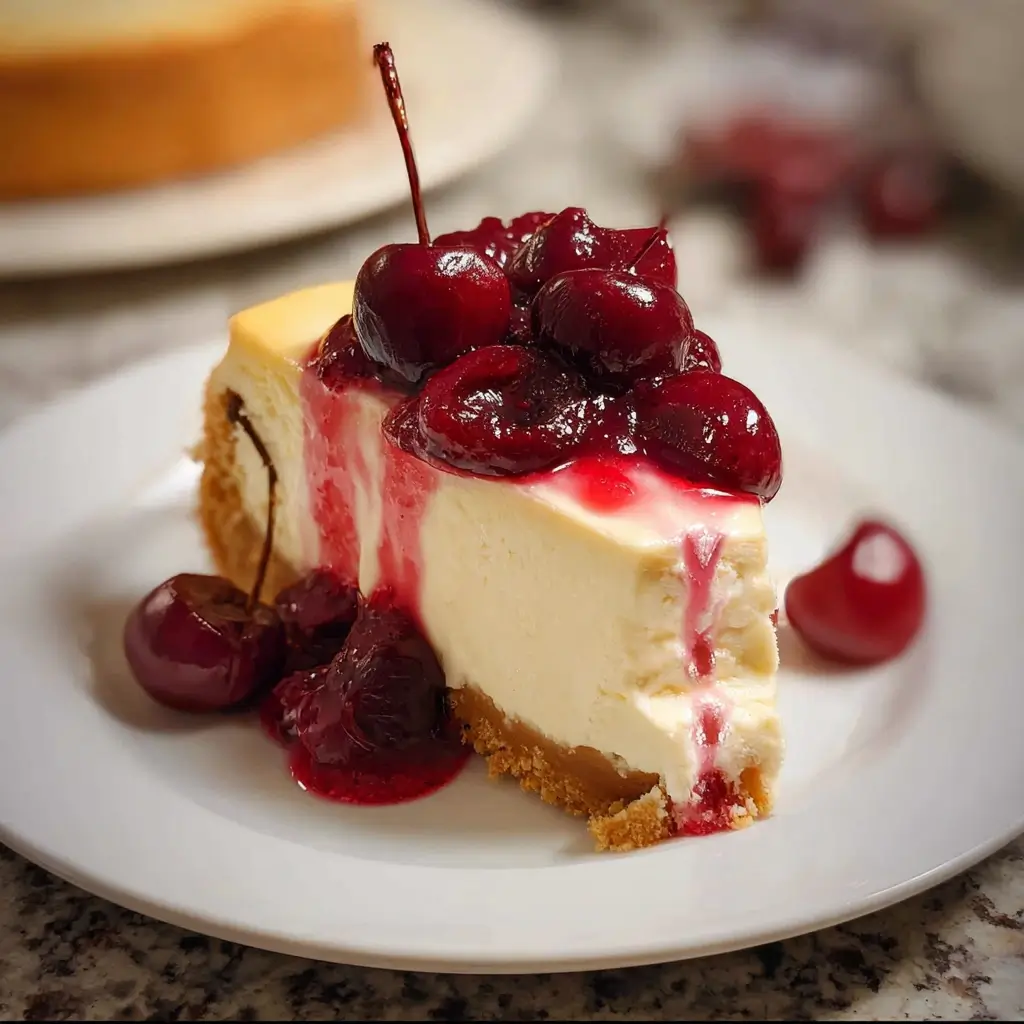

Of all the desserts that grace our family’s table, none command the same level of reverence and anticipation as this cherry cheesecake. It’s more than just a recipe; it’s a centerpiece, a tradition, a signal that a special occasion has truly begun. I still remember the first time I perfected it. After a few attempts that were “good,” but not “great,” I finally pulled this masterpiece from the oven. The top was a smooth, pale canvas, completely free of cracks. The graham cracker crust was a perfect golden-brown, and the aroma of baked cream cheese, vanilla, and butter filled the entire house. When I brought it to a family gathering, the initial silence after the first bite was the highest compliment I could have received. It was followed by a chorus of “This is the best cheesecake I have ever had.” My brother-in-law, a notorious dessert skeptic, had two slices. That’s when I knew this wasn’t just another recipe—it was the recipe. Its magic lies in the balance: the incredibly creamy, dense, yet not-too-heavy filling with a subtle tang, the crisp, buttery graham cracker crust that provides the perfect textural contrast, and the sweet, vibrant cherry topping that cuts through the richness. This is the dessert that people talk about for weeks, the one they request for their birthdays, and the one that will make you a legend in your own kitchen.
The Ultimate Best Cherry Cheesecake Recipe
This recipe has been meticulously tested to ensure a flawless result every time. By following these steps, you will create a rich, creamy, and visually stunning cheesecake that will become your go-to for any celebration.
For the Graham Cracker Crust:
- Graham Cracker Crumbs: 2 cups (from about 14-15 full graham cracker sheets)
- Unsalted Butter: ½ cup (1 stick or 113g), melted
- Granulated Sugar: ¼ cup (50g)
- Pinch of Salt: ⅛ teaspoon
For the Cream Cheese Filling:
- Full-Fat Block Cream Cheese: 32 oz (four 8-oz packages or 900g), at room temperature
- Granulated Sugar: 1 ½ cups (300g)
- Large Eggs: 4, plus 1 egg yolk, at room temperature
- Full-Fat Sour Cream: 1 cup (240g), at room temperature
- Heavy Cream: ¼ cup (60ml), at room temperature
- Pure Vanilla Extract: 1 tablespoon
- Fresh Lemon Juice: 1 tablespoon
- All-Purpose Flour: 3 tablespoons (to help prevent cracking)
For the Cherry Topping:
- Canned Cherry Pie Filling: 1 (21-ounce) can of your favorite brand
- OR Homemade Cherry Compote (see FAQ for recipe)
Step-by-Step Instructions for a Perfect Cheesecake
Patience and precision are the keys to a perfect cheesecake. Follow these detailed instructions closely for a bakery-quality result.
Part 1: Preparing the Pan and Crust
- Preheat and Prepare: Position a rack in the middle of your oven and preheat to 350°F (175°C). Take a 9-inch springform pan. To create a waterproof seal for the water bath, wrap the outside of the pan with a double layer of heavy-duty aluminum foil, ensuring it goes all the way up the sides. This is the single most important step to prevent water from seeping into your crust.
- Make the Crumb Mixture: In a medium bowl, combine the graham cracker crumbs, ¼ cup of granulated sugar, and the pinch of salt. Pour in the melted butter and stir with a fork until all the crumbs are evenly moistened. The texture should resemble wet sand.
- Press the Crust: Pour the buttery crumbs into your prepared springform pan. Using the flat bottom of a measuring cup or glass, firmly press the crumbs into an even layer across the bottom and about 1 inch up the sides of the pan. A tightly packed crust is essential for clean slices.
- Pre-Bake the Crust: Place the pan on a baking sheet and bake for 10 minutes. This pre-baking step creates a crispier, more stable base for your filling. Once baked, remove it from the oven and set it aside to cool on a wire rack while you prepare the filling. Reduce the oven temperature to 325°F (165°C).
Part 2: Crafting the Creamy Filling
- Beat the Cream Cheese: In the large bowl of a stand mixer fitted with the paddle attachment (or using a hand mixer), place the four blocks of room temperature cream cheese. Beat on medium-low speed for 2-3 minutes until it is completely smooth and creamy, with absolutely no lumps. Scrape down the sides and bottom of the bowl frequently. This is the most critical step for a silky, lump-free cheesecake. Do not rush it.
- Add Sugar and Flour: With the mixer on low, gradually add the 1 ½ cups of granulated sugar and the 3 tablespoons of flour. Mix until just combined, scraping the bowl again to ensure everything is incorporated.
- Incorporate Wet Ingredients: Add the room temperature sour cream, heavy cream, vanilla extract, and lemon juice. Mix on low speed until the batter is smooth and well-blended. Remember to scrape the bowl one more time. The lemon juice won’t make the cheesecake taste like lemon; it just brightens the flavor and balances the sweetness.
- Add the Eggs: Add the 4 room temperature eggs and 1 egg yolk, one at a time, mixing on the lowest possible speed after each addition. Mix only until the yellow of the yolk disappears into the batter. Over-mixing at this stage incorporates too much air, which is a primary cause of cheesecake cracking. The final batter should be thick, smooth, and pourable.
Part 3: Assembling, Baking, and Cooling
- Assemble the Cheesecake: Pour the cream cheese filling over the cooled, pre-baked crust in the springform pan. Use a spatula to spread it into an even layer.
- Prepare the Water Bath (Bain-Marie): Bring a kettle or pot of water to a boil. Place the foil-wrapped springform pan into a larger roasting pan. Carefully pour the hot water into the roasting pan until it reaches about halfway up the sides of the springform pan. The water bath creates a steamy, humid environment in the oven, which promotes even baking and is the best defense against cracks.
- Bake the Cheesecake: Carefully transfer the roasting pan to the oven. Bake at 325°F (165°C) for 70-80 minutes. The cheesecake is done when the edges are set and slightly puffed, but the center 2-3 inches still have a slight “jiggle” or “wobble” like Jell-O. Do not over-bake, as this will lead to a dry texture and cracks.
- The Crucial Cooling Process: This process is as important as the baking itself.
- Step 1 (Oven Off): Turn the oven off completely. Crack the oven door open with a wooden spoon and let the cheesecake cool slowly in the oven for 1 hour. This gradual temperature change prevents the shock that causes cracking.
- Step 2 (Room Temp): Carefully remove the cheesecake from the water bath and roasting pan. Remove the foil wrapping. Place the cheesecake on a wire rack and let it cool to room temperature, which will take about 2-3 hours.
- Step 3 (Refrigerate): Once at room temperature, run a thin knife around the edge of the cheesecake to loosen it from the pan (this also helps prevent cracking as it cools and shrinks). Cover the pan loosely with plastic wrap and refrigerate for at least 6 hours, but preferably overnight. This chilling period is non-negotiable; it allows the cheesecake to fully set and for the flavors to meld and deepen.
Part 4: Topping and Serving
- Release and Top: Once fully chilled, release the sides of the springform pan. Transfer the cheesecake to a serving platter. Just before serving, spoon the cherry pie filling over the top, spreading it gently and leaving a small border around the edge for a beautiful presentation.
- Slice and Enjoy: To get clean, perfect slices, use a large, sharp knife. Dip the knife in hot water and wipe it clean between each cut. Serve immediately and accept the compliments!
Nutrition Facts
- Servings: 16 slices
- Calories Per Serving (approximate): 550-600 kcal (This can vary based on the brand of cream cheese and cherry pie filling used).
Preparation Time
- Active Preparation Time: 30 minutes
- Baking Time: 70-80 minutes
- Cooling and Chilling Time: 9-10 hours (minimum)
- Total Time: Approximately 11 hours (Most of this is hands-off time)
How to Serve Your Masterpiece Cherry Cheesecake
Presentation elevates a great dessert to an unforgettable one. Here are some ways to serve your cherry cheesecake to wow your guests:
- The Classic Slice: Serve a simple, elegant slice on its own. The vibrant red of the cherries against the creamy white filling is beautiful enough to stand alone.
- With a Creamy Garnish:
- Add a generous dollop of freshly whipped, unsweetened heavy cream on the side or on top of each slice.
- A small quenelle of mascarpone cheese can add an extra layer of tangy richness.
- Add a Touch of Crunch and Flavor:
- Sprinkle a few dark chocolate shavings over the top for a beautiful look and a delicious flavor pairing with the cherry.
- Garnish with a sprig of fresh mint for a pop of color and a hint of freshness.
- Toasted, slivered almonds scattered over the cherries add a delightful nutty crunch.
- Perfect Pairings:
- Coffee: A freshly brewed cup of black coffee or a smooth latte cuts through the richness perfectly.
- Wine: A dessert wine like a late-harvest Riesling or a glass of bubbly Prosecco complements the tangy and sweet notes of the cheesecake.
- Tea: A robust cup of black tea, such as Earl Grey or English Breakfast, is a wonderful companion.
- For a Deconstructed Look: Serve a slice with a drizzle of high-quality chocolate or caramel sauce on the plate and a few fresh, whole cherries on the side.
5 Essential Tips for a Flawless Cherry Cheesecake
Avoid common cheesecake pitfalls with these professional-grade tips.
1. The Room Temperature Rule is Non-Negotiable
This is the golden rule of cheesecake making. Your cream cheese, eggs, and sour cream must be at room temperature. Cold cream cheese will not blend smoothly, resulting in a lumpy batter no matter how much you mix it. Cold eggs and sour cream can cause the smooth cream cheese mixture to curdle or break. To bring items to room temperature quickly, you can place the eggs in a bowl of warm water for 10 minutes and unwrap the cream cheese blocks and let them sit on the counter for at least an hour.
2. Perfecting the Water Bath (Bain-Marie)
Many bakers are intimidated by a water bath, but it’s the secret to a professional result. It insulates the cheesecake, ensuring it bakes gently and evenly, and creates a steamy environment that keeps the surface moist and prevents cracks. Always use heavy-duty foil and create a seamless wrap. If you’re nervous about leaks, you can place the springform pan inside a slightly larger (10-inch) round cake pan before placing it in the roasting pan as an extra layer of protection.
3. Avoid Over-mixing at All Costs
The number one enemy of a smooth cheesecake top is air. When you beat the filling, especially after adding the eggs, you incorporate air bubbles. During baking, these air bubbles rise to the surface and burst, causing cracks and a “souffléd” texture. This is why you should use the paddle attachment (not the whisk), keep the mixer on low speed, and only mix until the ingredients are just combined. Scrape the bowl often to avoid the need for extra mixing.
4. Master the Slow Cooling Process
A cheesecake is a delicate custard. A sudden change in temperature will cause it to contract too quickly, leading to a giant crack down the center. The three-step cooling process (1 hour in a turned-off, propped-open oven; 2-3 hours on the counter to room temp; 6+ hours in the fridge) is not optional. It’s an integral part of the recipe that allows the cheesecake to set gradually and perfectly.
5. Plan Ahead: Cheesecakes Love to Be Made in Advance
This is not a last-minute dessert, and that’s actually a good thing! The flavor and texture of a cheesecake improve significantly after a long, uninterrupted chill in the refrigerator. It allows the flavors to meld and the texture to become even denser and creamier. This makes it the perfect dessert for entertaining, as you can make it a full day or even two days before your event, freeing you up on the day of your party.
Frequently Asked Questions About Cherry Cheesecake
1. Why did my cheesecake crack? I followed the recipe!
Cracking is the most common cheesecake issue and can be caused by a few things, even if you think you did everything right. The top culprits are:
- Over-baking: Even a few extra minutes can dry out the surface. Remember to look for the “jiggle” in the center.
- Over-mixing: Too much air was incorporated, especially after adding the eggs.
- Temperature Shock: The cheesecake was cooled too quickly. Don’t skip the slow cooling process in the oven and on the counter.
- Sticking to the Pan: As the cheesecake cools, it shrinks slightly. If it’s stuck to the sides of the pan, it will pull and crack. Always run a thin knife around the edge before the final chill.
But don’t worry! A cracked cheesecake is still delicious. That’s what the beautiful cherry topping is for—to hide any imperfections!
2. Can I use a different kind of crust?
Absolutely! While graham cracker is classic, this cheesecake filling is a perfect canvas for other crusts. Here are some ideas:
- Oreo Crust: Use about 22-24 Oreo cookies (filling and all), crushed into fine crumbs, and mix with 5-6 tablespoons of melted butter.
- Biscoff Cookie Crust: Use the same proportions as the graham cracker crust for a delicious, spiced caramel flavor.
- Nut Crust: For a gluten-free and keto-friendly option, use 2 cups of finely ground almonds or pecans mixed with ¼ cup of melted butter and 2-3 tablespoons of a sugar substitute.
3. Can I use fresh or frozen cherries instead of canned pie filling?
Yes, and a homemade cherry topping is spectacular! Here is a simple recipe for a fresh cherry compote:
- Ingredients: 4 cups of pitted fresh or frozen sweet cherries, ¾ cup granulated sugar, ¼ cup water, 2 tablespoons cornstarch, 2 tablespoons fresh lemon juice.
- Instructions: In a saucepan, whisk together the water, cornstarch, and sugar until smooth. Add the cherries and lemon juice. Bring the mixture to a simmer over medium heat, stirring constantly. Cook for about 5-8 minutes, until the sauce has thickened and the cherries have softened. Let it cool completely before spooning it over your cheesecake.
4. How do I really know when my cheesecake is done baking?
The “wobble test” is the most reliable indicator. Gently nudge the side of the roasting pan. The outer 2-3 inches of the cheesecake should look set and relatively firm. The very center of the cheesecake, in a circle about 2-3 inches in diameter, should still be wobbly, similar to the consistency of set Jell-O. It will not look liquidy, but it will definitely jiggle. This center part will continue to cook and set from the residual heat during the long cooling process. If there is no jiggle at all, the cheesecake is likely over-baked.
5. How can I make this cheesecake gluten-free?
It’s very easy to adapt this recipe to be gluten-free.
- For the Crust: Simply substitute the graham crackers with your favorite gluten-free shortbread-style cookies or use the almond/pecan nut crust mentioned in the FAQ above.
- For the Filling: The recipe calls for 3 tablespoons of all-purpose flour. You can substitute this with 1 ½ tablespoons of cornstarch or an equal amount of a gluten-free all-purpose flour blend. The rest of the filling ingredients are naturally gluten-free. Always double-check your labels for cream cheese, sour cream, etc., to ensure they are certified GF if you are serving someone with Celiac disease.
Cherry Cheesecake Recipe
Ingredients
For the Graham Cracker Crust:
- Graham Cracker Crumbs: 2 cups (from about 14-15 full graham cracker sheets)
- Unsalted Butter: ½ cup (1 stick or 113g), melted
- Granulated Sugar: ¼ cup (50g)
- Pinch of Salt: ⅛ teaspoon
For the Cream Cheese Filling:
- Full-Fat Block Cream Cheese: 32 oz (four 8-oz packages or 900g), at room temperature
- Granulated Sugar: 1 ½ cups (300g)
- Large Eggs: 4, plus 1 egg yolk, at room temperature
- Full-Fat Sour Cream: 1 cup (240g), at room temperature
- Heavy Cream: ¼ cup (60ml), at room temperature
- Pure Vanilla Extract: 1 tablespoon
- Fresh Lemon Juice: 1 tablespoon
- All-Purpose Flour: 3 tablespoons (to help prevent cracking)
For the Cherry Topping:
- Canned Cherry Pie Filling: 1 (21-ounce) can of your favorite brand
- OR Homemade Cherry Compote (see FAQ for recipe)
Instructions
Part 1: Preparing the Pan and Crust
- Preheat and Prepare: Position a rack in the middle of your oven and preheat to 350°F (175°C). Take a 9-inch springform pan. To create a waterproof seal for the water bath, wrap the outside of the pan with a double layer of heavy-duty aluminum foil, ensuring it goes all the way up the sides. This is the single most important step to prevent water from seeping into your crust.
- Make the Crumb Mixture: In a medium bowl, combine the graham cracker crumbs, ¼ cup of granulated sugar, and the pinch of salt. Pour in the melted butter and stir with a fork until all the crumbs are evenly moistened. The texture should resemble wet sand.
- Press the Crust: Pour the buttery crumbs into your prepared springform pan. Using the flat bottom of a measuring cup or glass, firmly press the crumbs into an even layer across the bottom and about 1 inch up the sides of the pan. A tightly packed crust is essential for clean slices.
- Pre-Bake the Crust: Place the pan on a baking sheet and bake for 10 minutes. This pre-baking step creates a crispier, more stable base for your filling. Once baked, remove it from the oven and set it aside to cool on a wire rack while you prepare the filling. Reduce the oven temperature to 325°F (165°C).
Part 2: Crafting the Creamy Filling
- Beat the Cream Cheese: In the large bowl of a stand mixer fitted with the paddle attachment (or using a hand mixer), place the four blocks of room temperature cream cheese. Beat on medium-low speed for 2-3 minutes until it is completely smooth and creamy, with absolutely no lumps. Scrape down the sides and bottom of the bowl frequently. This is the most critical step for a silky, lump-free cheesecake. Do not rush it.
- Add Sugar and Flour: With the mixer on low, gradually add the 1 ½ cups of granulated sugar and the 3 tablespoons of flour. Mix until just combined, scraping the bowl again to ensure everything is incorporated.
- Incorporate Wet Ingredients: Add the room temperature sour cream, heavy cream, vanilla extract, and lemon juice. Mix on low speed until the batter is smooth and well-blended. Remember to scrape the bowl one more time. The lemon juice won’t make the cheesecake taste like lemon; it just brightens the flavor and balances the sweetness.
- Add the Eggs: Add the 4 room temperature eggs and 1 egg yolk, one at a time, mixing on the lowest possible speed after each addition. Mix only until the yellow of the yolk disappears into the batter. Over-mixing at this stage incorporates too much air, which is a primary cause of cheesecake cracking. The final batter should be thick, smooth, and pourable.
Part 3: Assembling, Baking, and Cooling
- Assemble the Cheesecake: Pour the cream cheese filling over the cooled, pre-baked crust in the springform pan. Use a spatula to spread it into an even layer.
- Prepare the Water Bath (Bain-Marie): Bring a kettle or pot of water to a boil. Place the foil-wrapped springform pan into a larger roasting pan. Carefully pour the hot water into the roasting pan until it reaches about halfway up the sides of the springform pan. The water bath creates a steamy, humid environment in the oven, which promotes even baking and is the best defense against cracks.
- Bake the Cheesecake: Carefully transfer the roasting pan to the oven. Bake at 325°F (165°C) for 70-80 minutes. The cheesecake is done when the edges are set and slightly puffed, but the center 2-3 inches still have a slight “jiggle” or “wobble” like Jell-O. Do not over-bake, as this will lead to a dry texture and cracks.
- The Crucial Cooling Process: This process is as important as the baking itself.
- Step 1 (Oven Off): Turn the oven off completely. Crack the oven door open with a wooden spoon and let the cheesecake cool slowly in the oven for 1 hour. This gradual temperature change prevents the shock that causes cracking.
- Step 2 (Room Temp): Carefully remove the cheesecake from the water bath and roasting pan. Remove the foil wrapping. Place the cheesecake on a wire rack and let it cool to room temperature, which will take about 2-3 hours.
- Step 3 (Refrigerate): Once at room temperature, run a thin knife around the edge of the cheesecake to loosen it from the pan (this also helps prevent cracking as it cools and shrinks). Cover the pan loosely with plastic wrap and refrigerate for at least 6 hours, but preferably overnight. This chilling period is non-negotiable; it allows the cheesecake to fully set and for the flavors to meld and deepen.
Part 4: Topping and Serving
- Release and Top: Once fully chilled, release the sides of the springform pan. Transfer the cheesecake to a serving platter. Just before serving, spoon the cherry pie filling over the top, spreading it gently and leaving a small border around the edge for a beautiful presentation.
- Slice and Enjoy: To get clean, perfect slices, use a large, sharp knife. Dip the knife in hot water and wipe it clean between each cut. Serve immediately and accept the compliments!
Nutrition
- Serving Size: One Normal Portion
- Calories: 550-600